
Loading, please wait...
LOT 0481
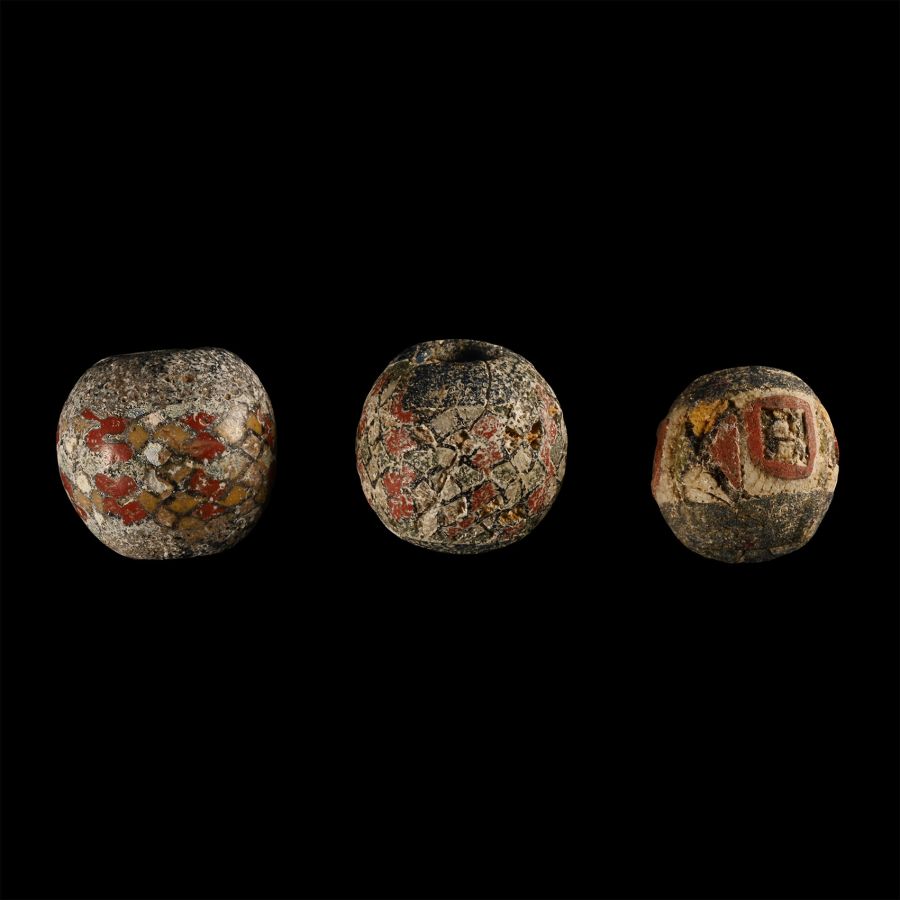
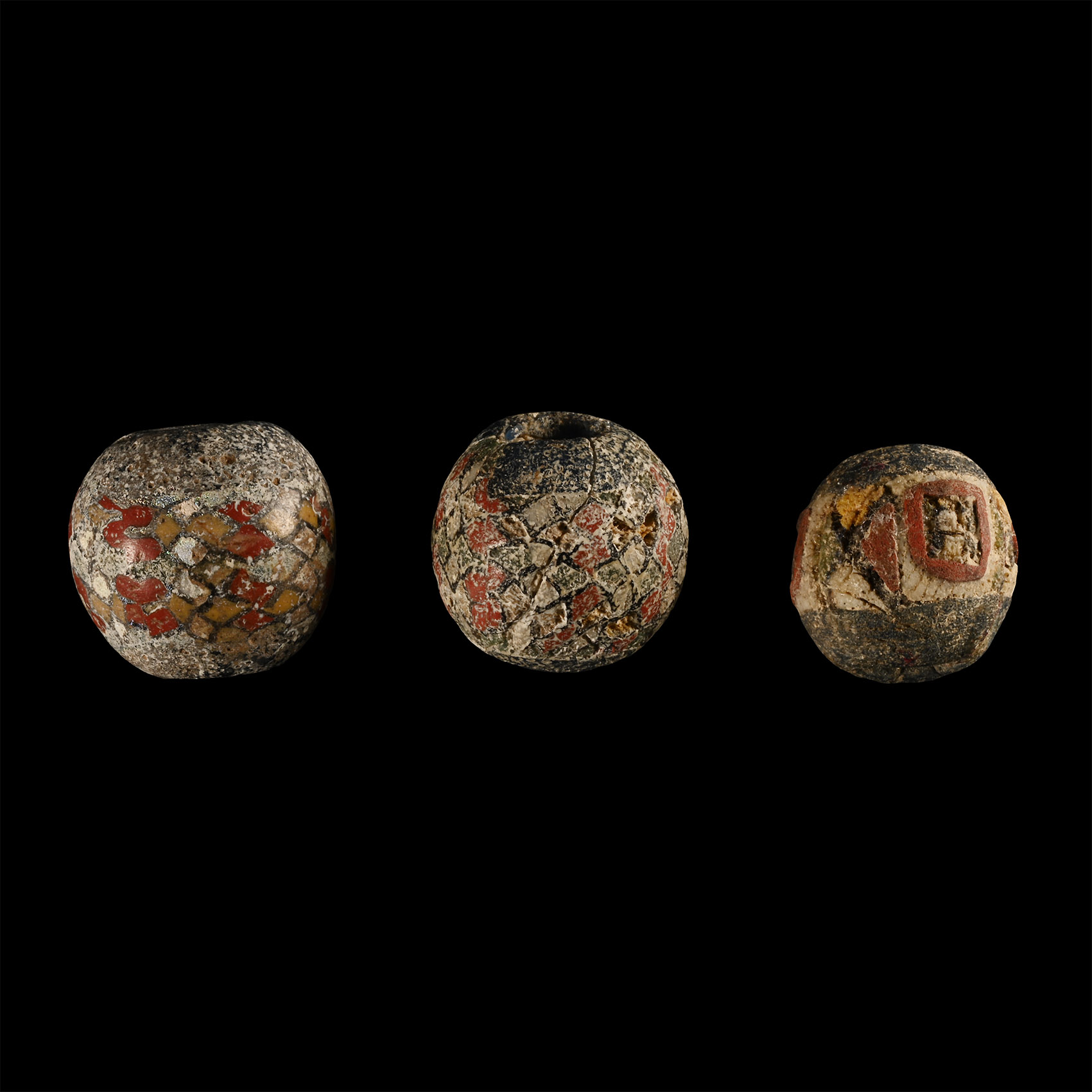
Egyptian Millefiori Glass Bead Group
ROMAN PERIOD, 30 B.C.-323 A.D.
1/2 - 5/8 in. (10 grams total, 12-15 mm).
Three spherical glass beads decorated with geometric millefiori patterns. [3]
ProvenanceCollected from 1969-1999.
From the collection of the late Mr S.M., London, UK.
TimeLine Auctions follows a vetting process to ensure the authenticity and legality of all items, reinforcing our commitment to integrity and responsible trading. Each antiquity, antique, and coin lot undergoes thorough examination by a vetting committee of at least ten external specialists, professional trade association members, scientists, and archaeologists: Our Vetting Process
AUCTIONS:
TimeLine is a leading auction house specialising in antiquities, ancient art, collectables, natural history, coins, medals, and books. Our auctions offer museums, collectors, historians, and enthusiasts the opportunity to acquire unique and historically significant pieces.
-
.jpg)
Egyptian Wooden Mummy Mask with Egyptian Blue Inlaid Eyebrows
Third Intermediate Period, 22nd-24th Dynasty, 944-716 B.C.Sold for (Inc. bp): £14,950
D-shaped in plan with finely carved facial detailing, slender nose and full lips, sockets to the eyes; eyebrows recessed to accept inserts still partly in situ; pierced to reverse for attachment. 972 grams, 20 cm
Old mounting to the reverse. From a private estate, Suffolk, UK. Acquired from a UK antiques fair. Property of Mr E.D., a UK professional. This lot has been checked against the Interpol Database of stolen works of art and is accompanied by a search certificate number no.12076-217420. -
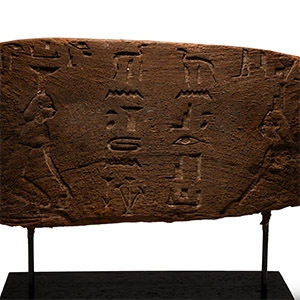
Egyptian Wood Panel with Hieroglyphs for Padi-Wsir
Late Period, 664-332 B.C.Sold for (Inc. bp): £2,340
Foot panel from a cedarwood sarcophagus with carved socket to the inner face to accept the feet and mortices for attaching to sides; the outer face in low relief, a figural scene depicting the sisters of Osiris (Nephthys to the left and Isis to the right) with their arms extended; text translatable as 'Words spoken for Neftis, which surrounds ...Words spoken for Osiris, Padi-Wsir. I have come into existence as [...] Osiris, Padi-Wsir, the righteous [...]'. 652 grams total, 31 cm wide including stand
From a Dutch private collection, acquired in the 1970s. Acquired from J. Bagot Ancient Art, Barcelona, Spain, in 2016. From the Keane private collection, Kent, UK. Accompanied by a copy of the J. Bagot certificate of authenticity and invoice (2,800 euros). This lot has been checked against the Interpol Database of stolen works of art and is accompanied by a search certificate number no.12078-216769.
'Padi Wsir' is probably the name of the owner of the sarcophagus; the same name was elsewhere transliterated as 'Padiusir' and Hellenised as 'Petosiris'', a familiar name in the Late Period. -
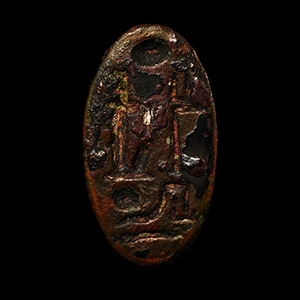
Egyptian Bronze Ring for Ramesses II
New Kingdom, 19th Dynasty, 1303-1213 B.C.Sold for (Inc. bp): £2,340
D-shaped hoop and ellipsoid plaque, hieroglyphic text in low relief giving the regnal name of Ramesses II (User-Maat-Re Setep-en-Re). 6.78 grams, 23.72 mm overall, 17.94 mm internal diameter (approximate size British Q, USA 8, Europe 17.49, Japan 16)
Ex R.K. collection, early 1980s. UK private collection before 2000. Property of a London gentleman. This lot has been checked against the Interpol Database of stolen works of art and is accompanied by a search certificate number no.12082-217353.
