
Loading, please wait...
LOT 0423
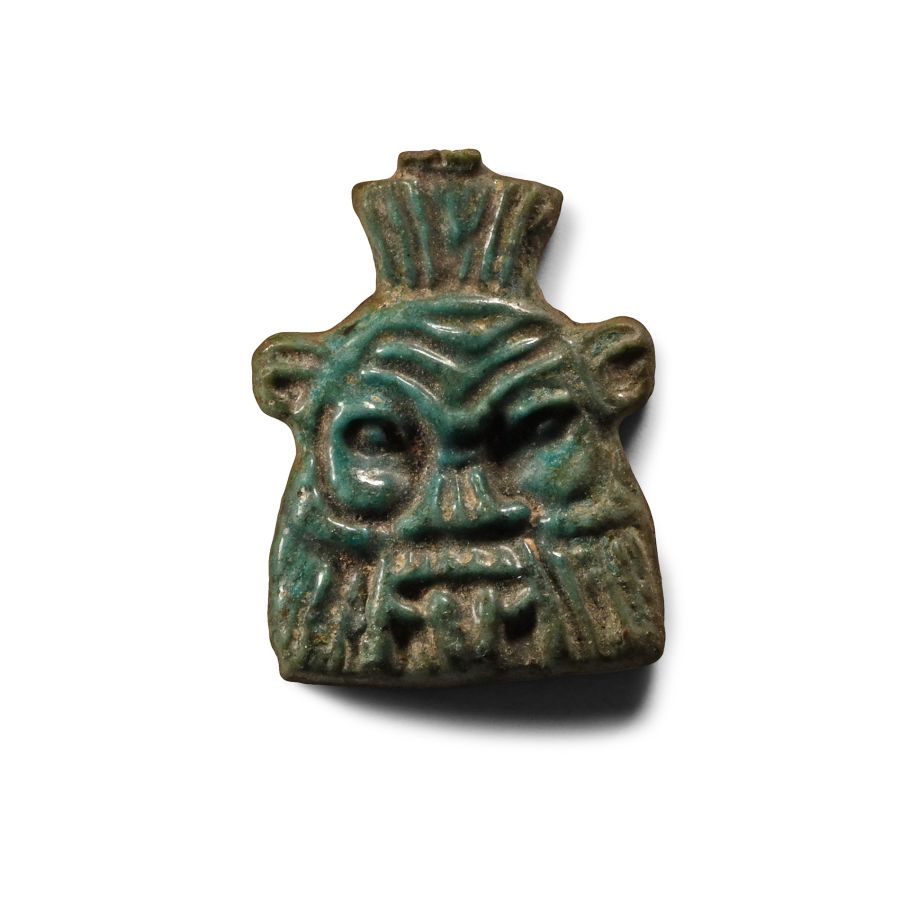
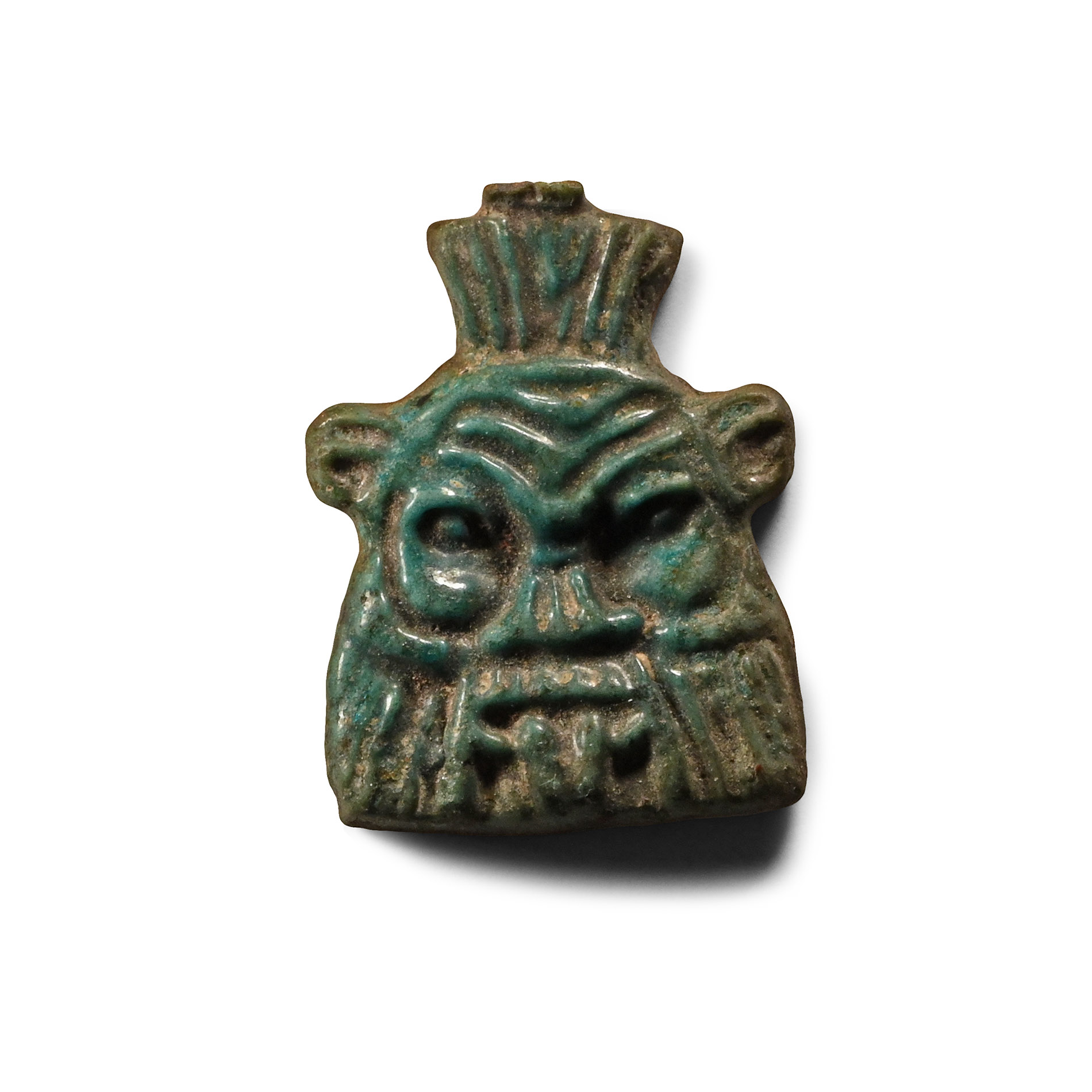
Egyptian 'Maspero' Green Faience Amulet
LATE PERIOD, 664-332 B.C.
1 in. (2.09 grams, 28 mm).
Mask of Bes in low-relief with lentoid eyes and tongue extended. [No Reserve]
ProvenanceEx Emile Bouillon Bey, c. 1880.
From the Gaston Maspero Archaeological Fund.
with Hotel des Ventes du Perigord, Bergerac, 24 June 2007.
Property of a French collector.
Cf. Tinius, I., Altägypten in Braunschweig. Die Sammlungen des Herzog Anton Ulrich-Museums und des Städtischen Museums, Wiesbaden, 2011, p.135, no.231, for similar form.
FootnotesBes became one of ancient Egypt's most popular apotropaic deities from the New Kingdom onwards. Despite his somewhat fearful appearance, Bes was the patron and protector of pregnant women and children. He was also believed to protect from snakes.
CONDITIONTimeLine Auctions follows a vetting process to ensure the authenticity and legality of all items, reinforcing our commitment to integrity and responsible trading. Each antiquity, antique, and coin lot undergoes thorough examination by a vetting committee of at least ten external specialists, professional trade association members, scientists, and archaeologists: Our Vetting Process
AUCTIONS:
TimeLine is a leading auction house specialising in antiquities, ancient art, collectables, natural history, coins, medals, and books. Our auctions offer museums, collectors, historians, and enthusiasts the opportunity to acquire unique and historically significant pieces.
-
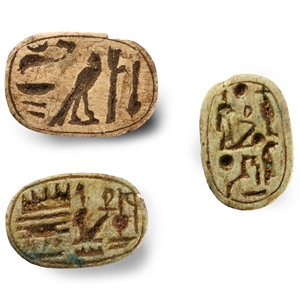
Egyptian Faience Scarab Group
Late Period, 664-332 B.C.Sold for (Inc. bp): £416
Group of three scarabs, each with a hieroglyphic inscription to the underside. 5.05 grams total, 16-18 mm
Acquired on the UK art market from various auction houses and collections mostly before 2000. From an important Cambridgeshire estate; thence by descent. -
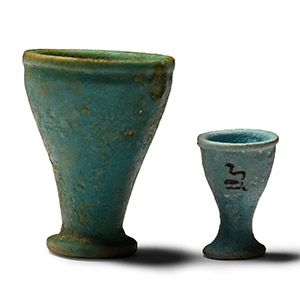
Egyptian Blue Faience Offering Cups
1st millennium B.C.Sold for (Inc. bp): £585
Group of two bell-shaped cups, the smaller with black hieroglyphic inscription. 37 grams total, 29-48 mm
Acquired on the German art market, 1989-1995. with The Museum Gallery, 19 Bury Place, London, WC1, UK, 1998-2003. Property of a London based academic, 2003-present. -
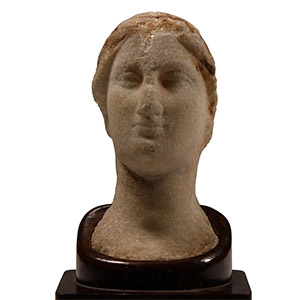
Egyptian Marble Head of a Queen
Ptolemaic Period, 323-30 B.C.Estimate: £3,000 - 4,000 (‡+bp*)
Opening Bid: £1,250
Modelled in the half-round with a stephane and centre-parted hair, serene facial features including hooded eyes and pert lips; mounted on a custom-made wooden display stand. 313 grams total, 10 cm high (14.3 cm high including stand)
Ex Hanna Saba collection, Ambassador to Egypt-USA-France (1909-1992). Private European collection. This lot has been checked against the Interpol Database of stolen works of art and is accompanied by a search certificate number no.12083-218194.
