
Loading, please wait...
LOT 0413
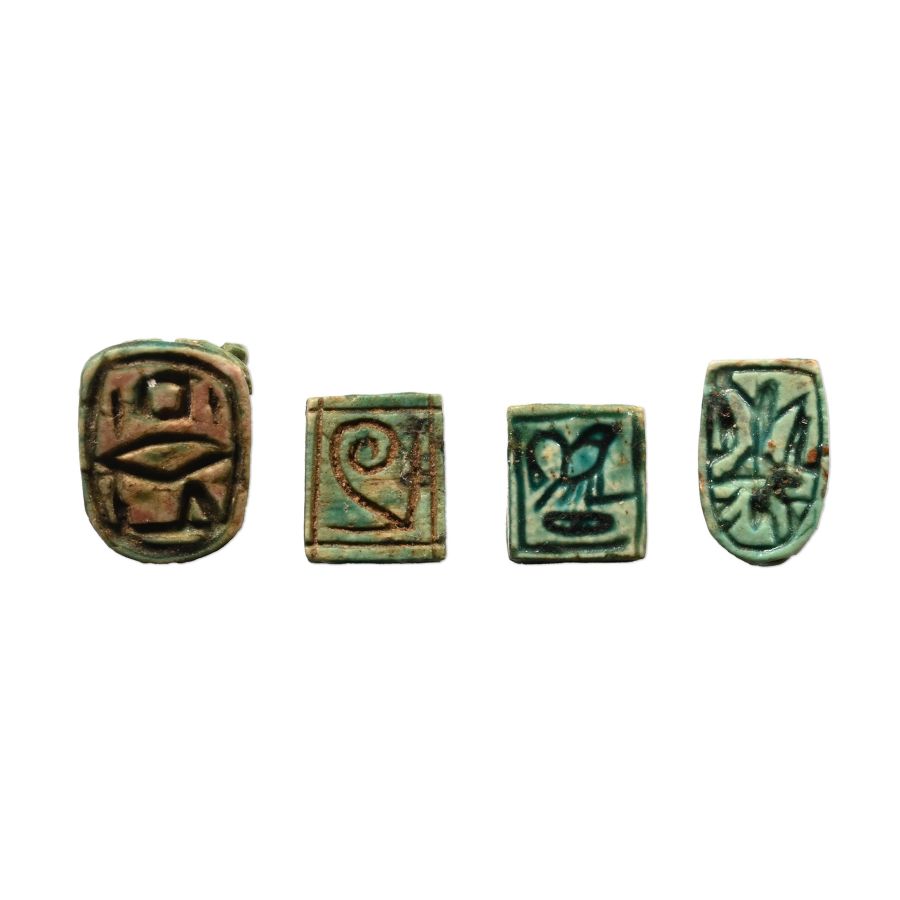
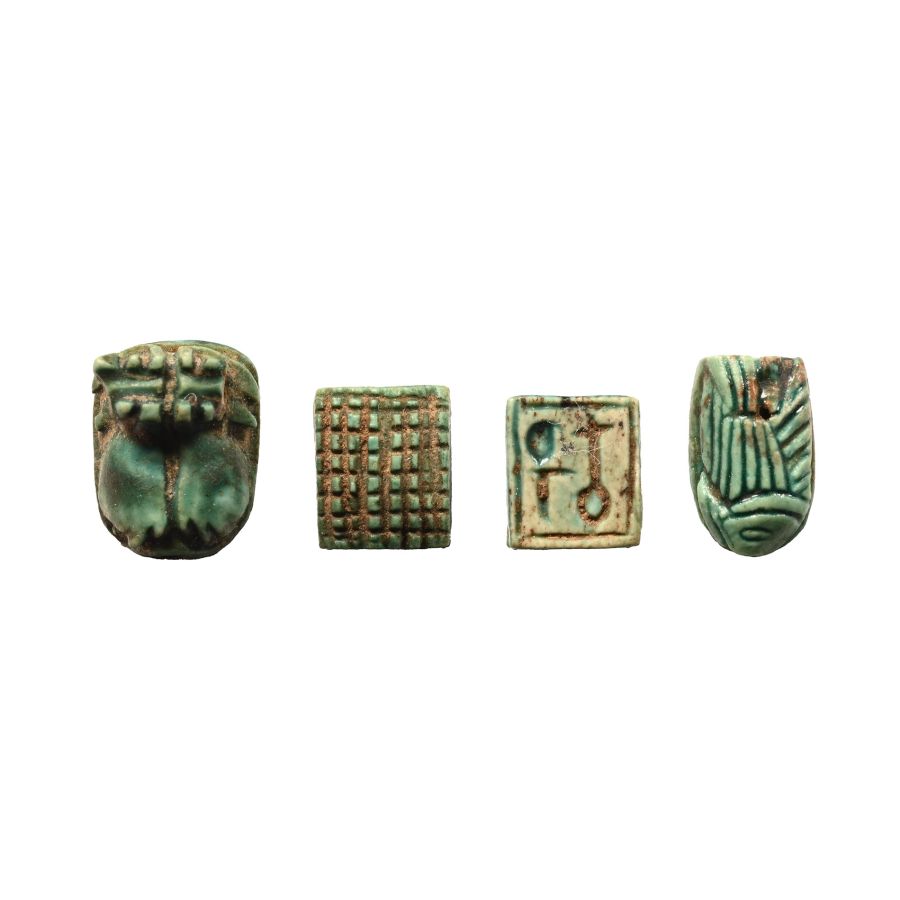
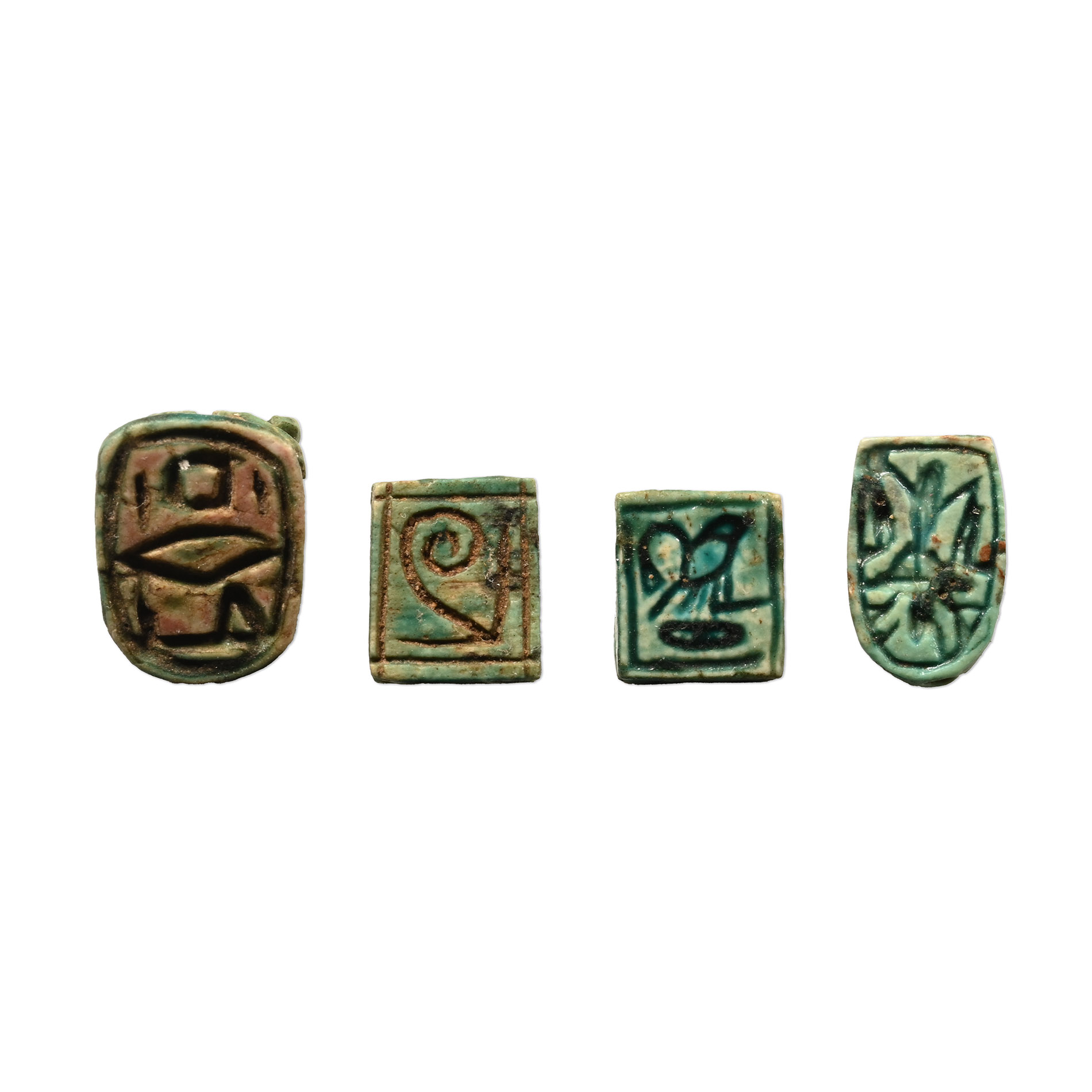
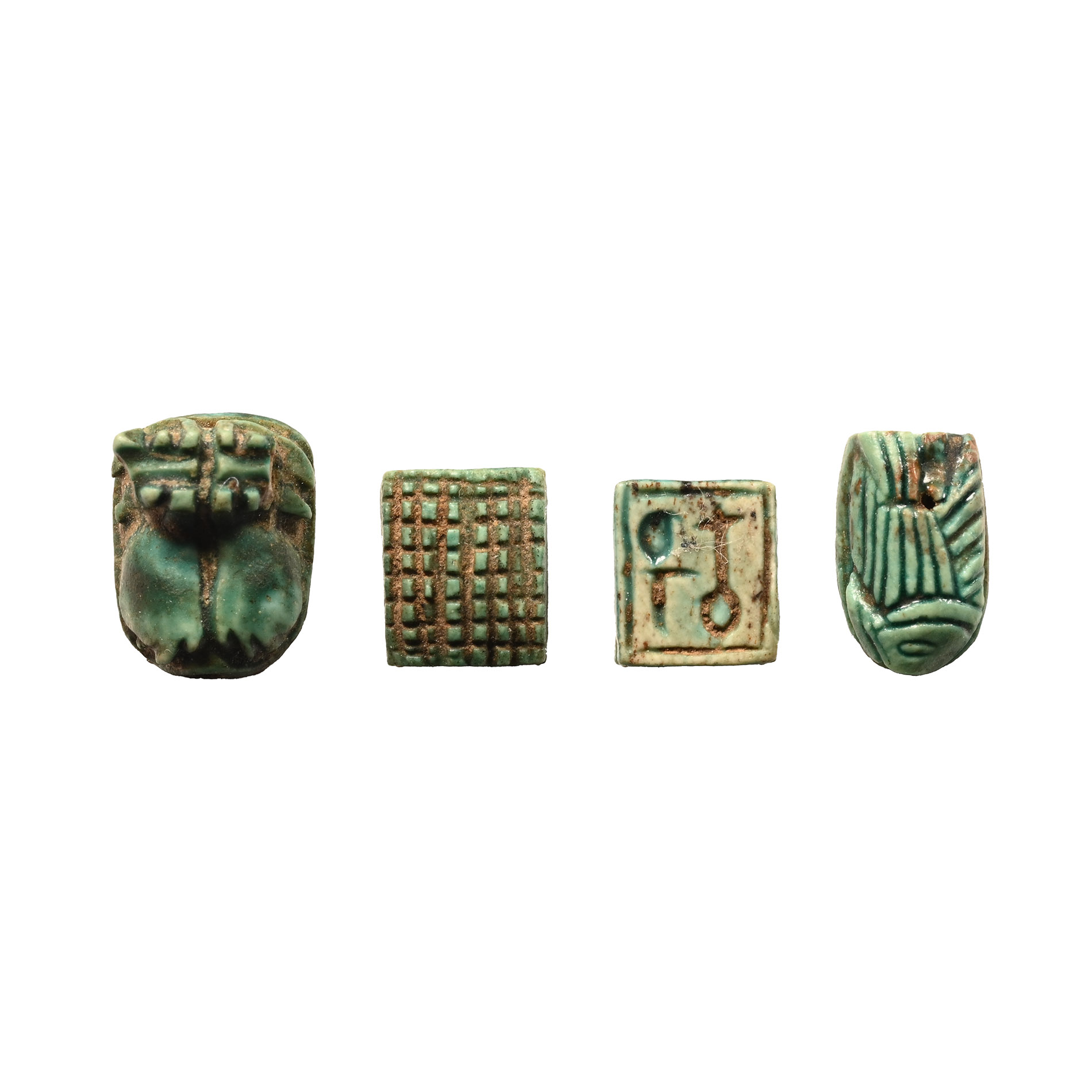
Egyptian 'Maspero' Faience Bead Group with Hieroglyphs
NEW KINGDOM, 19TH-20TH DYNASTY, 1279-1081 B.C.
1/4 - 3/8 in. (1.32 grams total, 7-10 mm).
Including two scarabs with hieroglyphs to the underside, and two rectangular beads with hieroglyphs. [4]
ProvenanceEx Emile Bouillon Bey, c. 1880.
From the Gaston Maspero Archaeological Fund.
with Hotel des Ventes du Perigord, Bergerac, 24 June 2007.
Property of a French collector.
Cf. Petrie, W.M.F., Button and Design Scarabs, London, 1925, pl. XVIII, for numerous examples of similar small design scarabs and beads with motifs and hieroglyphs.
CONDITIONTimeLine Auctions follows a vetting process to ensure the authenticity and legality of all items, reinforcing our commitment to integrity and responsible trading. Each antiquity, antique, and coin lot undergoes thorough examination by a vetting committee of at least ten external specialists, professional trade association members, scientists, and archaeologists: Our Vetting Process
AUCTIONS:
TimeLine is a leading auction house specialising in antiquities, ancient art, collectables, natural history, coins, medals, and books. Our auctions offer museums, collectors, historians, and enthusiasts the opportunity to acquire unique and historically significant pieces.
-
Egyptian Millefiori Glass Bead Group
Roman Period, 30 B.C.-323 A.D.Sold for (Inc. bp): £208
Three spherical glass beads decorated with geometric millefiori patterns. 10 grams total, 12-15 mm
Collected from 1969-1999. From the collection of the late Mr S.M., London, UK. -
.jpg)
Egyptian Painted Wooden Model of a Cow Giving Birth, Together with Two Figures
Middle Kingdom, 11th-12th Dynasty, 2023-1862 B.C.Estimate: £3,500 - 4,500 (+bp*)
Opening Bid: £1,750
Composed of three figures: a standing cow or other quadruped giving birth to its young, its head, neck and forelegs emerging from the mother's rear, both with a black and white speckled coat; a standing male figure with articulated arms and pierced hands, wearing a kilt and cropped wig and with stylised facial detailing; a kneeling figure also with articulated arms, open-palm hands, wearing a kilt and cropped wig, stylised facial features; extensive remains of polychrome pigment. 111 grams total, 9.5-16 cm
From an early 20th century Home Counties collection. This lot has been checked against the Interpol Database of stolen works of art and is accompanied by search certificate no.11597-199209.
Such models would have been deposited in tombs; the purpose of such a scene was probably to evoke the season of spring, when calves were born, and the floodplain where farmers lived and raised their livestock. -
Egyptian Hardstone Double Plume Amulet
Late Period, 664-332 B.C.Estimate: £250 - 350 (+bp*)
Opening Bid: £125
Carved with integral ribbed loop to the reverse; unfinished. 4.4 grams, 31 mm
with Hotel des Ventes, Drouot, Paris, France. From the collection of Mr H. Naudy, Paris, France. Acquired at between 2004-2010. Property of a French collector.
This ancient amulet represents two ostrich feathers or shuty. Interestingly, these feathers were also present on the Atef crown of Osiris, the god of the afterlife and the dead. This suggests the amulet was believed to imbue the wearer with Osiris' divine power and protection.
