
Loading, please wait...
LOT 0005
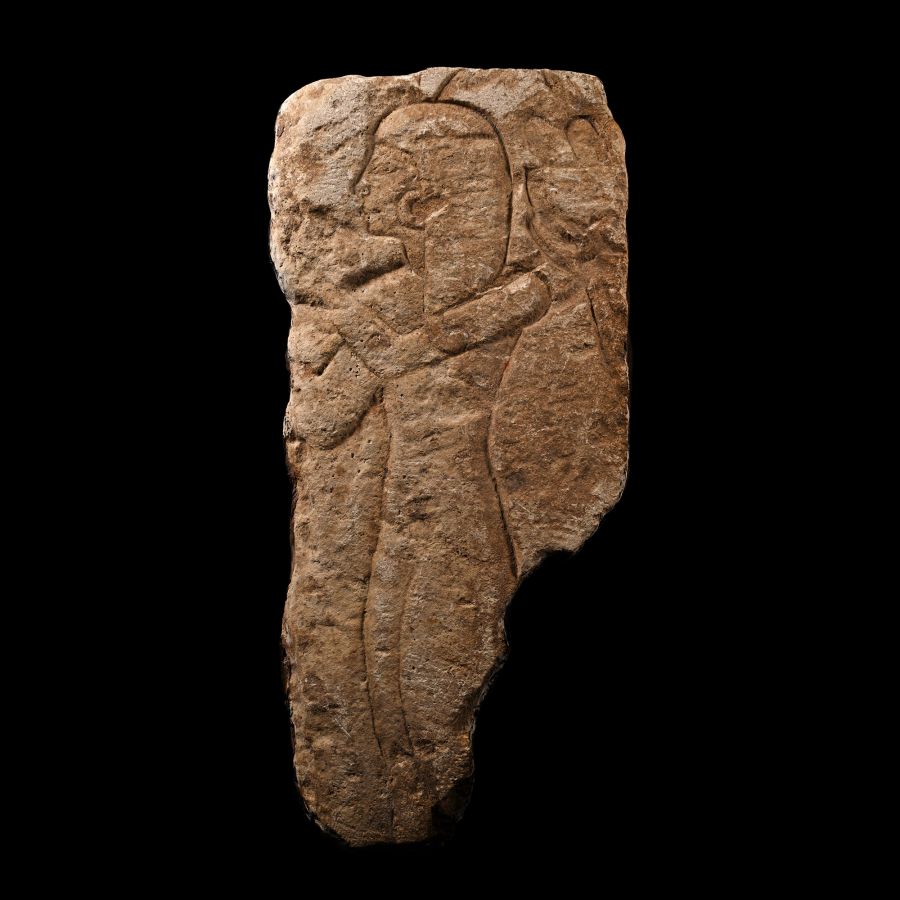
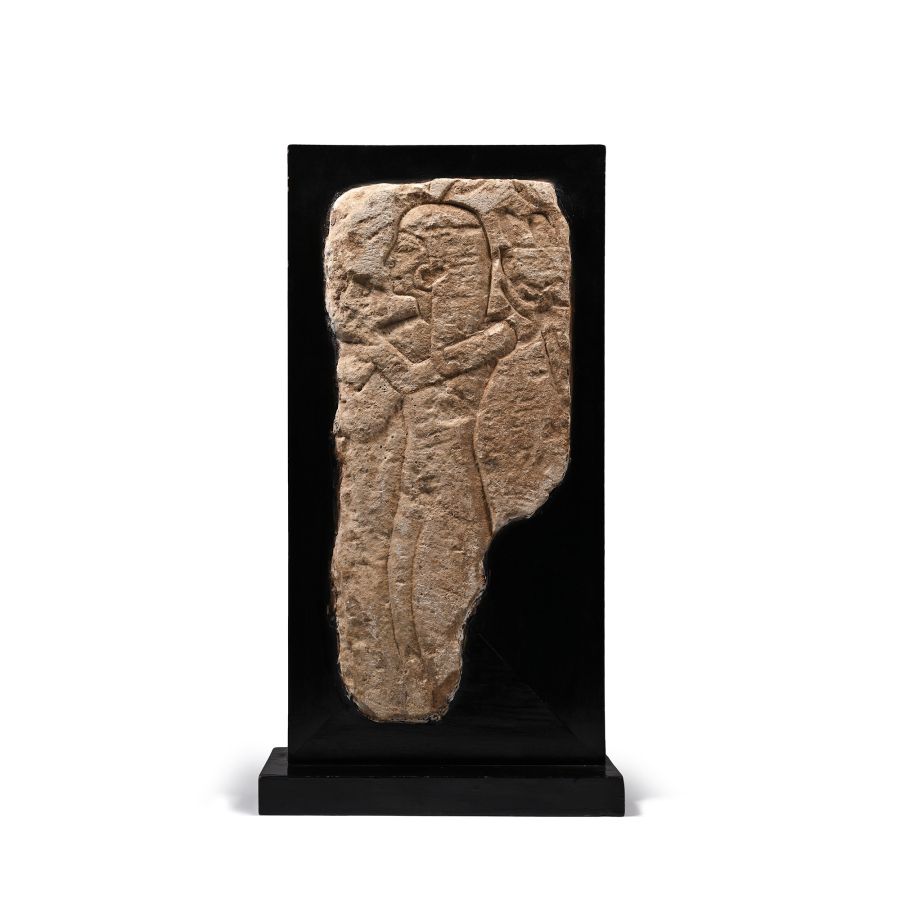
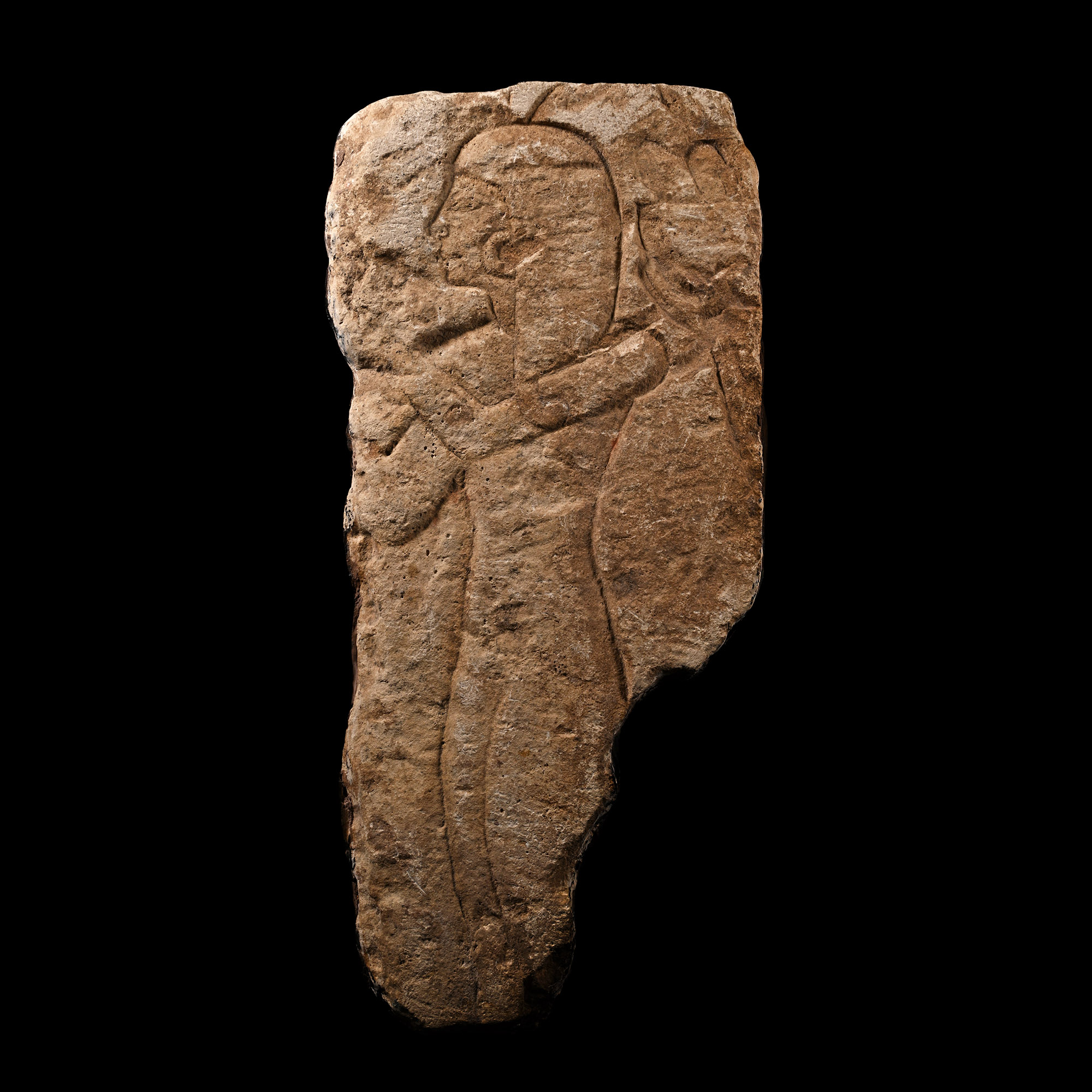
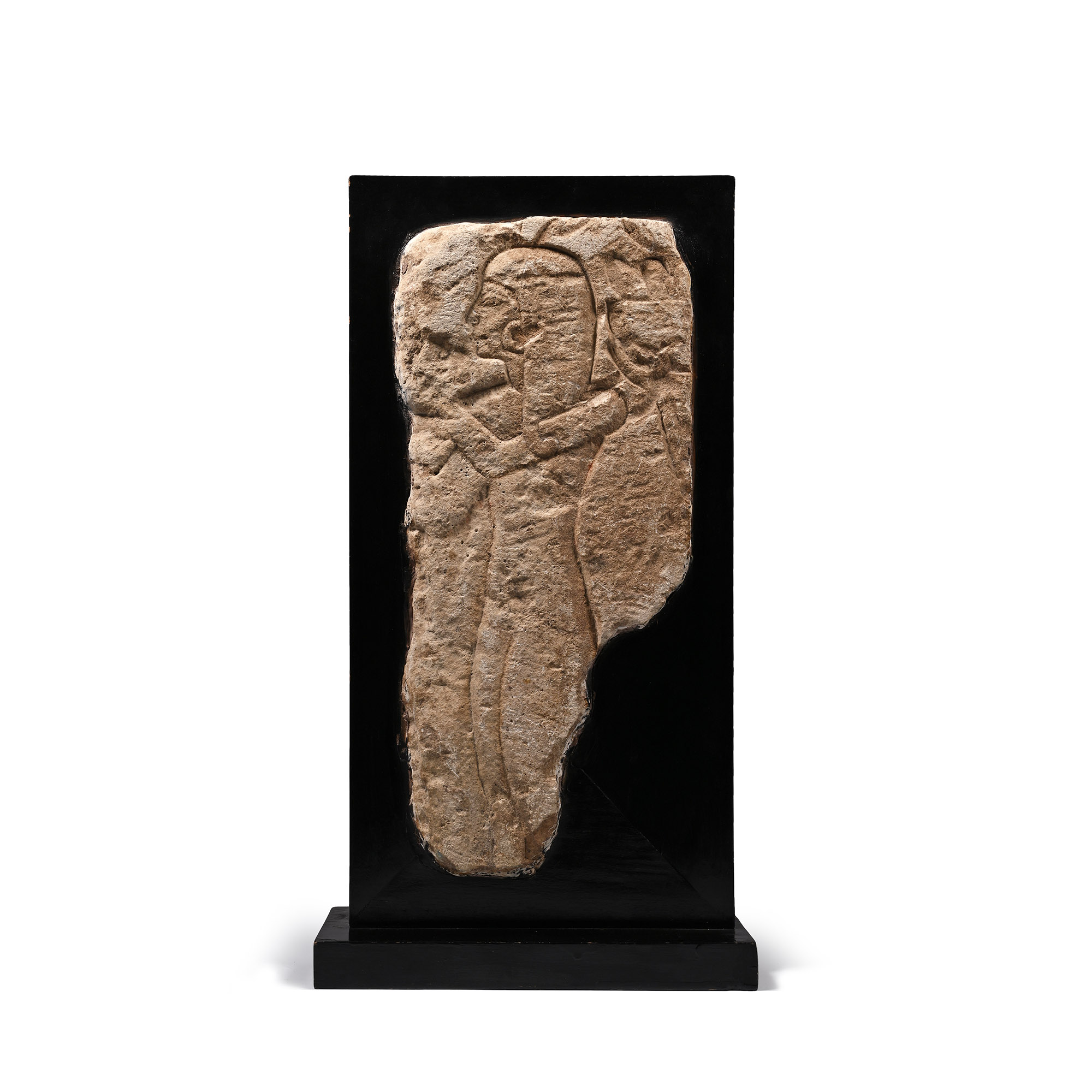
Egyptian Limestone Relief Fragment with Female Figure
NEW KINGDOM, 18TH DYNASTY, CIRCA 1295 B.C.
16 1/2 in. (3.12 kg total, 42 cm high including stand).
Showing a female figure as part of a procession, carrying a loaf of bread, a second offerant behind her; mounted on a custom-made display stand.
ProvenanceFrom the estate of the late Professor Dr E. Bernardo Streiff, Geneva; a distinguished collection of antiquities formed during the 1950s-1970s.
with Galerie Rhéa, Zurich, Switzerland.
This lot has been checked against the Interpol Database of stolen works of art and is accompanied by a search certificate number no.12625-236383.
This lot has been cleared against the Art Loss Register database, and is accompanied by an illustrated lot declaration signed by the Head of the Antiquities Department, Dr Raffaele D'Amato.
Cf. Davies, NdG., The Tomb of Nefer-hotep at Thebes, pl. XXXVI, for a female figure of similar form.
FootnotesProfessor Dr E. Bernardo Streiff (1911-2001) was a prominent Swiss physician and academic based in Geneva, best known for his contributions to medical science as well as his deep passion for ancient art and antiquities. Over the course of several decades, particularly between the 1950s and 1970s, Professor Streiff assembled a highly regarded private collection of antiquities, reflecting both scholarly discernment and aesthetic sensitivity. His interests focused on the art and material culture of the ancient Mediterranean, with a particular emphasis on Greek, Etruscan, and Roman objects. A connoisseur guided by academic rigour, Dr Streiff maintained close ties with museums, galleries, and archaeological experts of his time. Many pieces from his collection were acquired from leading European dealers and fairs, and are notable for their quality, provenance, and condition. Following his passing, objects from the Streiff collection have appeared in respected sales and exhibitions, recognised for their integrity and the refined eye of the collector behind them.
CONDITIONTimeLine Auctions follows a vetting process to ensure the authenticity and legality of all items, reinforcing our commitment to integrity and responsible trading. Each antiquity, antique, and coin lot undergoes thorough examination by a vetting committee of at least ten external specialists, professional trade association members, scientists, and archaeologists: Our Vetting Process
AUCTIONS:
TimeLine is a leading auction house specialising in antiquities, ancient art, collectables, natural history, coins, medals, and books. Our auctions offer museums, collectors, historians, and enthusiasts the opportunity to acquire unique and historically significant pieces.
LOT 0005
Egyptian Limestone Relief Fragment with Female Figure
Estimate £4,000 - 6,000€4,640 - 6,960 (for guidance only)$5,400 - 8,100 (for guidance only)
-
Egyptian Multi-Stranded Mummy Bead Necklace
Late Period, 664-332 B.C.Sold for (Inc. bp): £117
Four-stranded designer necklace composed of beads of mainly annular and tubular types. 24 grams, 80 cm long
Acquired before 1979. From the private collection of Mr F.A., South Kensington, London, UK; thence by descent 2014. This lot is accompanied by an illustrated lot declaration signed by the Head of the Antiquities Department, Dr Raffaele D'Amato.
For thousands of years, artisans in Egypt created vibrant ceramics to echo the beauty of rare jewels. These ornaments were created with almost every material, colour, and texture imaginable and they come from across Egypt and beyond: vibrant blue lapis lazuli from Afghanistan, glossy black obsidian from Turkey, and aqua-green turquoise from the Sinai. They were worn in life and, after death, they served as precious ornamentation for mummies. -
Coptic Textile Section with Figures and Animals
4th-6th century A.D.Sold for (Inc. bp): £338
Rectangular panel of woven fabric with borders of discs each with a lion passant, midian band with standing human figures and regardant beasts between; mounted in a glazed frame. 577 grams total, 30.5 x 23 cm
Acquired in the late 1980s-early 1990s. Private collection, London. This lot is accompanied by an illustrated lot declaration signed by the Head of the Antiquities Department, Dr Raffaele D'Amato. -
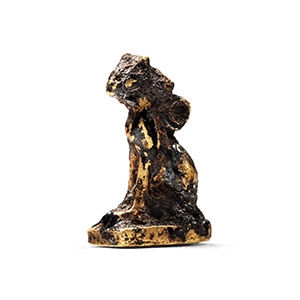
Egyptian Gold Goddess Bastet Cat Amulet
Late New Kingdom, 1070-900 B.C.Sold for (Inc. bp): £468
Modelled seated on a tongue-shaped base, suspension loop on the back. 0.53 grams, 8 mm
From an early 20th century French collection. This lot is accompanied by an illustrated lot declaration signed by the Head of the Antiquities Department, Dr Raffaele D'Amato.
The goddess Bastet was believed to be the daughter of the sun god and was shown with the features of a lion up until about 1000 B.C. when she was first portrayed as a cat or human with a cat head. As the daughter of Ra she was associated with the rage inherent in the sun god's eye which was considered to be his instrument of vengeance. Her development into a cat goddess occurred during the New Kingdom but did not fully develop until the Late Period. She was still associated with the destructive power of the sun and was shown on the prow of the solar boat, decapitating the evil serpent Apophis in the Book of the Dead. The maternal, protective and hunting characteristics of the cat are obvious in Bastet and she was seen as a protector of pregnant women and young children. In the Pyramid Texts she is invoked by the deceased king to act as his protector and to help him reach the sky to join the sun god; the king proclaims that Bastet is his mother and nurse. Like her counterpart, Sekhmet, Bastet has an aggressive side and, in a text from Karnak, Amenhotep II described his enemies being slaughtered like the victims of Bastet. The goddess had a shrine at Karnak, where she is known as the 'Lady of Asheru' which aligns her closely with the goddess Mut, the consort of Amun-Ra. Her most famous shrine was in the north-east Delta region, at Bubastis, and was known as Per-Bastet or 'the House of Bastet.' Herodotus describes the festival of Bastet as one of the most elaborate in all of Egypt and identifies her with the Greek Artemis. Cemeteries of cats have been excavated at Bubastis and at Saqqara and Memphis.
