
Loading, please wait...
LOT 0006
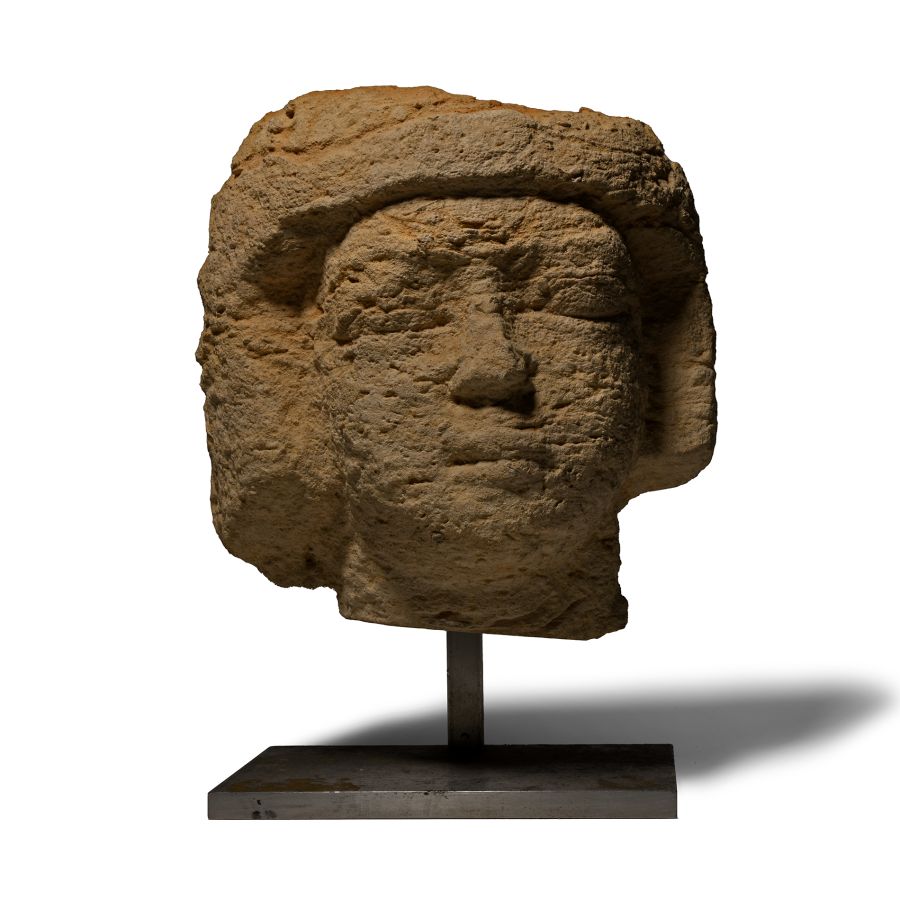
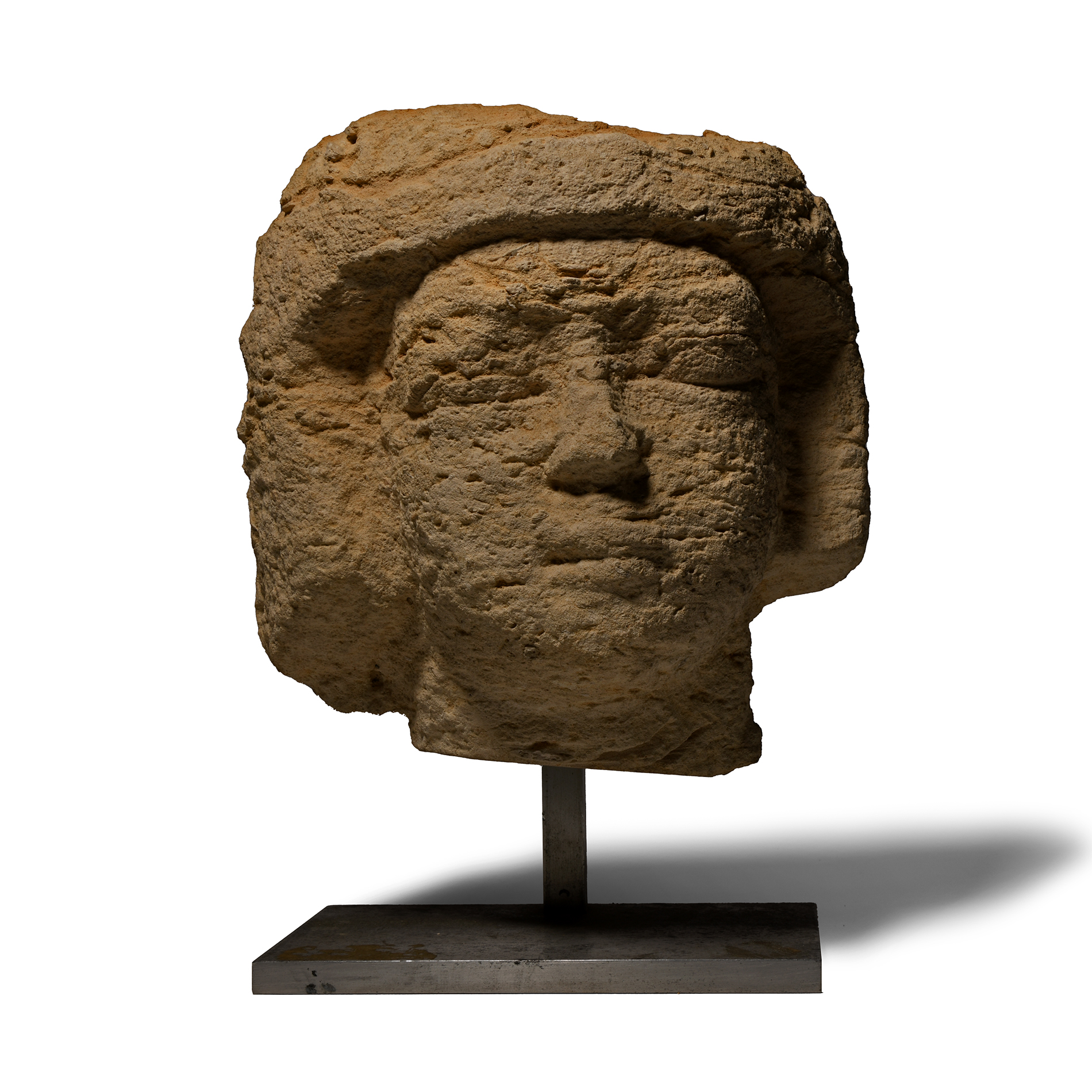
Egyptian Limestone Male Head Fragment
OLD KINGDOM, 4TH-EARLY 5TH DYNASTY, CIRCA 2640-2480 B.C.
10 1/2 in. (4.58 kg total, 26.5 cm including stand).
Wearing a short wig, the eyes with incised cosmetic lines; mounted on a custom-made display stand.
Provenancewith Sotheby's, London, 5 July 1982, no.190.
with Sotheby's, London, 13-14 December 1990, no.18.
Acquired from the above sale by the late Robert Browne.
Property of Ms L.F., London, UK.
Accompanied by a copy of an Art Loss Register certificate no.S00243674.
This lot has been checked against the Interpol Database of stolen works of art and is accompanied by a search certificate number no.12073-217362.
Cf. Ziegler, C., Les statues égyptiennes de l’Ancien Empire, Paris, 1997, p. 231, no. 71, for similar head.
CONDITIONTimeLine Auctions follows a vetting process to ensure the authenticity and legality of all items, reinforcing our commitment to integrity and responsible trading. Each antiquity, antique, and coin lot undergoes thorough examination by a vetting committee of at least ten external specialists, professional trade association members, scientists, and archaeologists: Our Vetting Process
AUCTIONS:
TimeLine is a leading auction house specialising in antiquities, ancient art, collectables, natural history, coins, medals, and books. Our auctions offer museums, collectors, historians, and enthusiasts the opportunity to acquire unique and historically significant pieces.
-
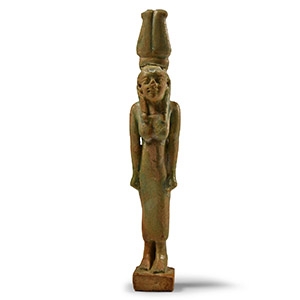
Large Egyptian Faience Amulet of the Goddess Isis
Late Period-Ptolemaic Period, 664-30 B.C.Estimate: £1,200 - 1,700 (‡+bp*)
Opening Bid: £600
The goddess dressed in a long tight-fitting tunic to her ankles, standing with her left leg forward, her straight arms descending to her thighs; vulture headgear surmounted two long feathers; dorsal pillar with hieroglyphic text; repaired. 50 grams, 14 cm
Private collection Mr E. Saad, Cairo, Egypt-Montreux, Switzerland, 1970s. Ex private collection of Mr S.A., acquired from Mr Saad in 1997.
In ancient Egyptian mythology, Isis was the sister-wife of Osiris and the mother of the sky god Horus. She is associated with aspects of fertility and motherhood. This amulet unusually depicts her with a two-plumed crown, which may associate her with the goddess Sothis. -
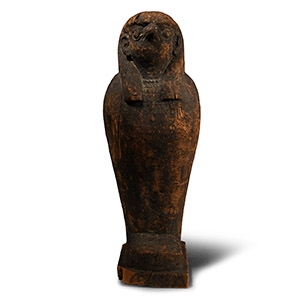
Egyptian Wooden Sarcophagus with Falcon Mummy
Late Period-Ptolemaic Period, 664-31 B.C.Estimate: £8,000 - 10,000 (‡+bp*)
Opening Bid: £3,500
Two-part wooden (sycamore?) falcon-headed mummiform coffin carved from a single piece of wood, with a tripartite wig and human ears, painted detailing to the eyes, and broad decorative collar; the whole covered with black paint with traces of yellow decoration and inscriptions; inside a mummified falcon wrapped in linen strips. 2.3 kg, 49.5 cm
Ex R. Liechti (1934-2010) Geneva, Switzerland, formed between 1950-1990s. Accompanied by a copy of an old collection inventory note. Accompanied by an academic report by Egyptologist Paul Whelan. This lot has been checked against the Interpol Database of stolen works of art and is accompanied by a search certificate number no.12074-218220.
This falcon-headed coffin once contained a so-called 'corn mummy' - a mummiform effigy impregnated with grain, which germinated. Such 'corn mummies' were associated with Osirian regeneration, fertility, and rebirth concepts. The falcon-headed coffin was associated with the powerful funerary deity Sokar-Osiris or Ptah-Sokar-Osiris. It seems that the original contents of this coffin were either lost or discarded and replaced with a mummified bird (falcon?). Interestingly, the most significant number of falcon-headed coffins come from Tuna el-Gebel, the site of an extensive animal mummy necropolis. -
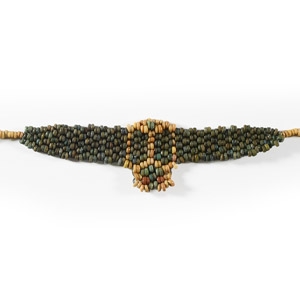
Egyptian Faience Bead Necklace with Winged Scarab Motif
Ptolemaic Period, 332-30 B.C.Sold for (Inc. bp): £208
Composed of annular beads in several colours, restrung and with a modern catch. 12.4 grams, 50 cm long
Property of a late lady collector, acquired 1940-1990s.
Winged scarabs were often used as funerary amulets and were believed to symbolise the rebirth and regeneration of the deceased.
