
Loading, please wait...

LOT 0516
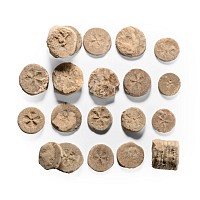
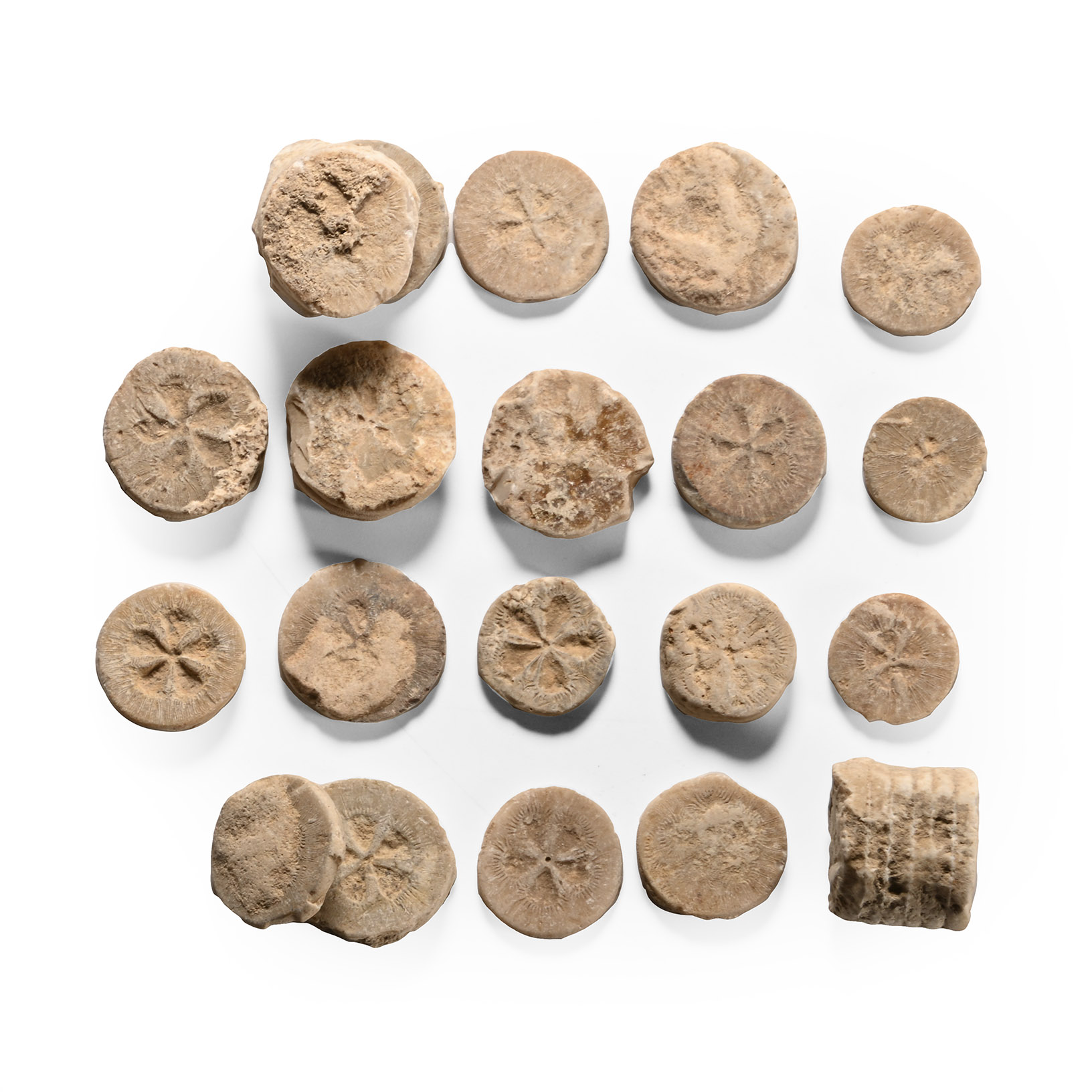
Egyptian Limestone 'Floral' Inlay Group
ROMAN PERIOD, 30 B.C.-323 A.D. OR EARLIER
1/2 - 5/8 in. (33 grams total, 13-18 mm).
Group of discoid inlay plaques or gaming counters, crinoids with cinquefoil motif. [20, No Reserve]
ProvenanceFrom a central London ADA dealership, 1980-1990.
FootnotesFlowers were symbolic of rebirth due to the daily reopening of their petals after nightfall. As a result, they were widely used in domestic settings, religious and funerary contexts, and as adornments. Similar rosette discs, like those recovered from the Ramesside Period palace at Qantir, were used as decorative elements in royal palaces.
CONDITIONTimeLine Auctions follows a vetting process to ensure the authenticity and legality of all items, reinforcing our commitment to integrity and responsible trading. Each antiquity, antique, and coin lot undergoes thorough examination by a vetting committee of at least ten external specialists, professional trade association members, scientists, and archaeologists: Our Vetting Process
AUCTIONS:
TimeLine is a leading auction house specialising in antiquities, ancient art, collectables, natural history, coins, medals, and books. Our auctions offer museums, collectors, historians, and enthusiasts the opportunity to acquire unique and historically significant pieces.
-
Egyptian Limestone 'Floral' Inlay Group
Roman Period, 30 B.C.-323 A.D. or earlierSold for (Inc. bp): £26
Group of discoid inlay plaques or gaming counters, crinoids with cinquefoil motif. 35 grams total, 14-18 mm
From a central London ADA dealership, 1980-1990.
Flowers were symbolic of rebirth due to the daily reopening of their petals after nightfall. As a result, they were widely used in domestic settings, religious and funerary contexts, and as adornments. Similar rosette discs, like those recovered from the Ramesside Period palace at Qantir, were used as decorative elements in royal palaces. -
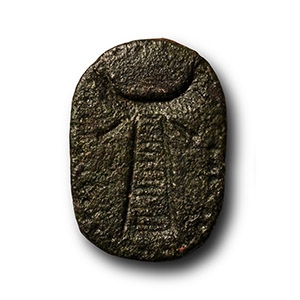
Phoenicio-Egyptian Dark Green Stone Scarab
Circa 6th-4th century B.C.Estimate: £300 - 400 (+bp*)
Opening Bid: £150
With textured carapace, bull-horned column to the reverse. 3.94 grams, 15 mm
From the property of the late Mr SM, London, UK, 1969-1999.
The very frequent discovery of scarabs in Eastern and Western Phoenician and Punic tombs is the most notable and evident document of the prestige that Egyptian magic had in the Phoenician world. The generalized adoption of the scarab, both in its symbolic language linked to the regenerative form of earthly or otherworldly life and in its function as a seal, identifies the extent of Egyptian influence on the Phoenician culture since its Syro-Palestinian origins. -
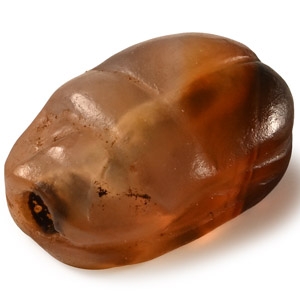
Egyptian Hardstone Scarab with Ankh
Late Period, 664-332 B.C.Sold for (Inc. bp): £124
Plano-convex in profile with segmented upper face and incised ankh to the underside. 1.05 grams, 13 mm
From the private collection of the late Mrs Belinda Ellison, long time member of the Egyptian Exploration Society, c.1940-2020.
