
Loading, please wait...
LOT 0467
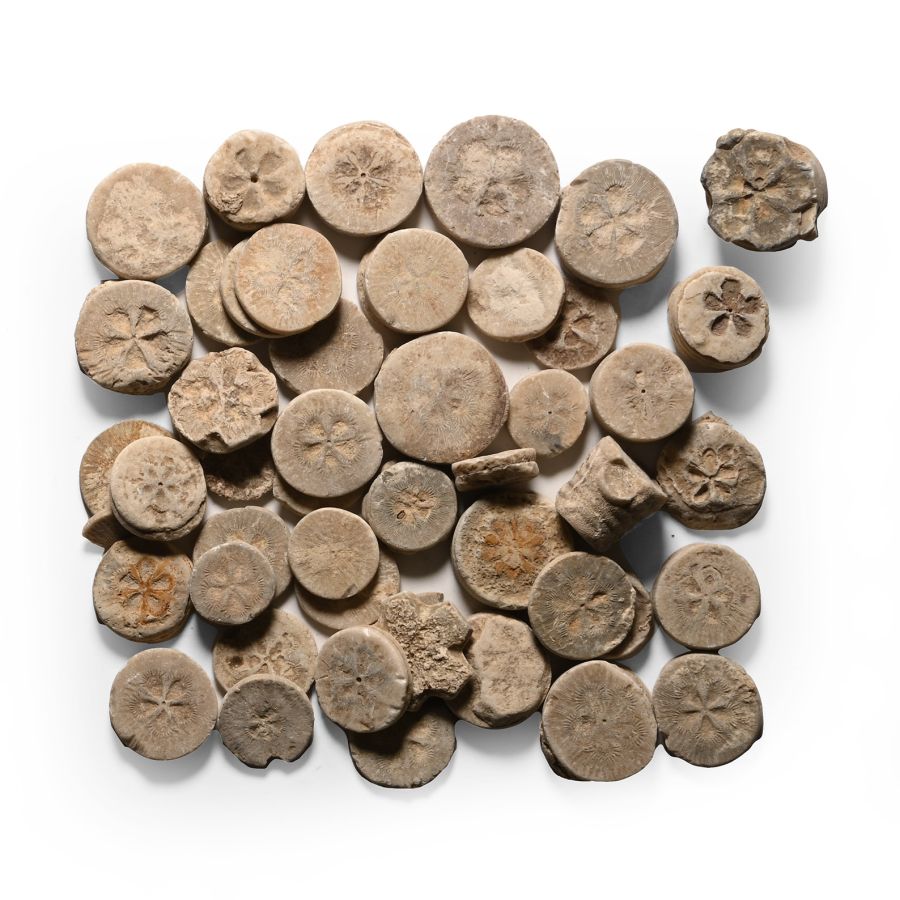
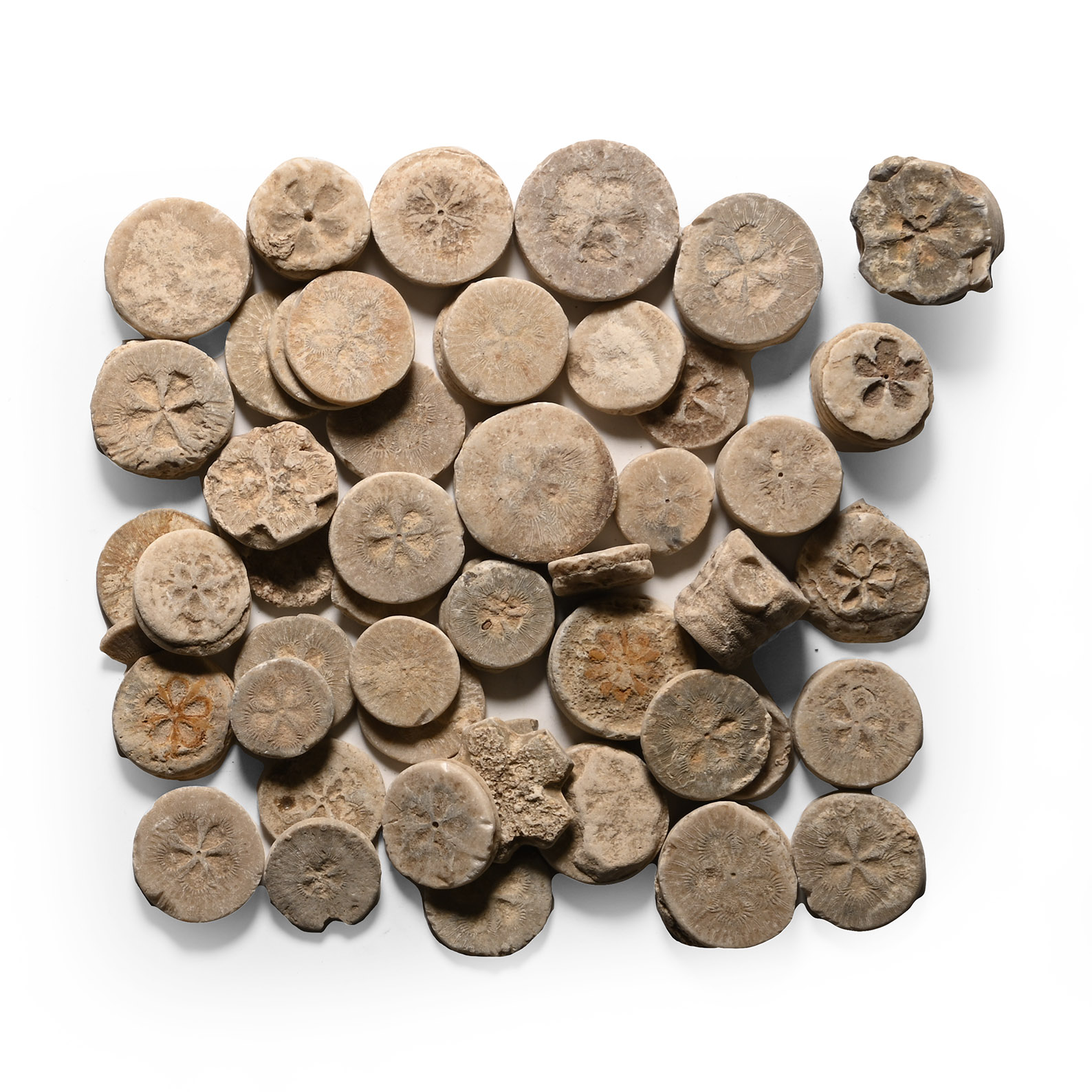
Egyptian Limestone 'Floral' Inlay Group
ROMAN PERIOD, 30 B.C.-323 A.D. OR EARLIER
1/2 - 3/4 in. (80 grams total, 12-19 mm).
Group of discoid inlay plaques or gaming counters, crinoids with cinquefoil motif. [49, No Reserve]
ProvenanceFrom a central London ADA gallery, 1990s.
FootnotesFlowers were symbolic of rebirth due to the daily reopening of their petals after nightfall. As a result, they were widely used in domestic settings, religious and funerary contexts, and as adornments. Similar rosette discs, like those recovered from the Ramesside Period palace at Qantir, were used as decorative elements in royal palaces.
CONDITIONTimeLine Auctions follows a vetting process to ensure the authenticity and legality of all items, reinforcing our commitment to integrity and responsible trading. Each antiquity, antique, and coin lot undergoes thorough examination by a vetting committee of at least ten external specialists, professional trade association members, scientists, and archaeologists: Our Vetting Process
AUCTIONS:
TimeLine is a leading auction house specialising in antiquities, ancient art, collectables, natural history, coins, medals, and books. Our auctions offer museums, collectors, historians, and enthusiasts the opportunity to acquire unique and historically significant pieces.
-
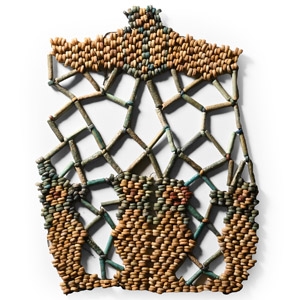
Egyptian Faience Mummy Bead Panel with Four Sons of Horus
Ptolemaic Period, 332-30 B.C.Sold for (Inc. bp): £117
Restrung as an openwork panel with a winged scarab above and the Four Sons of Horus below as two opposing pairs; restrung with some later beads. 34.6 grams, 15 cm
From an early 20th century Home Counties, UK, collection.
These elements would have been placed on the chest and body below a beadwork mummy mask. Winged scarabs were often used as funerary amulets and believed to symbolise the deceased's rebirth and regeneration. The Four Sons of Horus protected the deceased's internal organs. Here, on the left, is the erect-eared jackal-headed Duamutef who protects the stomach, followed by the falcon-headed Qebehsenuef, who protects the intestines, then the human-headed Imsety, protector of the liver and, finally, the baboon-headed Hapy on the right, protector of the lungs. -
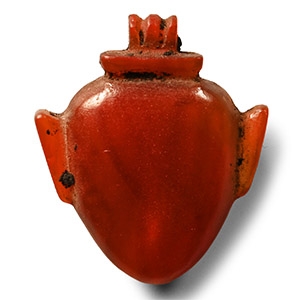
Large Egyptian Translucent Carnelian Heart Amulet
New Kingdom, circa 1550-1070 B.C.Sold for (Inc. bp): £3,900
Carved with lateral triangular lugs and ribbed bale. 4.6 grams, 24 mm
From an early 20th century collection.
According to ancient Egyptian beliefs, the heart (ib) was considered to be the centre of intelligence, emotions, and behaviour. The heart was also believed to store an individual's memories. During the Weighing of the Heart ceremony in the afterlife, the heart could speak up for the deceased and account for their lifetime of actions before Osiris. For this reason, heart amulets were placed on the mummy to safeguard the organ and ensure a favourable outcome during judgment. -
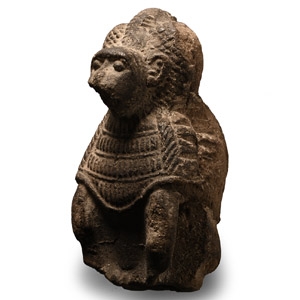
Romano-Egyptian Statuette of Thoth in Baboon Form
Roman Period, 30 B.C.-323 A.D.Sold for (Inc. bp): £312
Carved hardstone figure of a Hamadryas Baboon (papio hamadryus), sacred to Thoth, crouching with his forepaws resting on his knees and wearing a segmented and banded hood and collar with elaborately carved textural detailing; face chipped and lower body absent. 243 grams, 10.6 cm
Ex Yorkshire, UK, collection, 1960s-1980s.
The baboon was considered an embodiment of the god Thoth. The animal was associated with both the sun and the moon, often depicted wearing a moon and crescent headgear. Together, these aspects symbolised the cycle of rebirth, as it was believed that the deceased travelled through the night and was reborn at dawn. Thoth was highly regarded for his connection to knowledge, healing, and writing. Scribes would wear a Thoth baboon amulet to ensure continued professional success. In the Roman era, Thoth became the 'primary pseudonymous authority for diverse priestly texts' (Frankfurter, D., Religion in Roman Egypt,New Jersey, 1998, p.240). As some religious centres with animal cults were maintained in the Roman Period, it is possible that this figurine was a votive offering to the god. Baboon figurines have also been discovered in Isis sanctuaries in Rome. This discovery may indicate the mythological connection between the two deities, as Thoth provides words to Isis, enabling her to revive her husband, Osiris.
