
Loading, please wait...
LOT 0473
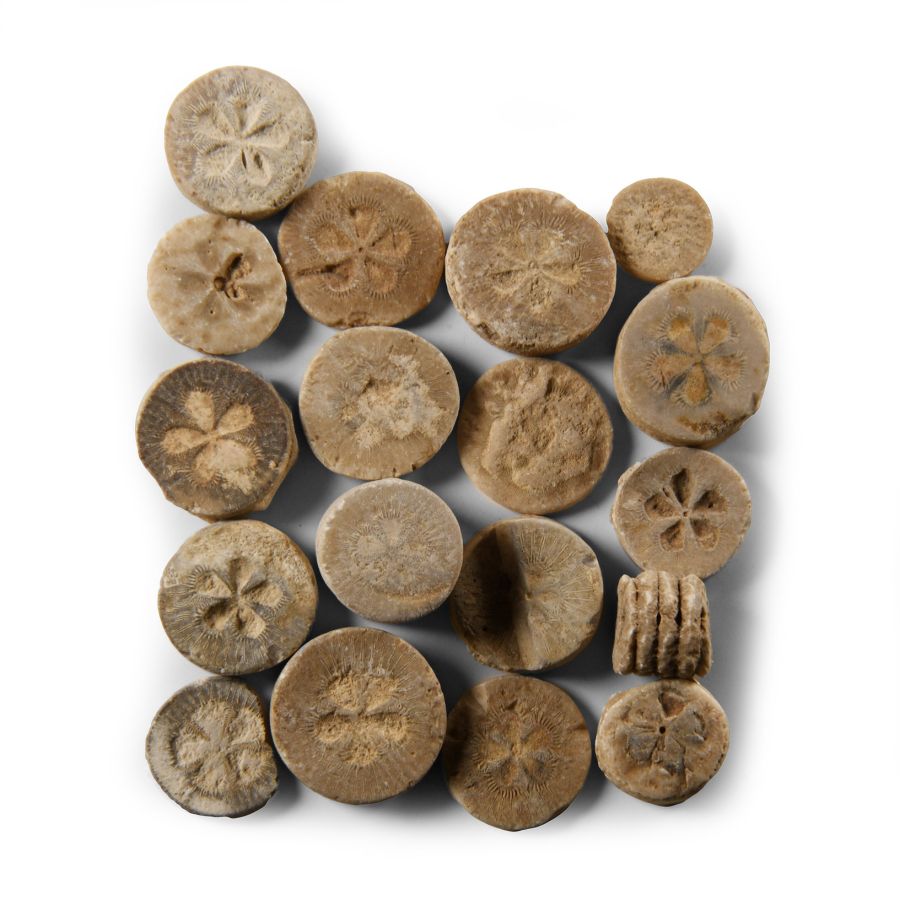
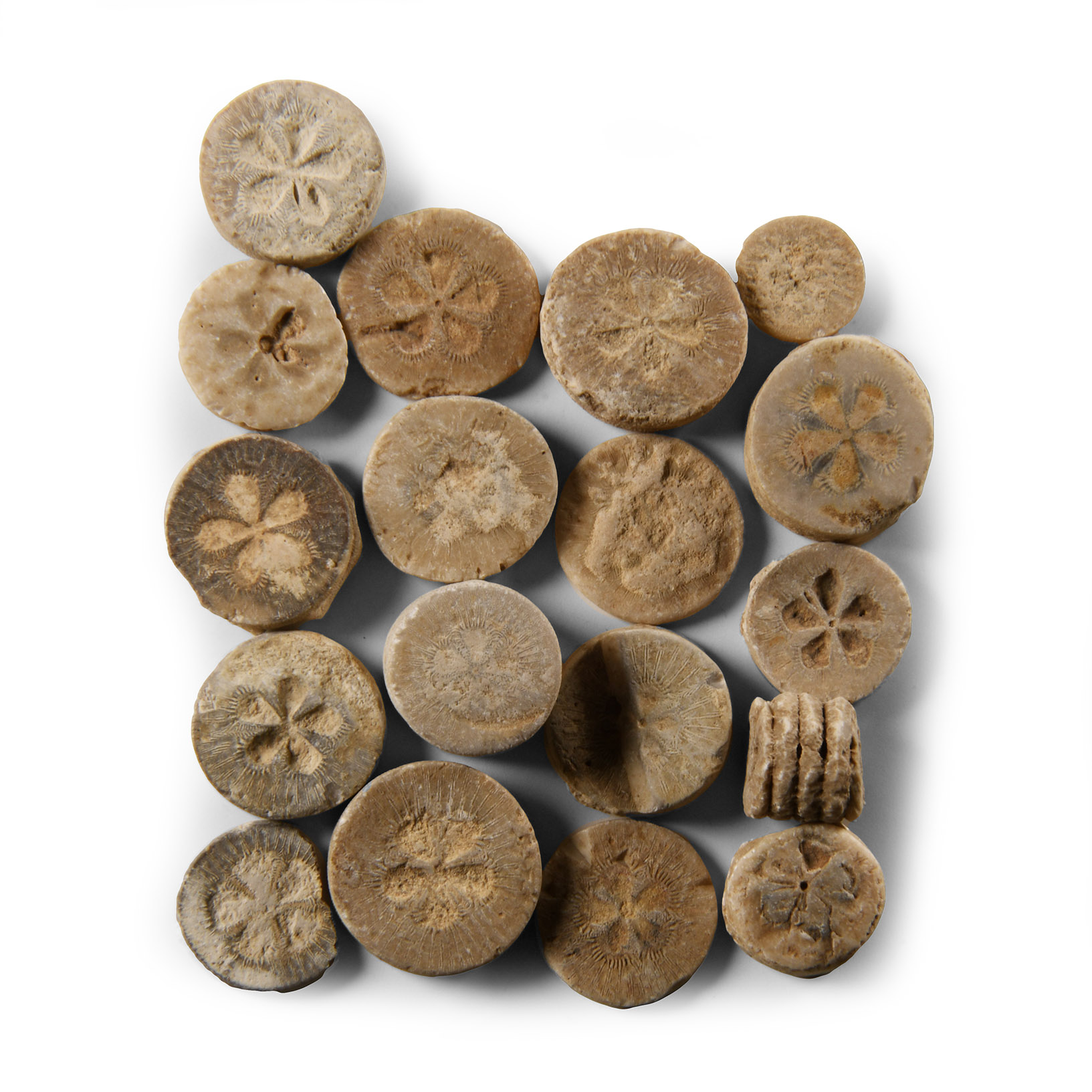
Egyptian Limestone 'Floral' Inlay Group
ROMAN PERIOD, 30 B.C.-323 A.D.
3/8 - 3/4 in. (36 grams total, 11-18 mm).
Group of discoid inlay plaques or gaming counters, crinoids with cinquefoil motif. [18, No Reserve]
ProvenanceFrom a central London ADA dealership, 1980-1990.
CONDITIONTimeLine Auctions follows a vetting process to ensure the authenticity and legality of all items, reinforcing our commitment to integrity and responsible trading. Each antiquity, antique, and coin lot undergoes thorough examination by a vetting committee of at least ten external specialists, professional trade association members, scientists, and archaeologists: Our Vetting Process
AUCTIONS:
TimeLine is a leading auction house specialising in antiquities, ancient art, collectables, natural history, coins, medals, and books. Our auctions offer museums, collectors, historians, and enthusiasts the opportunity to acquire unique and historically significant pieces.
-
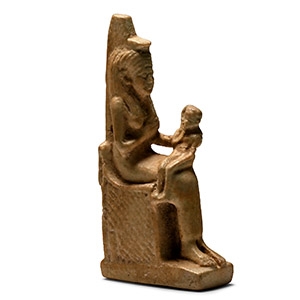
Large Egyptian Faience Amulet of Isis Nursing Baby Horus
Late Period, 664-332 B.C.Estimate: £1,000 - 1,400 (+bp*)
Opening Bid: £500
Amulet of Isis seated on an elaborate throne decorated with a crosshatch pattern, holding the infant Horus to her breast, supporting his head with her left hand; wearing a long close-fitting sheath dress and striated tripartite wig, surmounted by a crown in the form of her hieroglyphic name-sign, the "throne"; Horus wearing the sidelock of youth and holding his finger to his mouth; horizontal piercing just above the throne at the back for suspension. 20.16 grams, 65 mm
Ex Foxwell collection. Acquired from a London gallery. Ex Mr A.S. collection, 1990s.
In ancient Egyptian mythology, Isis was the sister-wife of Osiris and the mother of the sky god Horus. She is associated with aspects of fertility and motherhood and is often depicted in various artworks seated in a nursing pose with her son Horus on her lap. -
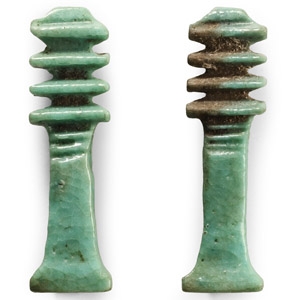
Egyptian Faience Djed Pillar Amulet Group
Late Period, 664-332 B.C.Sold for (Inc. bp): £195
Each a square-section column with flared base, transverse ribs, pierced at the top. 1.29 grams total, 23 mm each
From the collection of Doctor Girard, a collector for over 60 years. with Hotel des Ventes de Clermont-Ferrand, 22 May 2017. Property of a French collector.
The djed pillar signifies the concepts of 'enduring' and 'stability' and was a common funerary amulet from the Old Kingdom onwards. It was first associated with the gods Ptah and Sokar but later became a symbol of Osiris, representing the god's backbone. In this context, the djed pillar appears in Chapter 155 of the Book of the Dead, concerned with the deceased's resurrection. -
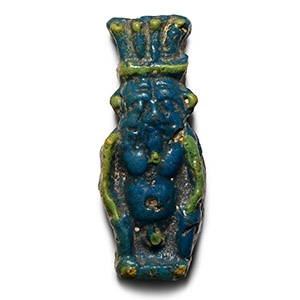
Egyptian Blue-Glazed Amulet of Bes
Ptolemaic Period, 332-30 B.C.Estimate: £200 - 300 (+bp*)
Opening Bid: £100
Faience amulet of the god Bes with his body of a dwarf, leonine head, and feather headdress; with a bright blue satin glaze and raised accents in yellow, modelled similarly on both sides; pierced through the neck for suspension 8.2 grams, 46 mm
From the P.C. collection, 1990s. Ex London gallery. Property of a Bristol, UK, gentleman.
Bes became one of ancient Egypt's most popular apotropaic deities from the New Kingdom onwards. Despite his somewhat fearful appearance, Bes was the patron and protector of pregnant women and children. He was also believed to protect from snakes.
