
Loading, please wait...
LOT 0024
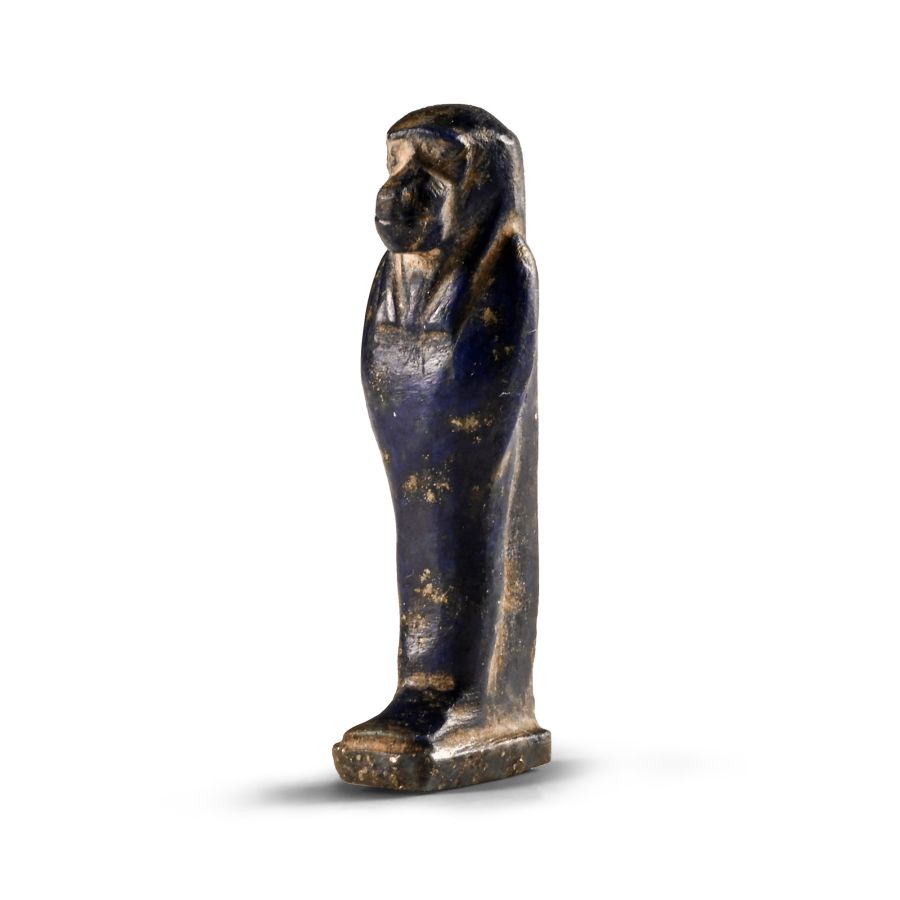
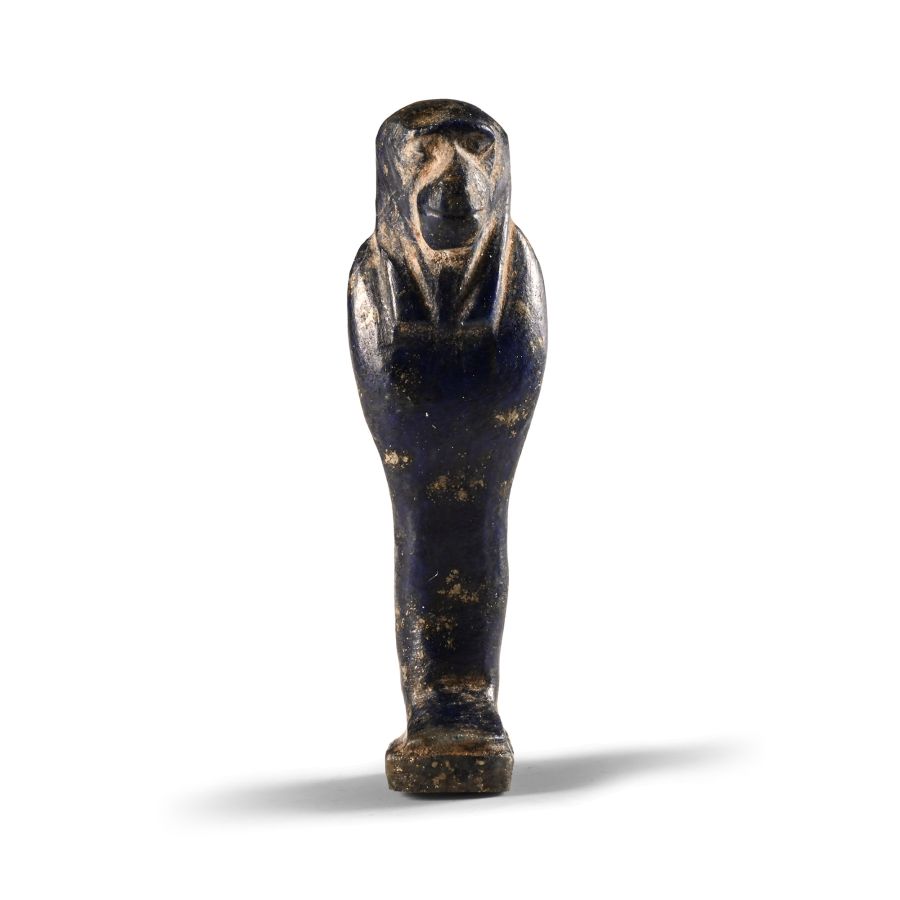
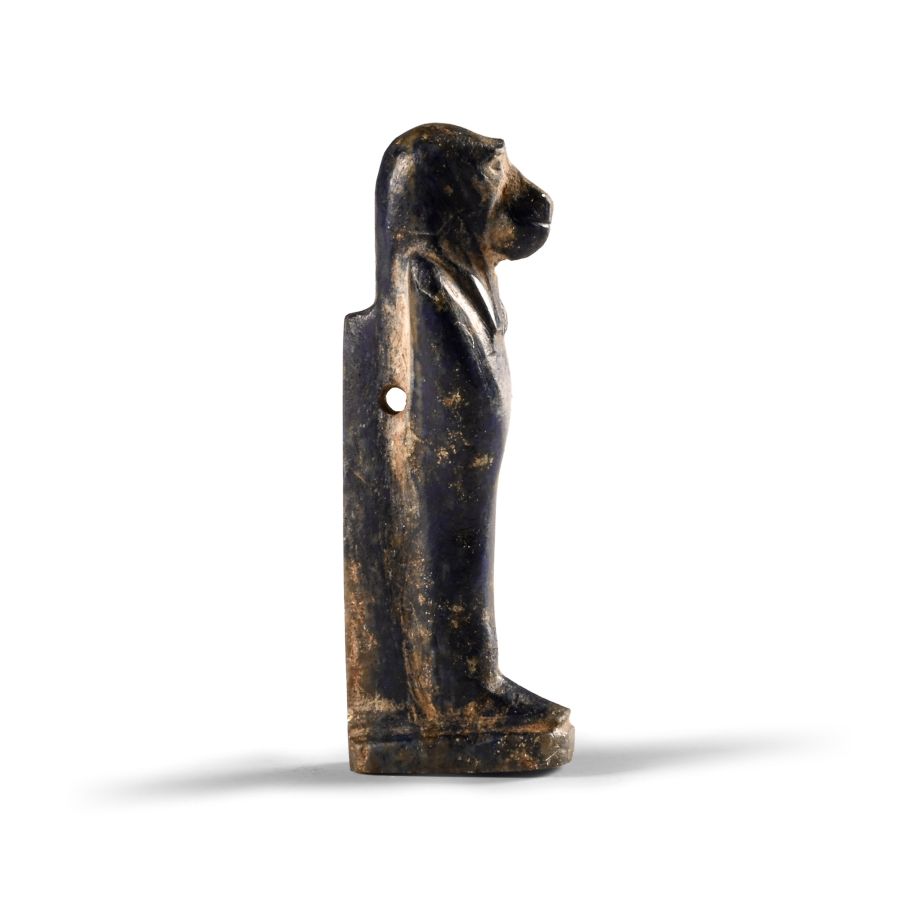
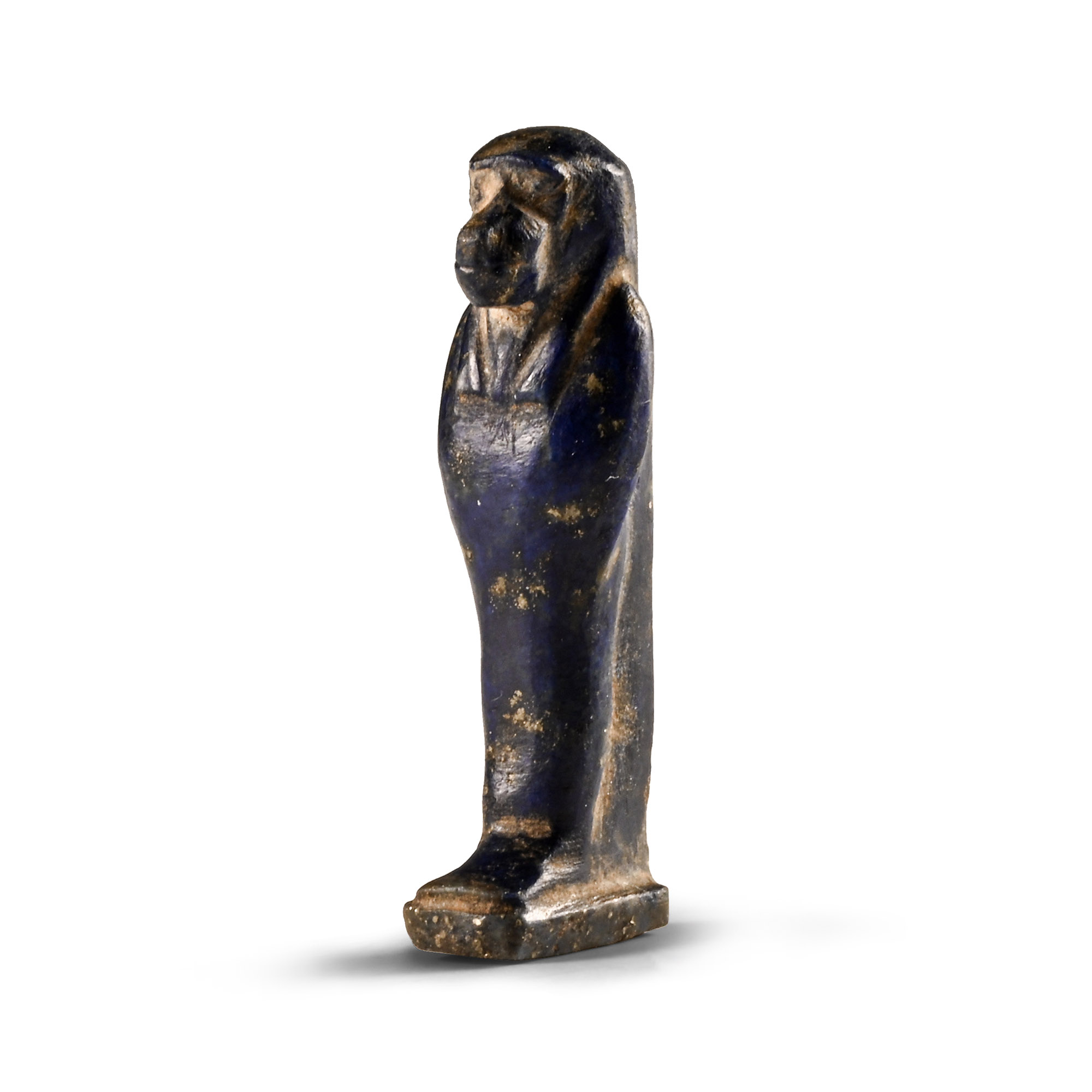
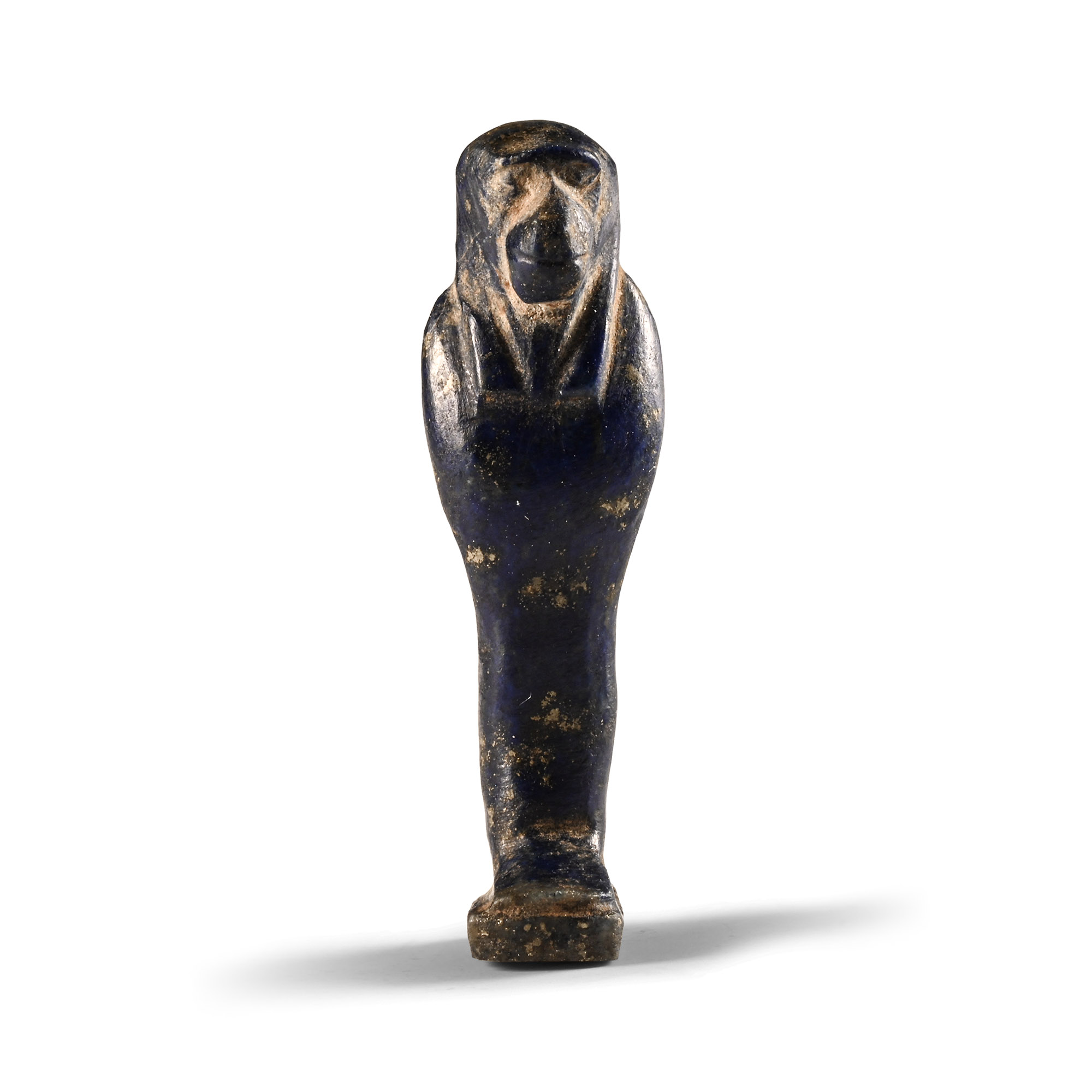
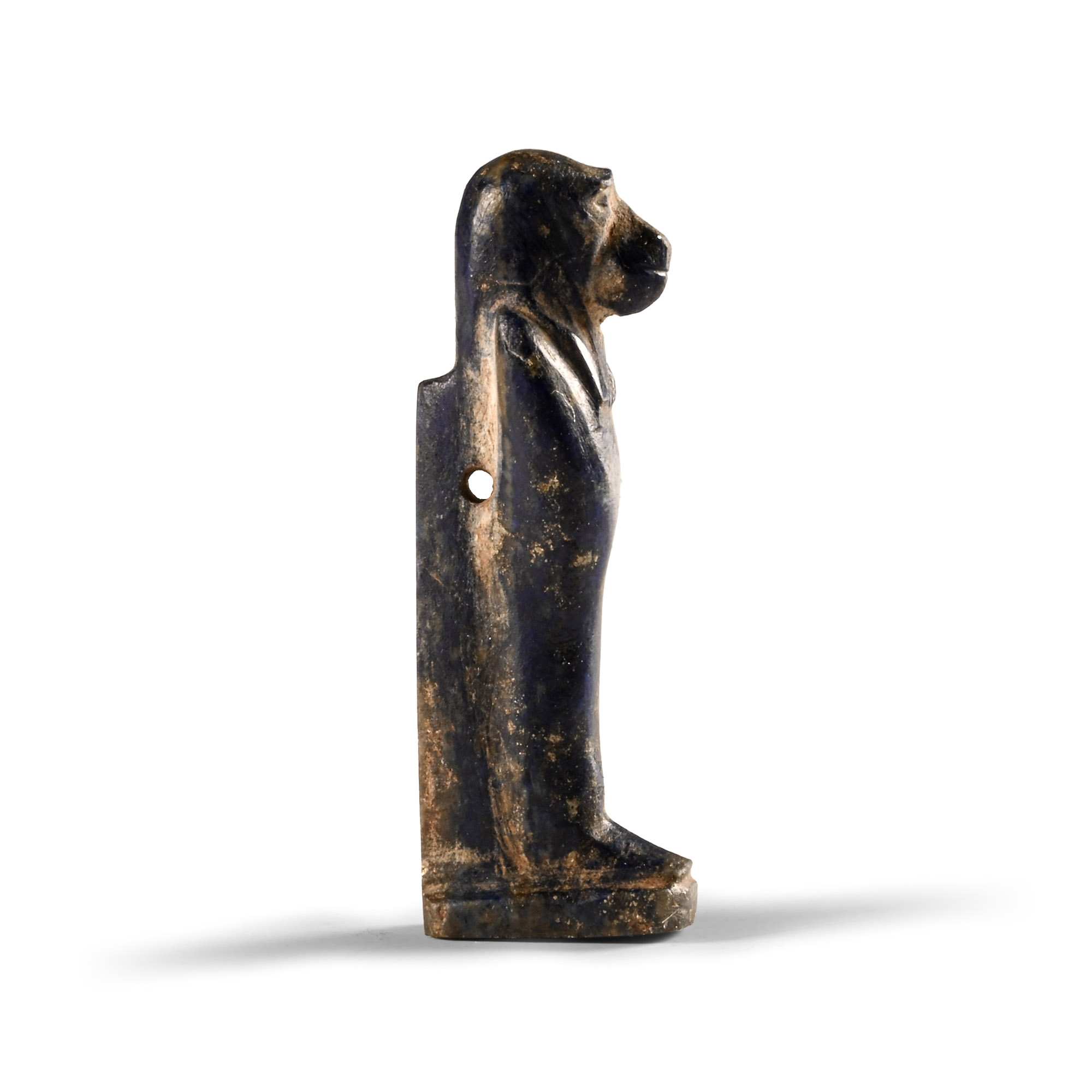
Egyptian Lapis Lazuli Son of Horus Amulet
LATE PERIOD, 664-332 B.C.
1 1/8 in. (2.52 grams, 28 mm).
Carved amulet of the baboon-headed mummiform figure of Hapy shown standing with dorsal pillar, pierced for suspension.
ProvenancePrivate collection of Mr S.A., Switzerland, 1990s, thence by descent.
LiteratureCf. Eggebrecht, A., Suche nach Unsterblichkeit: Totenkult und Jenseitsglaube im Alten Ägypten, Mainz, 1990, pp.44-45, no.T9, for a similar example in faience.
FootnotesThe Four Sons of Horus were deities responsible for protecting the internal organs of the deceased. The baboon-headed Hapy protected the lungs.
CONDITIONTimeLine Auctions follows a vetting process to ensure the authenticity and legality of all items, reinforcing our commitment to integrity and responsible trading. Each antiquity, antique, and coin lot undergoes thorough examination by a vetting committee of at least ten external specialists, professional trade association members, scientists, and archaeologists: Our Vetting Process
AUCTIONS:
TimeLine is a leading auction house specialising in antiquities, ancient art, collectables, natural history, coins, medals, and books. Our auctions offer museums, collectors, historians, and enthusiasts the opportunity to acquire unique and historically significant pieces.
-
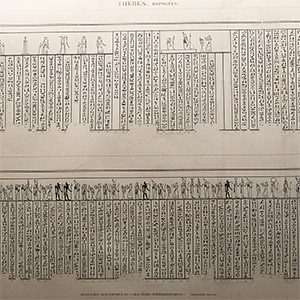
Large Egyptian Expedition Lithograph Print with Hieroglyphs
1820 A.D.Sold for (Inc. bp): £111
Willemin - Thèbes - Hypogées - Manuscrit sur papyrus en caractères hiéroglyphiques. Troisième partie - Proof etching on laid paper of plate 74 from La Description de l’Égypte: Antiquités, Volume II: Commission des sciences et arts d’Égypte with later backing sheet. 360 grams, 136 x 66 cm
From the collection of a North American priest. Acquired between 1981-1996. Property of a North American collector.
Produced between February 1802 and 1830 on the orders of Napoleon Bonaparte; published between 1809 and 1828. Just 1,000 copies were distributed to various institutions, printed on on laid paper with an 'Égypte ancienne et moderne' watermark. The book is subtitled Recueil des observations et des recherches qui ont été faites en Égypte pendant l’expédition de l’Armée française, publié par les ordres de Sa Majesté l’Empereur Napoléon le Grand (Gathering of observations and discoveries which were made in Egypt during the expedition of the French army, published on the orders of His Majesty the Emperor Napoleon the Great). It was the world's first encyclopedia devoted exclusively to the remains of ancient Egypt. The plates of this book are the first to present the archaeological sites of Thebes (Luxor). The papyrus manuscript was recovered from the underground chambers (hypogea). The original papyrus is now held in the Bibliothèque Nationale (1-19), Paris (Papyrus Cadet). -
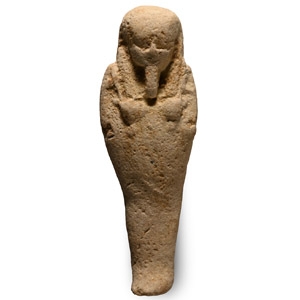
Egyptian White Faience Shabti
Ptolemaic Period, 332-30 B.C.Sold for (Inc. bp): £111
Modelled in the half-round with rounded facial features, lappet wig, false beard and crossed arms holding a pick and a hoe. 18 grams, 78 mm
Ex H. Norry collection, 1980s-1990s.
One of the primary purposes of shabti figures was to carry out heavy manual tasks on behalf of a person in the afterlife, and they were often depicted with necessary implements in their hands, such as baskets, picks, and hoes. Over time, the number of shabtis in a standard elite burial increased, from one in the Eighteenth Dynasty to several in the Nineteenth Dynasty, to one for every day of the year by the Third Intermediate Period. The high number of shabtis remained a feature in the Late and Ptolemaic Periods. -
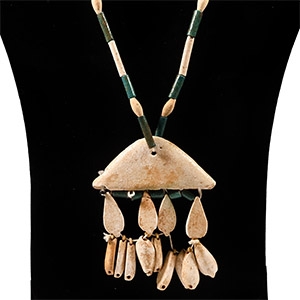
Egyptian Faience Necklace with Pendant
1400-1100 B.C.Estimate: £1,000 - 1,400 (‡+bp*)
Opening Bid: £333
Alternating white and turquoise tubular beads with oval spacer bead; a collar terminal as a central pendant with two rows of petal-shaped beads incorporating tubular and ring spacers suspended below. 41 grams, 76 cm long
Acquired in the mid 1980s-1990s. Private collection, Switzerland, thence by descent. Private collection, since the late 1990s.
