
Loading, please wait...
LOT 0005
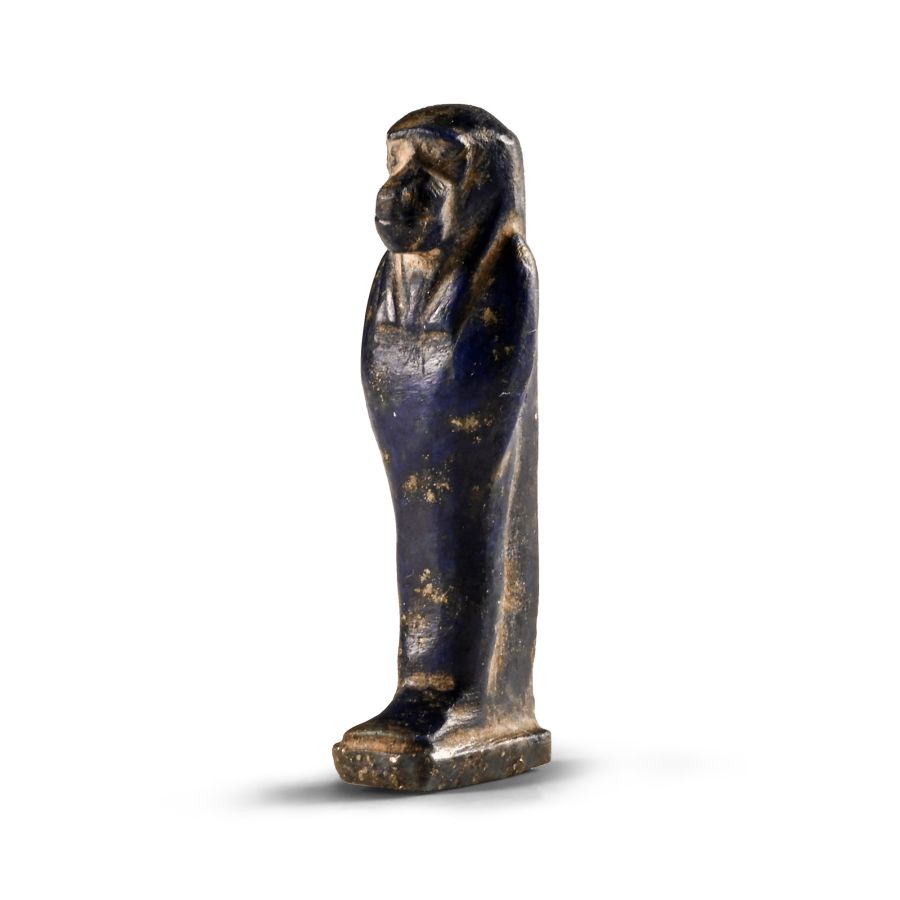
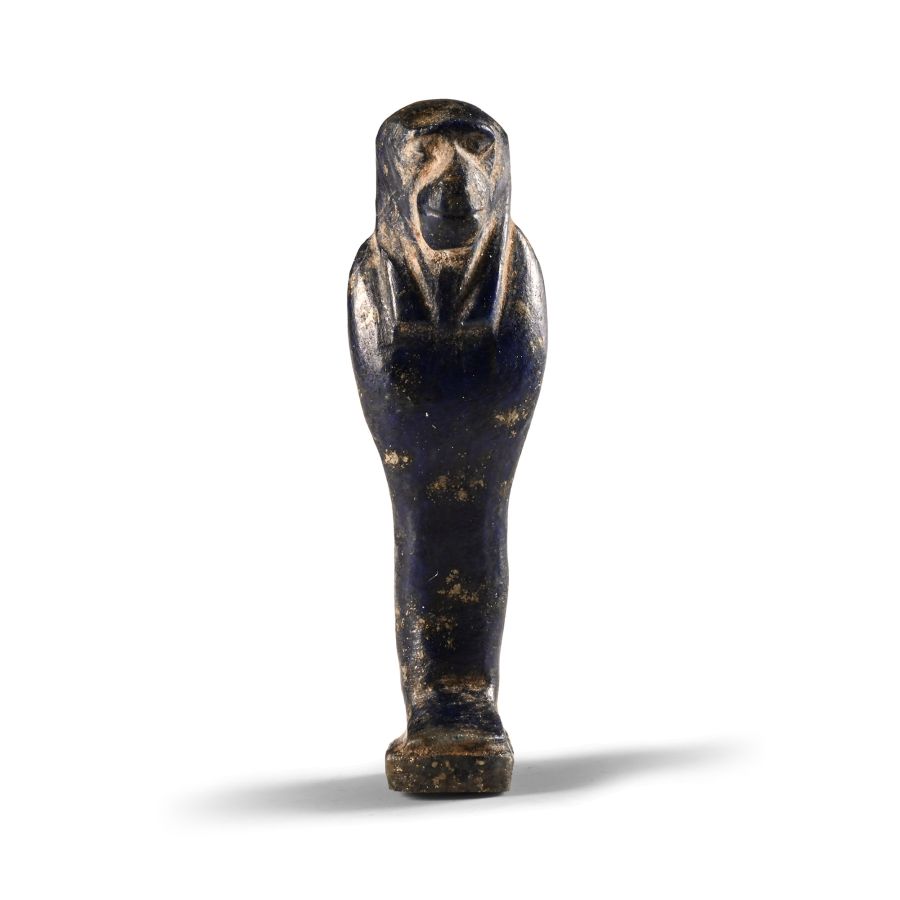
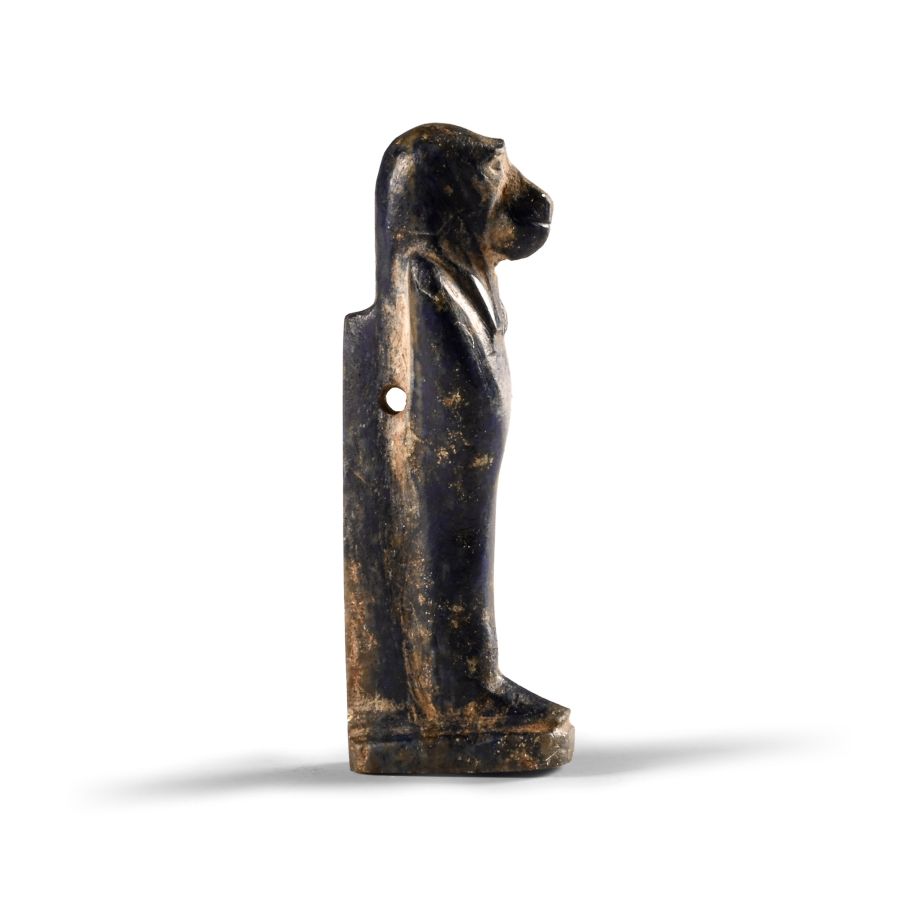
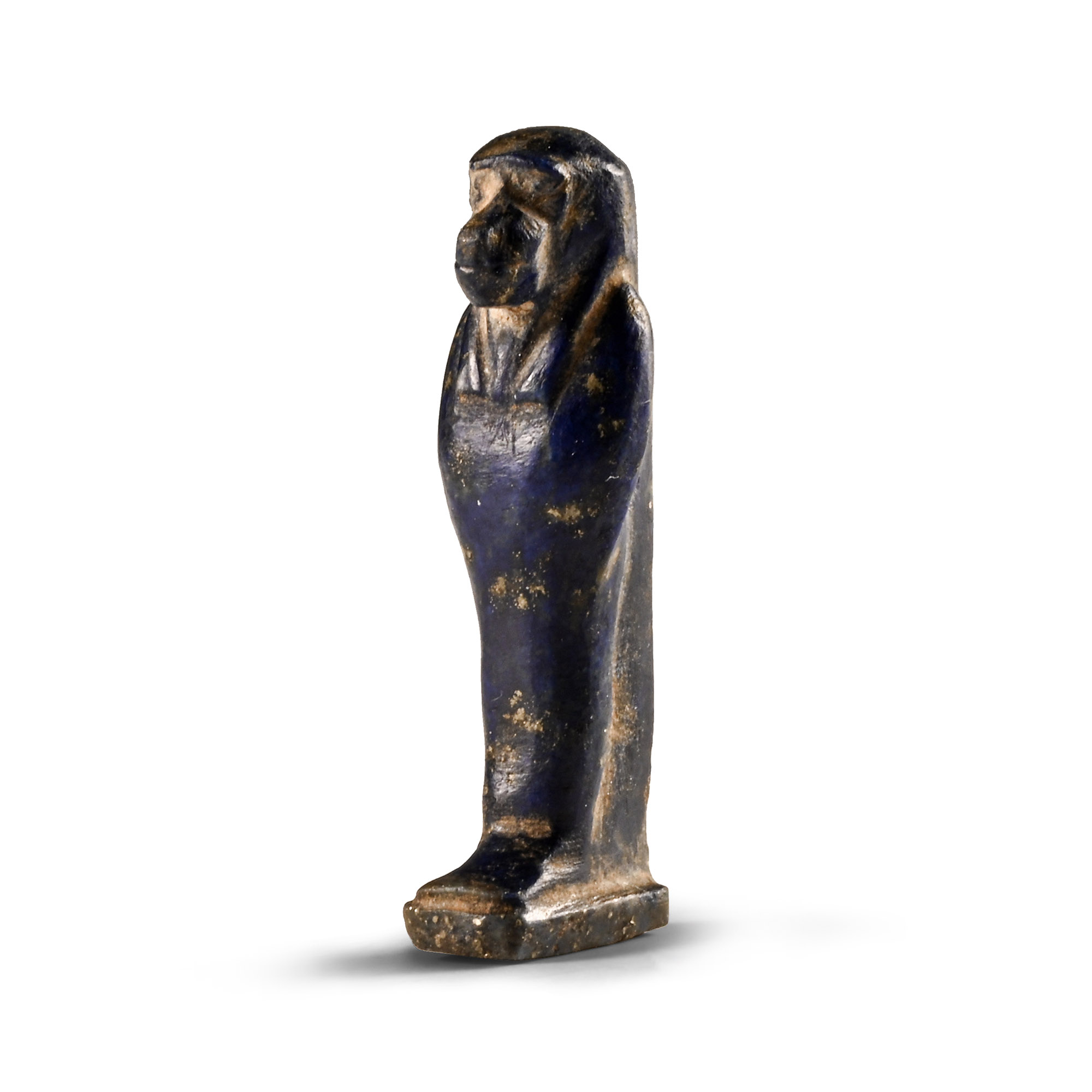
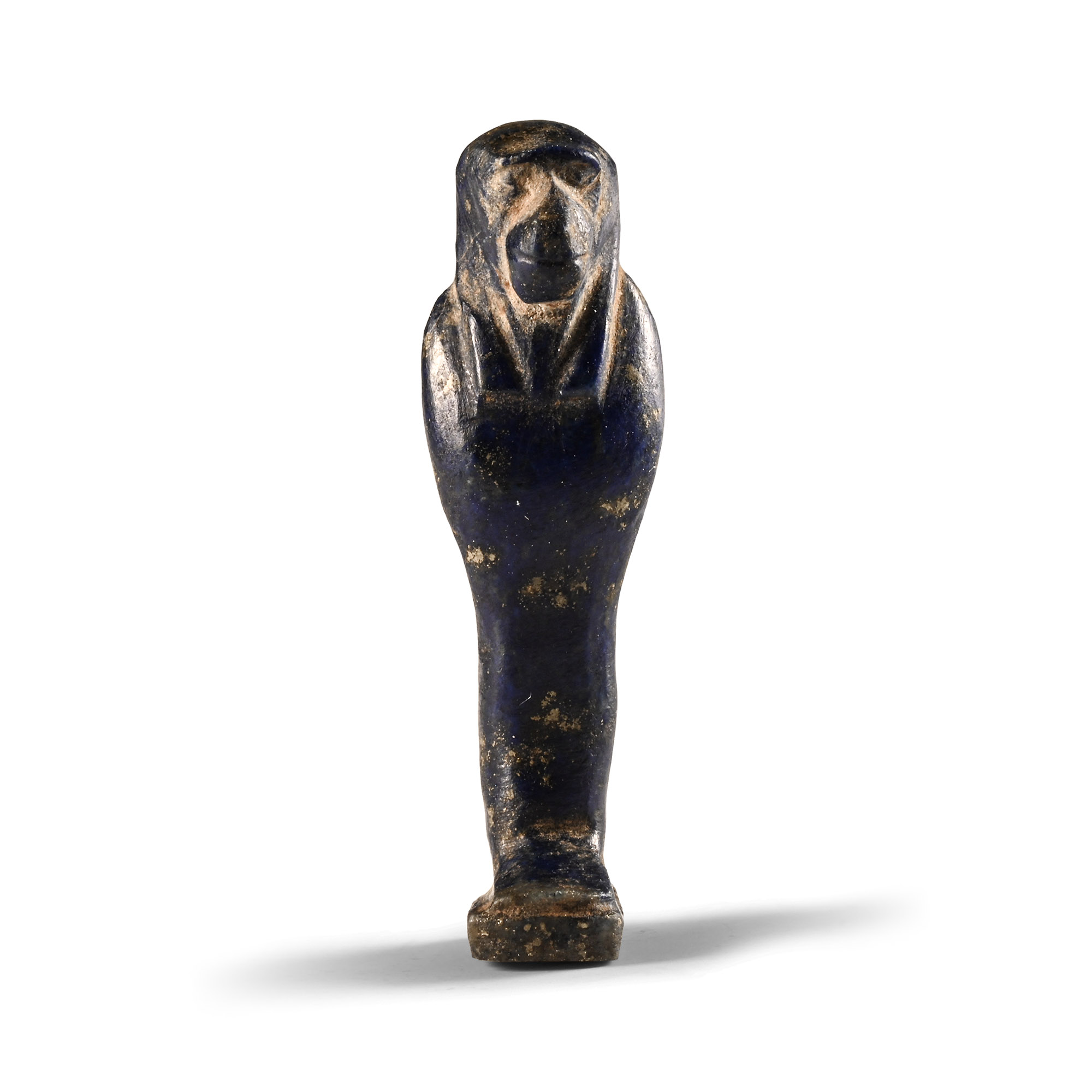
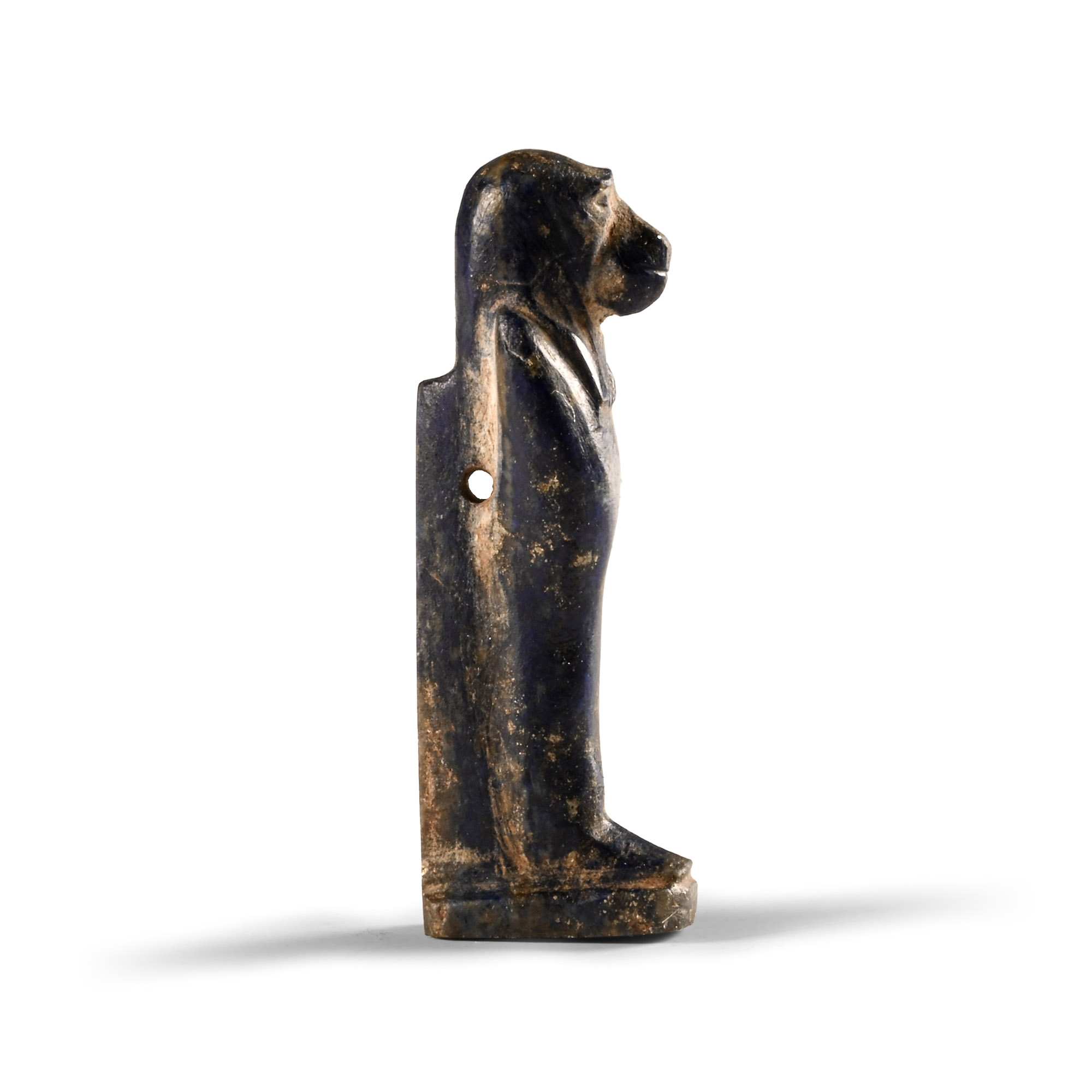
Egyptian Lapis Lazuli Son of Horus Amulet
LATE PERIOD, 664-332 B.C.
1 1/8 in. (2.52 grams, 28 mm).
Carved amulet of the baboon-headed mummiform figure of Hapy shown standing with dorsal pillar, pierced for suspension.
ProvenancePrivate collection of Mr S.A., Switzerland, 1990s, thence by descent.
LiteratureCf. Eggebrecht, A., Suche nach Unsterblichkeit: Totenkult und Jenseitsglaube im Alten Ägypten, Mainz, 1990, pp.44-45, no.T9, for a similar example in faience.
FootnotesThe Four Sons of Horus were deities responsible for protecting the internal organs of the deceased. The baboon-headed Hapy protected the lungs.
CONDITIONTimeLine Auctions follows a vetting process to ensure the authenticity and legality of all items, reinforcing our commitment to integrity and responsible trading. Each antiquity, antique, and coin lot undergoes thorough examination by a vetting committee of at least ten external specialists, professional trade association members, scientists, and archaeologists: Our Vetting Process
AUCTIONS:
TimeLine is a leading auction house specialising in antiquities, ancient art, collectables, natural history, coins, medals, and books. Our auctions offer museums, collectors, historians, and enthusiasts the opportunity to acquire unique and historically significant pieces.
LOT 0005
Egyptian Lapis Lazuli Son of Horus Amulet
Estimate £800 - 1,000€930 - 1,160 (for guidance only)$1,080 - 1,350 (for guidance only)
-
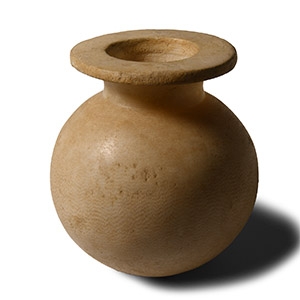
Egyptian Globular Alabaster Jar
Late Old Kingdom-First Intermediate Period, circa 2513-2165 B.C.Sold for (Inc. bp): £1,560
With globular body, short neck and thin, wide rim; part of the rim restored. 310 grams, 98 mm
Ex Waltz collection, Munich, Germany, circa 1970s. with Gorny & Mosch, Auction 206, no.12. Accompanied by copies of the relevant Gorny & Mosch catalogue pages.
Such vessels have been found at numerous sites including Naga ed-Deir, Saqqara, and Badari. -
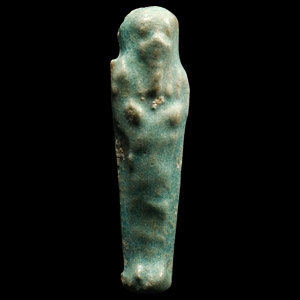
Egyptian Blue Faience Ushabti
Ptolemaic Period, 332-30 B.C.Sold for (Inc. bp): £59
Decorated with a blue glaze and displaying remains of facial, wig, beard and crossed arm detailing to the mummiform figure. 17.9 grams, 70 mm
Acquired in Europe before 1990. -
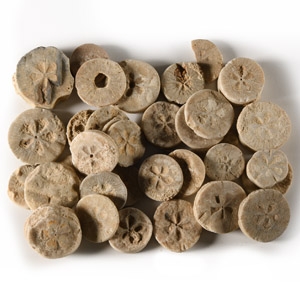
Romano-Egyptian Limestone 'Floral' Inlay Group
Roman Period, 30 B.C.-323 A.D.Sold for (Inc. bp): £117
Group of discoid inlay plaques or gaming counters, crinoids with cinquefoil motif. 55 grams total, 13-19 mm
From a central London ADA member's gallery, 1990s.
