Loading, please wait...

Egyptian Lapis Lazuli Necklace with Papyrus Flower Amulets Egyptian Lapis Lazuli Necklace with Papyrus Flower Amulets Egyptian Lapis Lazuli Necklace with Papyrus Flower Amulets Egyptian Lapis Lazuli Necklace with Papyrus Flower Amulets Egyptian Lapis Lazuli Necklace with Papyrus Flower Amulets Egyptian Lapis Lazuli Necklace with Papyrus Flower Amulets
Use mousewheel to zoom in and out, click to enlarge
Details

LOT 0028

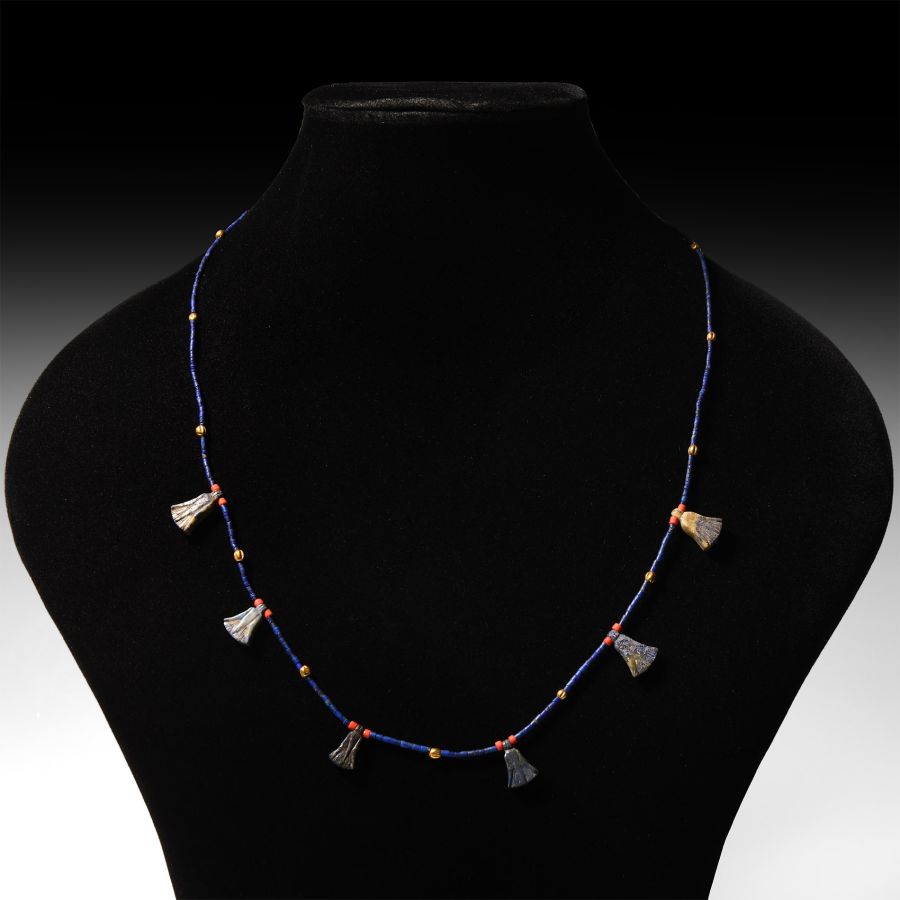
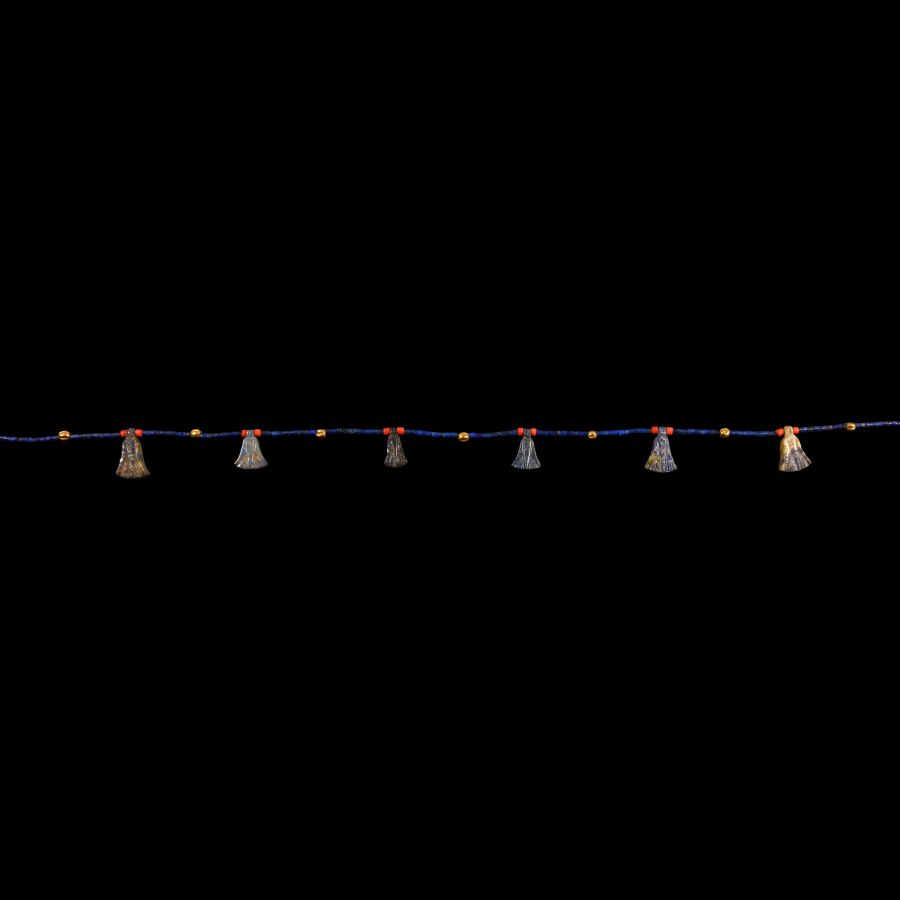
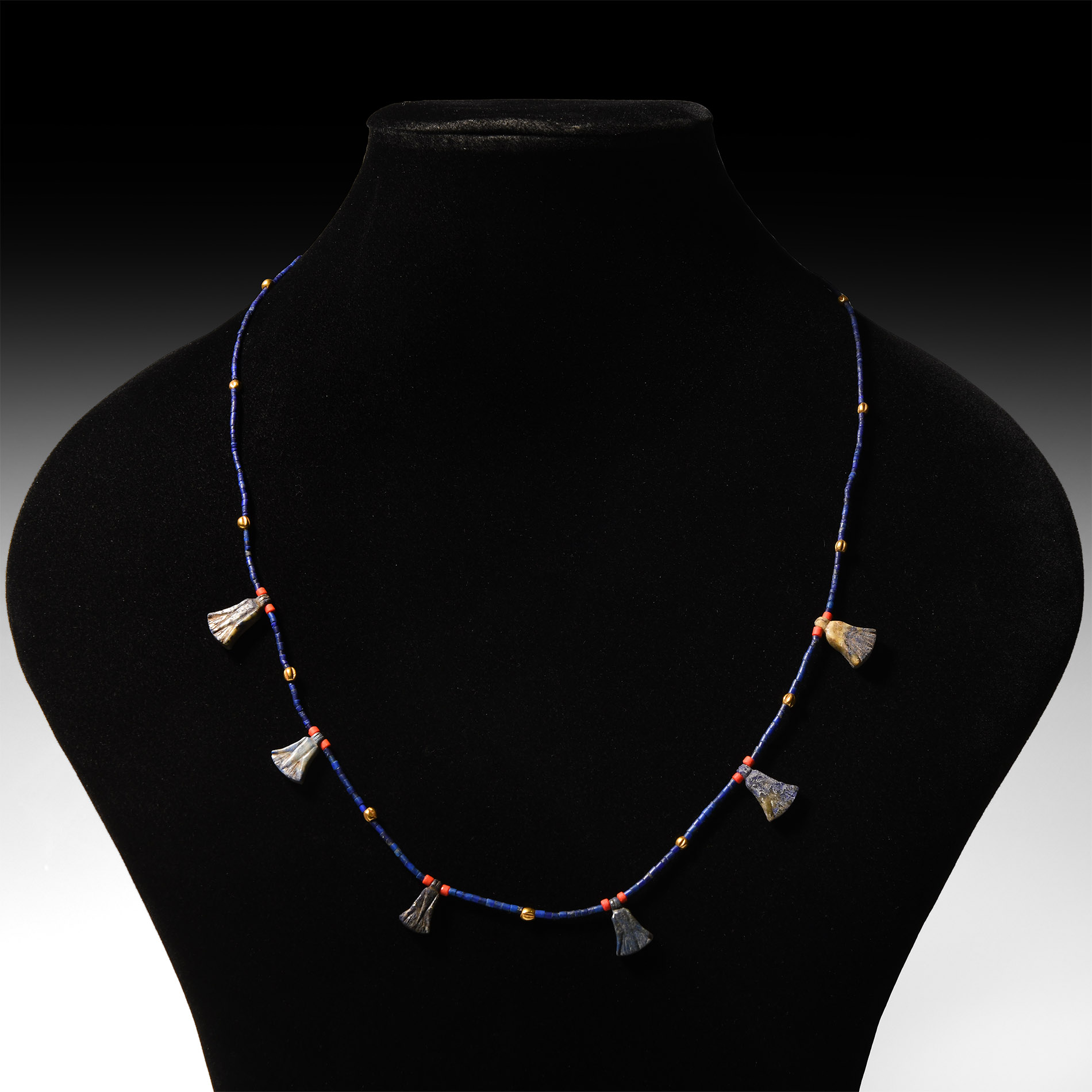
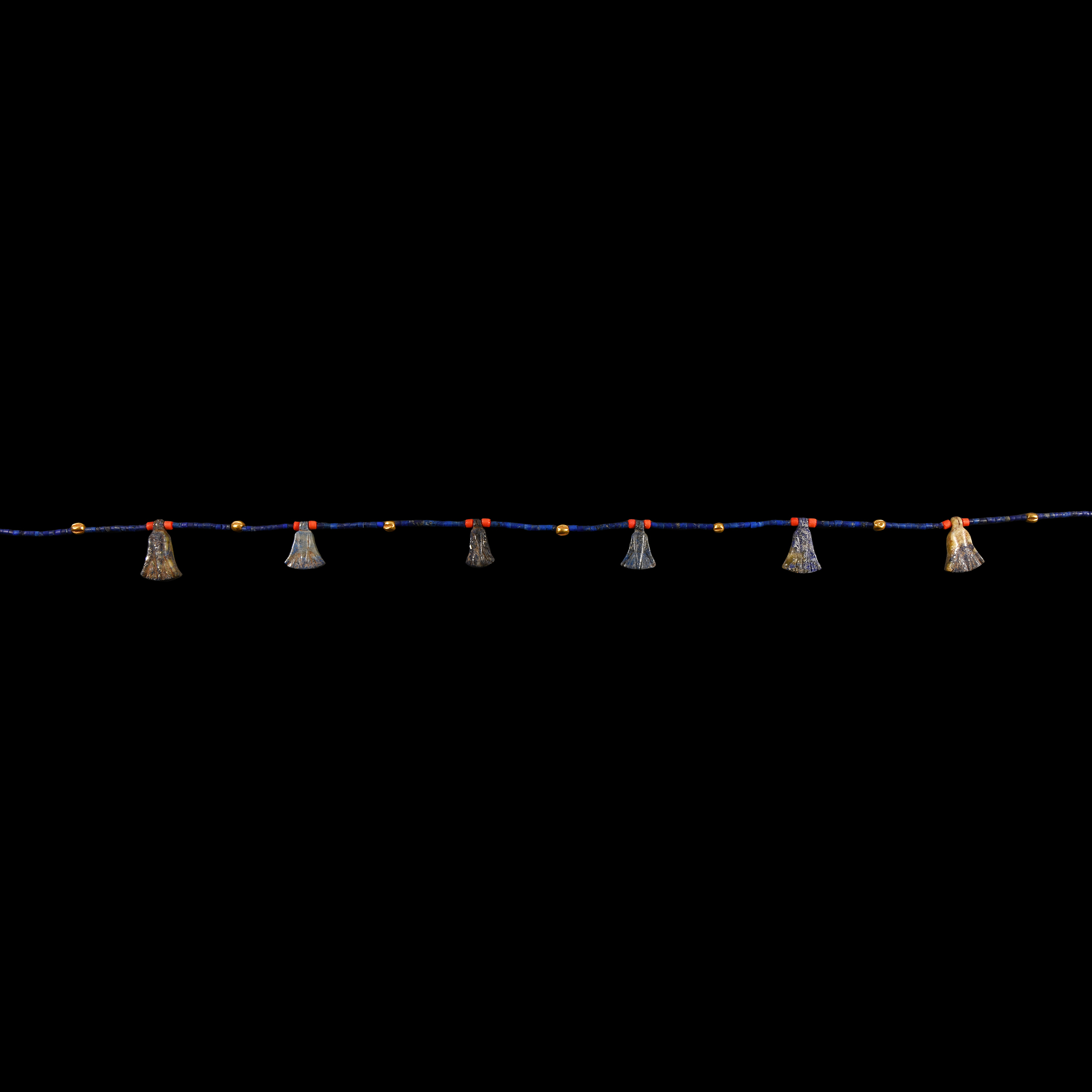
Egyptian Lapis Lazuli Necklace with Papyrus Flower Amulets

NEW KINGDOM, 1550-1070 B.C. AND LATER

23 5/8 in. (10 grams, 60 cm long).

Composed of restrung lapis lazuli papyrus flower amulets, very fine lapis cylindrical beads, tiny red beads and gold spheres, with a
modern clasp.

Provenance

UK private collection before 2000.
UK art market.
Property of a London gentleman.

CONDITION
VETTING:

TimeLine Auctions follows a vetting process to ensure the authenticity and legality of all items, reinforcing our commitment to integrity and responsible trading. Each antiquity, antique, and coin lot undergoes thorough examination by a vetting committee of at least ten external specialists, professional trade association members, scientists, and archaeologists: Our Vetting Process


AUCTIONS:

TimeLine is a leading auction house specialising in antiquities, ancient art, collectables, natural history, coins, medals, and books. Our auctions offer museums, collectors, historians, and enthusiasts the opportunity to acquire unique and historically significant pieces.

LOT 0028

Egyptian Lapis Lazuli Necklace with Papyrus Flower Amulets

Sold for (Inc. bp): £650

Print page

RELATED LOTS
  • Egyptian Bifacial Faience Pectoral with Anubis
    Egyptian Bifacial Faience Pectoral with Anubis
    Late New Kingdom, 1290-1070 B.C.

    Estimate: £2,500 - 3,500 (+bp*)

    Opening Bid: £800

    The obverse with a scene of Anubis recumbent on a pylon-shaped shrine with a standing sceptre in front; the reverse painted with a djed pillar flanked by two knots of Isis, remains of polychrome painted pigment; three piercings to both sides of the top; accompanied by a custom-made display stand. 71 grams, 85 mm wide (223 grams total, 10.5 cm including stand)

    Fine condition.

    From an early 20th century collection. This lot has been checked against the Interpol Database of stolen works of art and is accompanied by search certificate number no.11104-182800.

    Pectorals worn by the living were made from metal, usually gold; for the dead, glazed composition was an acceptable substitute, indicating the funerary nature of such objects. Circular piercings have been made through the cavetto cornice, enabling the piece to be stitched to the bandages covering a mummy's chest. The shape of the pectoral imitates that of a pylon, the rectangular tower which flanked the gateway into an Egyptian temple. The cavetto cornice is decorated with a winged and gilded sun-disk. All four sides are adorned with a block pattern. A jackal reclining on a pylon-shaped shrine represents Anubis, god of embalming. He has a magical tie or scarf around his neck and is shown with a flagellum. Such imagery is found in New Kingdom tombs at Thebes. In front of the shrine is the sekhem sceptre of power. The reverse depicts a djed pillar, believed to represent the backbone with ribs of Osiris, god of the dead, flanked by the Girdle of Isis or 'tit' amulet. Both were standard funerary amulets.

    Lot Details

  • Egyptian Green Glazed Hieroglyphic Shabti
    Egyptian Green Glazed Hieroglyphic Shabti
    Late Period, 664-323 B.C.

    Sold for (Inc. bp): £1,170

    Modelled mummiform with arms crossed over the chest, holding pick and hoe, a column of hieroglyphs with owner and mother's names running vertically down the front of the body, standing on a plinth with blank pillar to reverse; mounted on a wooden display base. 123 grams total, 13 cm high including stand


    Gifted by Herbert Parsons (1870-1940) to his grandson, James Gibson (1926-2013). Inherited by the vendor and her brother, from their grandfather James Gibson.

    The owner of this shabti (name unclear) was a Hem-Ka priest of Osiris.

    Lot Details

  • Egyptian Gold Horus Amulet
    Egyptian Gold Horus Amulet
    Late Dynastic Period, 664-343 B.C. or earlier

    Sold for (Inc. bp): £390

    Depicting the god Horus represented here as a falcon, surmounting the rectangular serekh, in turn considered to represent the façade of a royal palace; a pair of piercings through the sides for suspension; remains of bitumen. 1.13 grams, 9 mm

    Fine condition.

    Early 20th century French collection.

    Lot Details

Stay up-to-date with the latest from TimeLine Auctions by joining our mailing list