
Loading, please wait...
LOT 0493
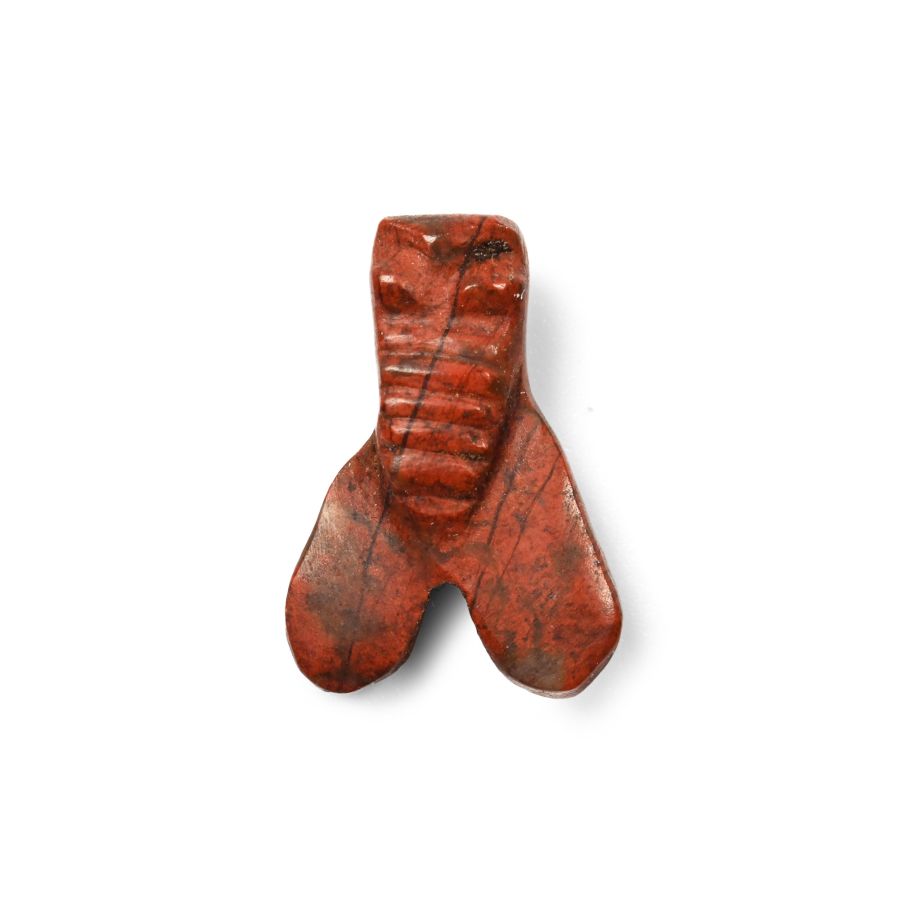
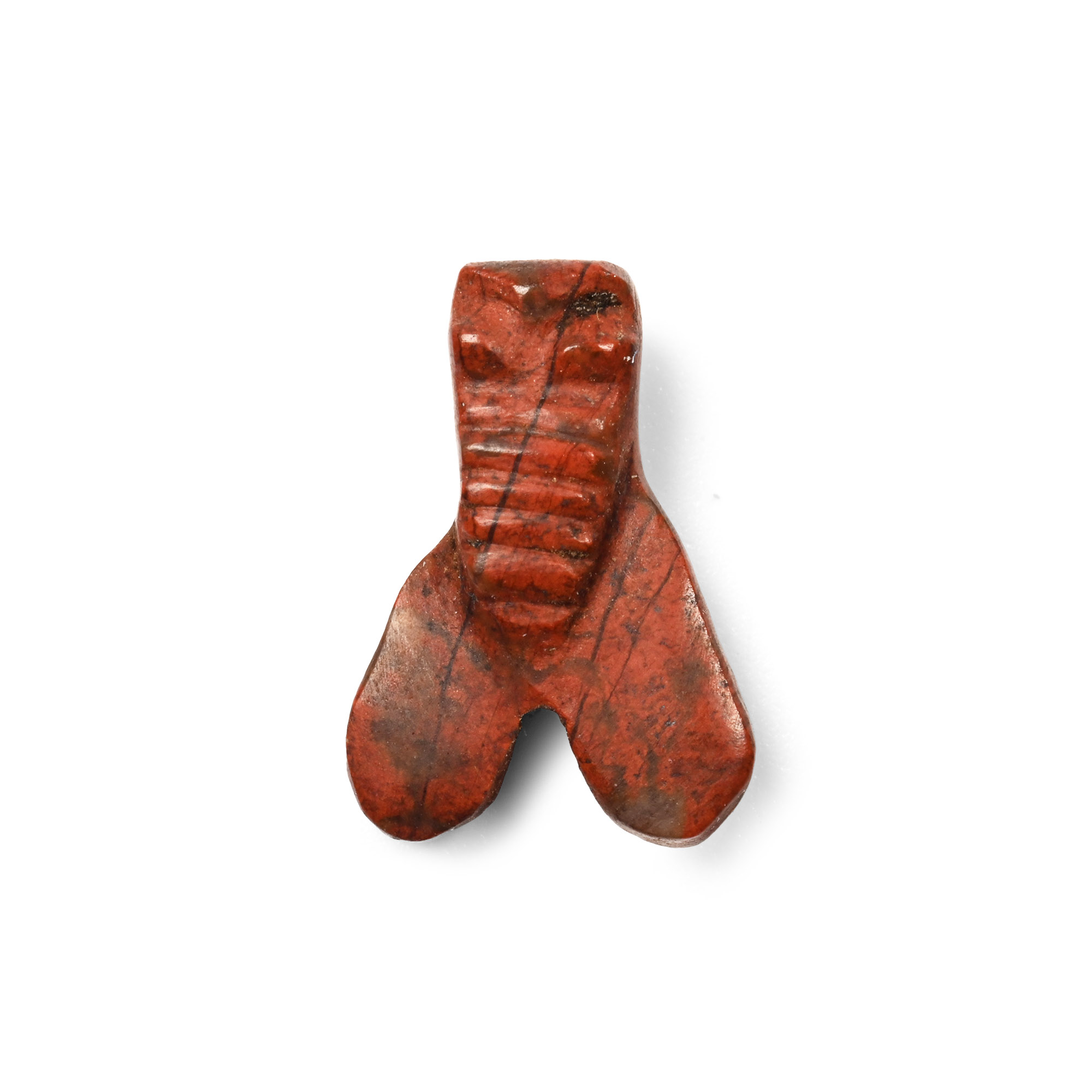
Egyptian Jasper Fly Amulet
NEW KINGDOM, 1550-1070 B.C.
1/2 in. (0.33 grams, 11 mm).
With incised line detailing to the body, pierced longitudinally for suspension. [No Reserve]
ProvenanceEx London and Home Counties collection, UK, 1920-1940.
This lot is accompanied by an illustrated lot declaration signed by the Head of the Antiquities Department, Dr Raffaele D'Amato.
Cf. Andrews, C., Amulets of Ancient Egypt, London, 1994, p.62.
FootnotesFly amulets are first attested during the Predynastic period (pre 3,100 BC). It is possible that they represented a wish to emulate the fly's renowned fecundity. These amulets were made in a variety of materials, including gold, and golden flies were used in the New Kingdom as an honorific award for military valour. No fewer than thirty-three fly amulets came from the tomb of the wives of Tuthmoses III.
CONDITIONTimeLine Auctions follows a vetting process to ensure the authenticity and legality of all items, reinforcing our commitment to integrity and responsible trading. Each antiquity, antique, and coin lot undergoes thorough examination by a vetting committee of at least ten external specialists, professional trade association members, scientists, and archaeologists: Our Vetting Process
AUCTIONS:
TimeLine is a leading auction house specialising in antiquities, ancient art, collectables, natural history, coins, medals, and books. Our auctions offer museums, collectors, historians, and enthusiasts the opportunity to acquire unique and historically significant pieces.
-
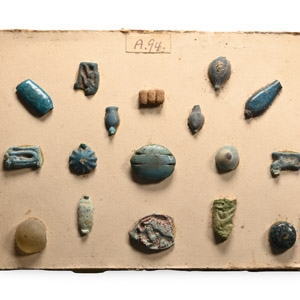
Egyptian Faience Bead and Amulet Collection
Late-Ptolemaic Period, 664-30 B.C.Sold for (Inc. bp): £520
Including floral, poppy seed, uraeus, an eye bead, a bull with solar disc, a standing deity holding a sceptre, and other types; mounted on cardboard backing with collector's label 'A.94.'. 24 grams total, 11.4 x 8.4 cm
From the private collection of Walter Thomas Gaze Cooper (1895-1980). This lot is accompanied by an illustrated lot declaration signed by the Head of the Antiquities Department, Dr Raffaele D'Amato. -
.jpg)
Phoenician Stone Scaraboid Seal
Circa 750-700 B.C.Sold for (Inc. bp): £234
With incised hatched motif to underside. 2.96 grams, 18 mm
with Artemis Gallery, Munich, Germany, 1998. Private collection, Europe. This lot is accompanied by an illustrated lot declaration signed by the Head of the Antiquities Department, Dr Raffaele D'Amato. -
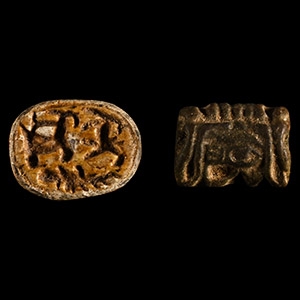
Egyptian Scarab and Amulet Group
Late Period, 664-332 B.C.Sold for (Inc. bp): £59
Comprising: a scarab with anatomical detailing to the carapace, underside with a crocodile and two quadrupeds; a rectangular Eye of Horus amulet with domed upper face. 3.04 grams total, 14-16 mm
Norfolk family collection, 1940s-1960s; thence by descent. This lot is accompanied by an illustrated lot declaration signed by the Head of the Antiquities Department, Dr Raffaele D'Amato.
