
Loading, please wait...
LOT 0456
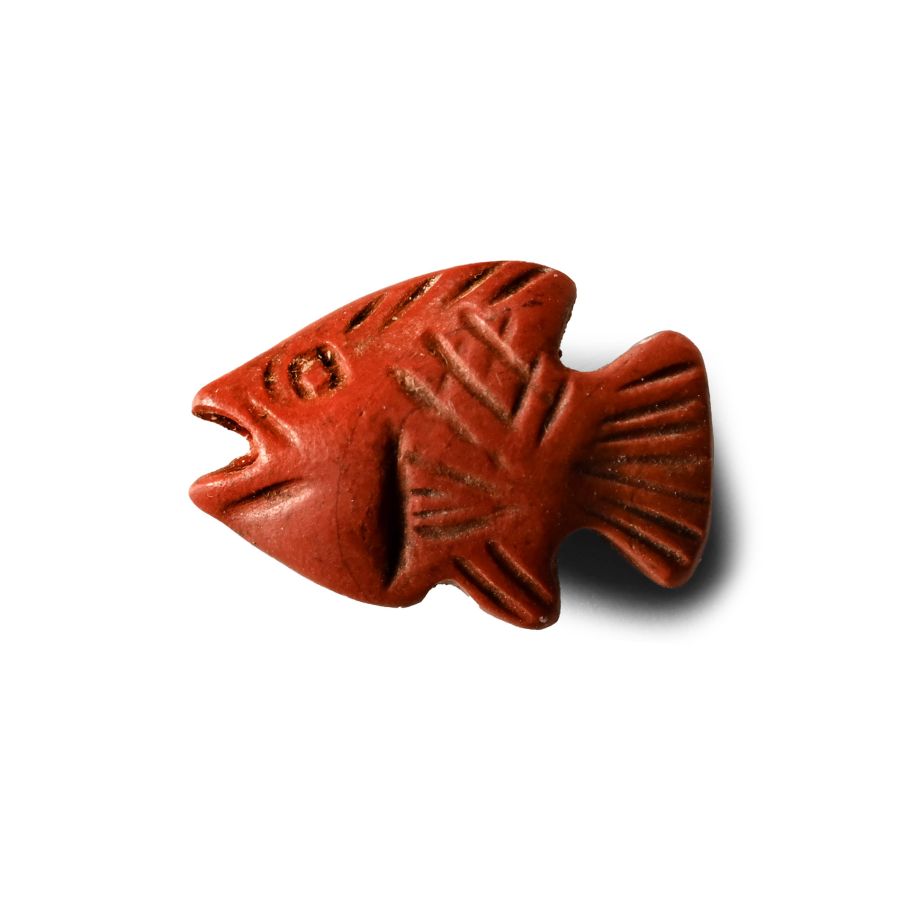
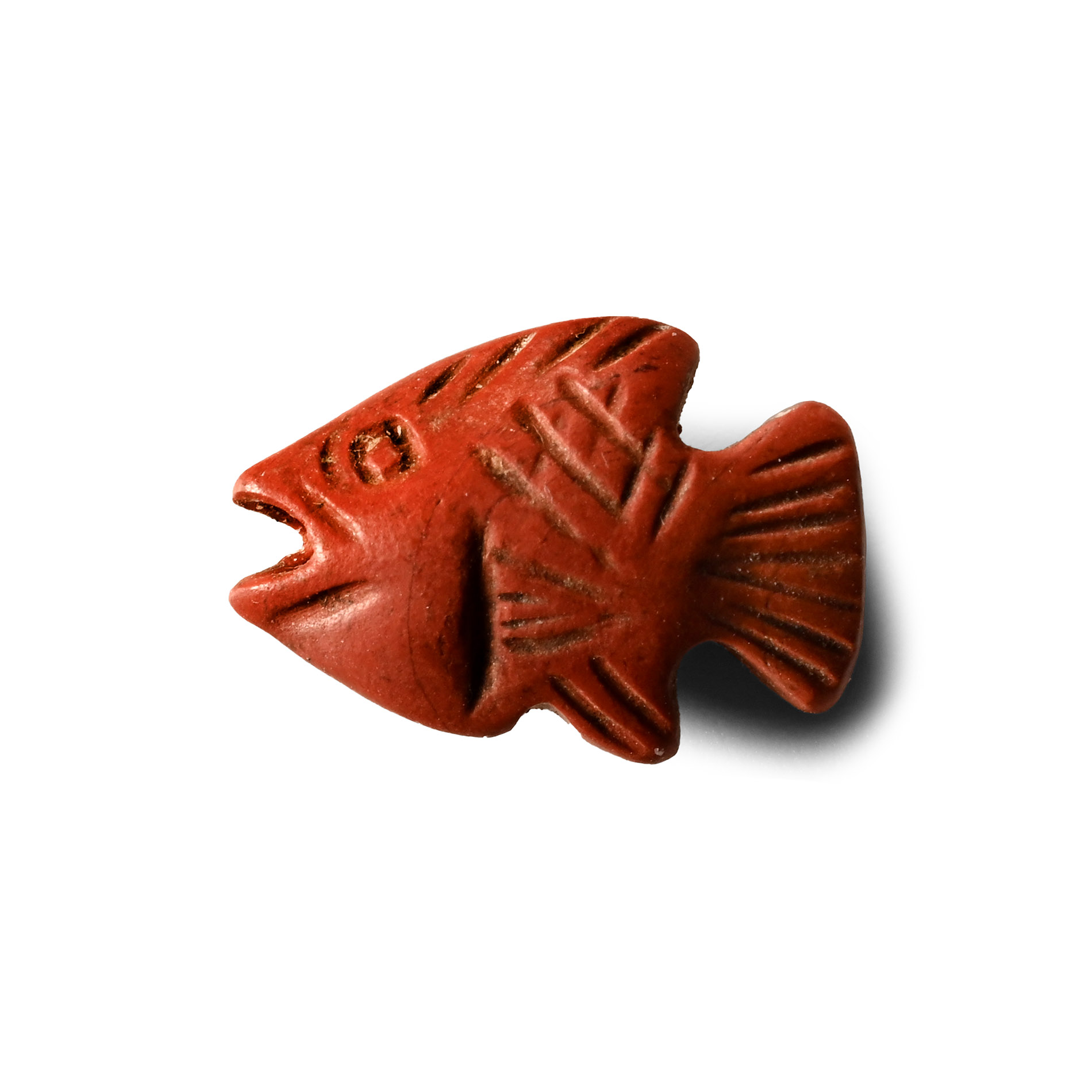
Egyptian Jasper Fish Amulet
LATE PERIOD, 664-332 B.C.
1/2 in. (0.80 grams, 14 mm).
Pierced longitudinally with hatched detailing to the flanks.
ProvenanceFrom an early 20th century collection.
LiteratureCf. Petrie, W.M.F., Amulets. Illustrated by the Egyptian Collection in University College, London, 1914, pl. XLIII, no.257b, for a similar open-mouthed fish amulet.
FootnotesFish amulets were worn by young women and children, often at the end of a plait of hair, to guard against the risk of drowning.
CONDITIONTimeLine Auctions follows a vetting process to ensure the authenticity and legality of all items, reinforcing our commitment to integrity and responsible trading. Each antiquity, antique, and coin lot undergoes thorough examination by a vetting committee of at least ten external specialists, professional trade association members, scientists, and archaeologists: Our Vetting Process
AUCTIONS:
TimeLine is a leading auction house specialising in antiquities, ancient art, collectables, natural history, coins, medals, and books. Our auctions offer museums, collectors, historians, and enthusiasts the opportunity to acquire unique and historically significant pieces.
-
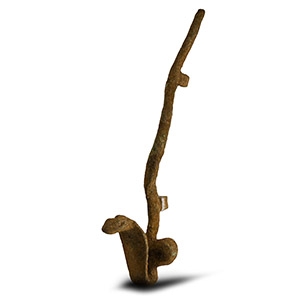
Egyptian Bronze Cobra Mount
Late Period, 6th century B.C.Estimate: £1,200 - 1,700 (‡+bp*)
Opening Bid: £600
Cobra-shaped mount with head raised and hood expanded, two mounting studs to the reverse; mounted on a custom-made stand. 182 grams, 22 cm
Private Israeli collection. Ex Archaeological Center, Tel Aviv, Israel, 2015. Private European collection.
The mount most likely adorned the Atef crown of a statue of Osiris. -
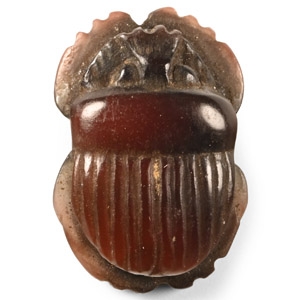
Egyptian Carnelian Heart Scarab
Late Period, 664-332 B.C.Sold for (Inc. bp): £260
With ridged detailing to the carapace, loop to the underside. 1.43 grams, 17 mm
From an early 20th century collection. -
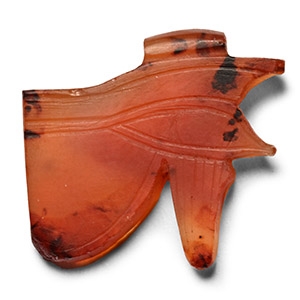
Egyptian Carnelian Eye of Horus Amulet
Circa 1000 B.C.Estimate: £1,000 - 1,400 (‡+bp*)
Opening Bid: £500
With exceptional eye detailing carved in low-relief to one face. 1.64 grams, 19 mm
Ex R. Liechti (1934-2010) Geneva, Switzerland, formed between 1950-1990s. Accompanied by a copy of an old collection inventory note.
The wedjat-eye amulet is a representation of the healed eye of the god Horus, featuring both human and falcon elements. The name wedjat in ancient Egyptian means ‘the one that is sound.’ According to Egyptian mythology, Horus' eye was wounded or taken by the god Seth and restored by Thoth. The wedjat-eye amulet was thought to protect its wearer and bestow the power of recovery and regeneration onto them. It was very popular and used by both the living and the dead.
