
Loading, please wait...
LOT 0029
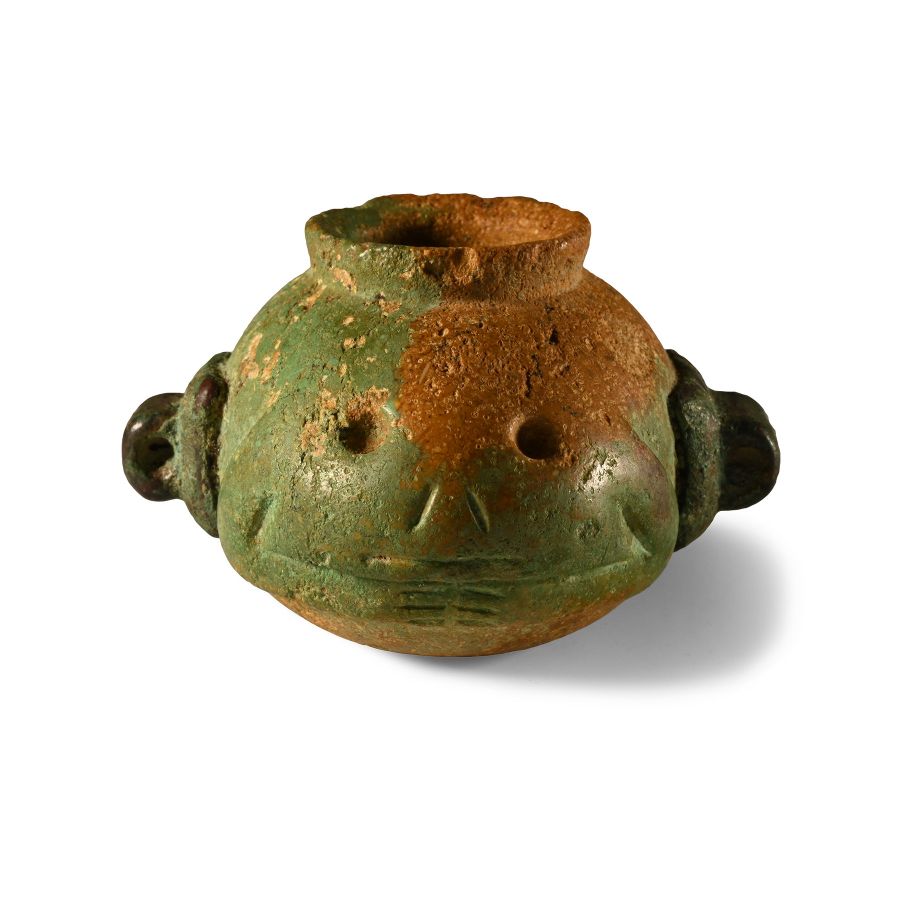
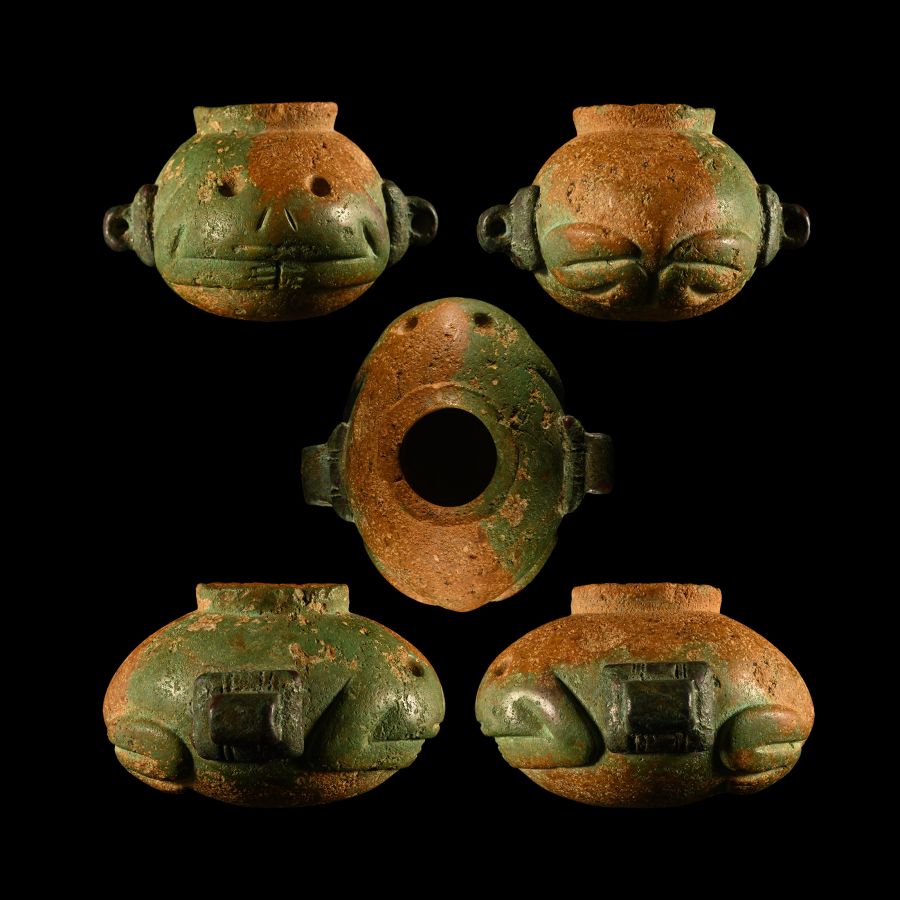
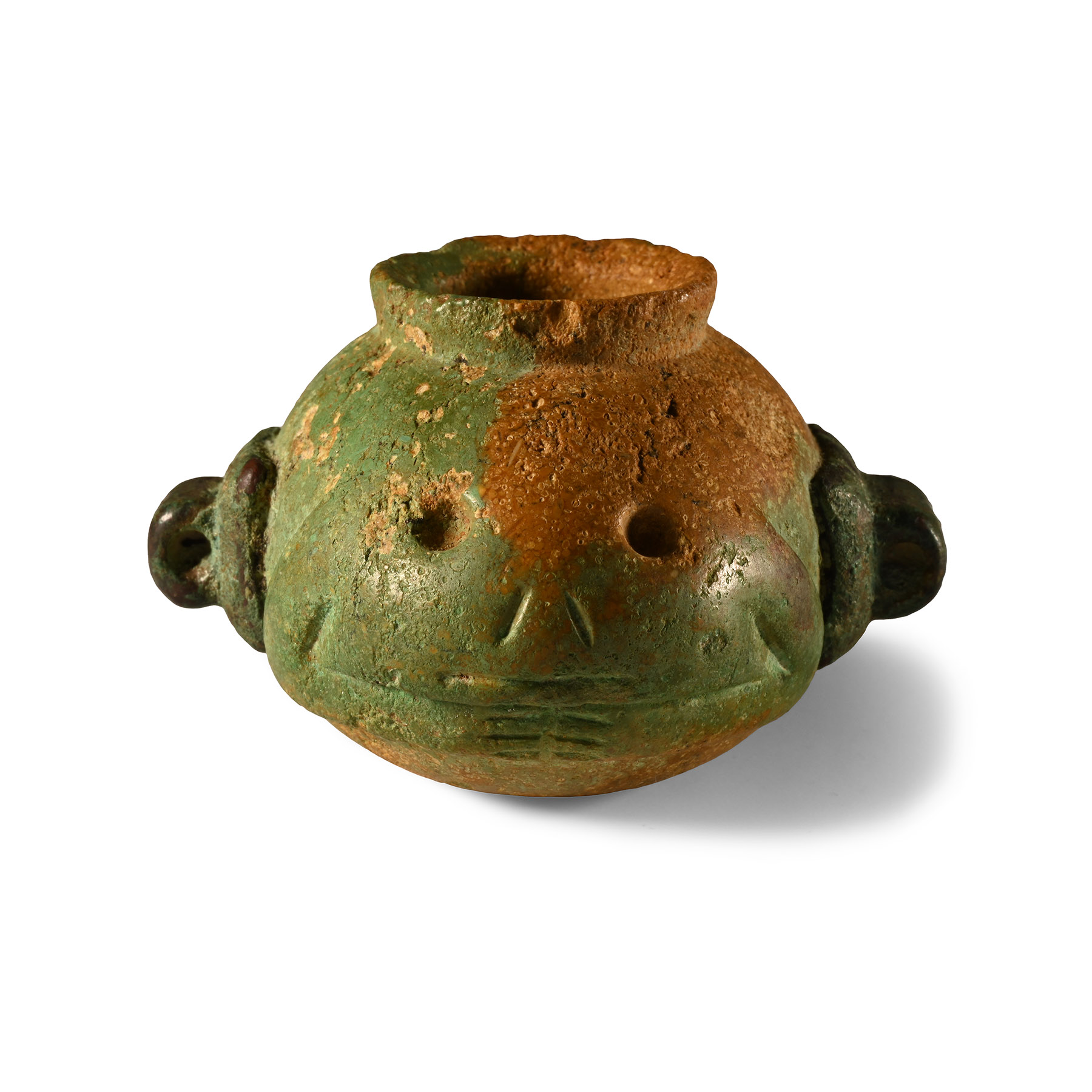
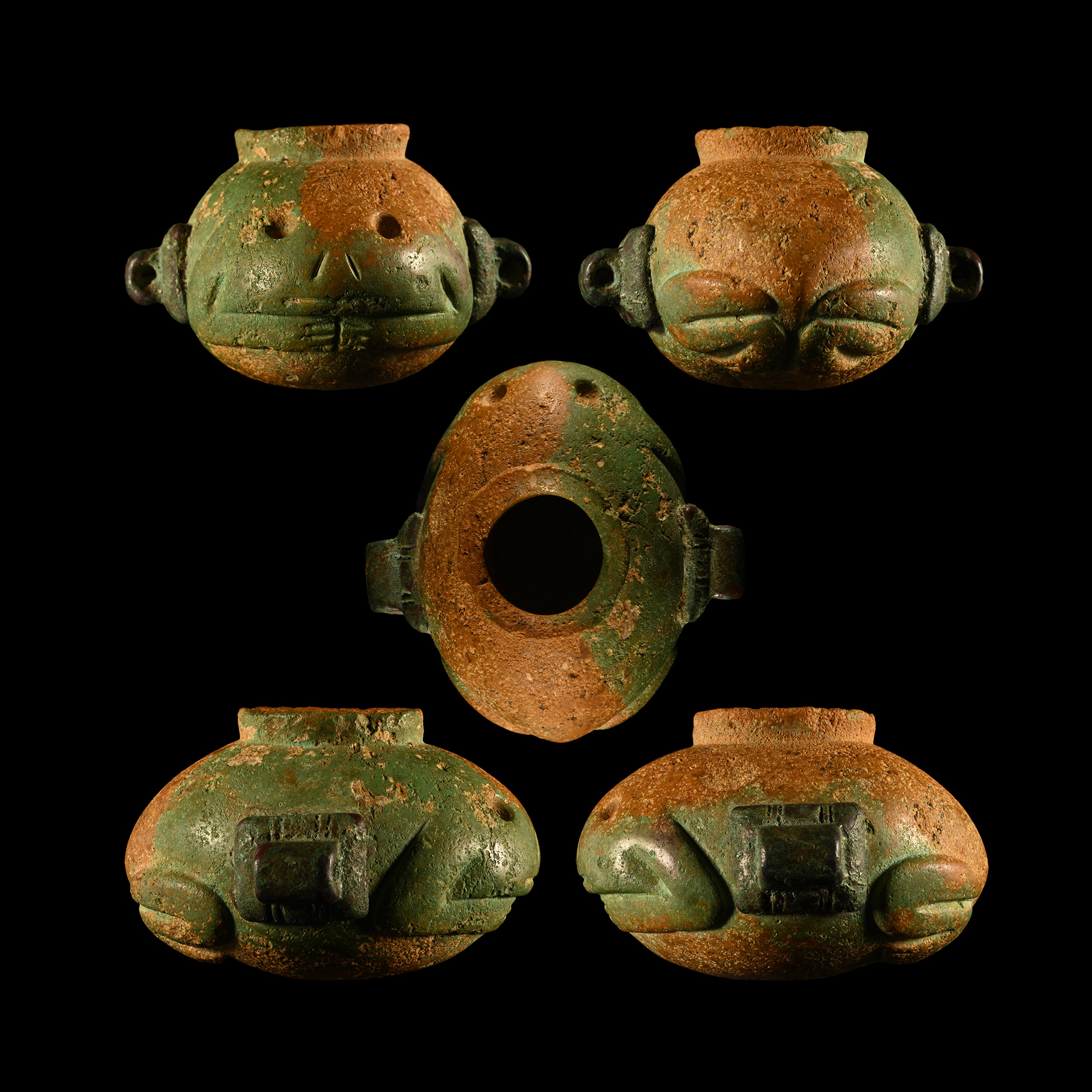
Egyptian Indurated Limestone Frog-Shaped Cosmetic Vessel
PREDYNASTIC PERIOD, LATE NAQADA I-NAQADA II, CIRCA 3700-3300 B.C.
2 1/2 in. (165 grams, 63 mm).
Squat ovoid in profile, modelled with the legs folded beneath the body, with hollow socket eyes, flared rim to mouth; copper lug on either side.
ProvenanceEx collection of Madame Kismet Pilati, acquired in Vienna and London in 1976.
with Bonhams, London, 24th October 2012, no.284 (£30,000-£50,000).
Property of a London lady, part of her family's Swiss collection.
Accompanied by an academic report by Egyptologist Paul Whelan.
Accompanied by copies of the relevant Bonhams catalogue pages.
This lot has been checked against the Interpol Database of stolen works of art and is accompanied by search certificate no.12101-213115.
Cf. Patch, D.C., Dawn of Egyptian Art, New Haven/London, 2011, pp.30-31, Cat. nos.17-18, for discussion and similar examples; the modelling of the frog on this vessel, with the definition of the limbs achieved in raised relief rather than being individually modelled, is closer to an example in the Brooklyn Museum no.37.648E, and Penn Museum no.E9665.
CONDITIONTimeLine Auctions follows a vetting process to ensure the authenticity and legality of all items, reinforcing our commitment to integrity and responsible trading. Each antiquity, antique, and coin lot undergoes thorough examination by a vetting committee of at least ten external specialists, professional trade association members, scientists, and archaeologists: Our Vetting Process
AUCTIONS:
TimeLine is a leading auction house specialising in antiquities, ancient art, collectables, natural history, coins, medals, and books. Our auctions offer museums, collectors, historians, and enthusiasts the opportunity to acquire unique and historically significant pieces.
LOT 0029
Egyptian Indurated Limestone Frog-Shaped Cosmetic Vessel
Sold for (Inc. bp): £9,750
-
Egyptian Glass Bes Amulet in Gold Pin
Late Period-Roman Period, 664 B.C.-323 A.D. and laterEstimate: £400 - 600 (+bp*)
Opening Bid: £210
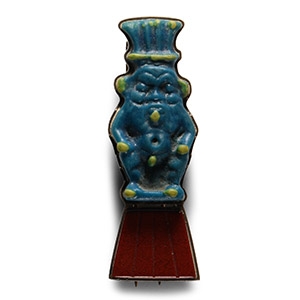
Comprising a large blue amulet of facing Bes with yellow highlighting, the grimacing god wearing a plumed headdress and depicted nude; set in a later gold casing with a plume-shaped red jasper insert, an articulated pin attachment on the reverse. 13.7 grams, 51.6 mm
Ex AH collection, London, UK, 1980s. Accompanied by a previous cataloguing slip.
Despite his rather fearful appearance, Bes was the patron and protector of pregnant women and children. He was also believed to provide protection from snakes. -
Egyptian Bronze Horus Falcon on Shrine-Shaped Base
Late Period-Ptolemaic Period, 664-31 B.C.Sold for (Inc. bp): £4,680
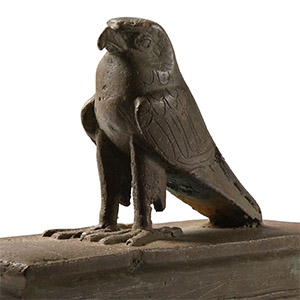
Naturalistically modelled falcon with incised feathers and detailing; standing on a shrine-shaped rectangular box with slightly battered sides and cornice moulding; inked note on the inside of each long side 'E.311' and 'Collection R.L.' respectively. 521 grams, 15 cm
Collected between the 1950s-1990s. Ex Roger Liechti (1934-2010) collection, Geneva, Switzerland. This lot has been checked against the Interpol Database of stolen works of art and is accompanied by search certificate no.12133-211848.
This box almost certainly once contained the mummified remains of a falcon. The falcon was principally identified with the sun-god Horus, and associated with the living king. Numerous falcon cults existed throughout Egypt, but the most spectacular was found at Saqqara, where many thousands of birds were mummified and buried in an extensive complex of underground galleries. -
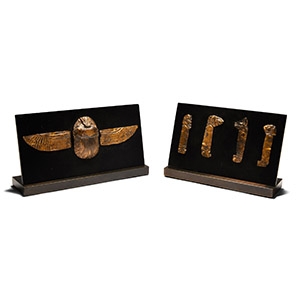
Egyptian Gold Cartonnage Inlays
Late Period-Ptolemaic Period, 664-31 B.C.Sold for (Inc. bp): £4,420
Comprising: a winged scarab with detailed carapace and wings; and the mummiform figures of the four Sons of Horus, Imsety, Hapy, Duamutef, and Qebehsenuef; mounted on custom-made display stands. 635 grams total, 16.5-20 cm wide including stand
From a 1920s French collection. Ex German gallery, 1970-1980s. Spanish collection, 1980s-1990s. London, UK, collection, 2000s. This lot has been checked against the Interpol Database of stolen works of art and is accompanied by search certificate no.12126-214208.
The Four Sons of Horus were deities responsible for protecting the internal organs of the deceased. The human-headed Imsety protected the liver, the baboon-headed Hapy protected the lungs, the jackal-headed Duamutef protected the stomach, and the falcon-headed Qebehsenuef protected the intestines.
