
Loading, please wait...
LOT 0596
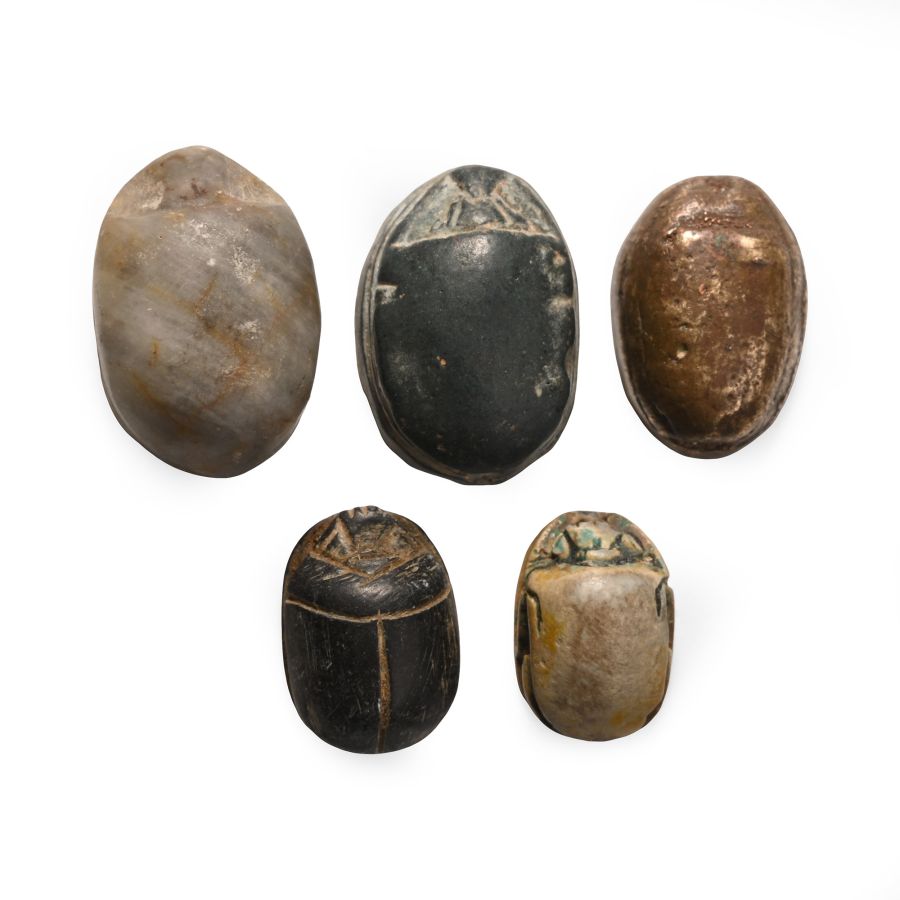
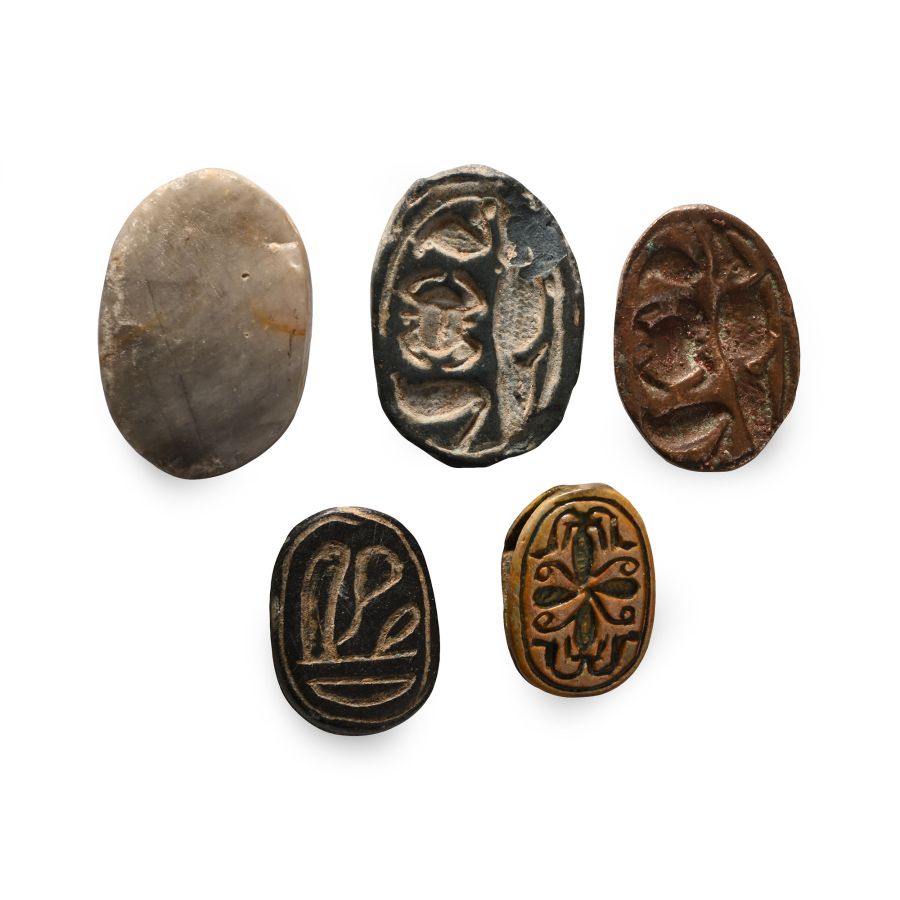
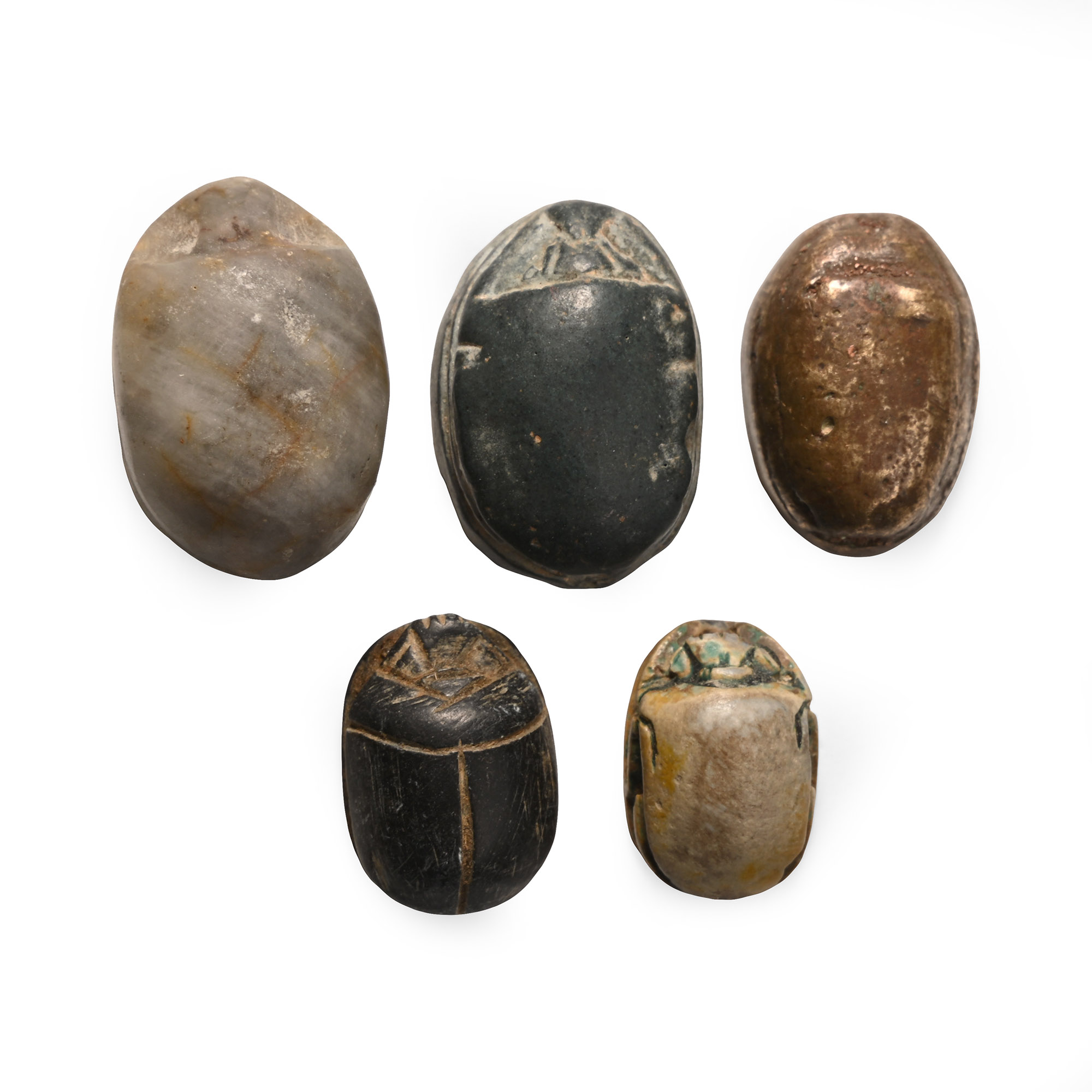
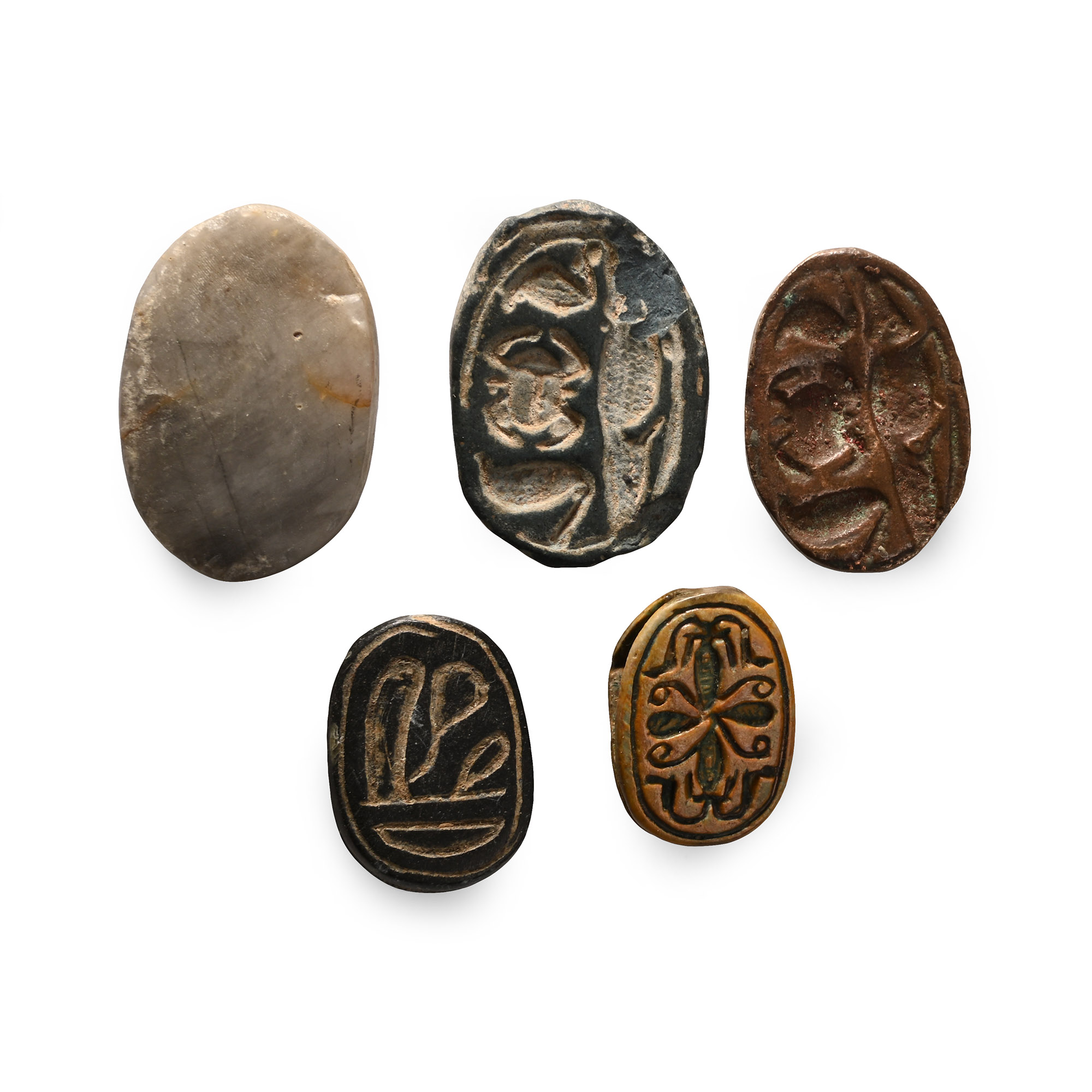
Egyptian Hieroglyphic Scarab Group
LATE-PTOLEMAIC PERIOD, CIRCA 664-30 B.C. AND LATER
1/2 - 3/4 in. (17.1 grams total, 14-20 mm).
Comprising; a copper-alloy scarab with a scarab flanked by rearing uraei on the underside; a stone scarab with similar motif on the underside; a faience scarab with floral motif; a stone scarab with hieroglyphics on the underside; a stone scarab with plain underside. [5]
ProvenanceFrom the collection of a gentleman, acquired on the London art market in the 1990s.
CONDITIONTimeLine Auctions follows a vetting process to ensure the authenticity and legality of all items, reinforcing our commitment to integrity and responsible trading. Each antiquity, antique, and coin lot undergoes thorough examination by a vetting committee of at least ten external specialists, professional trade association members, scientists, and archaeologists: Our Vetting Process
AUCTIONS:
TimeLine is a leading auction house specialising in antiquities, ancient art, collectables, natural history, coins, medals, and books. Our auctions offer museums, collectors, historians, and enthusiasts the opportunity to acquire unique and historically significant pieces.
-
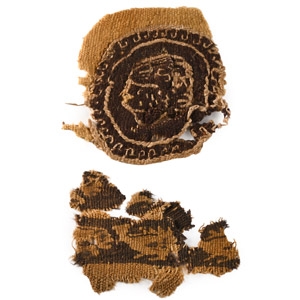
Egyptian Coptic Textile Fragment Group
Circa 4th-5th century A.D.Sold for (Inc. bp): £65
Comprising: an orbiculus in coarse linen and brown wool, S torsion, embroidered with the image of a stylised bird, surrounded by tondos ornamented with geometric embroidery, borders meander decorated; a similar fragment of double segmenta, embroidered with hares alternated to fishes. 9 grams total including package, 60-64 mm
Acquired 1970s-1996. Property of a North American collector. London collection, 2016.
The iconography of this fragment is called "Nilotic," as it depicts plant and human elements linked to life on the Nile River. These images are very recurrent on Coptic textiles. Weavers created patterns that allowed them to reproduce these motifs on any type of fabric (curtains, tassels, clothing). -
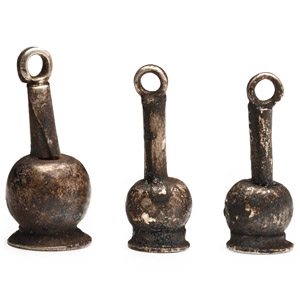
Egyptian Poppy Amulet Group
Late Period, 664-332 B.C.Sold for (Inc. bp): £78
Three pendants each with poppy-head and loop at the apex. 3.55 grams total, 17-19 mm
From a gentleman's family collection, 2000s. -
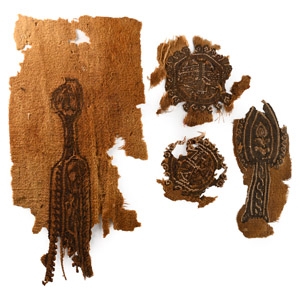
Egyptian Coptic Textile Fragment Group
5th-6th century A.D.Sold for (Inc. bp): £156
Comprising: a decorative tunic stripe (clavus) ending with circular decorations (orbiculus), in dark brown wool, S-twist tapestry, borders meander decorated; two orbiculi in white and black wool over yellow linen, S-twist tapestry, embroidered with geometric motifs. 61 grams total including package, 6-23 cm
Acquired 1970s-1996. Property of a North American collector. London collection, 2016.
