
Loading, please wait...
LOT 0461
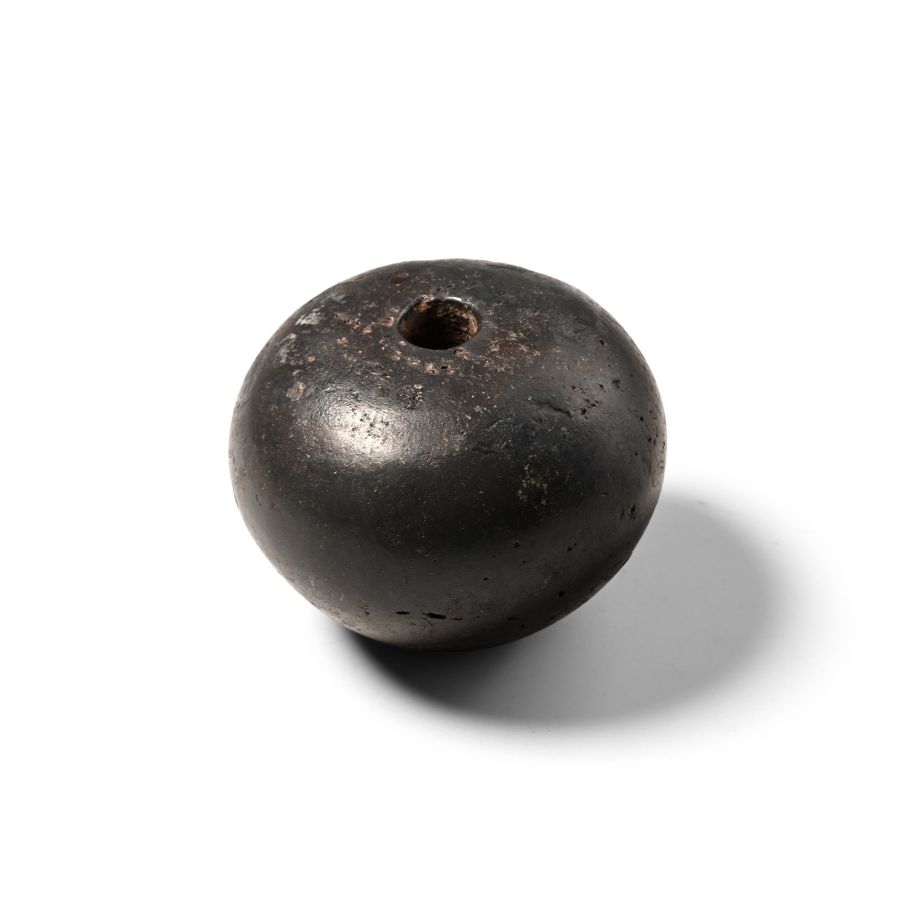
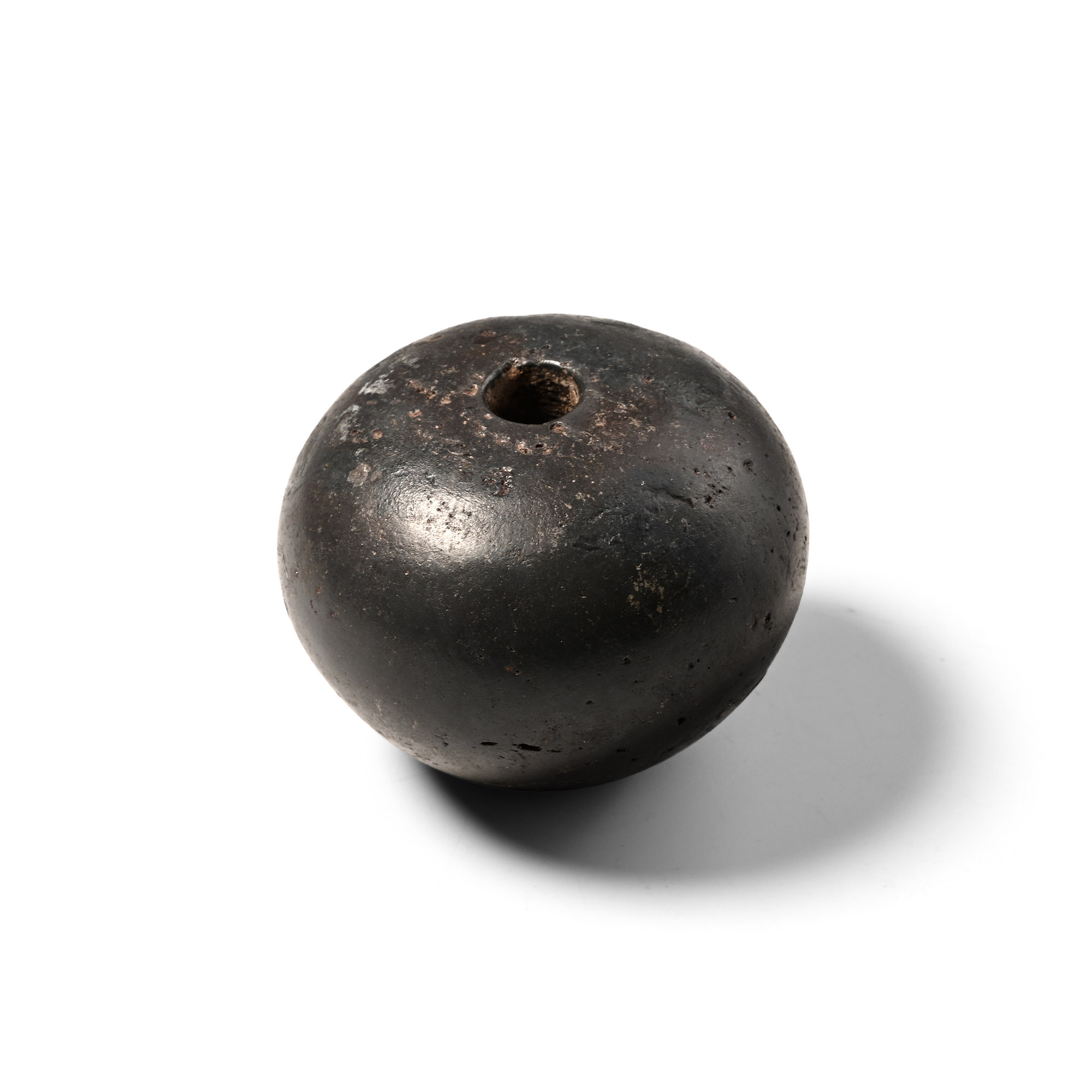
Egyptian Hematite Macehead
3RD MILLENNIUM B.C.
2 1/8 in. (323 grams, 54 mm).
Piriform with narrow socket tapering to the socket's mouth.
ProvenanceAcquired 1970s-1996.
Property of a North American collector.
London collection, 2016.
Cf. Petrie, W.M.F., Prehistoric Egypt, London, 1920, pl. XXVI, no. 45, for a similar stone macehead.
CONDITIONTimeLine Auctions follows a vetting process to ensure the authenticity and legality of all items, reinforcing our commitment to integrity and responsible trading. Each antiquity, antique, and coin lot undergoes thorough examination by a vetting committee of at least ten external specialists, professional trade association members, scientists, and archaeologists: Our Vetting Process
AUCTIONS:
TimeLine is a leading auction house specialising in antiquities, ancient art, collectables, natural history, coins, medals, and books. Our auctions offer museums, collectors, historians, and enthusiasts the opportunity to acquire unique and historically significant pieces.
-
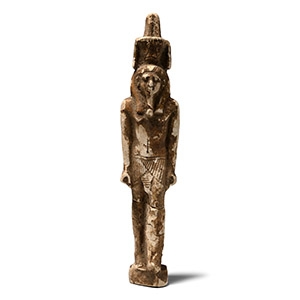
Egyptian Faience Nefertem Statuette with Hieroglyphs
Late-Ptolemaic Period, circa 664-30 B.C.Sold for (Inc. bp): £468
Presented in a striding pose with his left leg forward and his arms at his sides; wearing his emblem, the lotus-flower headdress from which two plumes emerge, and a menat on each side; dorsal pillar with hieroglyphs, beginning with the incantation: "Words spoken by Nefertum, son of Sekhmet...." 42.8 grams, 11.6 cm
From the collection of a gentleman, acquired on the London art market in the 1990s.
Nefertum is usually depicted as a young man wearing a headdress with a lotus flower or a crown featuring the flower. The god is often linked to beauty, healing, and the lotus flower, with his cult connected to the royal family and the cycle of rebirth. Nefertum’s imagery and symbolism associate him with themes of creation, renewal, and the sun; he symbolises the first sunlight and the pleasant scent of the Egyptian blue lotus flower, emerging from the primal waters within an Egyptian blue water lily. -
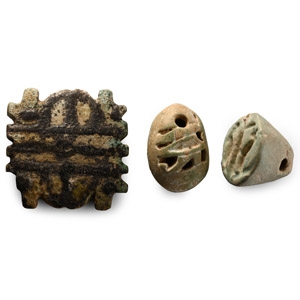
Egyptian Blue Glazed Amulet Collection
Late Period, 664-332 B.C.Sold for (Inc. bp): £46
Including a glazed composition plaque formed from four conjoined wedjat motifs, a pendant with pierced-work wedjat-eye, and a pendant with a double uraei motif. 14 grams total, 17.2-32 mm
with Archaeologia, Switzerland, before 1983. Ex private North American collection. London private collection, 2016. -
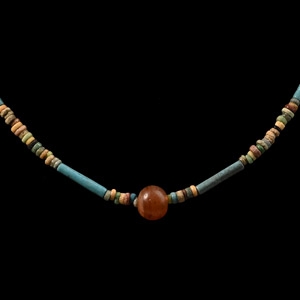
Egyptian Mummy Bead Necklace with Carnelian Feature Bead
Late Period, 664-332 B.C.Sold for (Inc. bp): £111
Restrung group of tubular and annular glazed composition beads with oblate centrepiece. 8.41 grams, 51 cm long
Previously with Astarte Gallery, London W1, UK, 1983. From the private collection of T.R. Elley, West Sussex, UK, 1980s. Accompanied by an invoice copy dated 18 October 1983.
