
Loading, please wait...
LOT 0462
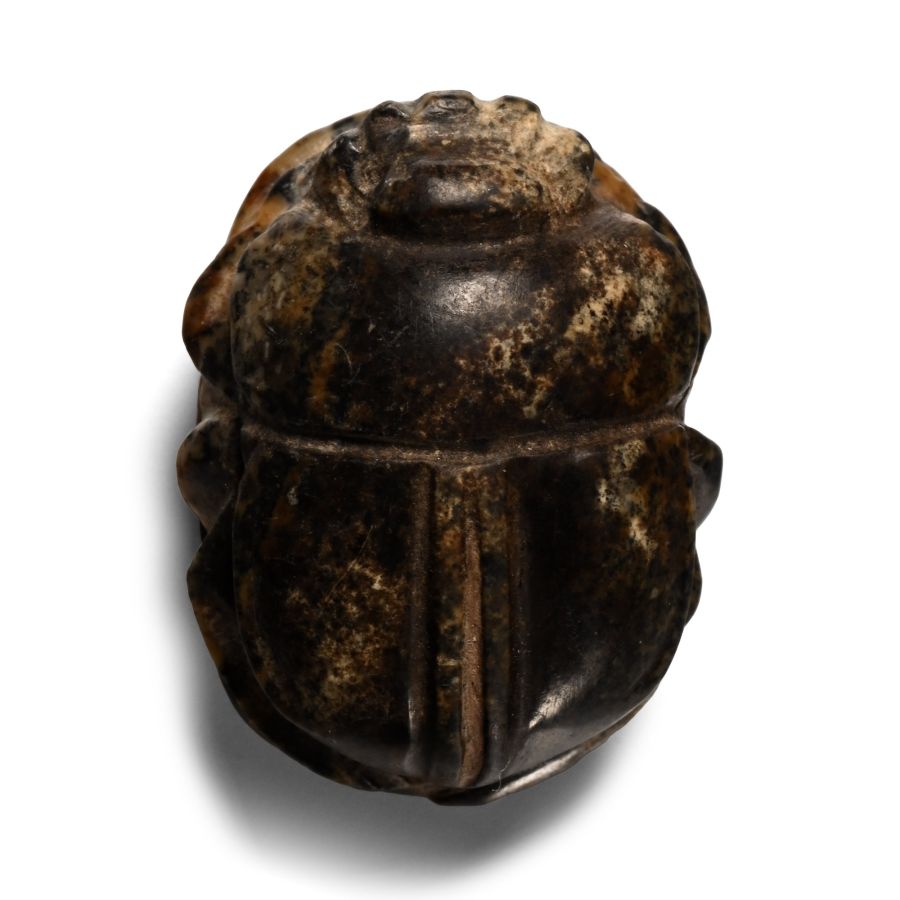
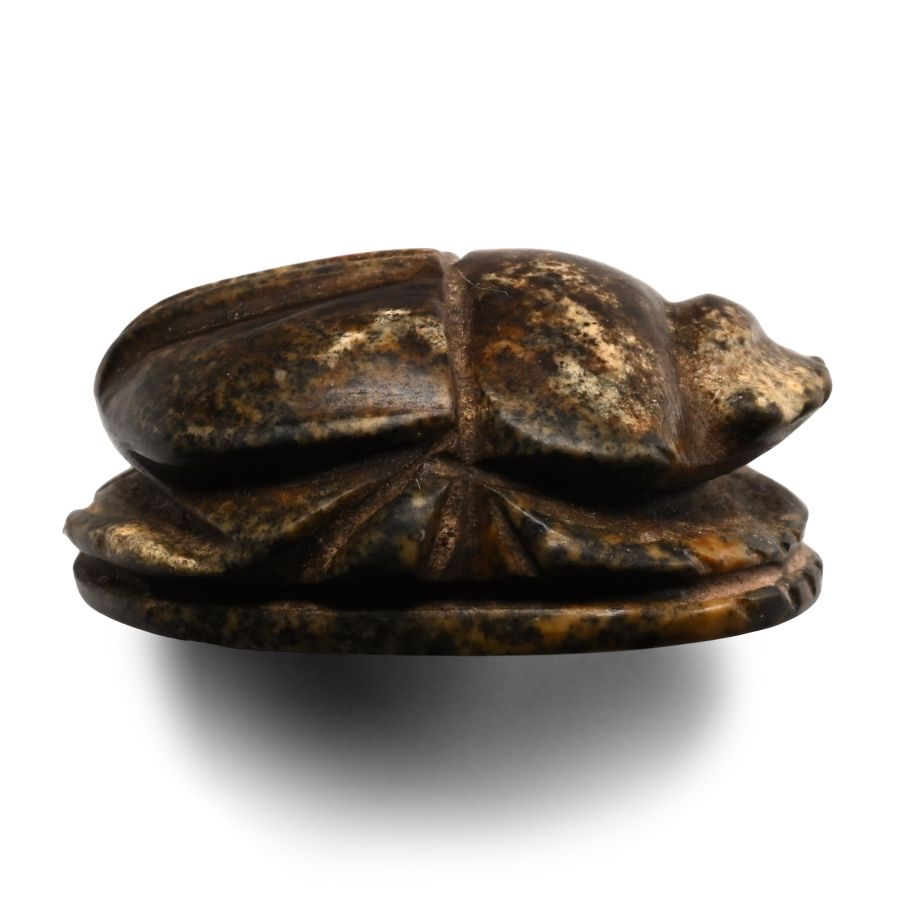
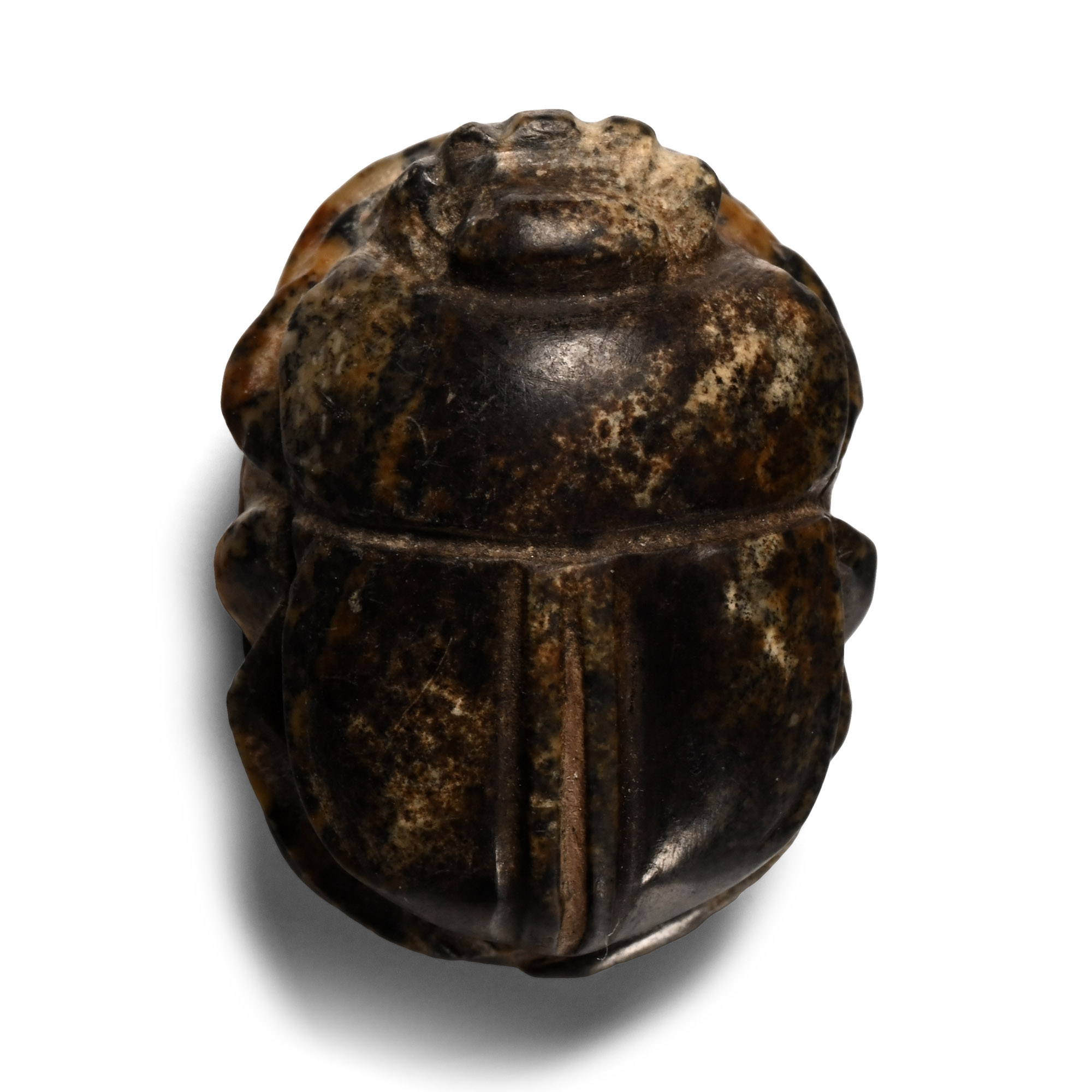
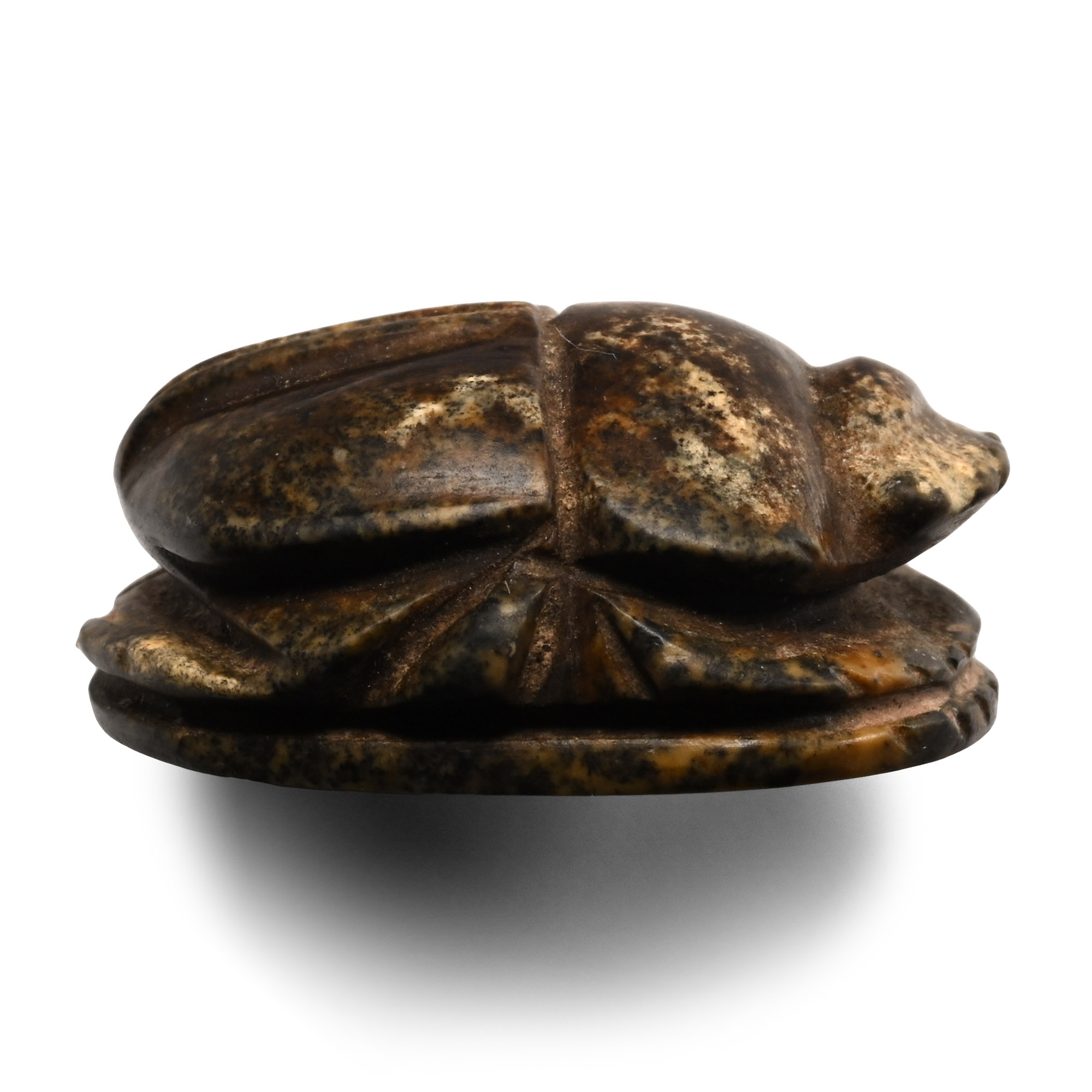
Egyptian Hardstone Scarab
LATE PERIOD, 664-332 B.C.
1 in. (10.1 grams, 27 mm).
With detailed clypeus and head, raised ridge separating the wing case, resting on an oval base with plain underside.
ProvenanceFrom the property of a London, UK, gentleman, 1970-2000s.
This lot is accompanied by an illustrated lot declaration signed by the Head of the Antiquities Department, Dr Raffaele D'Amato.
The scarab, which represented the dung beetle, was the most popular amulet in ancient Egypt for approximately two thousand years until the Ptolemaic Period when it gradually fell out of favour. The popularity of scarabs extended beyond the borders of Egypt, and they were also distributed and produced in other regions, such as Phoenicia and Israel. The beetle is named khepri, derived from the verb 'to come into existence', and was considered the embodiment of the creator god Khepri, who was self-engendered. The ancient Egyptians mistakenly believed that the young beetle emerging from the dung ball was the result of an act of self-creation.
CONDITIONTimeLine Auctions follows a vetting process to ensure the authenticity and legality of all items, reinforcing our commitment to integrity and responsible trading. Each antiquity, antique, and coin lot undergoes thorough examination by a vetting committee of at least ten external specialists, professional trade association members, scientists, and archaeologists: Our Vetting Process
AUCTIONS:
TimeLine is a leading auction house specialising in antiquities, ancient art, collectables, natural history, coins, medals, and books. Our auctions offer museums, collectors, historians, and enthusiasts the opportunity to acquire unique and historically significant pieces.
-
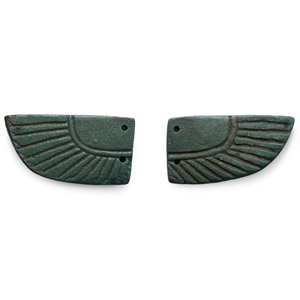
Egyptian Faience Scarab Wing Pair
Late Period, 664-332 B.C.Sold for (Inc. bp): £143
Each flat-section with a band of feathers within the border, two attachment holes. 15 grams total, 43-44 mm
From the private collection of the late Julian Bird, UK, formed since the 1970s. This lot is accompanied by an illustrated lot declaration signed by the Head of the Antiquities Department, Dr Raffaele D'Amato.
These wings were once part of a central scarab amulet. Winged scarabs often served as funerary adornments and were believed to symbolise the rebirth and regeneration of the deceased. -
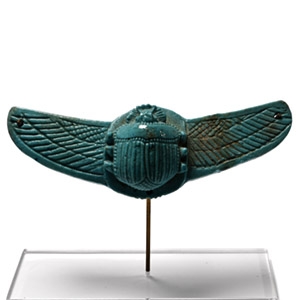
Egyptian Blue Faience Scarab
Late Period, 7th-6th century B.C.Sold for (Inc. bp): £4,550
Comprising a crescentic plaque with central scarab modelled in the half-round, and lateral wings with hatched texturing; scarab with ribbing and other detailing; pierced in four places for attachment; accompanied by a custom-made stand. 22.3 grams, 10 cm wide (44 grams total, 10 cm wide including stand)
Acquired in the 1950-1990s. Mr C., Geneva, Switzerland. Private collection, Europe. This lot has been checked against the Interpol Database of stolen works of art and is accompanied by a search certificate number no.12592-232170. This lot has been cleared against the Art Loss Register database, and is accompanied by an illustrated lot declaration signed by the Head of the Antiquities Department, Dr Raffaele D'Amato.
Winged scarabs were thought to ensure the rebirth and regeneration of the deceased, making them popular funerary amulets. This is a particularly fine example of a rarer one-piece amulet, as they are usually made from three separate elements. -
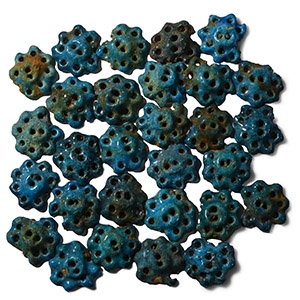
Egyptian Blue Faience Clothing Mounts
Roman Period, 30 B.C.-323 A.D.Sold for (Inc. bp): £247
Group of rosette mounts, each plano-convex in profile with two attachment holes to the centre and pierced loops to the rim. 124 grams total, 25-30 mm
UK private collection, formed in the 1980s. This lot is accompanied by an illustrated lot declaration signed by the Head of the Antiquities Department, Dr Raffaele D’Amato. This lot is accompanied by an illustrated lot declaration signed by the Head of the Antiquities Department, Dr Raffaele D'Amato.
