
Loading, please wait...
LOT 0468
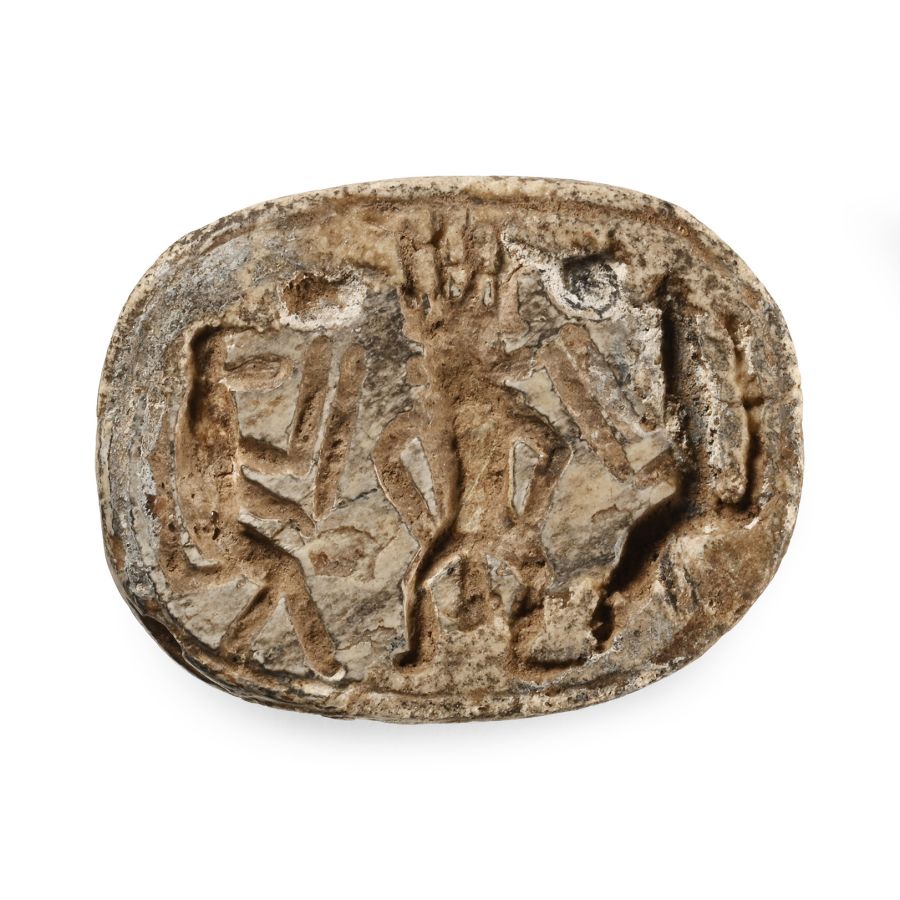
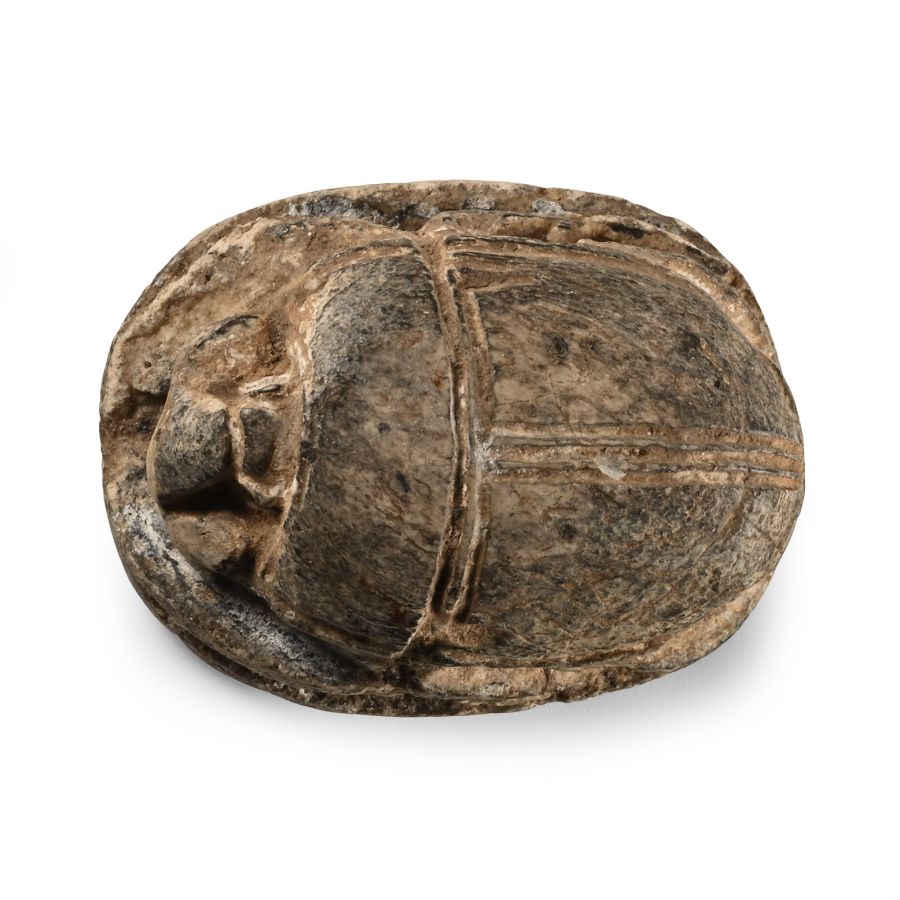
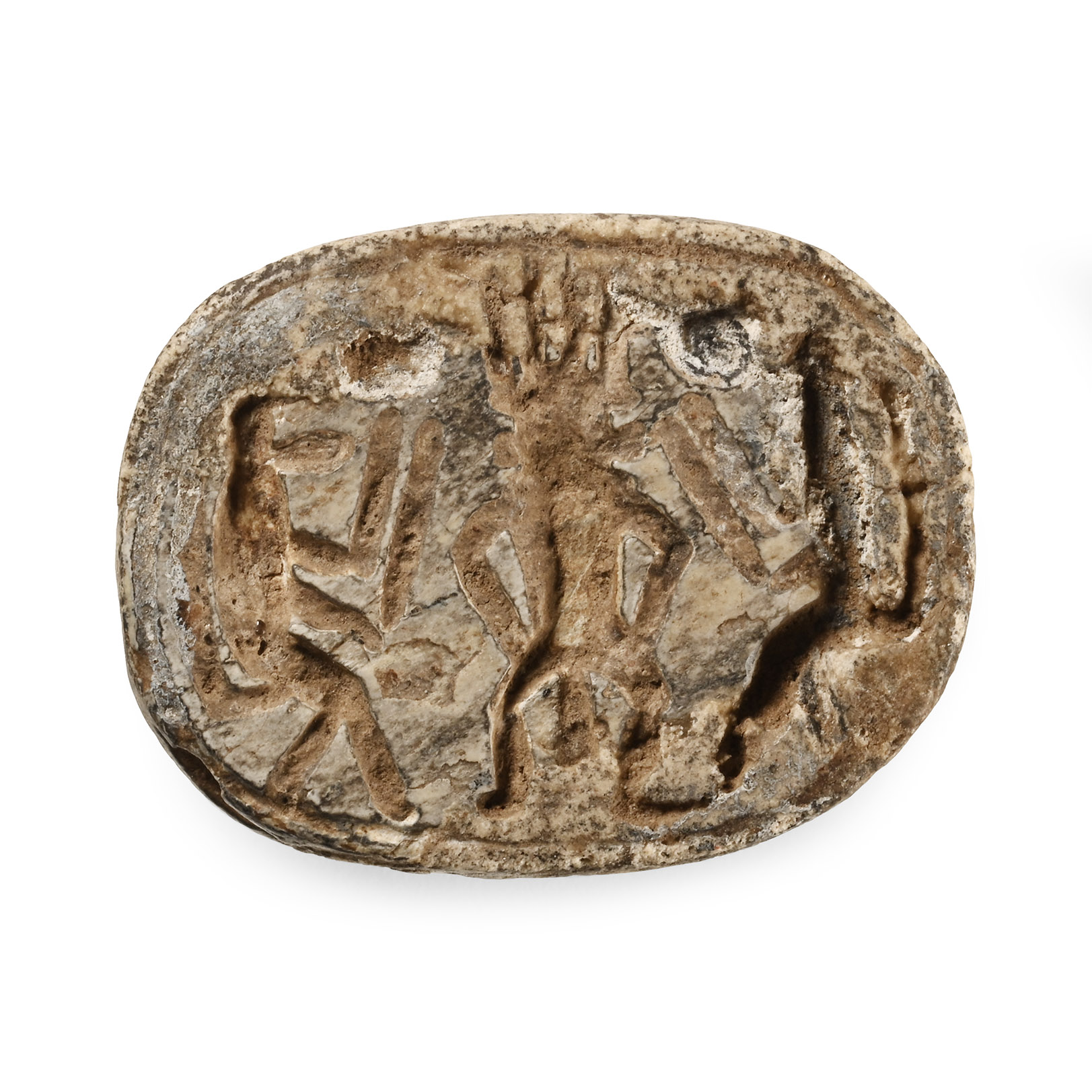
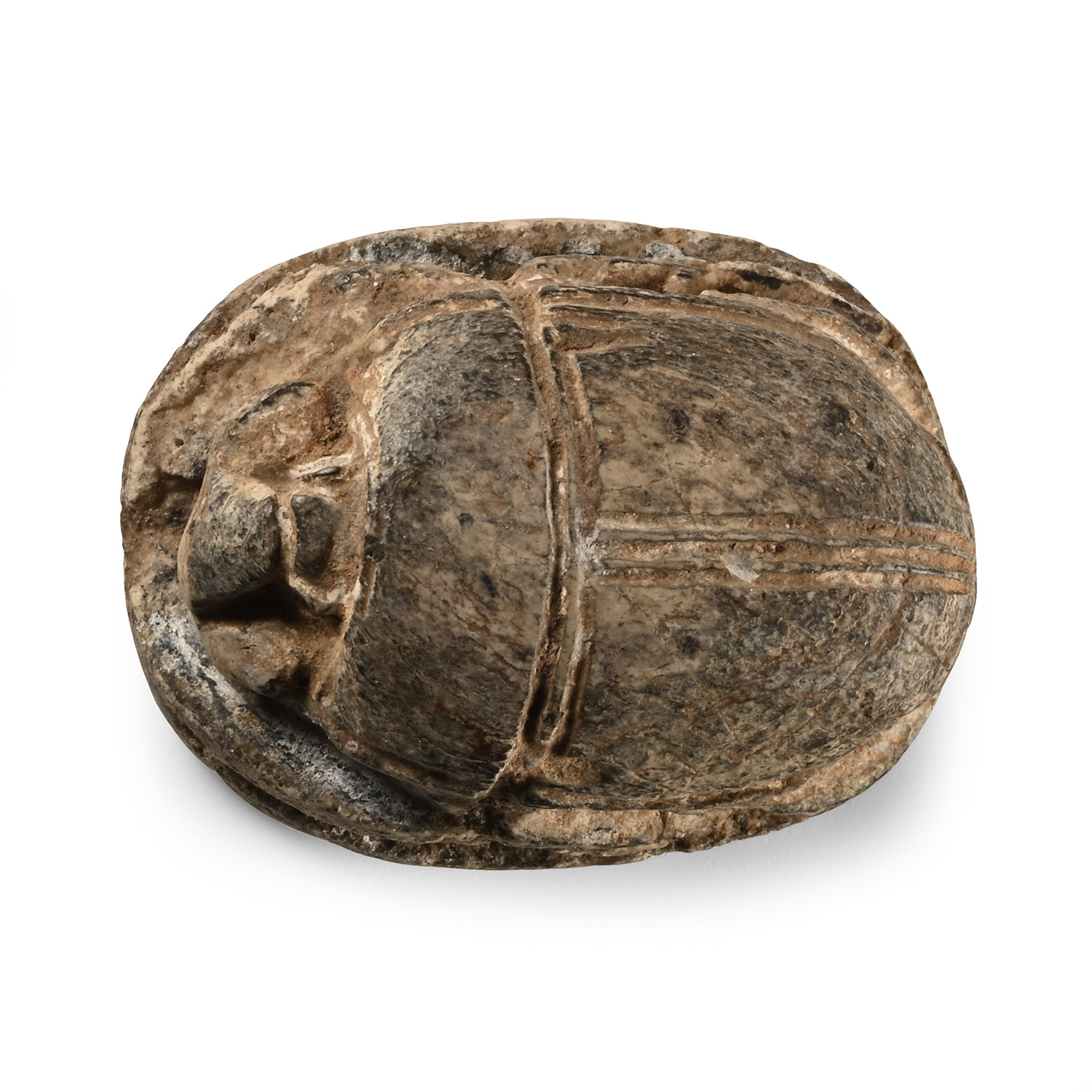
Egyptian Hardstone Scarab with Bes
LATE PERIOD, 664-332 B.C.
1 1/4 in. (10.7 grams, 31 mm).
Plano-convex in section with detailed obverse, the underside with the figure of Bes flanked by adoring baboons and sun disks.
ProvenanceEx London, UK collection, 1990s.
LiteratureCf. Matouk, F.S., Corpus du scarabée égyptien. Vol. 2: Analyse thématique, Beirut, 1976, p.345, no.584, for the baboon and Bes motif.
FootnotesBes became one of ancient Egypt's most popular apotropaic deities from the New Kingdom onwards. Despite his somewhat fearful appearance, Bes was the patron and protector of pregnant women and children and believed to protect the wearer from snakes. The depiction of baboons flanking Bes with their arms raised before the sun disk was a common feature on temple wall reliefs. In ancient Egyptian religious literature, baboons heralded the dawn and, thus, the rebirth of the sun.
CONDITIONTimeLine Auctions follows a vetting process to ensure the authenticity and legality of all items, reinforcing our commitment to integrity and responsible trading. Each antiquity, antique, and coin lot undergoes thorough examination by a vetting committee of at least ten external specialists, professional trade association members, scientists, and archaeologists: Our Vetting Process
AUCTIONS:
TimeLine is a leading auction house specialising in antiquities, ancient art, collectables, natural history, coins, medals, and books. Our auctions offer museums, collectors, historians, and enthusiasts the opportunity to acquire unique and historically significant pieces.
-
.jpg)
Egyptian Amethyst Scarab in Gold Frame
Late Period, 664-332 B.C. and laterSold for (Inc. bp): £572
Carved with lightly incised carapace, chipped to the obverse; set in a 19th century gold frame. 12.45 grams, 52 mm
From an early 20th century collection. -
Egyptian Steatite Scarab for Thutmose III
New Kingdom or later, circa 1334-332 B.C.Estimate: £400 - 600 (+bp*)
Opening Bid: £175
Underside with cartouche of Pharaoh Thutmose III (Men-kheper-Re). 3.85 grams, 20 mm
Ex North London gentleman's collection, 1990s. Property of a Cambridgeshire, UK, gentleman.
The popularity of this great Egyptian pharaoh was such that his name appeared on scarabs during his reign and into the Late Period. -
Large Egyptian Blue Glazed Hieroglyphic Shabti for Ta-Amun
Saite Period, 26th Dynasty, 664-525 B.C.Sold for (Inc. bp): £1,690
With finely modelled facial details, a plaited beard, holding a hoe and the cord of a seed bag at the left shoulder and a pick at the right, eleven horizontal bands of hieroglyphic text to the lower body. 140 grams, 18 cm
Acquired on the German art market, 1989-1995. with The Museum Gallery, 19 Bury Place, London, WC1, UK, 1998-2003. Property of a London based academic, 2003-present.
