
Loading, please wait...
LOT 0427
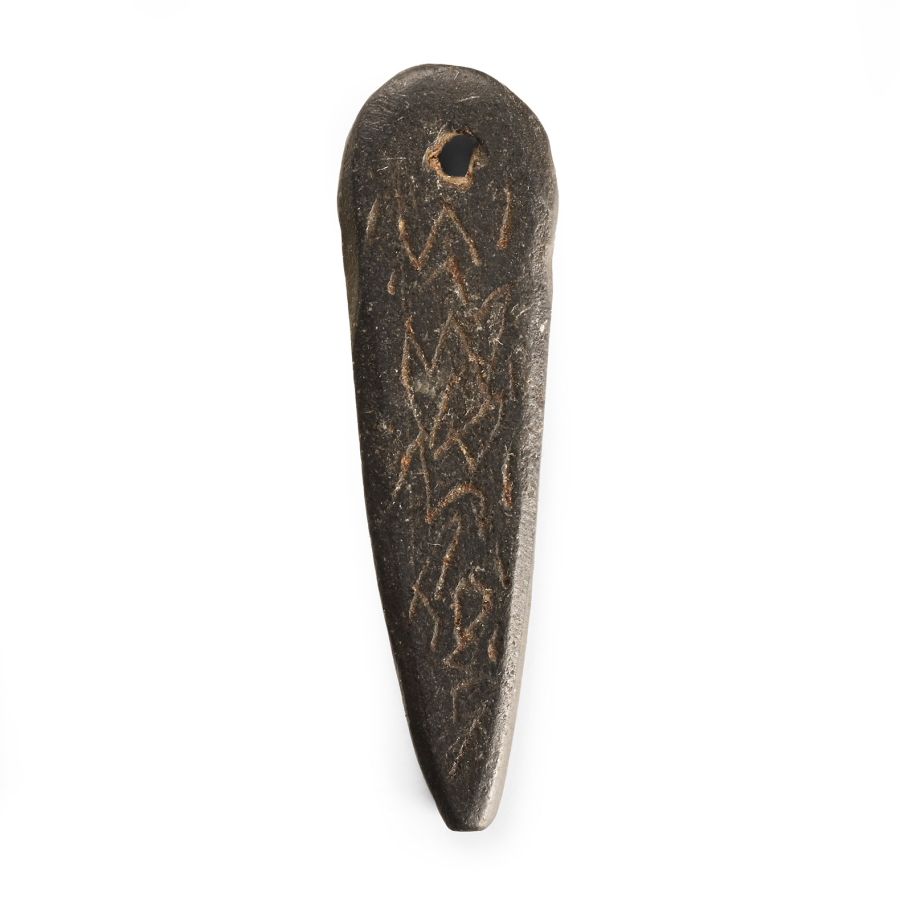
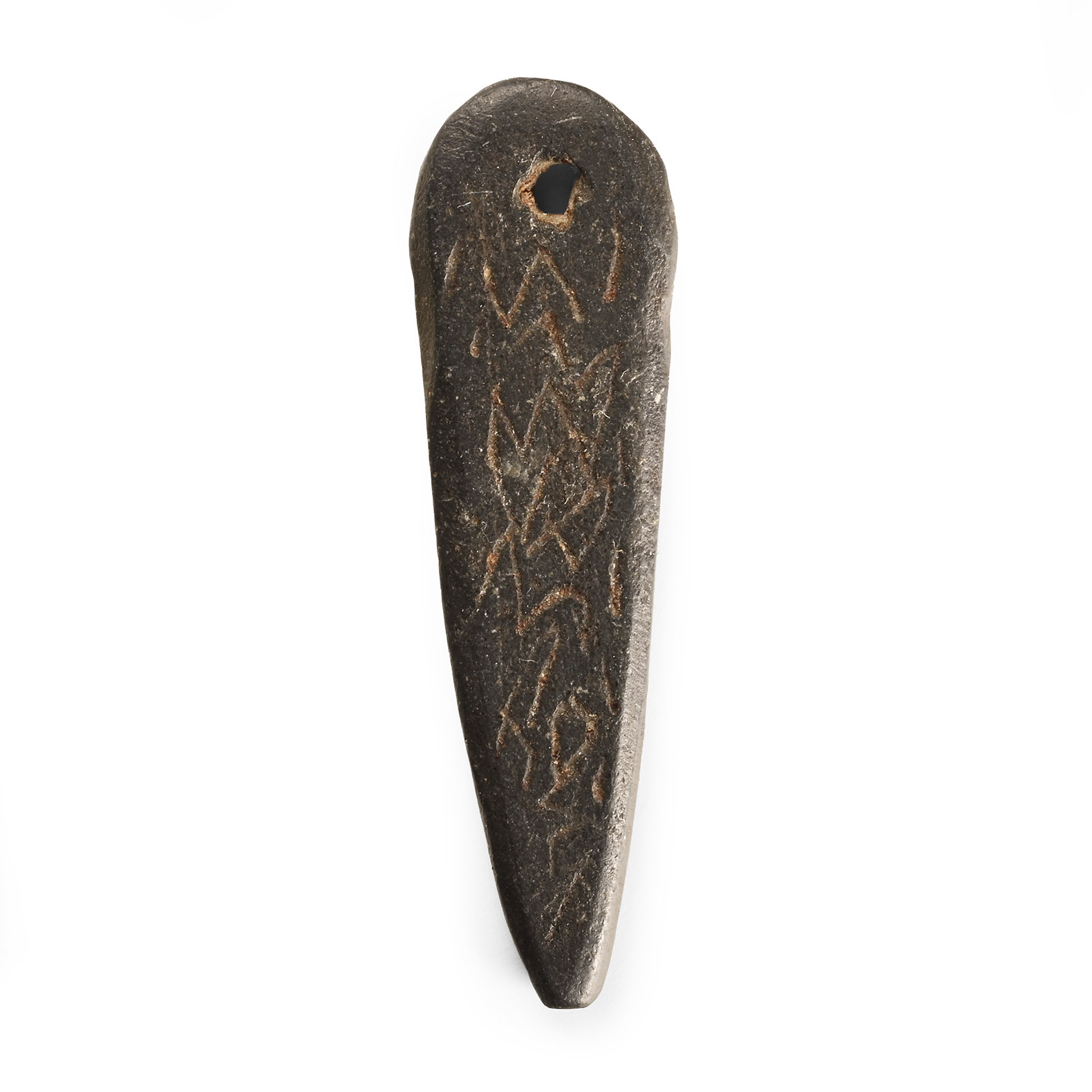
Egyptian Hardstone Pendant with Inscription
LATE PERIOD, 664-332 B.C.
1 3/8 in. (1.70 grams, 36 mm).
Teardrop-shaped flat pendant pierced at the broad end, with incised text to both faces. [No Reserve]
ProvenanceFrom the collection of Doctor Girard, a collector for over 60 years.
with Hotel des Ventes de Clermont-Ferrand, 22 May 2017.
Property of a French collector.
TimeLine Auctions follows a vetting process to ensure the authenticity and legality of all items, reinforcing our commitment to integrity and responsible trading. Each antiquity, antique, and coin lot undergoes thorough examination by a vetting committee of at least ten external specialists, professional trade association members, scientists, and archaeologists: Our Vetting Process
AUCTIONS:
TimeLine is a leading auction house specialising in antiquities, ancient art, collectables, natural history, coins, medals, and books. Our auctions offer museums, collectors, historians, and enthusiasts the opportunity to acquire unique and historically significant pieces.
-
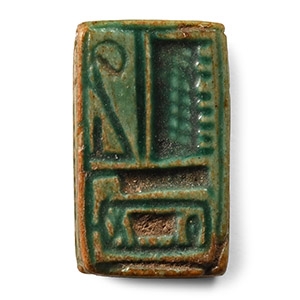
Egyptian Faience Block Bead of Thutmose III
New Kingdom, 18th Dynasty, circa 1504-1452 B.C.Sold for (Inc. bp): £442
With impressed hieroglyphs on all four faces, two sides giving the throne name of Thutmose III (Men-kheper-Re), the others mentioning the god Amun. 1.1 grams, 12 mm
From the old collection of Emile Bouillon Bey, c. 1880. Ex Gaston Maspero archaeological fund. Property of a French collector.
Thutmose III was a renowned warrior king widely revered even centuries after his reign. -
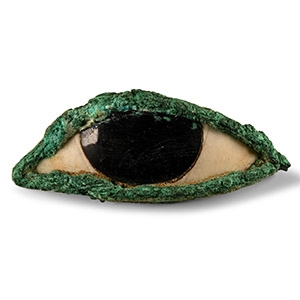
Egyptian Bronze Eye Inlay
Late Period, 664-332 B.C.Sold for (Inc. bp): £715
Comprising a bronze frame with a delicately modelled tear duct, inset with a white hardstone scalera and a large black glass pupil. 33 grams, 62 mm
Ex AB collection, 1920s-1930s. Accompanied by an old collection ticket.
Mummy masks were used as a protection over the deceased and were first introduced during the First Intermediate Period. The eyes were thought to fend off evil by reflecting it back to the one bestowing it. -
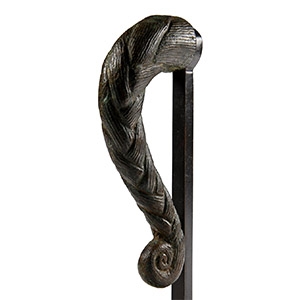
Egyptian Bronze Braided Sidelock of Harpocrates
Ptolemaic Period, circa 332-30 B.C.Sold for (Inc. bp): £624
Accessory from a statue, S-curved with braid detailing to the surface and coiled end; mounted on a custom-made display stand. 372 grams total, 14.3 cm high including stand
Jean P. Bourgis, Beaulieu Sur-Mer, France; acquired 1980.
