
Loading, please wait...
LOT 0460
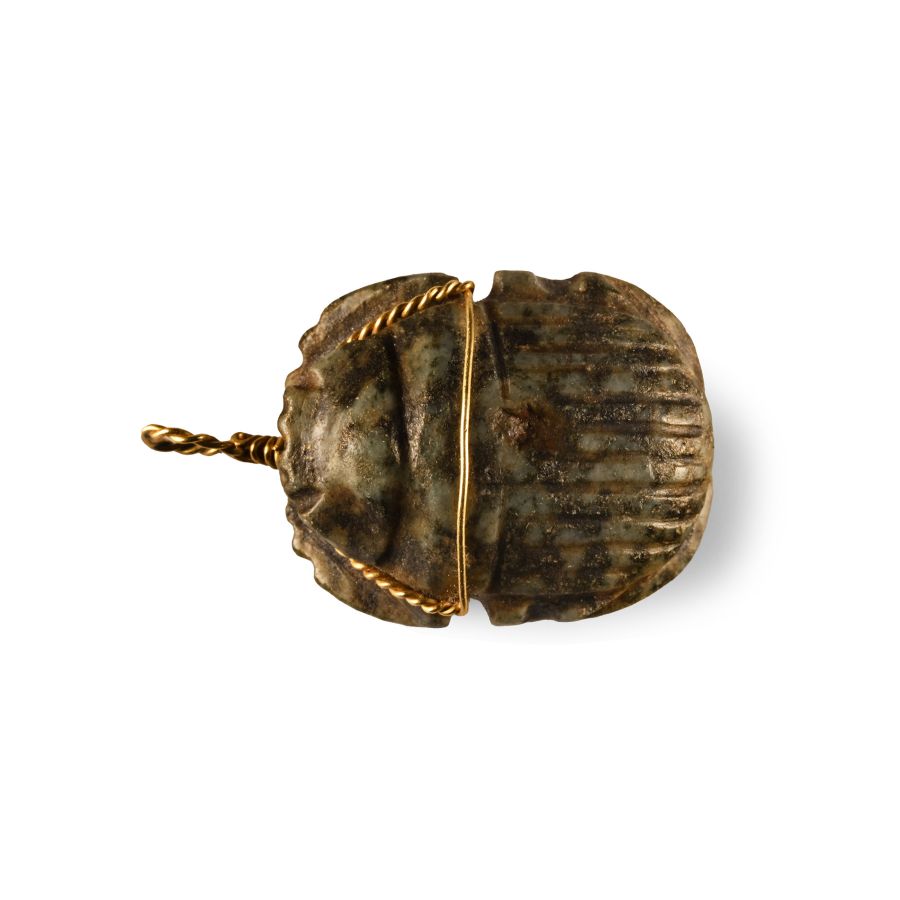
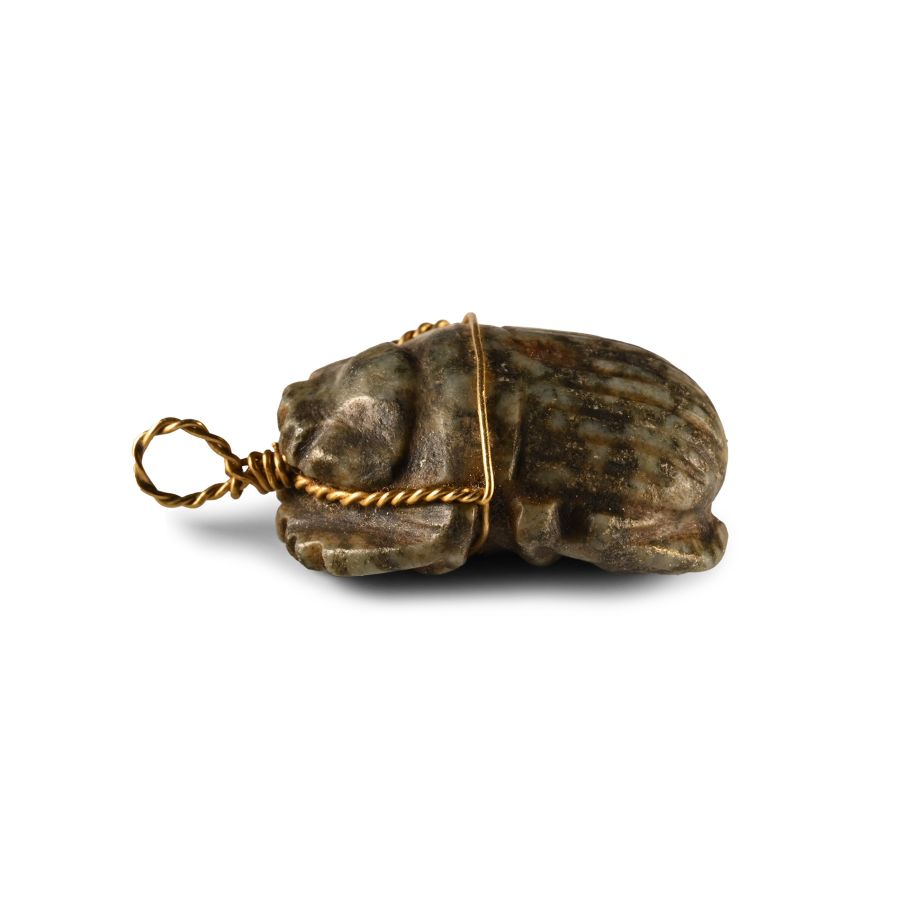
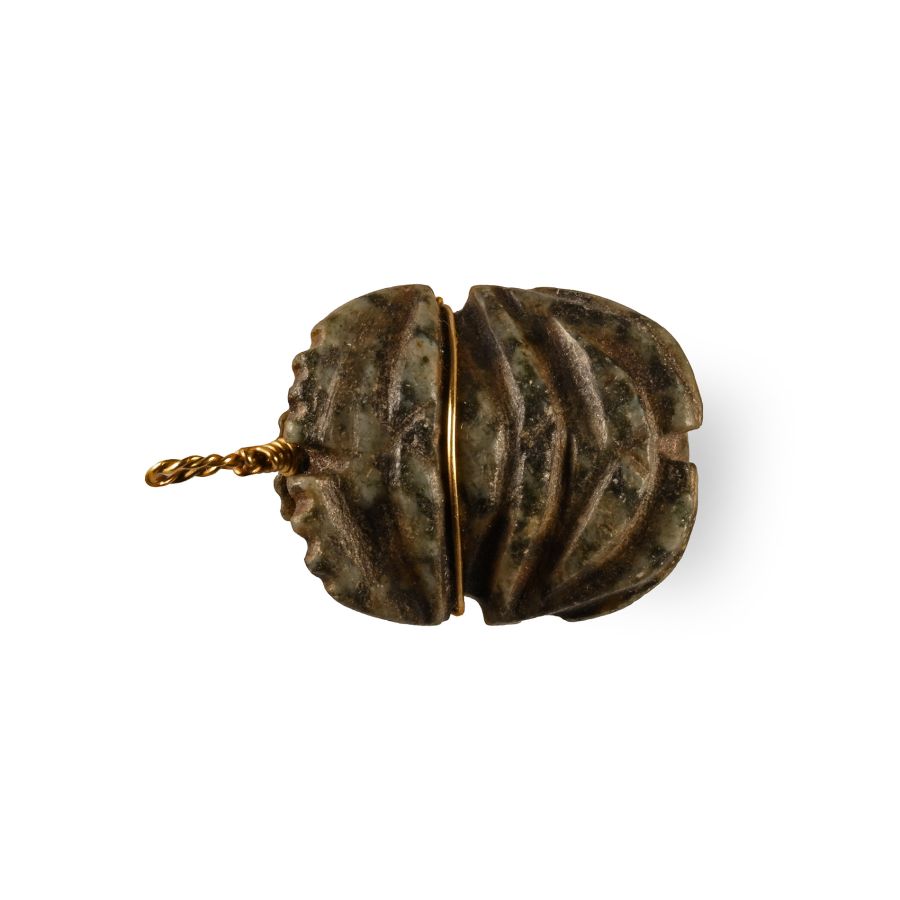
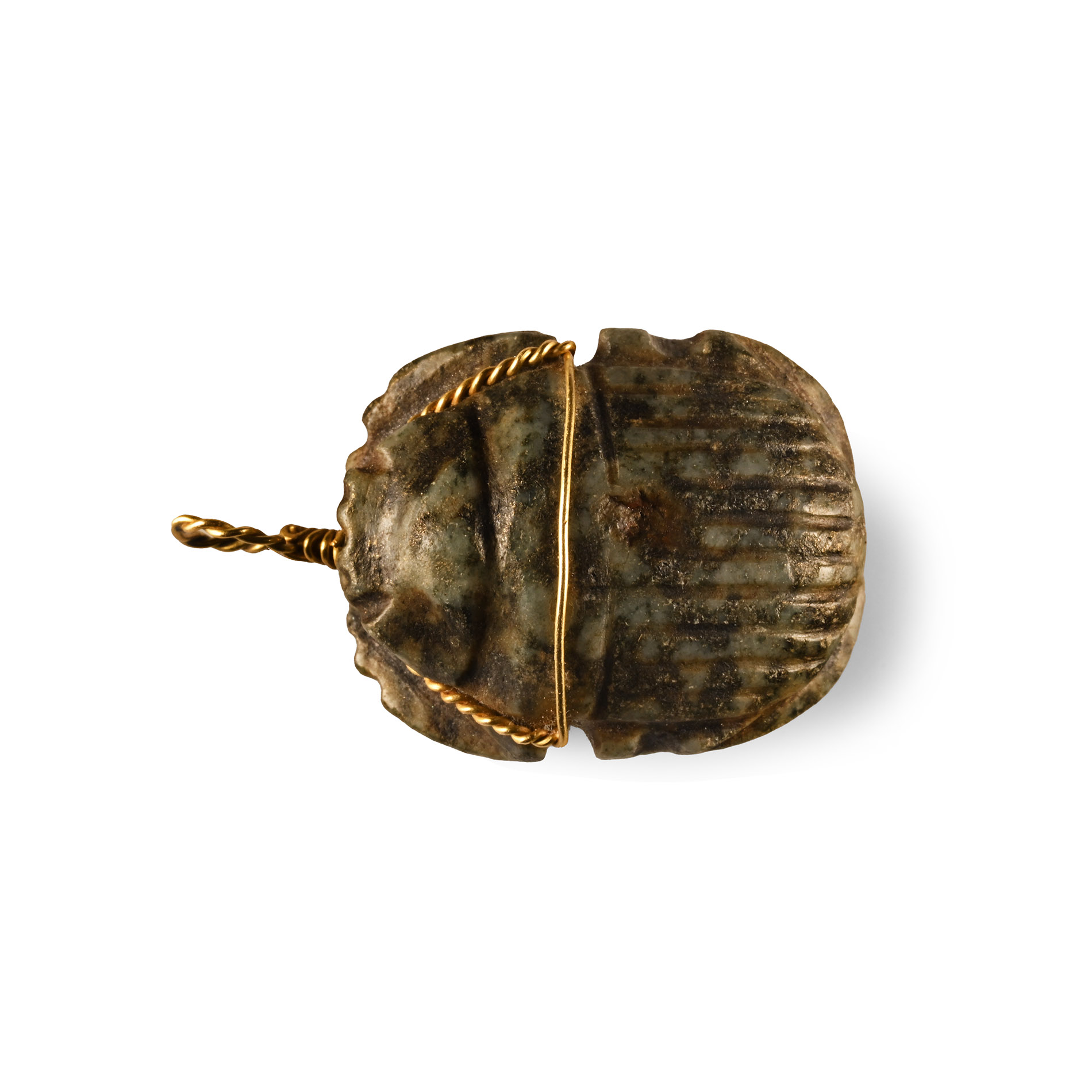
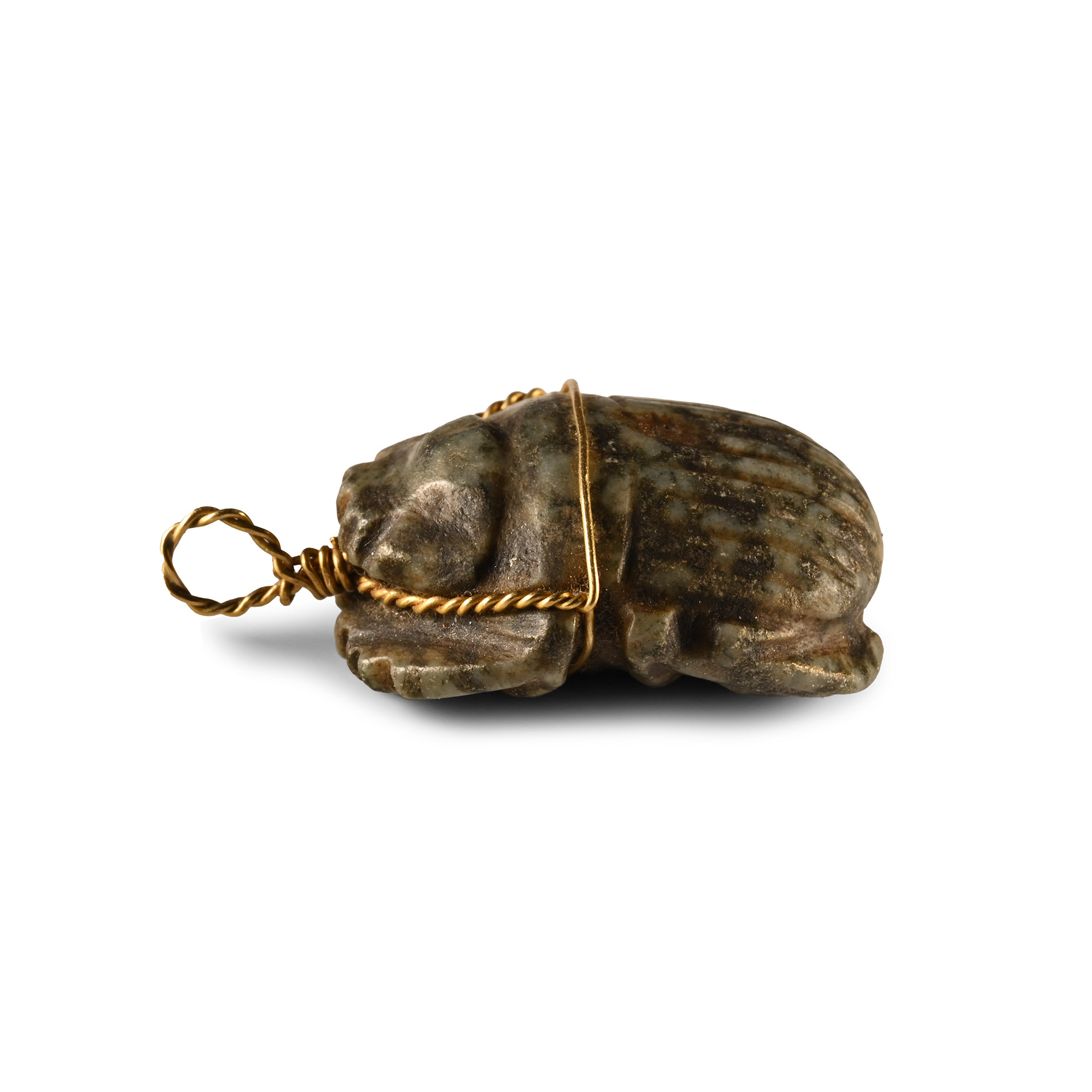
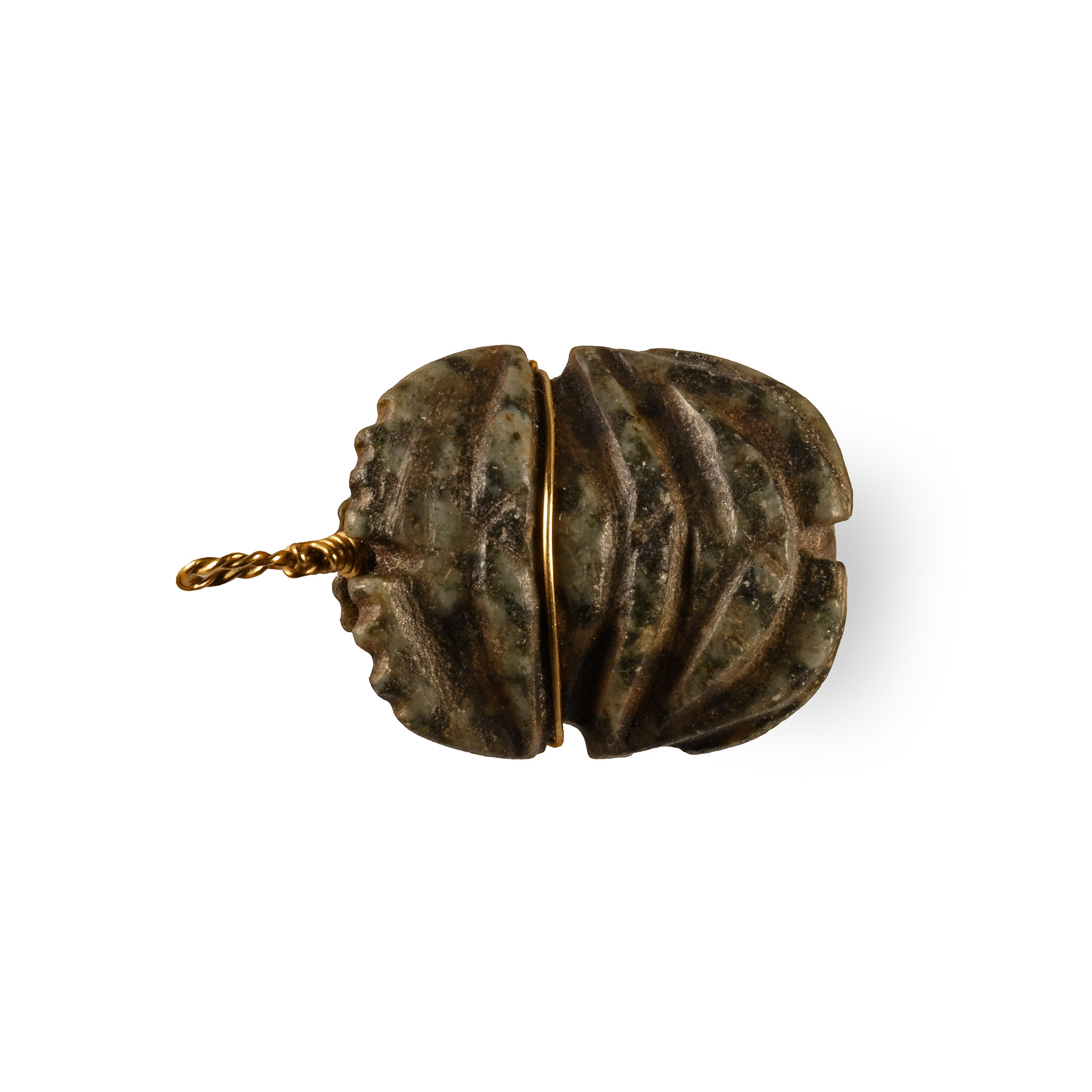
Egyptian Hardstone Heart Scarab in Gold Mount
LATE PERIOD, 664-332 B.C. AND LATER
1 1/8 in. (6.02 grams, 28 mm).
Carved scarab with textured carapace and detailed legs; set in a 19th century gold mount.
ProvenanceFrom an early 20th century collection.
LiteratureCf. Ben-Tor, D., The Scarab: A Reflection of Ancient Egypt, Tel Aviv, 1993, p. 77, no. 13, for similar.
CONDITIONTimeLine Auctions follows a vetting process to ensure the authenticity and legality of all items, reinforcing our commitment to integrity and responsible trading. Each antiquity, antique, and coin lot undergoes thorough examination by a vetting committee of at least ten external specialists, professional trade association members, scientists, and archaeologists: Our Vetting Process
AUCTIONS:
TimeLine is a leading auction house specialising in antiquities, ancient art, collectables, natural history, coins, medals, and books. Our auctions offer museums, collectors, historians, and enthusiasts the opportunity to acquire unique and historically significant pieces.
-
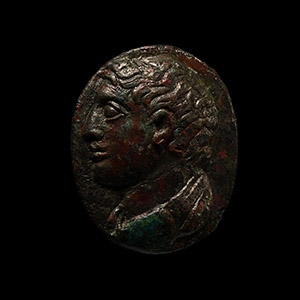
Egyptian Bronze Ring with Portrait
Ptolemaic Period, 3rd-2nd century B.C.Sold for (Inc. bp): £2,925
With ellipsoid plaque, low-relief profile bust of a male with tousled hair and aquiline nose. 21.88 grams, 30.19 mm overall, 19.08 x 16.73 mm internal diameter (approximate size British O, USA 7, Europe 14.98, Japan 14)
Acquired by the owners family in the 1980s. Ex Rupert Wace, Ancient Art Ltd, London UK. with Christie's, New York, ‘Ancient Jewellery’, 11 December 2003, no.378. European private collection. Accompanied by copies of the relevant Christie's catalogue pages. This lot has been checked against the Interpol Database of stolen works of art and is accompanied by a search certificate number no.12084-218157. -
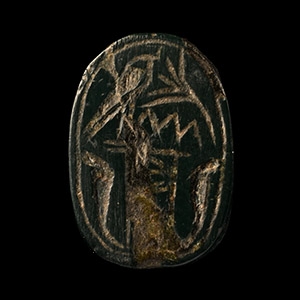
Phoenicio-Egyptian Hardstone Scarab with Hieroglyphs
Circa 6th-4th century B.C.Estimate: £400 - 600 (+bp*)
Opening Bid: £200
Haematite scarab with underside incised Horus falcon and lotus flower atop a fire-altar(?) flanked by uraei. 2.21 grams, 16 mm
Collected from 1969-1999. From the collection of the late Mr S.M., London, UK. -
.jpg)
Egyptian Painted Wooden Model of a Cow Giving Birth, Together with Two Figures
Middle Kingdom, 11th-12th Dynasty, 2023-1862 B.C.Estimate: £3,500 - 4,500 (+bp*)
Opening Bid: £1,750
Composed of three figures: a standing cow or other quadruped giving birth to its young, its head, neck and forelegs emerging from the mother's rear, both with a black and white speckled coat; a standing male figure with articulated arms and pierced hands, wearing a kilt and cropped wig and with stylised facial detailing; a kneeling figure also with articulated arms, open-palm hands, wearing a kilt and cropped wig, stylised facial features; extensive remains of polychrome pigment. 111 grams total, 9.5-16 cm
From an early 20th century Home Counties collection. This lot has been checked against the Interpol Database of stolen works of art and is accompanied by search certificate no.11597-199209.
Such models would have been deposited in tombs; the purpose of such a scene was probably to evoke the season of spring, when calves were born, and the floodplain where farmers lived and raised their livestock.
