
Loading, please wait...
LOT 0469
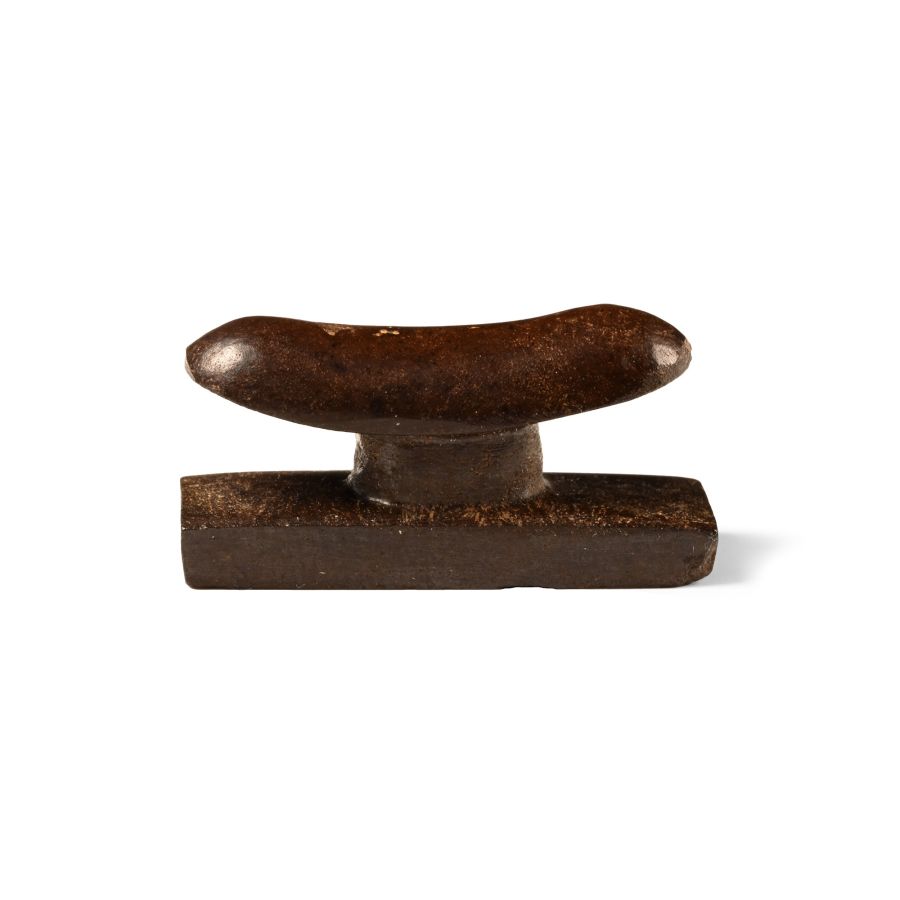
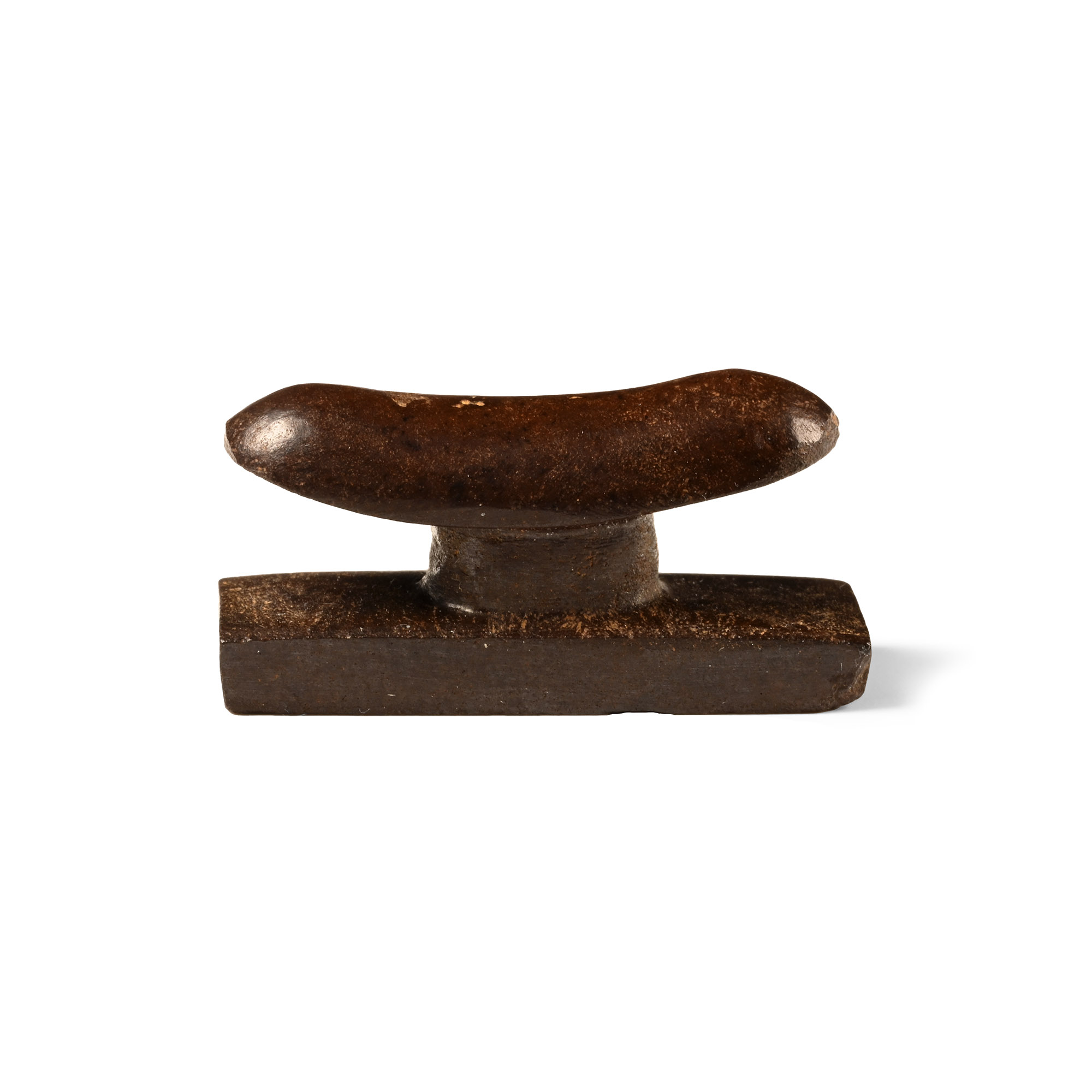
Egyptian Hardstone Head Rest Amulet
LATE PERIOD, 664-332 B.C.
1 in. (5.74 grams, 26 mm).
Carved miniature headrest with rectangular base. [No Reserve]
ProvenanceOld French collection.
Acquired from Hotel des Ventes, Drouot, Paris, France, early 2000.
From the collection of Mr D.
Property of a French collector.
Cf. Andrews, C., Amulets of Ancient Egypt, London, 1994, plate 95.
FootnotesThe headrest, or weres amulet, was placed under the mummy's head to protect it from damage and ensure the deceased's rebirth.
CONDITIONTimeLine Auctions follows a vetting process to ensure the authenticity and legality of all items, reinforcing our commitment to integrity and responsible trading. Each antiquity, antique, and coin lot undergoes thorough examination by a vetting committee of at least ten external specialists, professional trade association members, scientists, and archaeologists: Our Vetting Process
AUCTIONS:
TimeLine is a leading auction house specialising in antiquities, ancient art, collectables, natural history, coins, medals, and books. Our auctions offer museums, collectors, historians, and enthusiasts the opportunity to acquire unique and historically significant pieces.
-
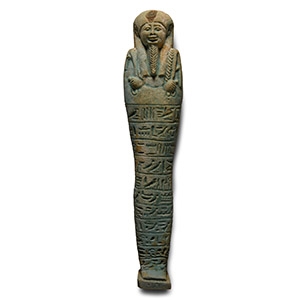
Large Egyptian Blue Glazed Hieroglyphic Shabti for Ta-Amun
Saite Period, 26th Dynasty, 664-525 B.C.Sold for (Inc. bp): £1,690
With finely modelled facial details, a plaited beard, holding a hoe and the cord of a seed bag at the left shoulder and a pick at the right, eleven horizontal bands of hieroglyphic text to the lower body. 140 grams, 18 cm
Acquired on the German art market, 1989-1995. with The Museum Gallery, 19 Bury Place, London, WC1, UK, 1998-2003. Property of a London based academic, 2003-present. -
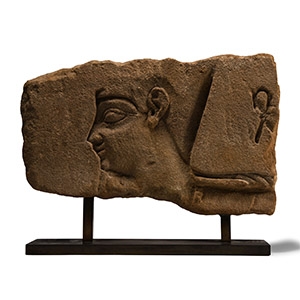
Egyptian Sandstone Relief
Late Period or Ptolemaic Period, 664-31 B.C.Estimate: £4,000 - 6,000 (+bp*)
Opening Bid: £2,000
Rectangular frieze fragment with low-relief profile bust wearing the double crown; sa symbol (of protection) to the rear; mounted on a custom-made stand. 2.8 kg total, 27 cm wide
From Galerie Orient-Occident, Paris, France. with Cahn Auctions, 19 October 2002, no.527. From the Keane private collection, Kent, UK. This lot has been checked against the Interpol Database of stolen works of art and is accompanied by a search certificate number no.12077-216770.
Possibly a sculptor's trial piece or model. -
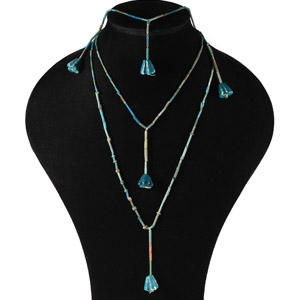
Egyptian Faience Mummy Bead Necklace with Lotus Flower Amulets
Late Period, 664-332 B.C.Sold for (Inc. bp): £208
Restrung group of mainly tubular beads with five faience lotus-flower pendants. 24.9 grams, 111 cm long
From an old English deceased estate. Acquired on the London art market in the early 1990s. Property of a London, UK, collector.
