
Loading, please wait...
LOT 0518
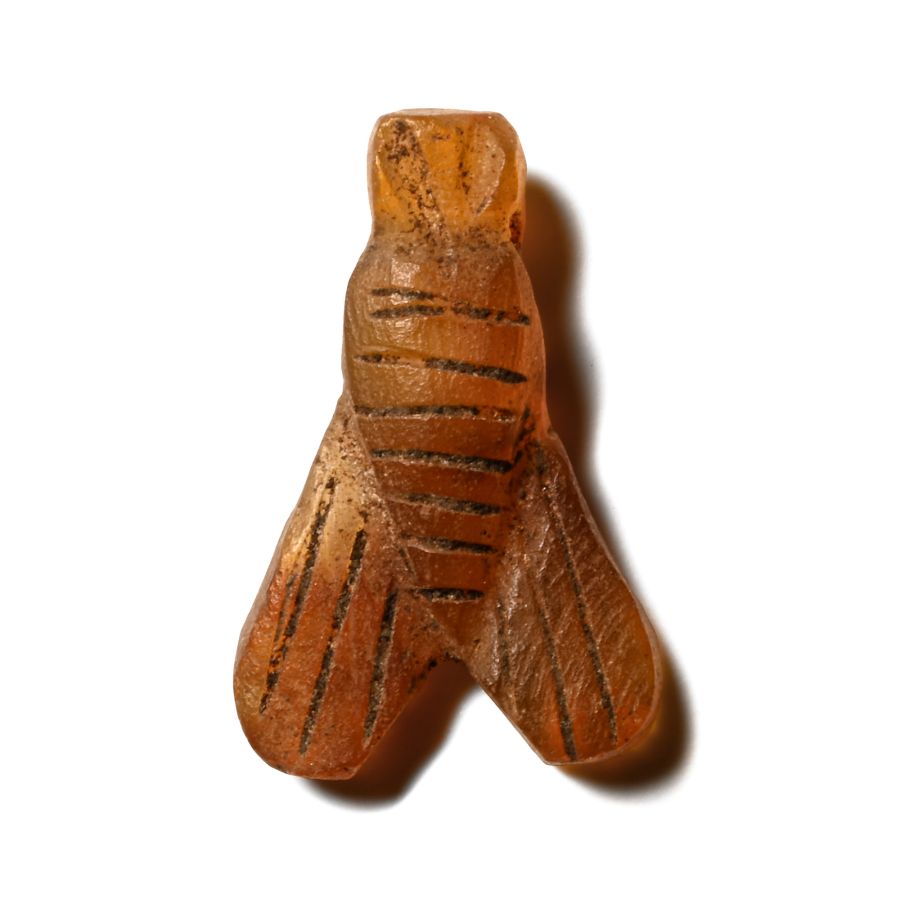
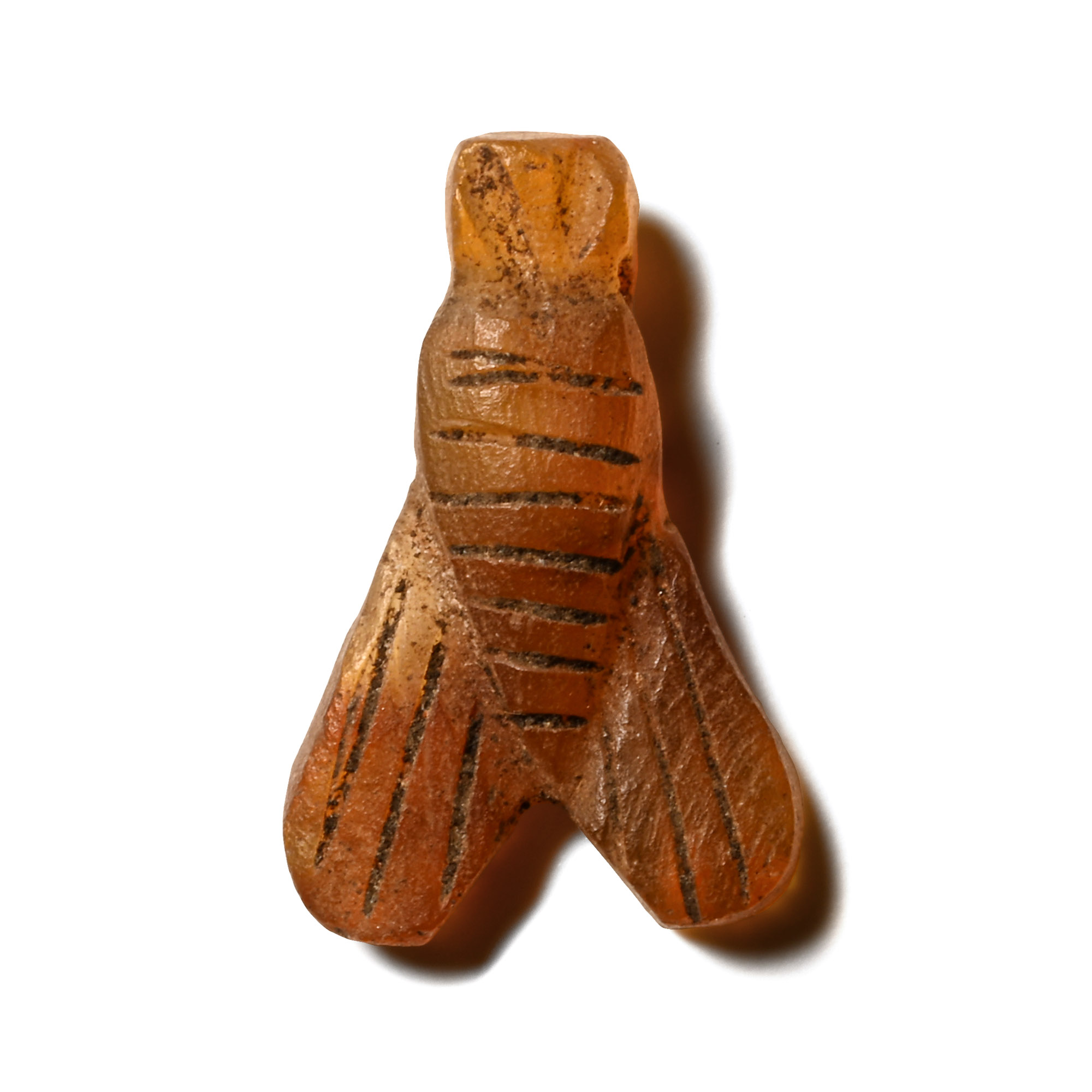
Egyptian Hardstone Fly Amulet
LATE PERIOD, 664-332 B.C.
1/2 in. (0.34 grams, 13 mm).
With linear detailing to body and wings, pierced at the neck. [No Reserve]
ProvenanceFrom an early 20th century UK collection.
LiteratureCf. Andrews, C., Amulets of Ancient Egypt, London, 1994, pp.62-3.
CONDITIONTimeLine Auctions follows a vetting process to ensure the authenticity and legality of all items, reinforcing our commitment to integrity and responsible trading. Each antiquity, antique, and coin lot undergoes thorough examination by a vetting committee of at least ten external specialists, professional trade association members, scientists, and archaeologists: Our Vetting Process
AUCTIONS:
TimeLine is a leading auction house specialising in antiquities, ancient art, collectables, natural history, coins, medals, and books. Our auctions offer museums, collectors, historians, and enthusiasts the opportunity to acquire unique and historically significant pieces.
-
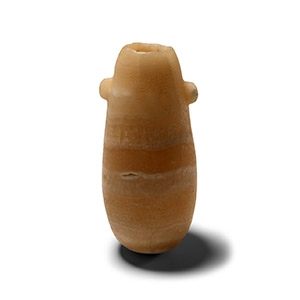
Egyptian Alabaster Alabastron
Late Period, 664-332 B.C.Sold for (Inc. bp): £260
The piriform vessel with rounded base, two integral lug handles to the neck; fractured above the neck. 139 grams, 97 mm high
Acquired in Europe before 1992. -
.jpg)
Egyptian Faience Beaded Mummy Mask with Sons of Horus
Ptolemaic Period, 332-31 B.C.Sold for (Inc. bp): £445
Restrung netted beadwork panel of annular and tubular glazed composition beads in blues, greens, black, cream and red-brown colours, depicting a mummy face mask with false beard, a scarab with extended wings below, the 'Four Sons of Horus’ beneath the scarab, joined together with areas of open netting of tubular beads; mounted in a glazed frame with papyrus backing. 127 grams, 28 cm
Previously with Mariaud de Serres, Paris, France. From a Paris gallery.
The Four Sons of Horus were deities responsible for protecting the internal organs of the deceased. The human-headed Imsety protected the liver, the baboon-headed Hapy protected the lungs, the jackal-headed Duamutef protected the stomach, and the falcon-headed Qebehsenuef protected the intestines. -
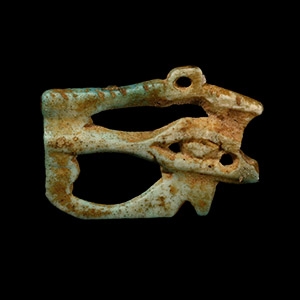
Egyptian Faience Eye of Horus
Late New Kingdom, circa 1300-1075 B.C.Sold for (Inc. bp): £130
Openwork wedjat eye pendant with suspension loop above and slender frame. 0.78 grams, 21 mm
Acquired 1970s onwards. Private collection of Michael O'Hara, Cambridgeshire, UK.
