
Loading, please wait...
LOT 0448
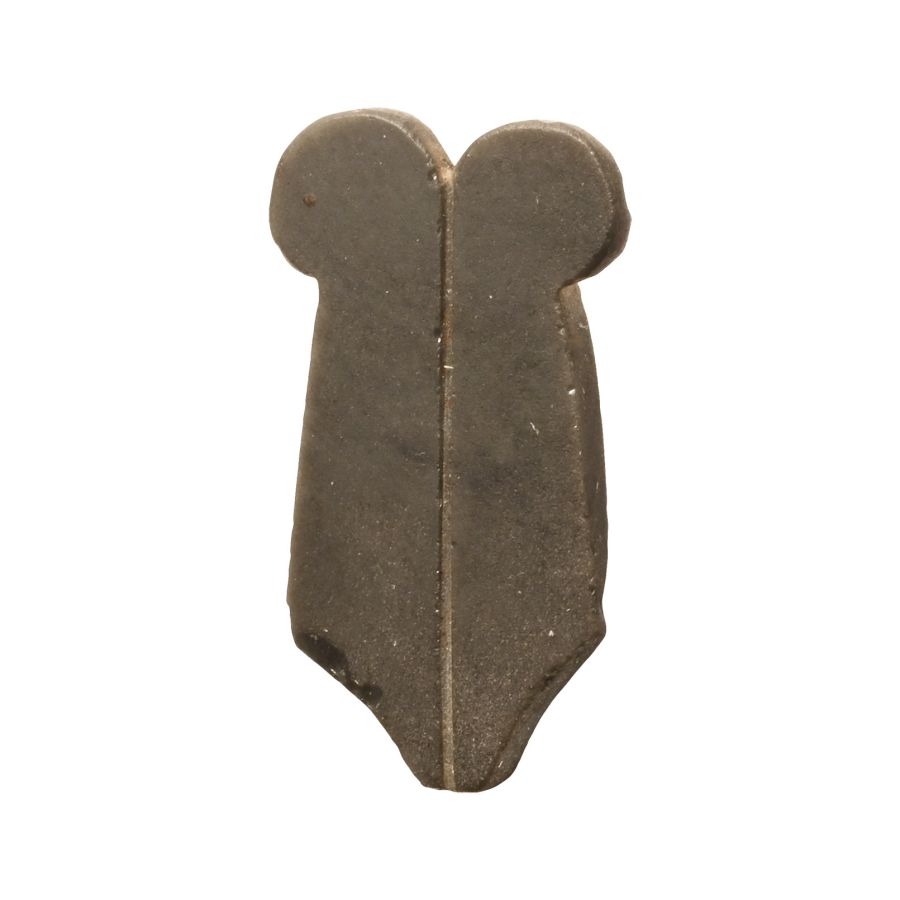
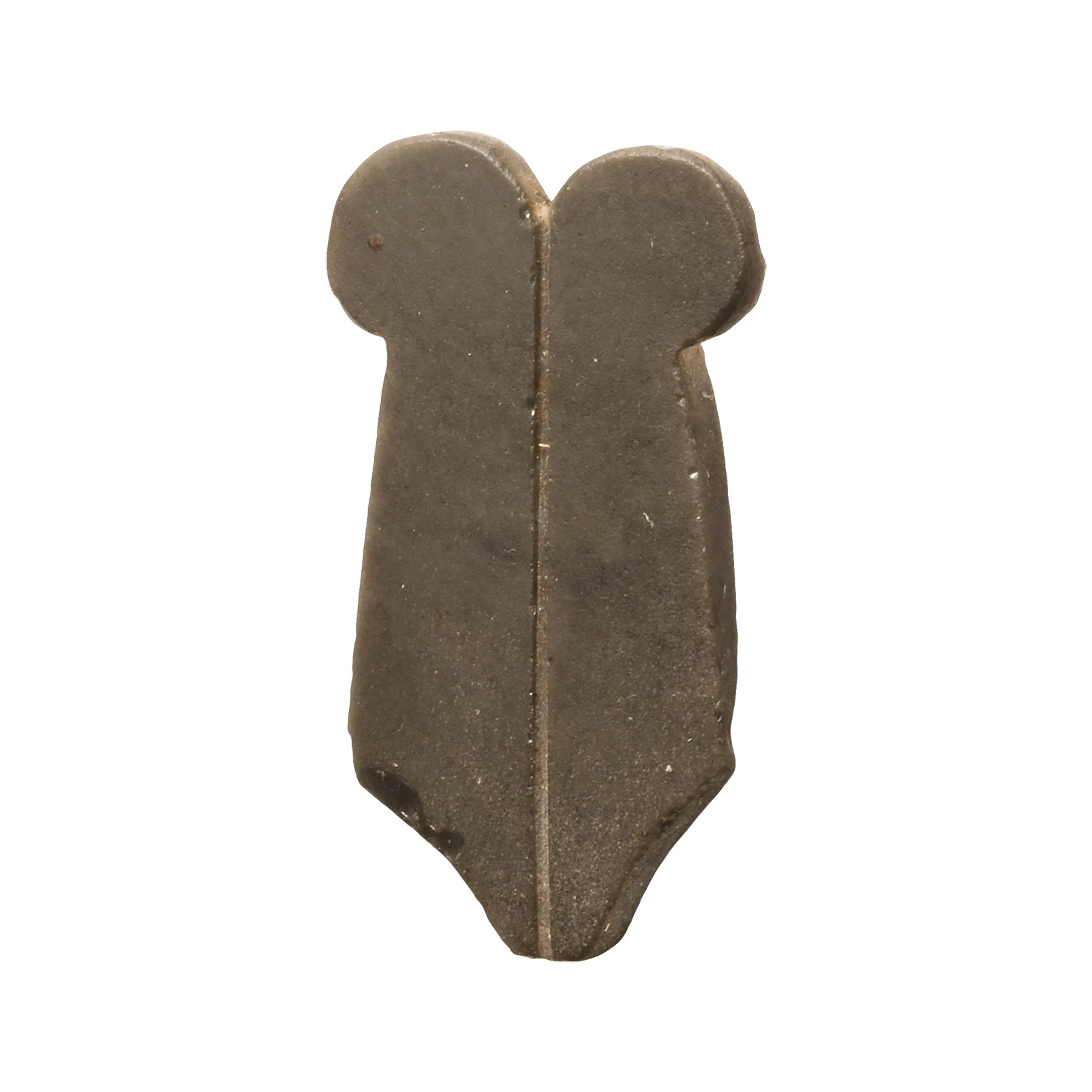
Egyptian Hardstone Double Plume Amulet
LATE PERIOD, 664-332 B.C.
1 1/8 in. (2.58 grams, 27 mm).
Carved with integral loop to the reverse; old inked collector's reference 'ES716'.
Provenancewith Hotel des Ventes, Drouot, Paris, France.
From the collection of Mr H. Naudy, Paris, France.
Acquired at between 2004-2010.
Property of a French collector.
Cf. Andrews, C., Amulets of Ancient Egypt, London, 1994, pl.81(c).
FootnotesThis ancient amulet represents two ostrich feathers or shuty. Interestingly, these feathers were also present on the Atef crown of Osiris, the god of the afterlife and the dead. This suggests the amulet was believed to imbue the wearer with Osiris' divine power and protection.
CONDITIONTimeLine Auctions follows a vetting process to ensure the authenticity and legality of all items, reinforcing our commitment to integrity and responsible trading. Each antiquity, antique, and coin lot undergoes thorough examination by a vetting committee of at least ten external specialists, professional trade association members, scientists, and archaeologists: Our Vetting Process
AUCTIONS:
TimeLine is a leading auction house specialising in antiquities, ancient art, collectables, natural history, coins, medals, and books. Our auctions offer museums, collectors, historians, and enthusiasts the opportunity to acquire unique and historically significant pieces.
LOT 0448
Egyptian Hardstone Double Plume Amulet
Estimate £250 - 350€290 - 410 (for guidance only)$340 - 470 (for guidance only)
-
.jpg)
Egyptian White Stone Scarab with Uraei and Falcons
New Kingdom-Late Period, 1550-332 B.C.Estimate: £400 - 600 (+bp*)
Opening Bid: £175
Underside with design including hieroglyphs and falcons and uraei. 3.8 grams, 21 mm
Ex North London gentleman's collection, 1990s. Property of a Cambridgeshire, UK, gentleman. -
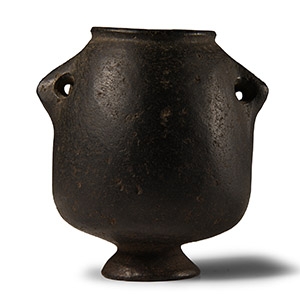
Egyptian Predynastic Basalt Vase
Naqada I-II, circa 3900-3300 B.C.Estimate: £5,000 - 7,000 (‡+bp*)
Opening Bid: £2,500
Barrel-shaped in profile with tapering neck and trumpet-shaped foot, two lateral pierced lug handles, flared rim (damaged). 330 grams, 86 mm
French private collection. From the 'Yvelines Department', Northern France. with Mme Digard, Drouot, Paris, 7 February 2011, no.107. Accompanied by a copy of a French cultural passport. This lot has been checked against the Interpol Database of stolen works of art and is accompanied by a search certificate number no.12072-218133. -
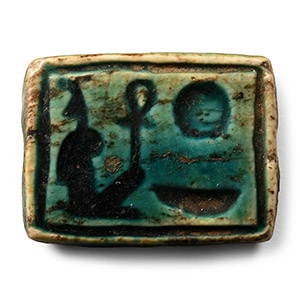
Egyptian Faience Block Bead for Amenhotep III and Queen Tiye
New Kingdom, 18th Dynasty, circa 1398-1338 B.C.Sold for (Inc. bp): £520
Rectangular bifacial stamp with hieroglyphs writing the prenomen of Amenhotep III (Neb-Maat-Re) to obverse, and to reverse 'King's Wife Tiye'. 1.84 grams, 16 mm
Ex Emile Bouillon Bey, c. 1880. From the Gaston Maspero Archaeological Fund. with Hotel des Ventes du Perigord, Bergerac, 24 June 2007. Property of a French collector.
