
Loading, please wait...
LOT 0444
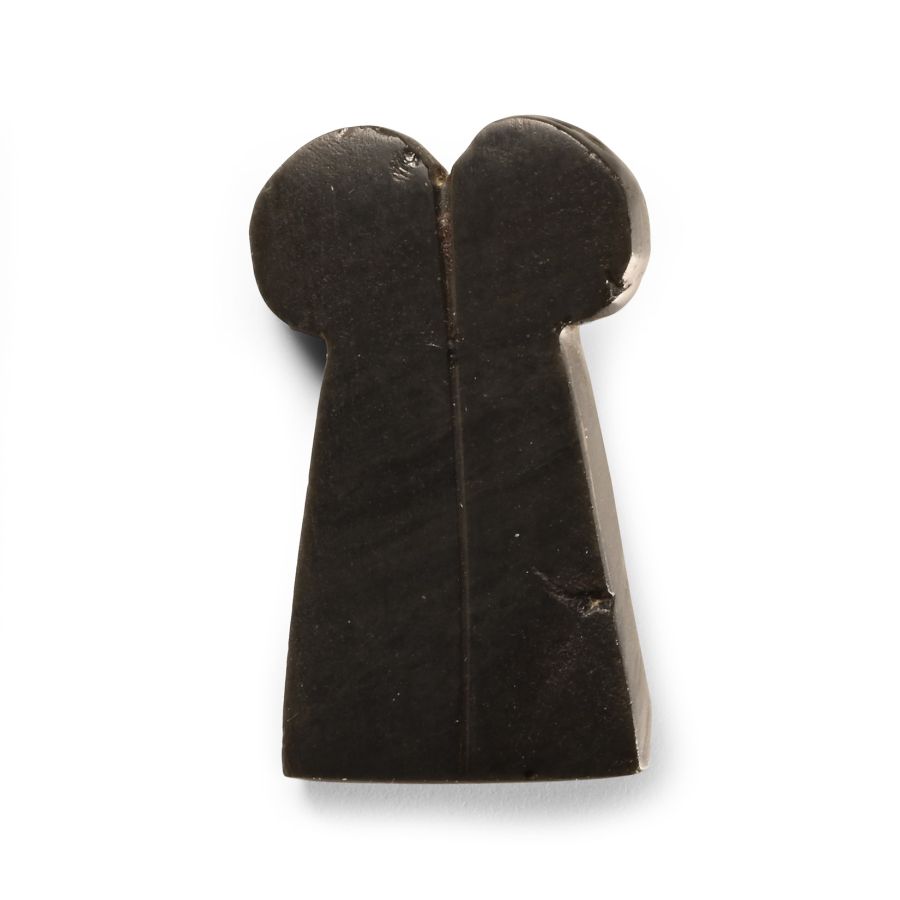
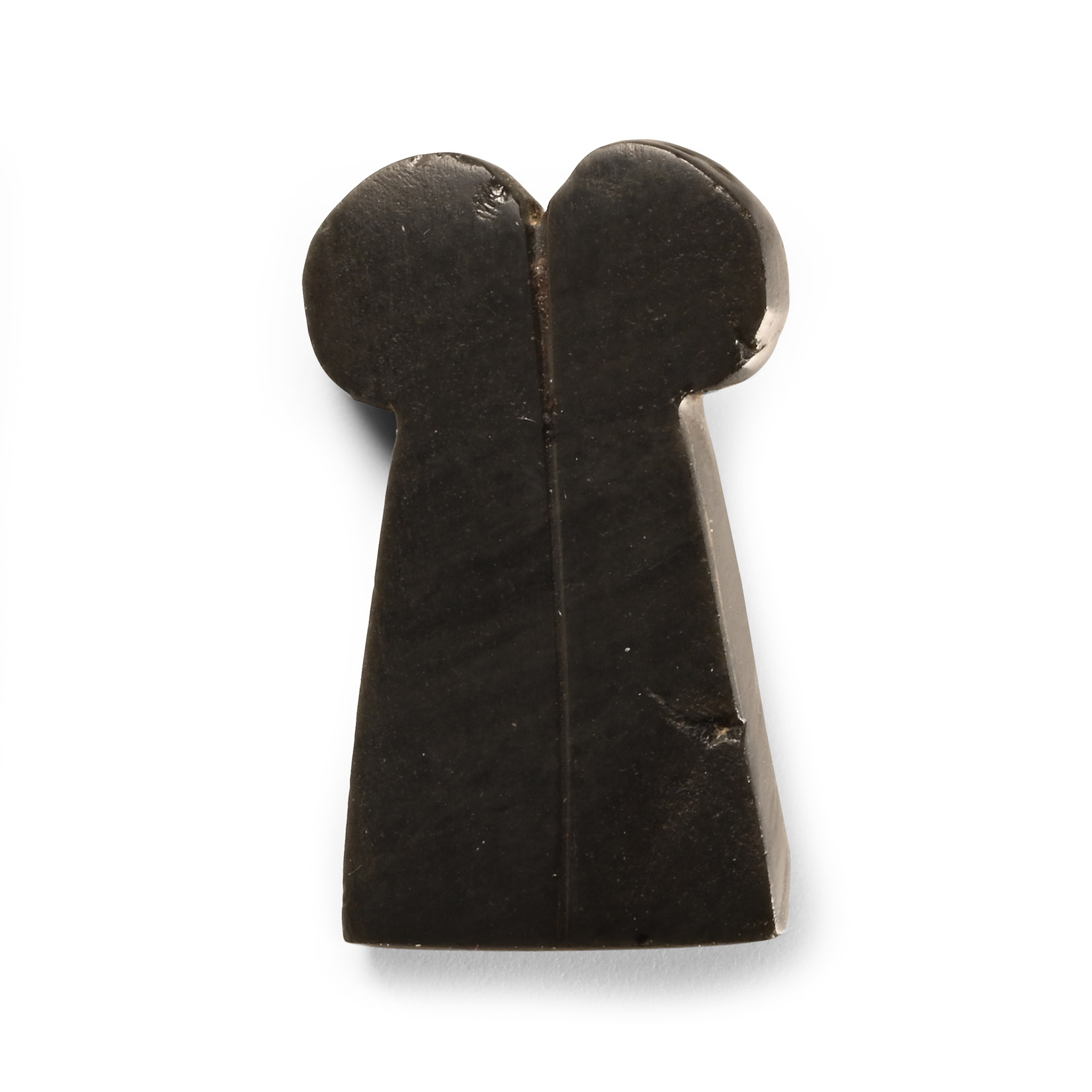
Egyptian Hardstone Double Plume Amulet
LATE PERIOD, 664-332 B.C.
1 1/4 in. (4.4 grams, 31 mm).
Carved with integral ribbed loop to the reverse; unfinished.
Provenancewith Hotel des Ventes, Drouot, Paris, France.
From the collection of Mr H. Naudy, Paris, France.
Acquired at between 2004-2010.
Property of a French collector.
Cf. Andrews, C., Amulets of Ancient Egypt, London, 1994, pl.81(c).
FootnotesThis ancient amulet represents two ostrich feathers or shuty. Interestingly, these feathers were also present on the Atef crown of Osiris, the god of the afterlife and the dead. This suggests the amulet was believed to imbue the wearer with Osiris' divine power and protection.
CONDITIONTimeLine Auctions follows a vetting process to ensure the authenticity and legality of all items, reinforcing our commitment to integrity and responsible trading. Each antiquity, antique, and coin lot undergoes thorough examination by a vetting committee of at least ten external specialists, professional trade association members, scientists, and archaeologists: Our Vetting Process
AUCTIONS:
TimeLine is a leading auction house specialising in antiquities, ancient art, collectables, natural history, coins, medals, and books. Our auctions offer museums, collectors, historians, and enthusiasts the opportunity to acquire unique and historically significant pieces.
LOT 0444
Egyptian Hardstone Double Plume Amulet
Estimate £250 - 350€290 - 410 (for guidance only)$340 - 470 (for guidance only)
-
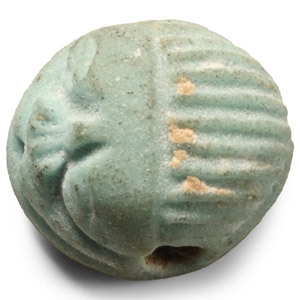
Phoenician Faience Scarab with Face
6th-4th century B.C.Sold for (Inc. bp): £98
Discoid scarab with plain reverse, stylised human face. 0.55 grams, 10 mm
From the Fadel family collection, London, UK, 1970s. -
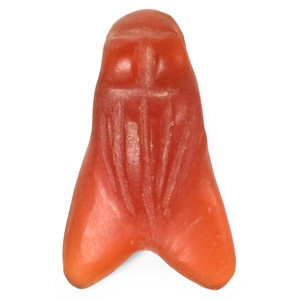
Egyptian Carnelian Fly Amulet
Late Period, 664-332 B.C.Sold for (Inc. bp): £312
Carved with simple body and eye detailing and polished; drilled through the eyes for suspension. 0.44 grams, 13 mm
From an early 20th century collection, Surrey, UK.
Considering Egyptian artists often depicted fly whisks in the hands of pharaohs and high officials, one might assume that flies were simply a nuisance. However, the Egyptians held flies in high regard due to their quick speed, reactions, and persistence. Small fly amulets were made from various materials, including gold, silver, lapis lazuli, carnelian, amethyst, faience, and bone. These amulets were believed to protect against insect bites and ward off flying creatures through apotropaic magic. -
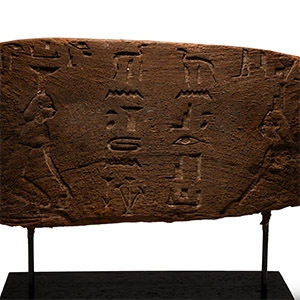
Egyptian Wood Panel with Hieroglyphs for Padi-Wsir
Late Period, 664-332 B.C.Sold for (Inc. bp): £2,340
Foot panel from a cedarwood sarcophagus with carved socket to the inner face to accept the feet and mortices for attaching to sides; the outer face in low relief, a figural scene depicting the sisters of Osiris (Nephthys to the left and Isis to the right) with their arms extended; text translatable as 'Words spoken for Neftis, which surrounds ...Words spoken for Osiris, Padi-Wsir. I have come into existence as [...] Osiris, Padi-Wsir, the righteous [...]'. 652 grams total, 31 cm wide including stand
From a Dutch private collection, acquired in the 1970s. Acquired from J. Bagot Ancient Art, Barcelona, Spain, in 2016. From the Keane private collection, Kent, UK. Accompanied by a copy of the J. Bagot certificate of authenticity and invoice (2,800 euros). This lot has been checked against the Interpol Database of stolen works of art and is accompanied by a search certificate number no.12078-216769.
'Padi Wsir' is probably the name of the owner of the sarcophagus; the same name was elsewhere transliterated as 'Padiusir' and Hellenised as 'Petosiris'', a familiar name in the Late Period.
