
Loading, please wait...
LOT 0460
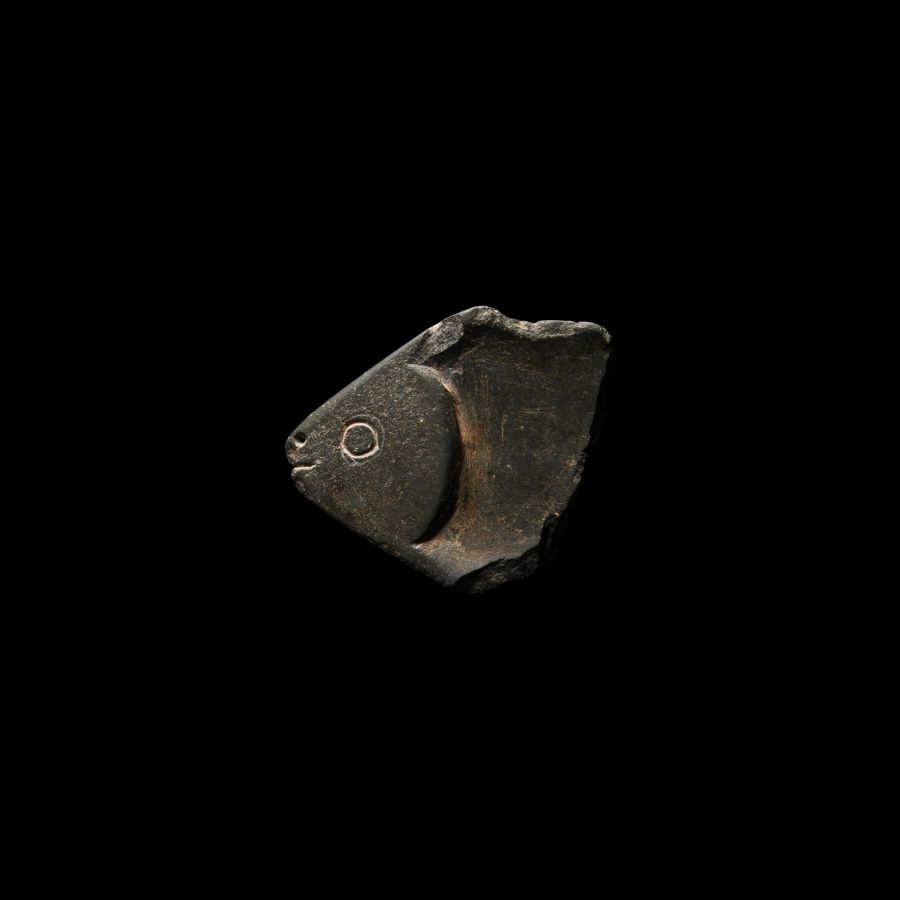
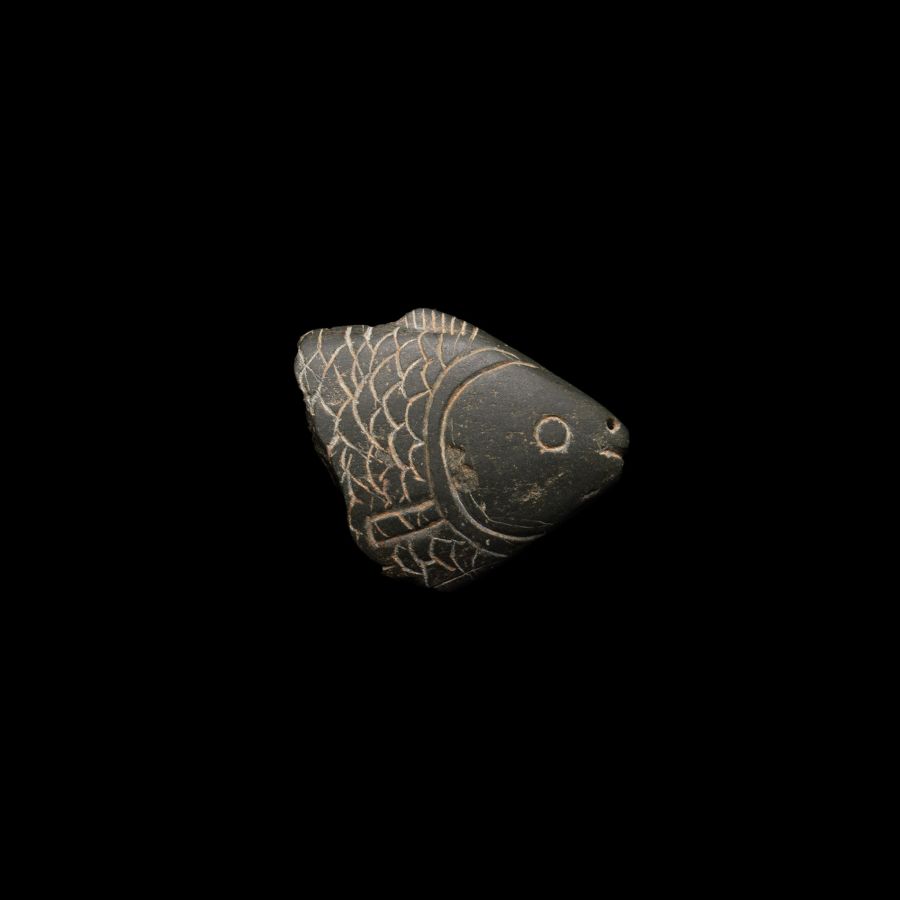
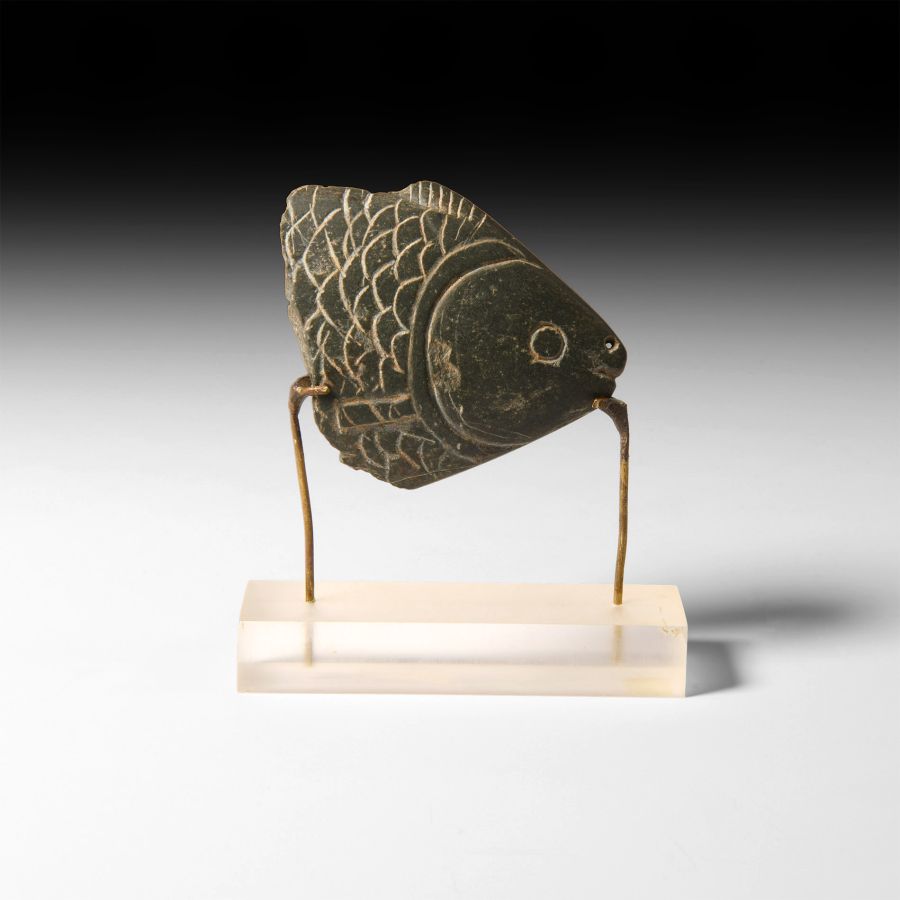
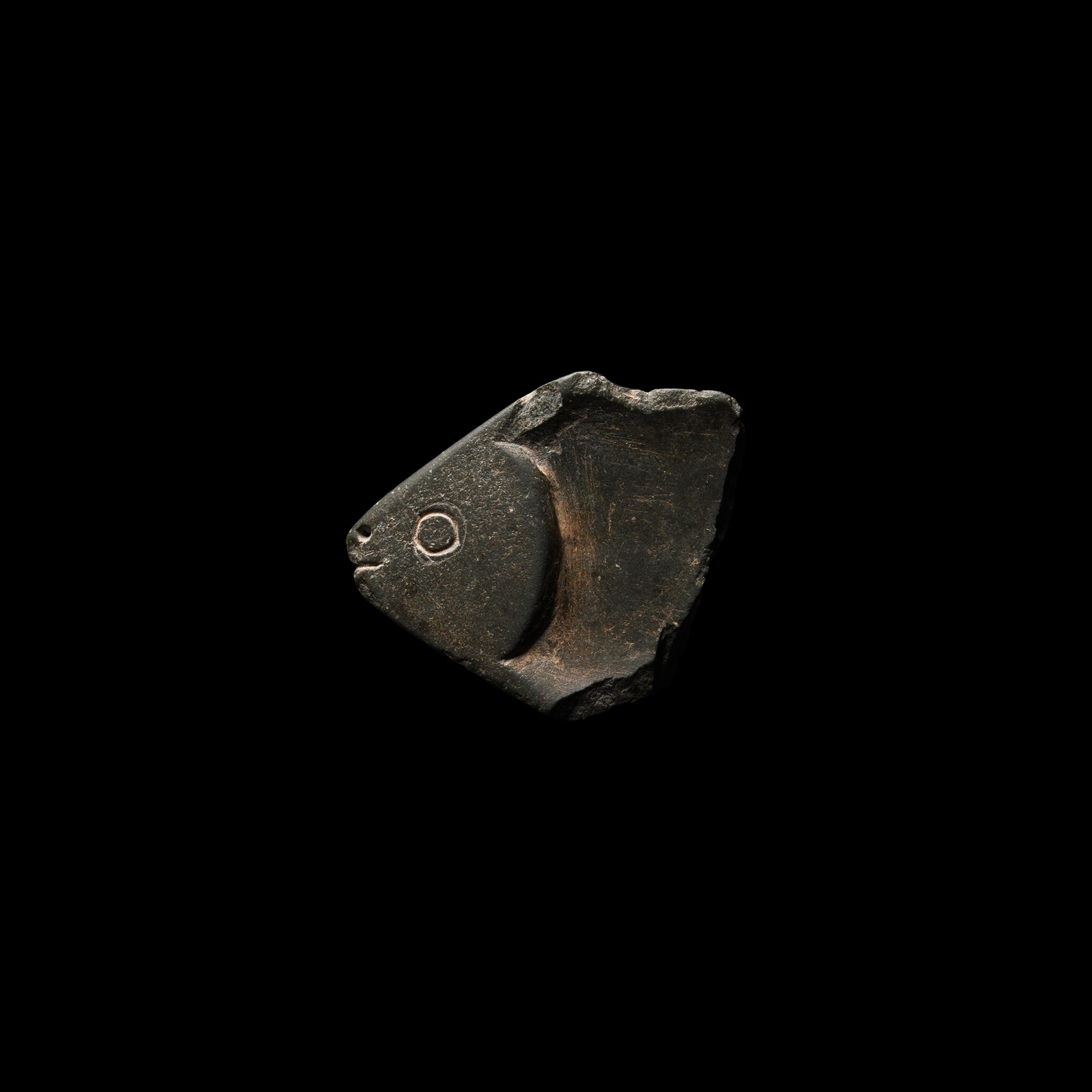
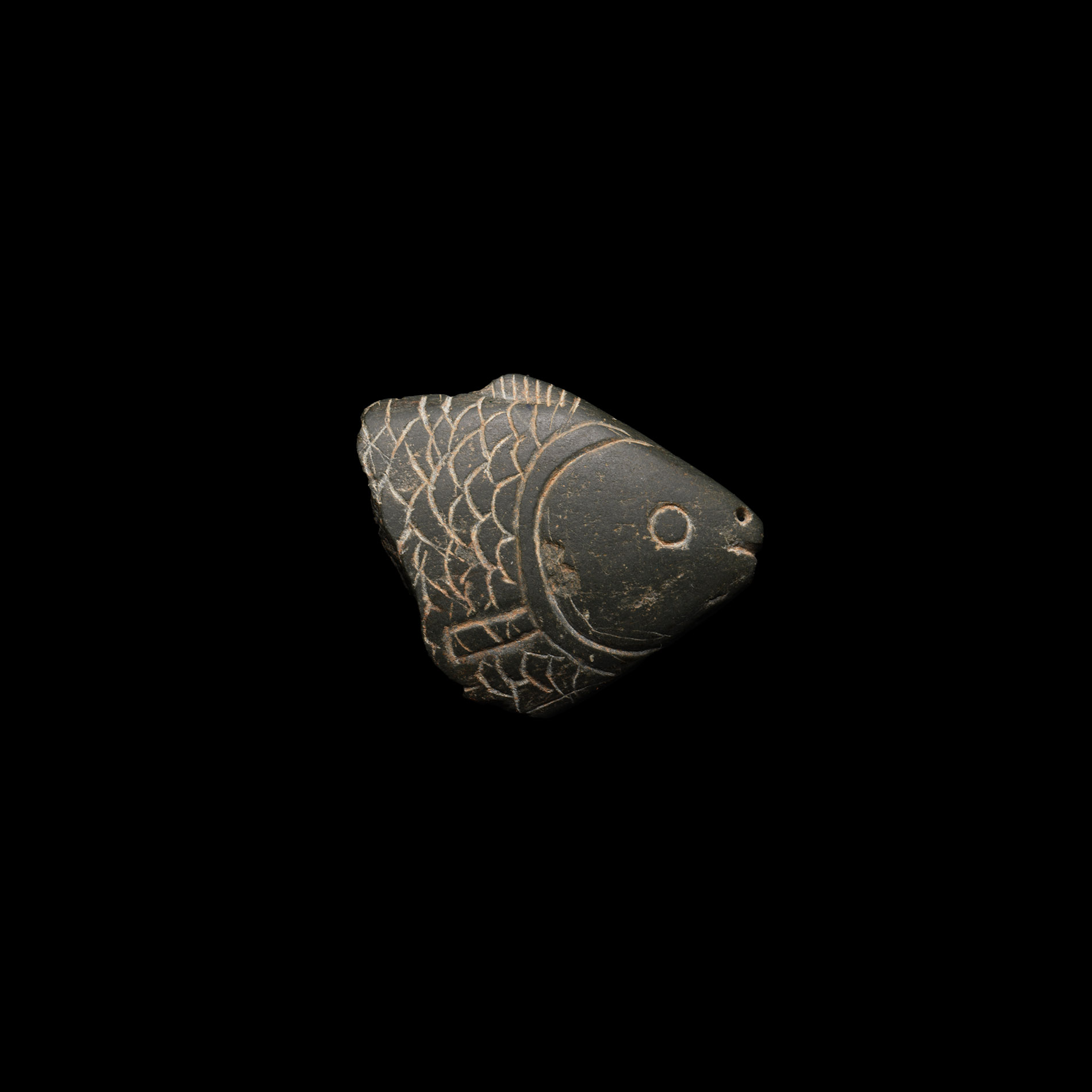
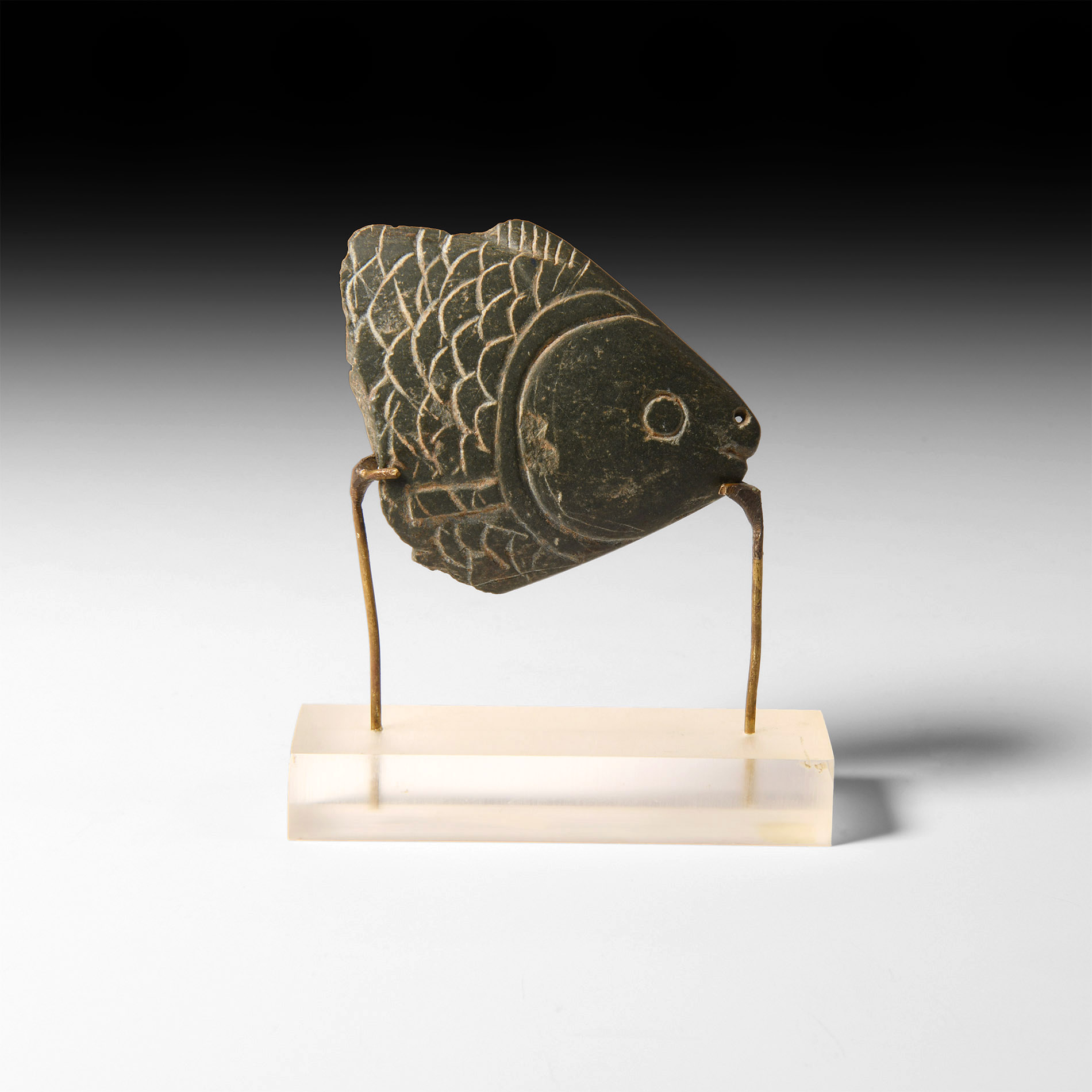
Egyptian Greywacke Cosmetic Fish Spoon Section
NEW KINGDOM, 1569-1081 B.C.
2 1/4 - 3 3/8 in. (27 grams, 58 mm wide (50 grams total, 85 mm high including stand)).
A fragment of a greywacke cosmetic spoon, shaped as a fish with finely worked features and incised eye, scales, gill, and fin detailing; the underside is recessed to create the spoon bowl; accompanied by a custom-made display stand.
ProvenanceAcquired in the 1980s.
From a French collection.
See Hodjash, S.I., Ancient Egyptian vessels in the State Pushkin Museum of Fine Art, Moscow, Oakville CT, 2005, p.86, nos.311 and 312, pl.29, for comparable examples.
CONDITIONTimeLine Auctions follows a vetting process to ensure the authenticity and legality of all items, reinforcing our commitment to integrity and responsible trading. Each antiquity, antique, and coin lot undergoes thorough examination by a vetting committee of at least ten external specialists, professional trade association members, scientists, and archaeologists: Our Vetting Process
AUCTIONS:
TimeLine is a leading auction house specialising in antiquities, ancient art, collectables, natural history, coins, medals, and books. Our auctions offer museums, collectors, historians, and enthusiasts the opportunity to acquire unique and historically significant pieces.
LOT 0460
Egyptian Greywacke Cosmetic Fish Spoon Section
Estimate £250 - 350€290 - 410 (for guidance only)$340 - 470 (for guidance only)
-
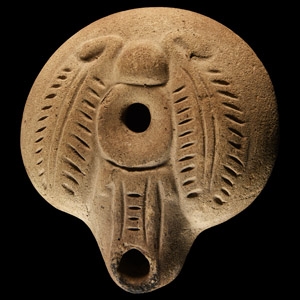
Egyptian Terracotta Frog Type Lamp
Roman Period, 2nd-4th century A.D.Estimate: £150 - 200 (+bp*)
Opening Bid: £75
Displaying palm branches; possible letter W incised to base. 107 grams, 83 mm
From a German collection. Ex Cambridge, UK, collection, 1980s. -
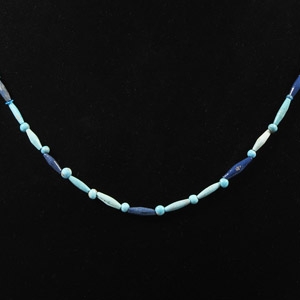
Egyptian Faience Bead Necklace
New Kingdom, 1569-1081 B.C.Sold for (Inc. bp): £221
Composed of gently tapering biconical beads of various shades of turquoise and blue, interspersed with coin-shaped and spherical beads; restrung. 6.43 grams, 66 cm long
From an early 20th century UK collection. -
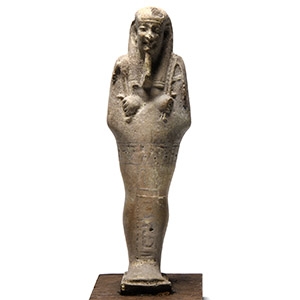
Large Egyptian Glazed Hieroglyphic Shabti
Late Period, 30th Dynasty, 380-343 B.C.Sold for (Inc. bp): £845
Modelled mummiform, arms crossed over the chest holding crook and flail, with a blank pillar to reverse; hieroglyphs to the front of the body; remains of glaze; mounted on a wooden display base; repaired. 191 grams total, 17 cm high including stand
Gifted by Herbert Parsons (1870-1940) to his grandson, James Gibson (1926-2013). Inherited by the vendor and her brother, from their grandfather James Gibson.
