
Loading, please wait...
LOT 0039
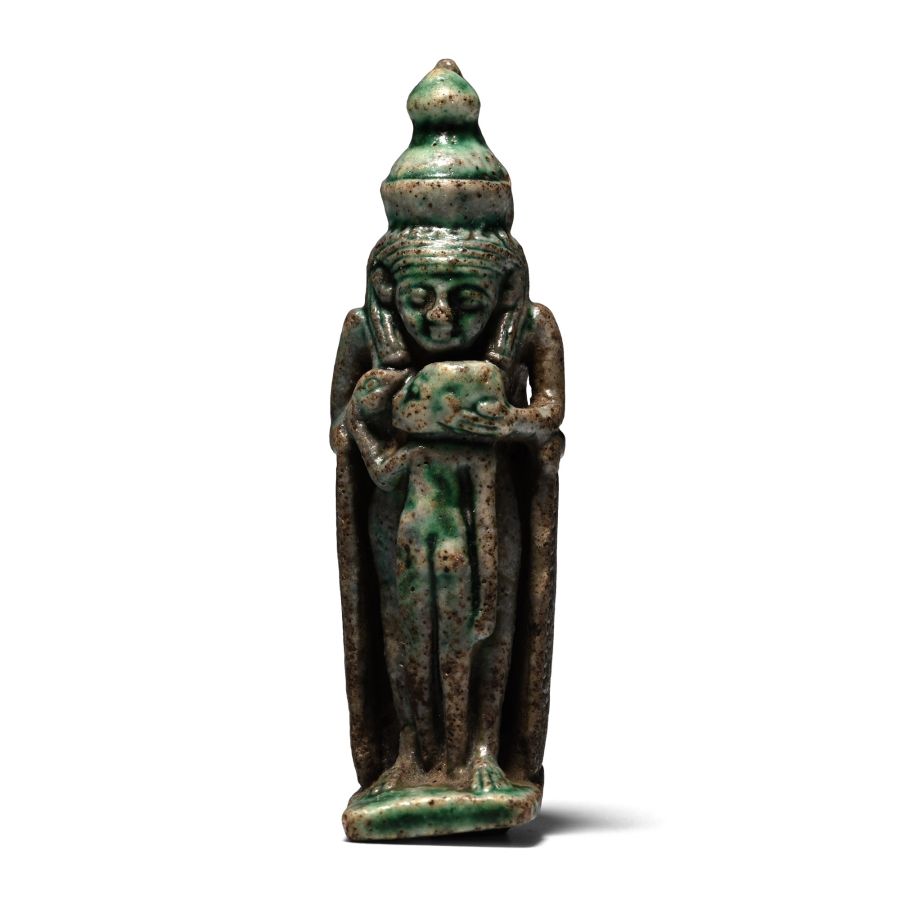
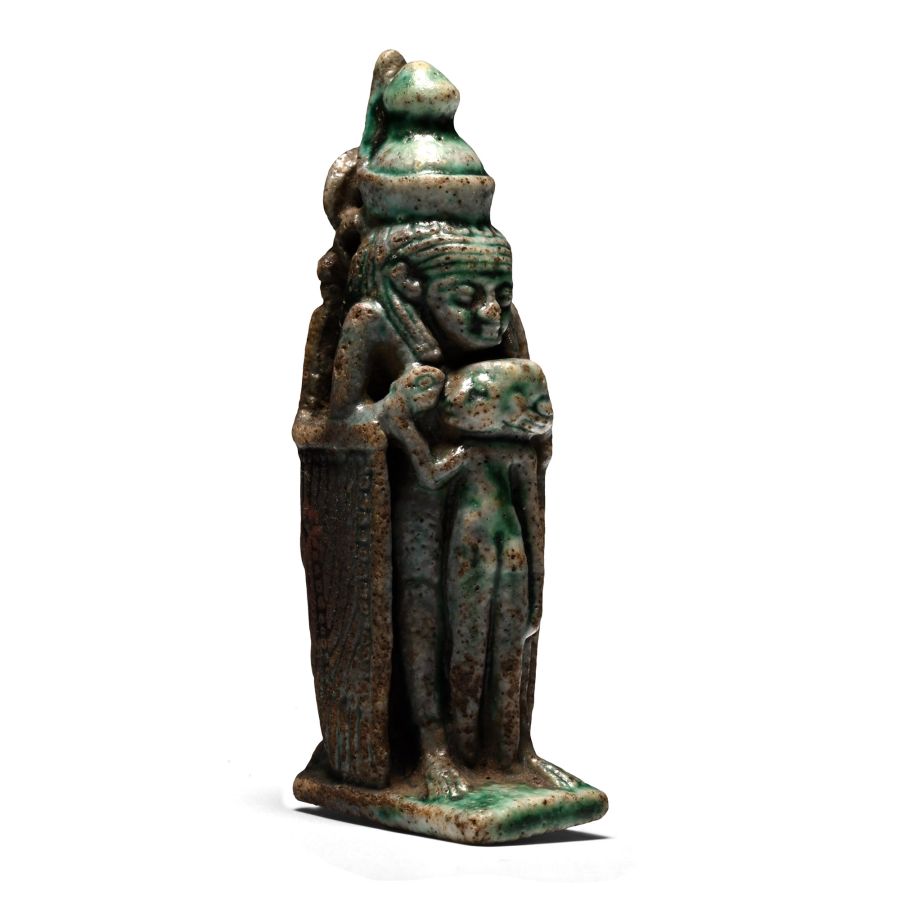
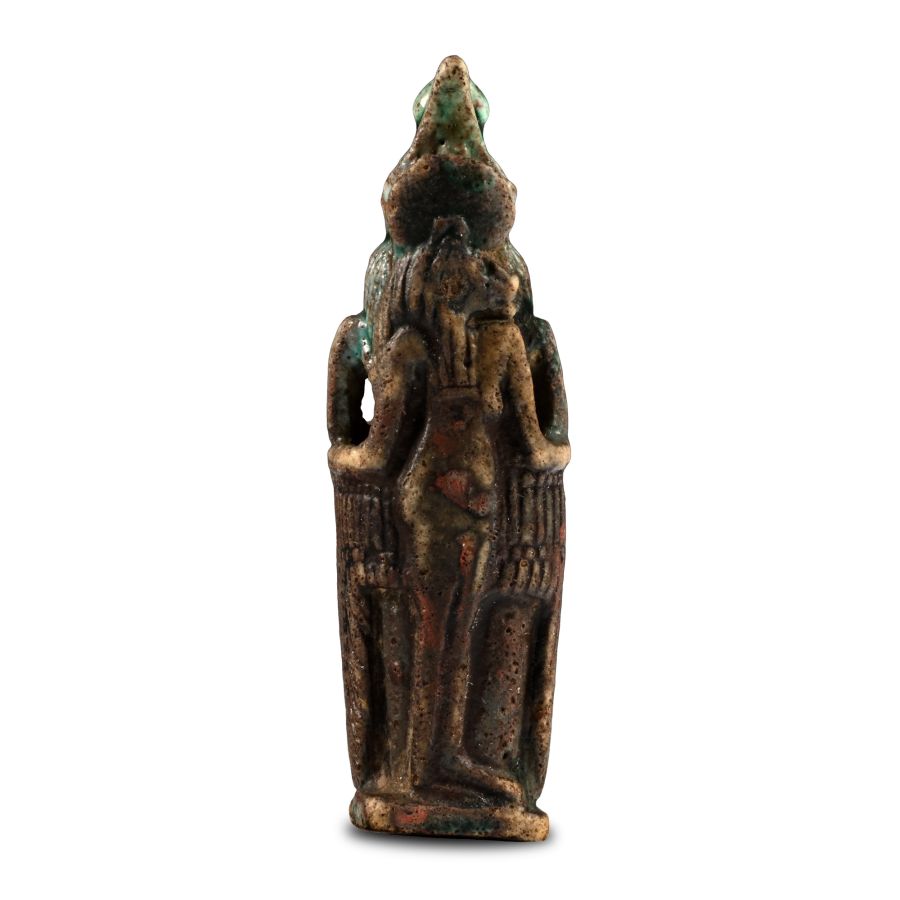
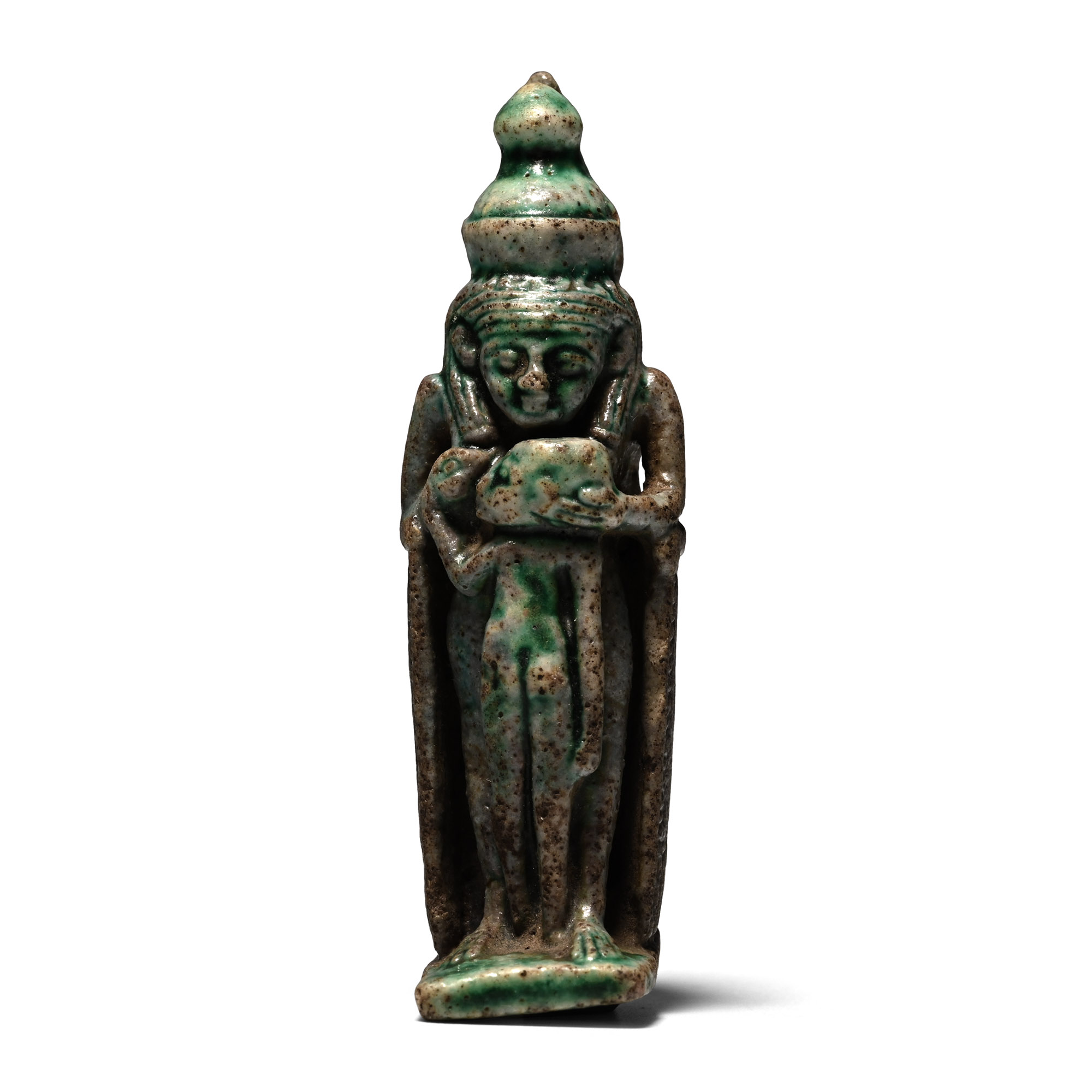
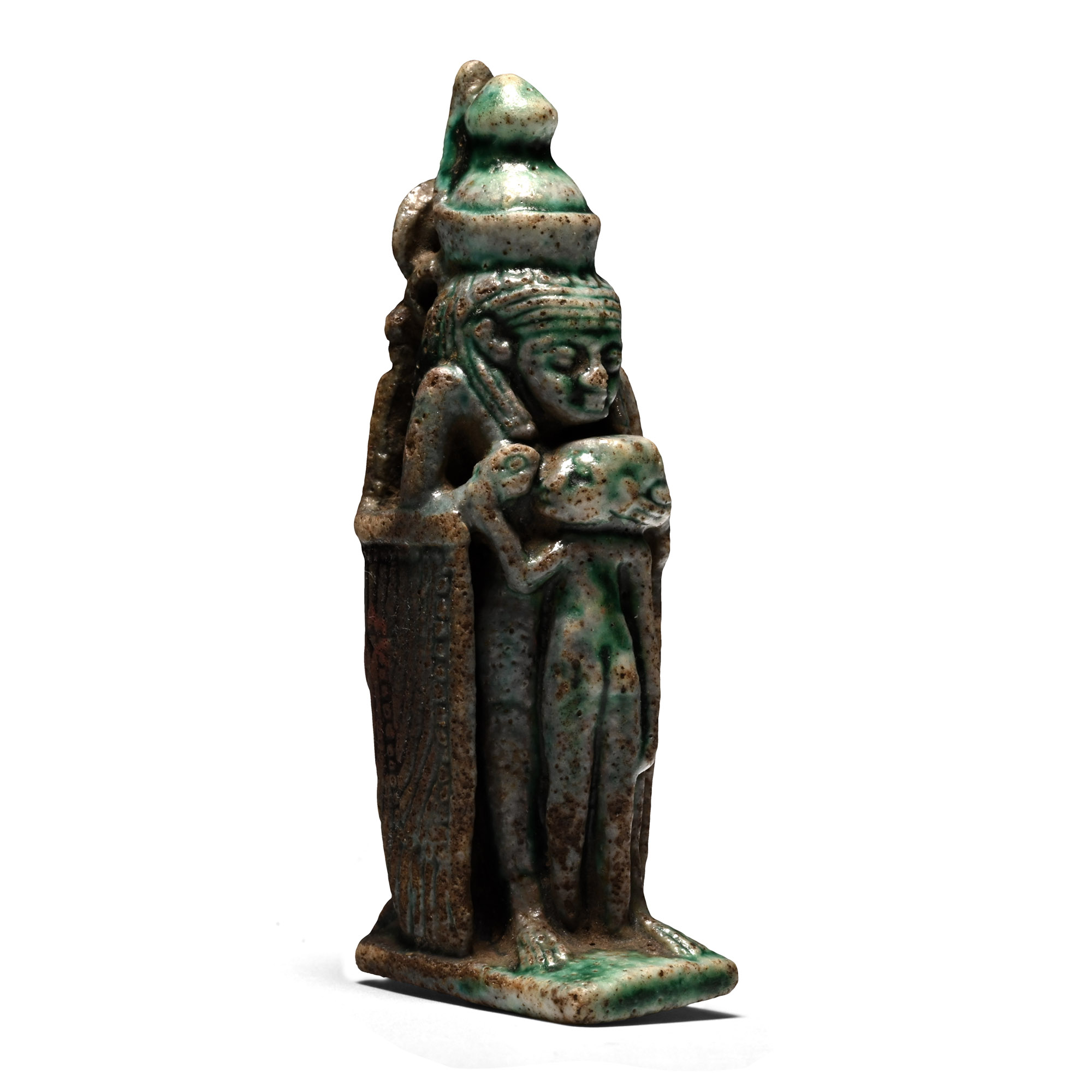
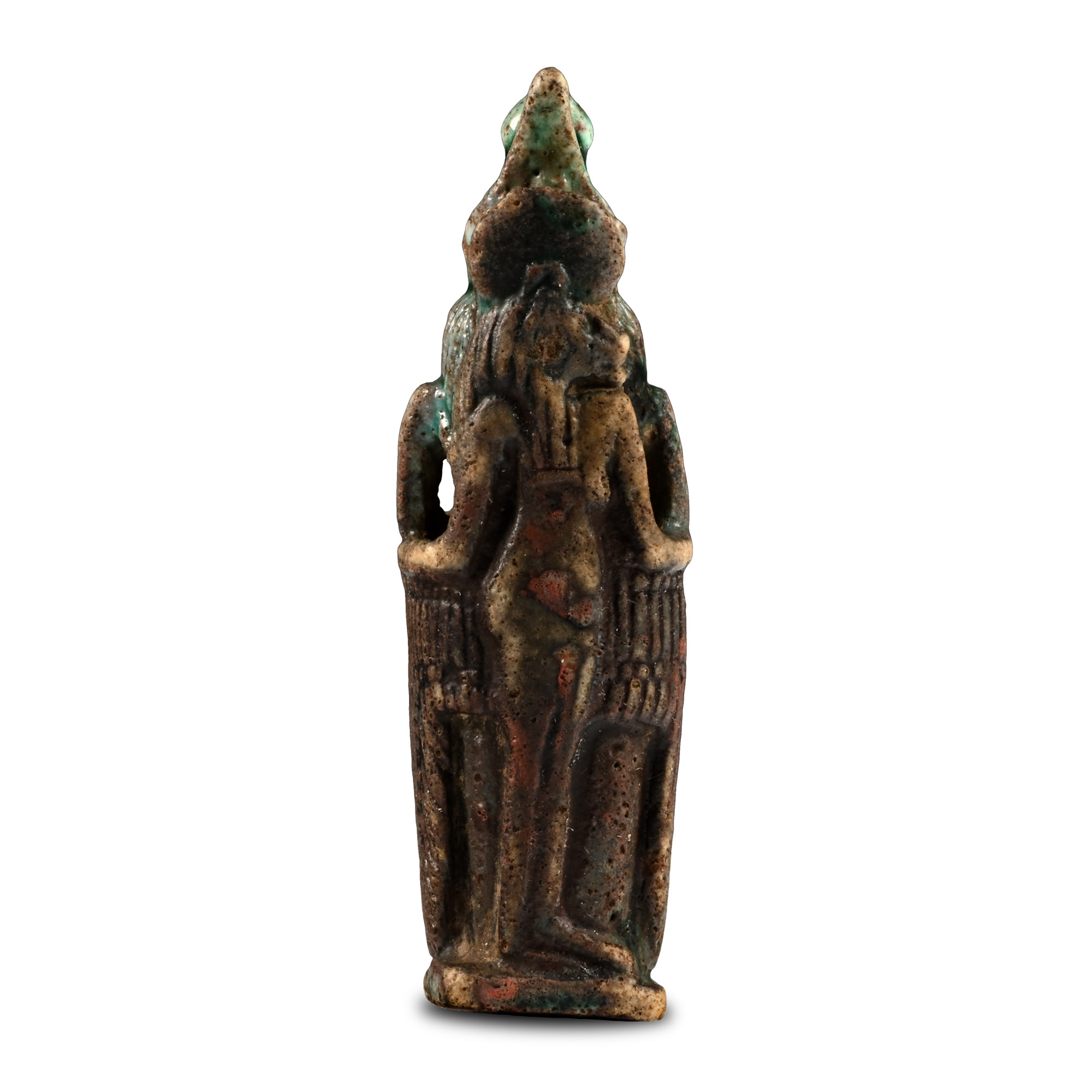
Egyptian Green Glazed Steatite Syncretic Amulet of Mut
THIRD INTERMEDIATE PERIOD, CIRCA 1069-735 B.C.
2 3/8 in. (22.6 grams, 61 mm).
Modelled in the round, formed as the goddess standing before a high-backed throne cradling the head of a standing child to her chest; the goddess with tiered double-crown and tripartite wig; throne with low-relief figure of the lioness-headed goddess Sekhmet to the rear with spread wings forming the arms of the chair.
Provenancewith Jean-Phillipe Mariaud de Serres, Paris, France.
Private collection, London, UK, acquired from the above in 1992.
This lot has been checked against the Interpol Database of stolen works of art and is accompanied by a search certificate number no.12633-235083.
This lot has been cleared against the Art Loss Register database, and is accompanied by an illustrated lot declaration signed by the Head of the Antiquities Department, Dr Raffaele D'Amato.
Cf. Daressy, G., Catalogue général des antiquités égyptiennes du Musée du Caire N° 38001-39384 Statues de divinités, Cairo, 1906, pl. LXIII (39.374), for a similar example in the Cairo Museum.
FootnotesMut was a prominent mother goddess in ancient Egyptian religion, associated with creation, motherhood, and the sky. She was the consort of the god Amun and the mother of Khonsu, forming the Theban triad with them in Thebes. Mut's name ("mother" in ancient Egyptian), reflects her role as a divine mother and patroness of motherhood. Sekhmet was revered as a powerful and fierce protector. Her presence was believed to ward off evil and safeguard the people from harm. In ancient Egyptian mythology, Sekhmet was also a manifestation of Hathor, another powerful birth goddess.
CONDITIONTimeLine Auctions follows a vetting process to ensure the authenticity and legality of all items, reinforcing our commitment to integrity and responsible trading. Each antiquity, antique, and coin lot undergoes thorough examination by a vetting committee of at least ten external specialists, professional trade association members, scientists, and archaeologists: Our Vetting Process
AUCTIONS:
TimeLine is a leading auction house specialising in antiquities, ancient art, collectables, natural history, coins, medals, and books. Our auctions offer museums, collectors, historians, and enthusiasts the opportunity to acquire unique and historically significant pieces.
LOT 0039
Egyptian Green Glazed Steatite Syncretic Amulet of Mut
Estimate £2,500 - 3,500€2,900 - 4,060 (for guidance only)$3,380 - 4,730 (for guidance only)
-
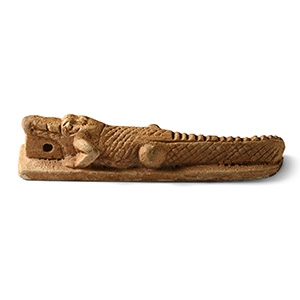
Egyptian Faience Crocodile Amulet
Late-Ptolemaic Period, 664-30 B.C.Sold for (Inc. bp): £2,600
Representing the god Sobek; detailed face and scales; standing on a rectangular plinth; pierced to the front for suspension. 13.4 grams, 74 mm
From the estate of the late Professor Dr E. Bernardo Streiff, Geneva; a distinguished collection of antiquities formed during the 1950s-1970s. with Galerie Rhéa, Zurich, Switzerland. This lot has been checked against the Interpol Database of stolen works of art and is accompanied by a search certificate number no.12629-236404. This lot has been cleared against the Art Loss Register database, and is accompanied by an illustrated lot declaration signed by the Head of the Antiquities Department, Dr Raffaele D'Amato.
Sobek is one of the most ancient and fascinating deities in the Egyptian pantheon. He is typically depicted as a crocodile or a man with the head of a crocodile, embodying various attributes related to the natural world, power, and protection. Sobek was mainly associated with water, fertility, and the Nile, along with strength and military prowess. His worship extends throughout much of ancient Egyptian history, and he was venerated not only as a force of nature but also as a god of healing, protection, and royal authority. His principal cult centres were situated in the Faiyum region, particularly the city of Crocodilopolis, and also at Kom Ombo in Upper Egypt. -
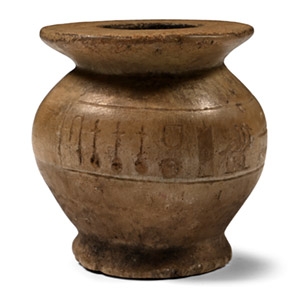
Egyptian Alabaster Kohl Pot with Later Hieroglyphs
Second Intermediate Period, 1650-1550 B.C.Sold for (Inc. bp): £195
Comprising a squat piriform body with a wide everted rim, a band of later hieroglyphs beneath the shoulder: ḳmꜢ.t n bꜢw ı͗wnw nfrw.s (You have gathered the souls (i.e. divine powers) of Heliopolis—her beauties). 208 grams, 55 mm high
Ex late London, UK, gentleman, 1970s. This lot is accompanied by an illustrated lot declaration signed by the Head of the Antiquities Department, Dr Raffaele D'Amato.
The inscription on what is a cosmetic vessel could be interpreted as “You acquire the powers of Heliopolis, source of her beauty”; “her beauties” likely references either the woman using the vessel or perhaps the divine beauty imparted by the contents. -
.jpg)
Egyptian Green Glazed Faience Openwork Ring
Third Intermediate Period, circa 1069-735 B.C.Sold for (Inc. bp): £1,430
With the reserved figure of a seated falcon-headed deity holding the Maat feather, a stylised lotus bloom above and below. 3.53 grams, 24.05 mm overall, 19.40 mm internal diameter (approximate size British S, USA 9, Europe 20, Japan 19)
with Christie's, London, 19 October 1994, no.133 (part). Private collection, London, UK, acquired from the above sale. This lot is accompanied by an illustrated lot declaration signed by the Head of the Antiquities Department, Dr Raffaele D'Amato.
