
Loading, please wait...
LOT 0480
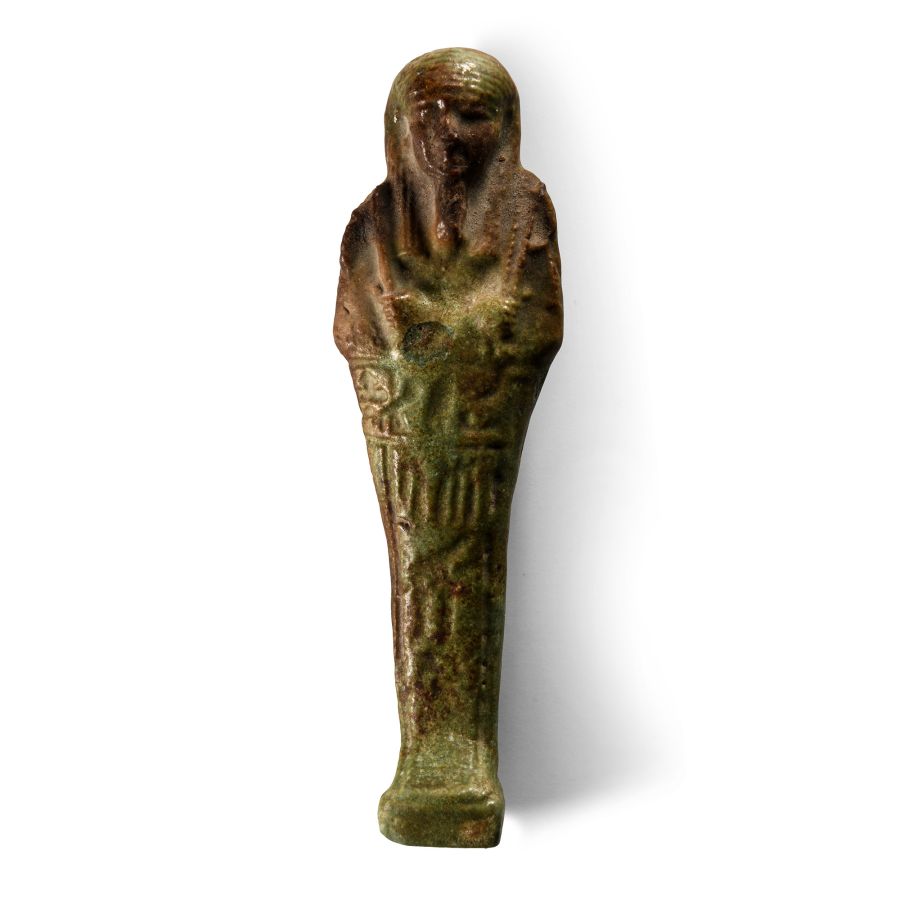
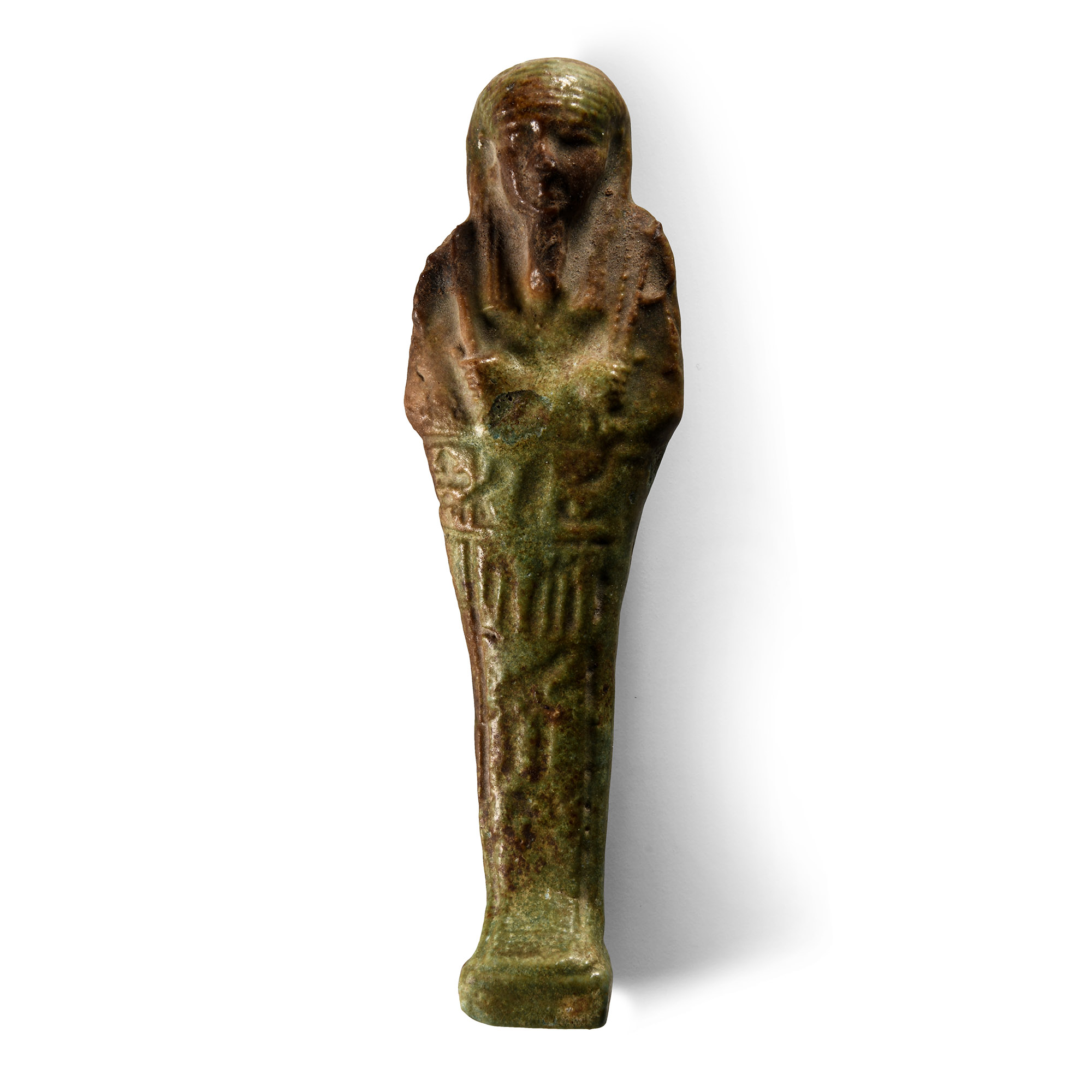
Egyptian Green Glazed Shabti
LATE PERIOD, 664-332 B.C.
4 7/8 in. (73 grams, 12.5 cm).
With arms crossed at the chest holding pick, hoe and cord for seed bag, dorsal pillar, horizontal and vertical panels to the lower body with hieroglyphic text. [No Reserve]
ProvenanceAcquired from Hotel des Ventes, Drouot, in the early 1980s.
Ex collection of a private collector.
Property of a French collector.
Cf. von Droste zu Hülsdorf, V. and Schlick-Nolte, B., Ägyptische Bildwerke II: Statuetten, Gefässe und Geräte, Melsungen, 1990, pp.161-162, no. 78, for the shabti type.
CONDITIONTimeLine Auctions follows a vetting process to ensure the authenticity and legality of all items, reinforcing our commitment to integrity and responsible trading. Each antiquity, antique, and coin lot undergoes thorough examination by a vetting committee of at least ten external specialists, professional trade association members, scientists, and archaeologists: Our Vetting Process
AUCTIONS:
TimeLine is a leading auction house specialising in antiquities, ancient art, collectables, natural history, coins, medals, and books. Our auctions offer museums, collectors, historians, and enthusiasts the opportunity to acquire unique and historically significant pieces.
-
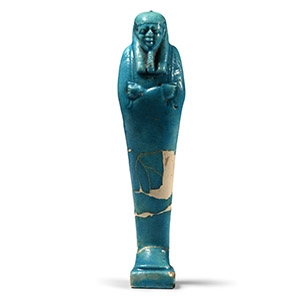
Egyptian Blue Glazed Shabti
Late Period, 664-332 B.C.Sold for (Inc. bp): £364
Faience shabti with detailed face, beard and wig, holding a pick and hoe, dorsal pillar and seed bag to left shoulder; some loss to surface; repaired. 162 grams, 16.5 cm
Ex Gilles Grimm collection, Paris, France. Acquired by the current owner from Aguttes, 19 December 2018, no.451. Property of a French collector. -
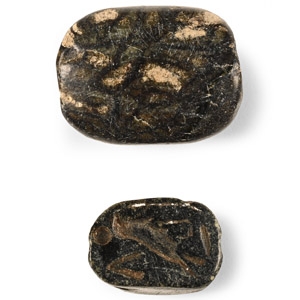
Egypto-Phoenician Stone Scaraboid Group
1st millennium B.C.Sold for (Inc. bp): £52
One with incuse bird, chevron and other motifs to the underside, the other in mottled hardstone. 4.69 grams total, 13-18 mm
From a collection acquired on the UK art market from various auction houses and collections mostly before 2000. From an important Cambridgeshire estate; thence by descent. -
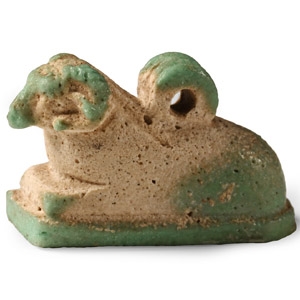
Egyptian Blue Faience Ram Amulet
Late Period, 664-332 B.C.Sold for (Inc. bp): £143
Modelled resting on a tongue-shaped base with ribbed suspension loop. 2.15 grams, 23 mm
From the collection of Doctor Girard, a collector for over 60 years. with Hotel des Ventes de Clermont-Ferrand, 22 May 2017. Property of a French collector.
Various gods were depicted in the form of rams. The downturned horns on this amulet indicate that the ram is a representation of Amun. The ram was symbolically linked to concepts of revival and fecundity. Eventually, it became associated with Osiris and was recognised as the god's soul or ba.
