
Loading, please wait...
_900x900.jpg "Egyptian Green Glazed Faience Openwork Ring")
_200x200.jpg "Egyptian Green Glazed Faience Openwork Ring")
.jpg "Egyptian Green Glazed Faience Openwork Ring")
LOT 0022
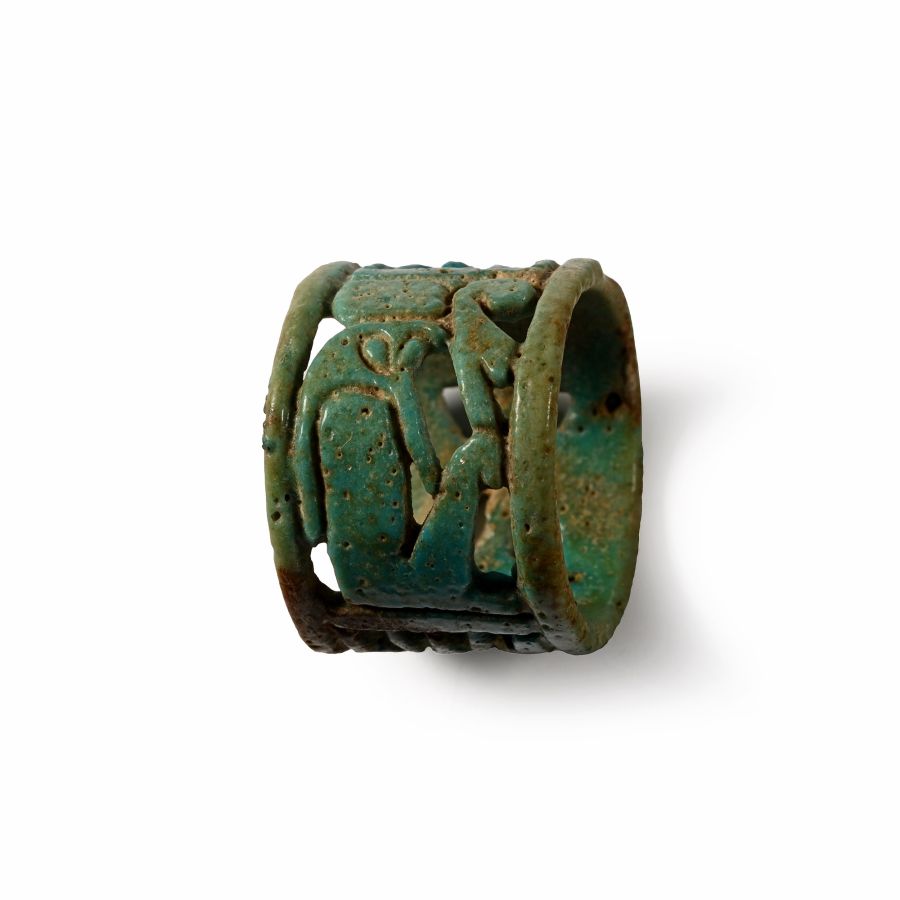
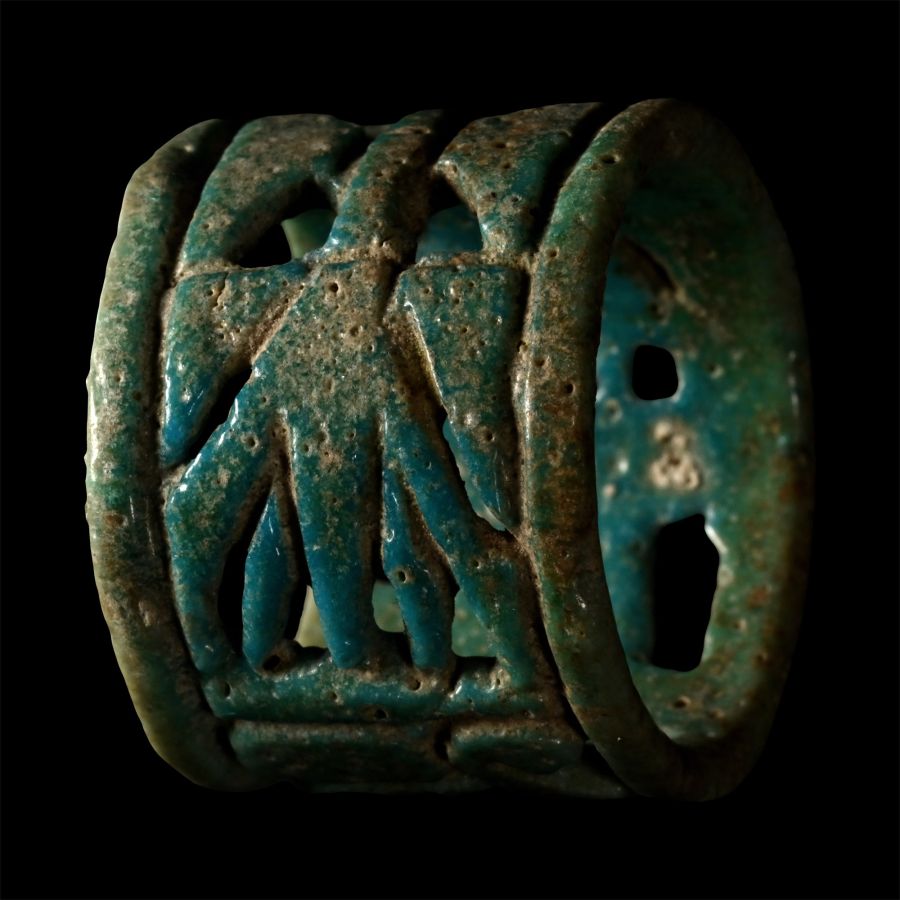
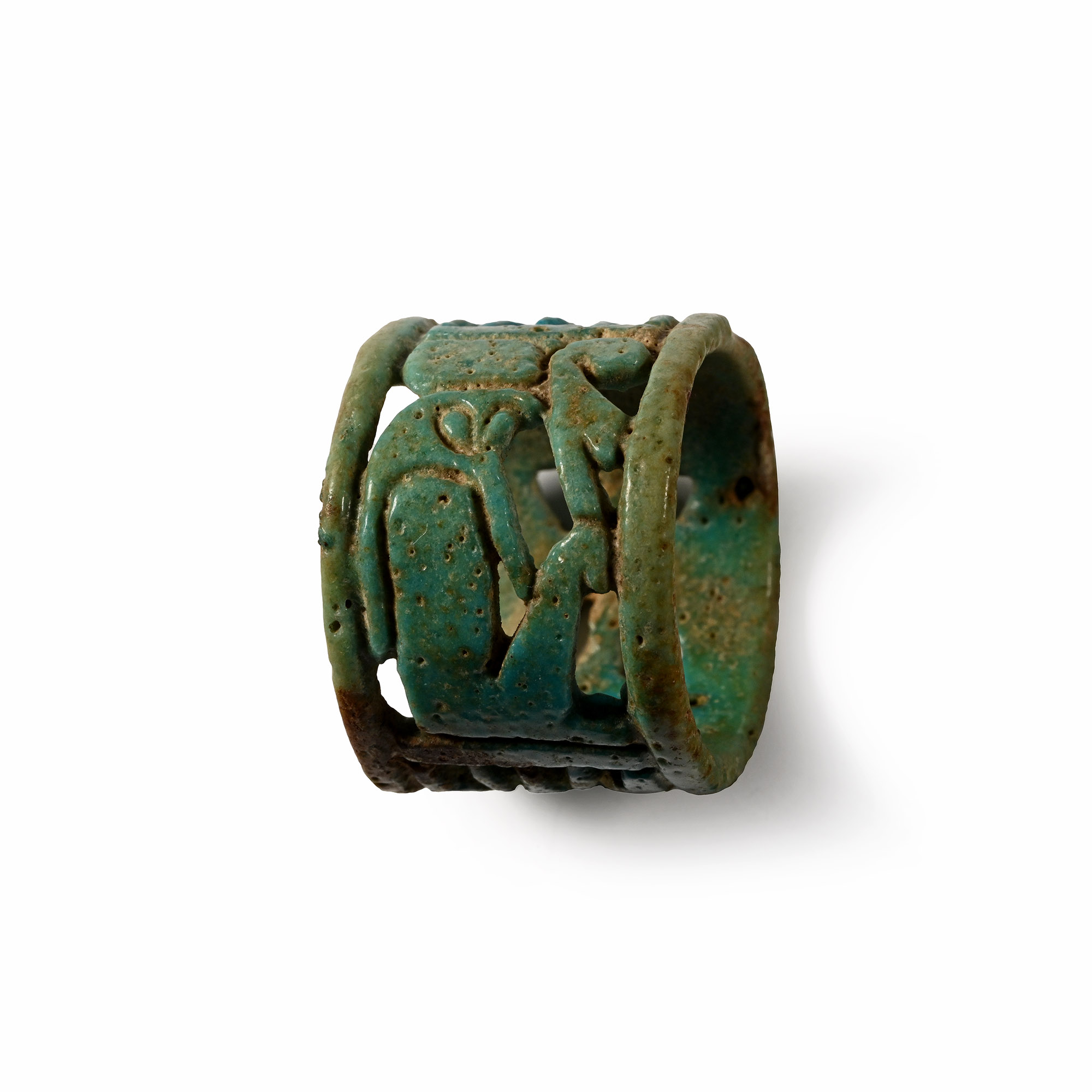
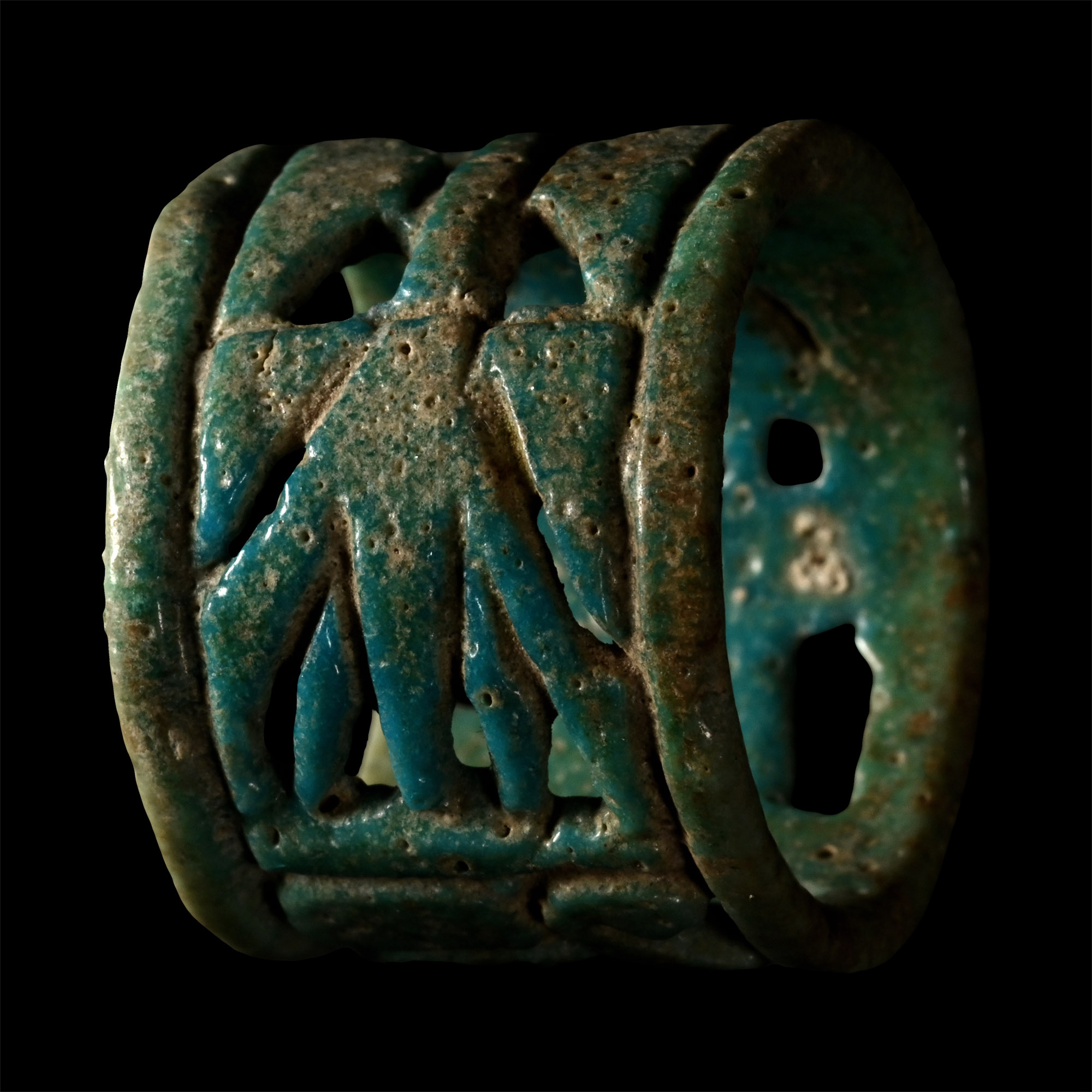
Egyptian Green Glazed Faience Openwork Ring
THIRD INTERMEDIATE PERIOD, CIRCA 1069-735 B.C.
1 in. (3.53 grams, 24.05 mm overall, 19.40 mm internal diameter (approximate size British S, USA 9, Europe 20, Japan 19)).
With the reserved figure of a seated falcon-headed deity holding the Maat feather, a stylised lotus bloom above and below.
Provenancewith Christie's, London, 19 October 1994, no.133 (part).
Private collection, London, UK, acquired from the above sale.
This lot is accompanied by an illustrated lot declaration signed by the Head of the Antiquities Department, Dr Raffaele D'Amato.
Cf. Andrews, C., Amulets of Ancient Egypt, London, 1994, fig. 45f, for an openwork ring with a similar seated falcon-headed deity holding the Maat feather.
CONDITIONTimeLine Auctions follows a vetting process to ensure the authenticity and legality of all items, reinforcing our commitment to integrity and responsible trading. Each antiquity, antique, and coin lot undergoes thorough examination by a vetting committee of at least ten external specialists, professional trade association members, scientists, and archaeologists: Our Vetting Process
AUCTIONS:
TimeLine is a leading auction house specialising in antiquities, ancient art, collectables, natural history, coins, medals, and books. Our auctions offer museums, collectors, historians, and enthusiasts the opportunity to acquire unique and historically significant pieces.
-
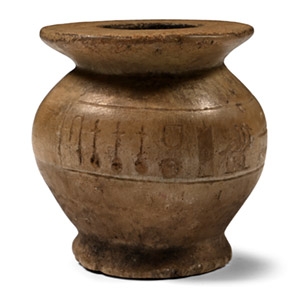
Egyptian Alabaster Kohl Pot with Later Hieroglyphs
Second Intermediate Period, 1650-1550 B.C.Sold for (Inc. bp): £195
Comprising a squat piriform body with a wide everted rim, a band of later hieroglyphs beneath the shoulder: ḳmꜢ.t n bꜢw ı͗wnw nfrw.s (You have gathered the souls (i.e. divine powers) of Heliopolis—her beauties). 208 grams, 55 mm high
Ex late London, UK, gentleman, 1970s. This lot is accompanied by an illustrated lot declaration signed by the Head of the Antiquities Department, Dr Raffaele D'Amato.
The inscription on what is a cosmetic vessel could be interpreted as “You acquire the powers of Heliopolis, source of her beauty”; “her beauties” likely references either the woman using the vessel or perhaps the divine beauty imparted by the contents. -
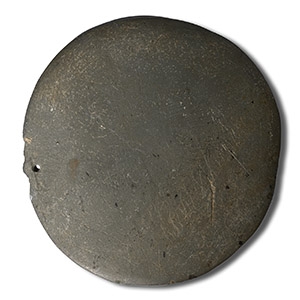
Egyptian Pre-Dynastic Greywacke Palette
Predynastic Period, Naqada III, circa 3300–2960 B.C.Sold for (Inc. bp): £468
Circular in plan with smoothed faces, pierced through the edge. 238 grams, 13.3 cm
Acquired in the mid 1980s-1990s. Private collection, Switzerland, thence by descent. Private collection, since the late 1990s. This lot is accompanied by an illustrated lot declaration signed by the Head of the Antiquities Department, Dr Raffaele D'Amato.
Palettes were utilitarian objects used in the Predynastic Period to grind and mix mineral-based eye pigments (including ochre, malachite, and haematite). Greywacke cosmetic palettes were easily carved in various shapes and sizes, including zoomorphic representations and geometric forms. The symbolism of this circular palette may be connected to the sun disc, which featured prominently in ancient Egyptian culture. The palette was so significant in Predynastic society that purely ceremonial versions, often impractically large for their original purpose, were produced for use in temple rituals. The most famous is the highly decorated Narmer Palette discovered at Hierakonpolis. -
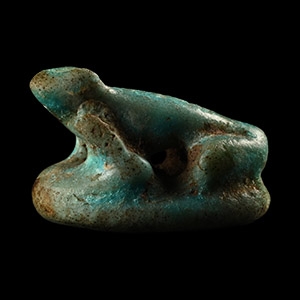
Egyptian Faience Frog Scaraboid
Ptolemaic Period, circa 300 B.C.Sold for (Inc. bp): £260
Discoid base with crouching frog pierced longitudinally for threading; underside with a solar disc and unidentified symbol. 0.56 grams, 13 mm
Ex R. Liechti (1934-2010) Geneva, Switzerland, formed between 1950-1990s. Accompanied by a copy of an old collection inventory note. This lot is accompanied by an illustrated lot declaration signed by the Head of the Antiquities Department, Dr Raffaele D'Amato.
