
Loading, please wait...
LOT 0032
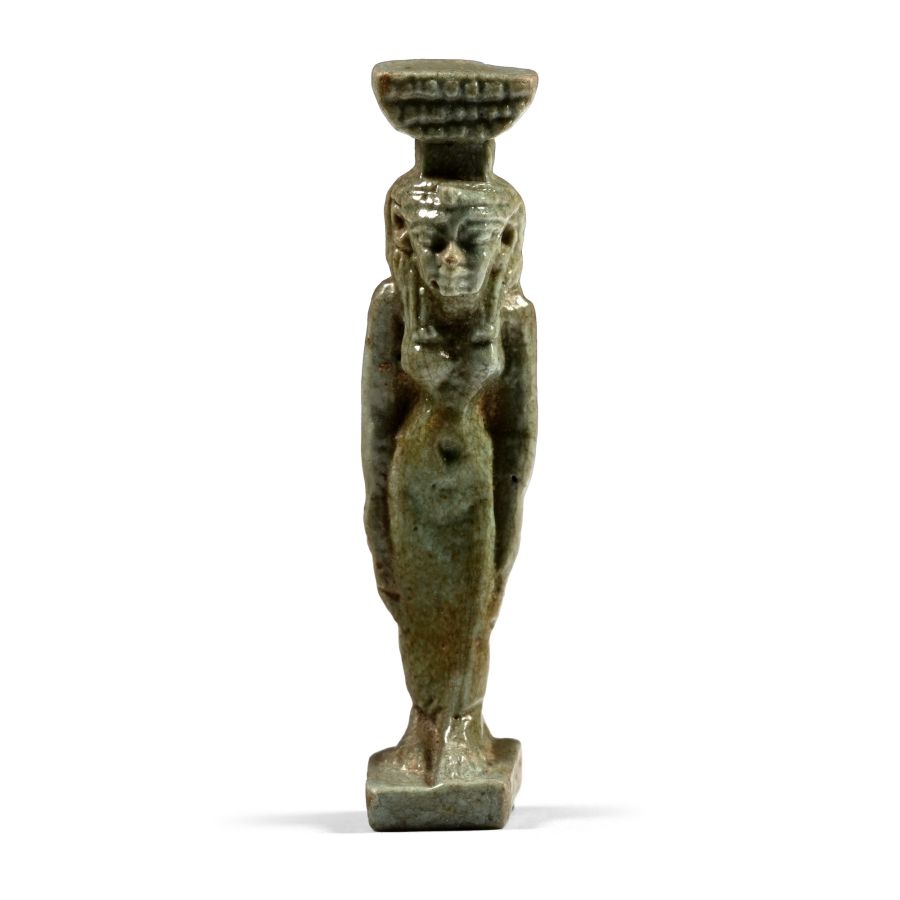
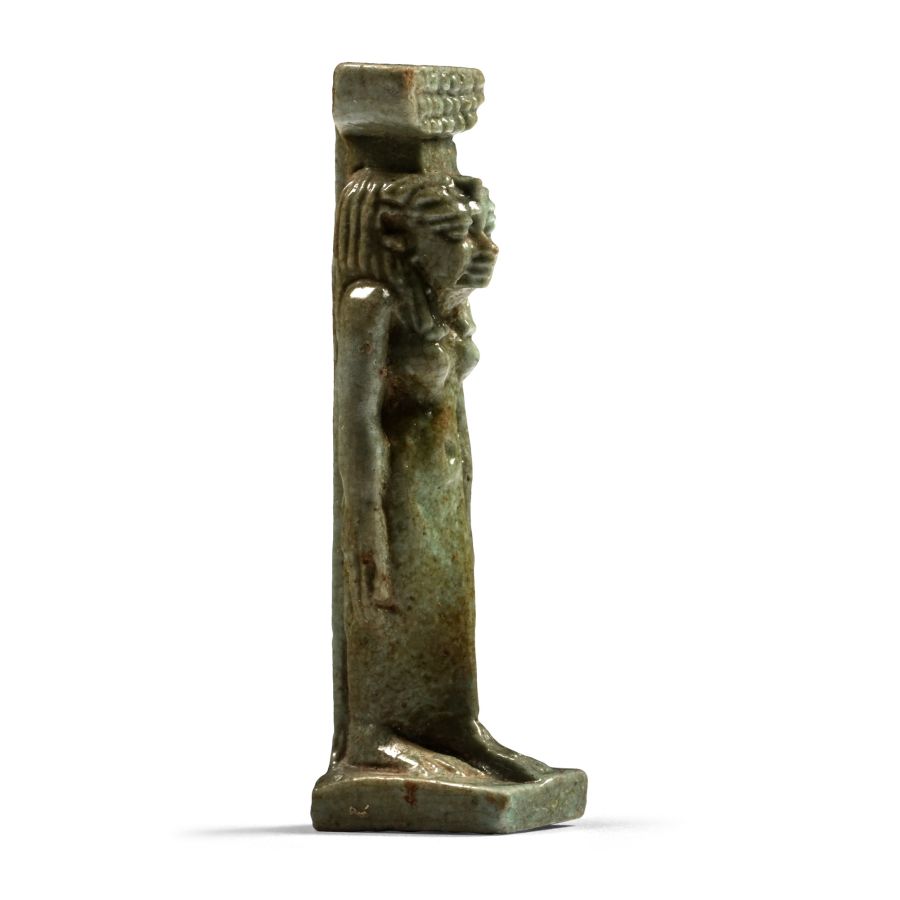
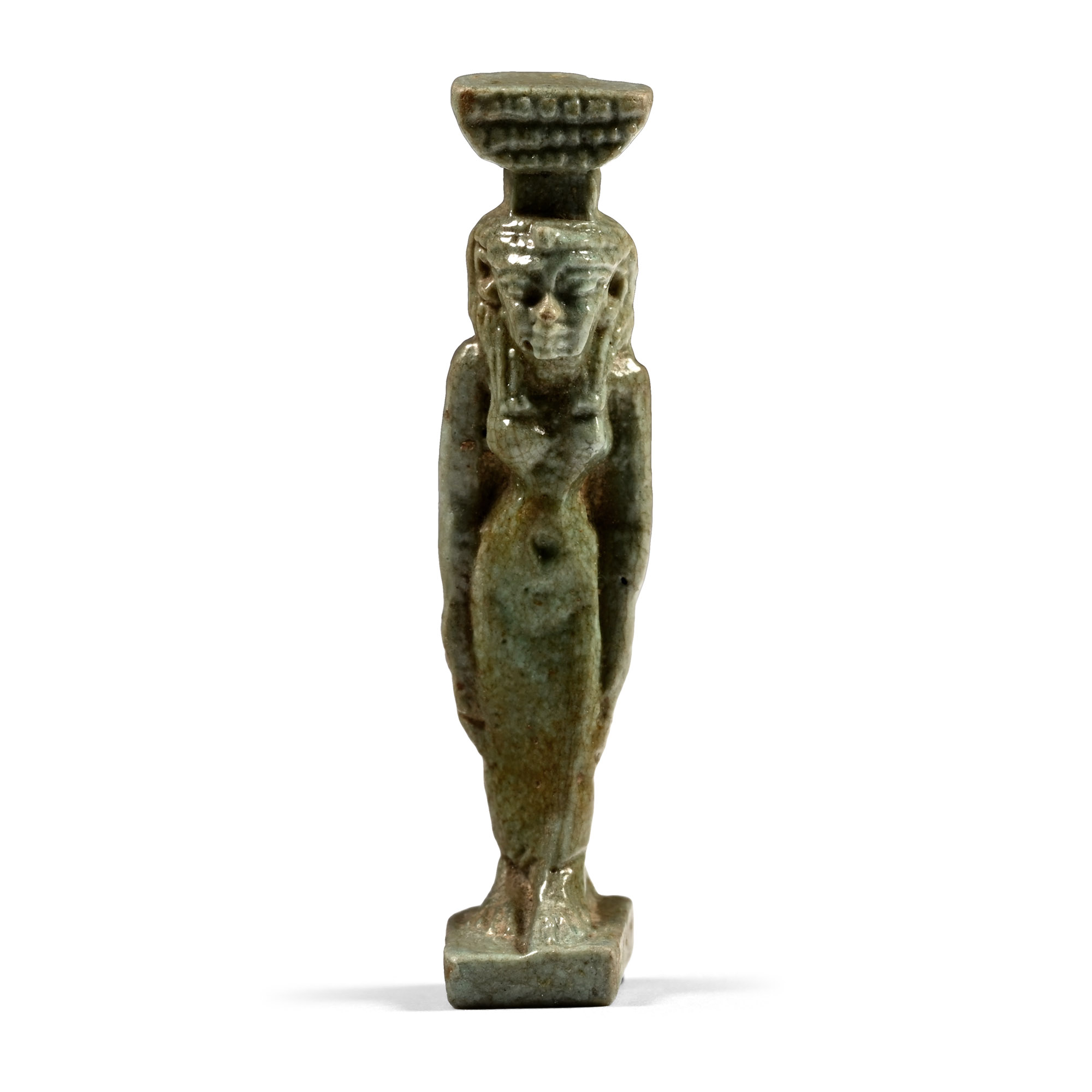
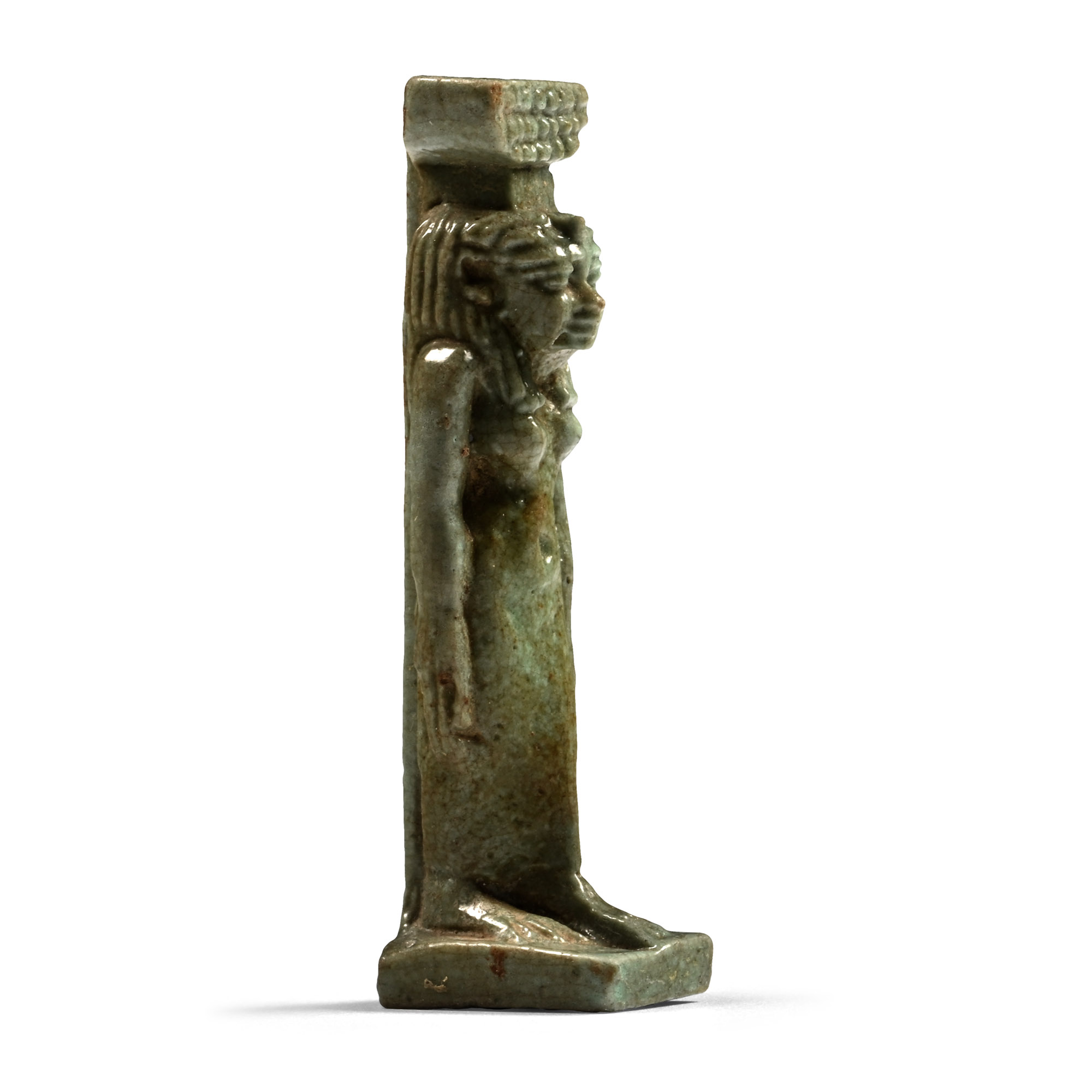
Egyptian Green Glazed Faience Amulet of Nephthys
LATE PERIOD, 26TH DYNASTY, CIRCA 664-525 B.C.
1 3/8 in. (2.68 grams, 37 mm).
Depicting the goddess Nephthys wearing the two hieroglyphic parts of her name (Neb(et)-Hut), with dorsal pillar and base.
Provenancewith B.M.S., Switzerland.
Private collection, London, UK, acquired from the above on 14 September 1981.
This lot is accompanied by an illustrated lot declaration signed by the Head of the Antiquities Department, Dr Raffaele D'Amato.
Cf. Andrews, C., Amulets of Ancient Egypt, British Museum 1994, p.48.
FootnotesNephthys was a protective goddess linked to mourning, magic, and the afterlife. As the sister of Isis, she played a vital role in the funerary rites of Osiris. Amulets like this were placed on the deceased to invoke her protection and aid in rebirth. Typically made of faience or semi-precious stone, they were especially common in the Late Period.
CONDITIONTimeLine Auctions follows a vetting process to ensure the authenticity and legality of all items, reinforcing our commitment to integrity and responsible trading. Each antiquity, antique, and coin lot undergoes thorough examination by a vetting committee of at least ten external specialists, professional trade association members, scientists, and archaeologists: Our Vetting Process
AUCTIONS:
TimeLine is a leading auction house specialising in antiquities, ancient art, collectables, natural history, coins, medals, and books. Our auctions offer museums, collectors, historians, and enthusiasts the opportunity to acquire unique and historically significant pieces.
LOT 0032
Egyptian Green Glazed Faience Amulet of Nephthys
Estimate £500 - 700€580 - 810 (for guidance only)$680 - 950 (for guidance only)
-
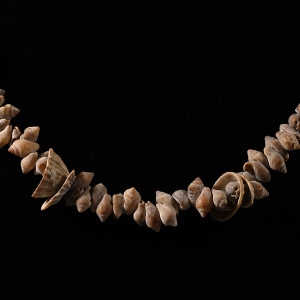
Egyptian Shell Bead Necklace
Late-Ptolemaic Period, 664-30 B.C.Sold for (Inc. bp): £26
Restrung necklace of scallops, cockles, limpets, and other types. 27 grams, 51 cm
From the private collection of Walter Thomas Gaze Cooper (1895-1980). This lot is accompanied by an illustrated lot declaration signed by the Head of the Antiquities Department, Dr Raffaele D'Amato. -
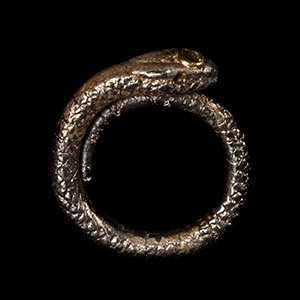
Egyptian Silver Snake Ring
1st millennium B.C.Sold for (Inc. bp): £910
Comprising a round-section tapering body with intricate scale detailing, the head resting on the body, detailed face with closed mouth and rounded eyes, an applied gold annulet with two granules above the head; part of the tail absent. 6.79 grams, 26.03 mm overall, 15.77 mm internal diameter (approximate size British J, USA 4 3/4, Europe 8.69, Japan 8)
Ex Dr Leo Mildenberg, Zurich, 1990s. Acquired by Galerie Rhéa, Zurich, from the above in 1999. This lot is accompanied by an illustrated lot declaration signed by the Head of the Antiquities Department, Dr Raffaele D'Amato.
Snake rings were not originally a traditional form in Egypt and only became common during the Ptolemaic and Roman Periods. Animal-shaped rings, including those with snake motifs, originated in Western Asia around the eighth century BC, spread to Greece by the fifth century BC, and were introduced to Egypt primarily through the Ptolemaic Period. In Greek culture, snakes were often linked to healing, though they likely carried other symbolic meanings as well. -
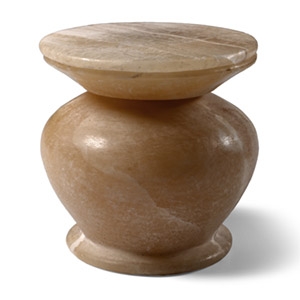
Egyptian Travertine Kohl Jar and Lid
Middle Kingdom-early New Kingdom, 12th-early 18th Dynasty, circa 1985-1479 B.C.Estimate: £1,500 - 2,000 (‡+bp*)
Opening Bid: £833
Piriform vessel with flared foot and wide rim, discoid lid with raised central panel to verso. 355 grams, 65 mm
Ex Galerie Nefer, Zurich, Switzerland. with Galerie Rhéa, Zurich, Switzerland. This lot has been cleared against the Art Loss Register database, and is accompanied by an illustrated lot declaration signed by the Head of the Antiquities Department, Dr Raffaele D'Amato.
