
Loading, please wait...
LOT 0016
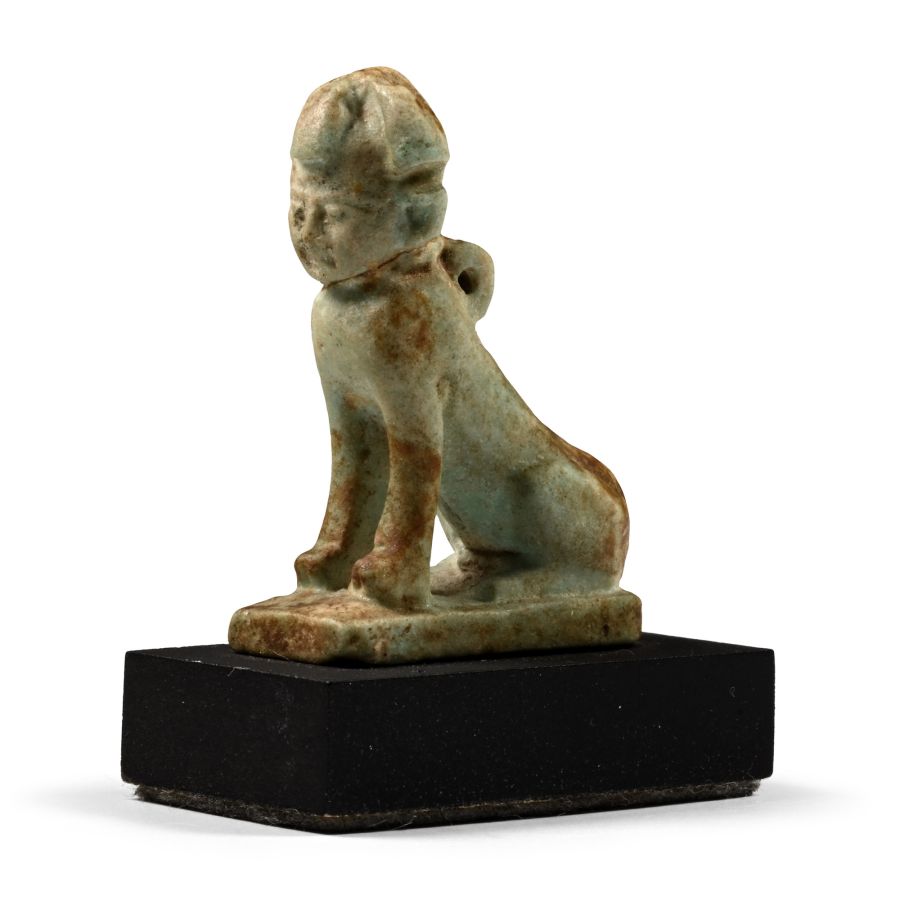
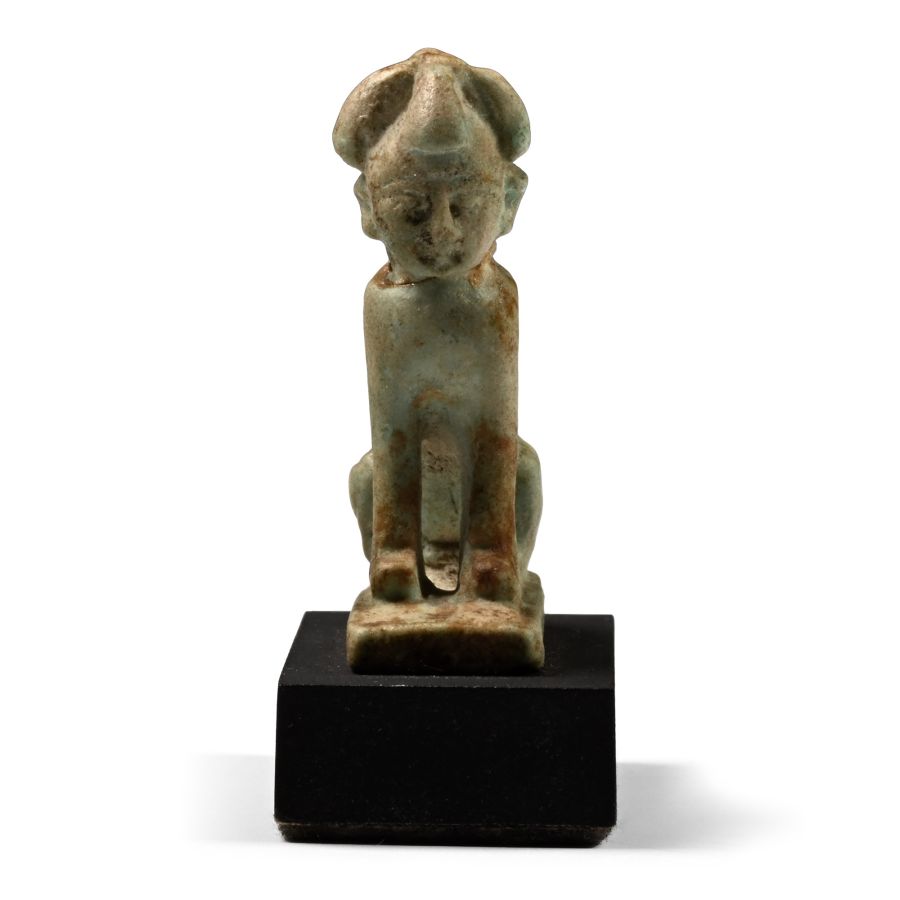
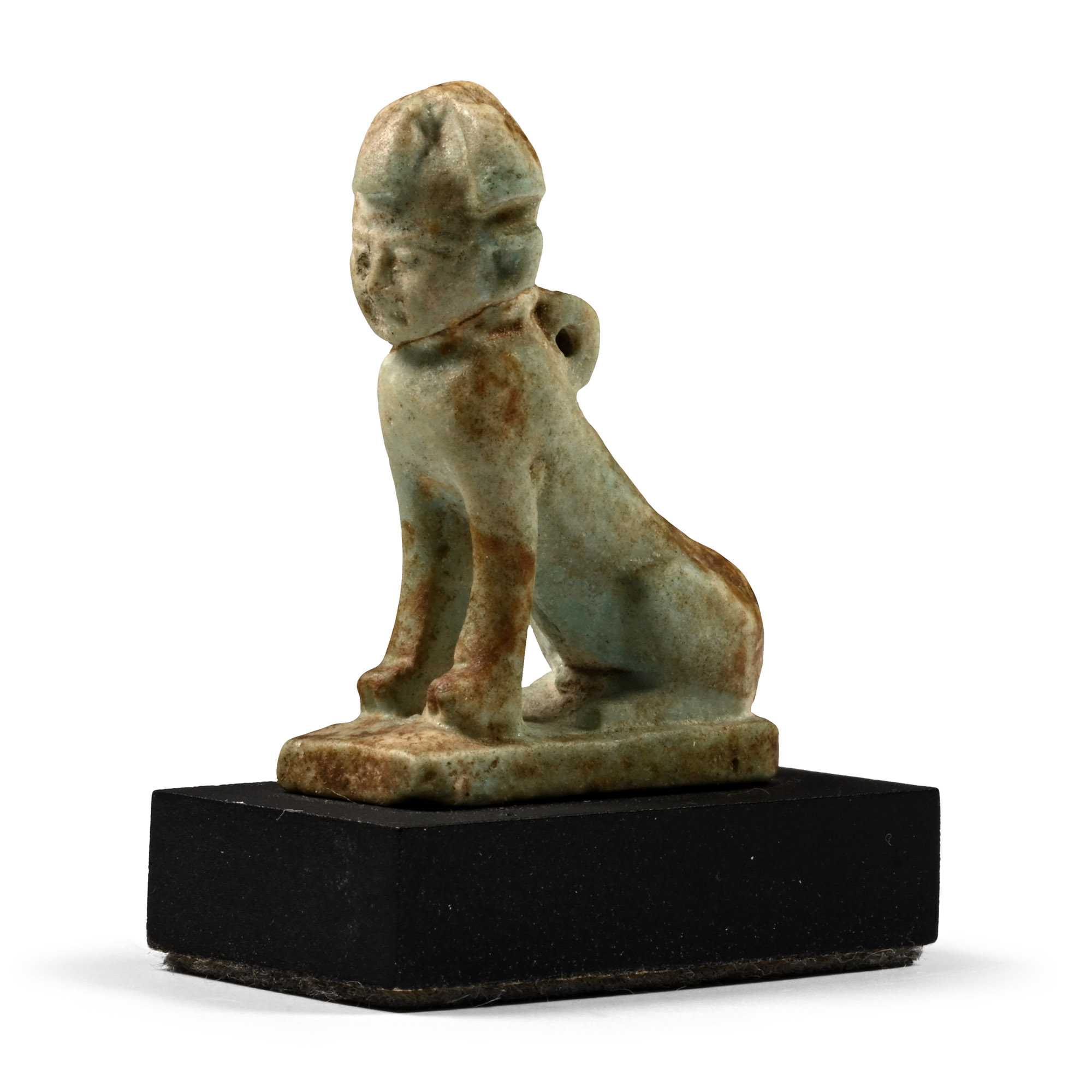
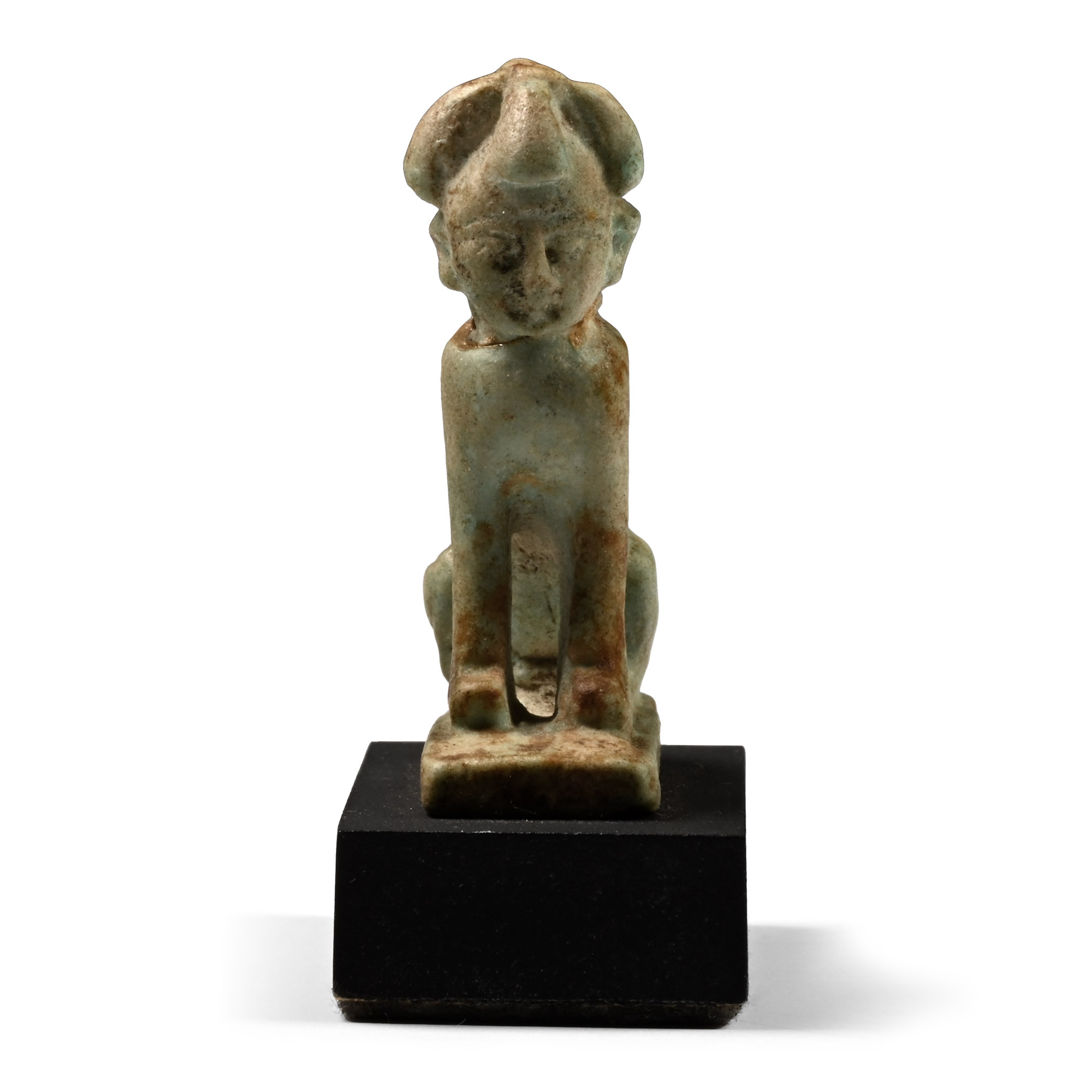
Egyptian Green Glazed Faience Amulet of a Seated Sphinx
KUSHITE KINGDOM, 25TH DYNASTY, CIRCA 747-656 B.C.
2 in. (17.48 grams total, 51 mm including stand).
Figure of a sphinx in seated pose on a tongue-shaped base, with loop between the shoulders and Nubian hairstyle.
Provenancewith Charles Ede Ltd, London, UK.
Private collection, London, UK, acquired from the above on 28 April 1994.
Accompanied by a copy of the Charles Ede invoice.
This lot is accompanied by an illustrated lot declaration signed by the Head of the Antiquities Department, Dr Raffaele D'Amato.
Cf. Andrews, C., Amulets of Ancient Egypt, British Museum 1994, p.78, fig.78d, for a similar amulet.
FootnotesThe 'Nubian' hairstyle was worn by young women in connection with birth, nursing babies and applying cosmetics.
CONDITIONTimeLine Auctions follows a vetting process to ensure the authenticity and legality of all items, reinforcing our commitment to integrity and responsible trading. Each antiquity, antique, and coin lot undergoes thorough examination by a vetting committee of at least ten external specialists, professional trade association members, scientists, and archaeologists: Our Vetting Process
AUCTIONS:
TimeLine is a leading auction house specialising in antiquities, ancient art, collectables, natural history, coins, medals, and books. Our auctions offer museums, collectors, historians, and enthusiasts the opportunity to acquire unique and historically significant pieces.
LOT 0016
Egyptian Green Glazed Faience Amulet of a Seated Sphinx
Estimate £1,000 - 1,400€1,160 - 1,620 (for guidance only)$1,350 - 1,890 (for guidance only)
-
Egyptian Faience Frog Scaraboid
Ptolemaic Period, circa 300 B.C.Sold for (Inc. bp): £260
Discoid base with crouching frog pierced longitudinally for threading; underside with a solar disc and unidentified symbol. 0.56 grams, 13 mm
Ex R. Liechti (1934-2010) Geneva, Switzerland, formed between 1950-1990s. Accompanied by a copy of an old collection inventory note. This lot is accompanied by an illustrated lot declaration signed by the Head of the Antiquities Department, Dr Raffaele D'Amato. -
Phoenician Inscribed Bronze Scaraboid Seal
Late 1st millennium B.C.Sold for (Inc. bp): £117
With plain body and three lines of characters including a scarab to the underside. 3.5 grams, 13 mm
Ex London, UK, gentleman, 1990. This lot is accompanied by an illustrated lot declaration signed by the Head of the Antiquities Department, Dr Raffaele D'Amato. -
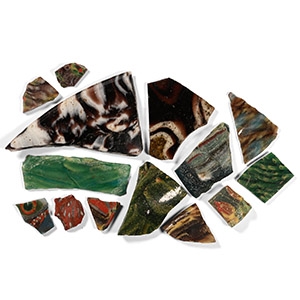
Egyptian and Other Mosaic Glass Fragment Collection
3rd century B.C.-4th century A.D.Sold for (Inc. bp): £234
Comprising fourteen polychrome fragments displaying vibrant colours and patterns, two with a rounded lip. 58 grams total, 15-71 mm
Ex Gallery Mikazuki before 1984. London gallery, latterly Mayfair, UK, collection. This lot is accompanied by an illustrated lot declaration signed by the Head of the Antiquities Department, Dr Raffaele D'Amato.
