
Loading, please wait...
LOT 0019
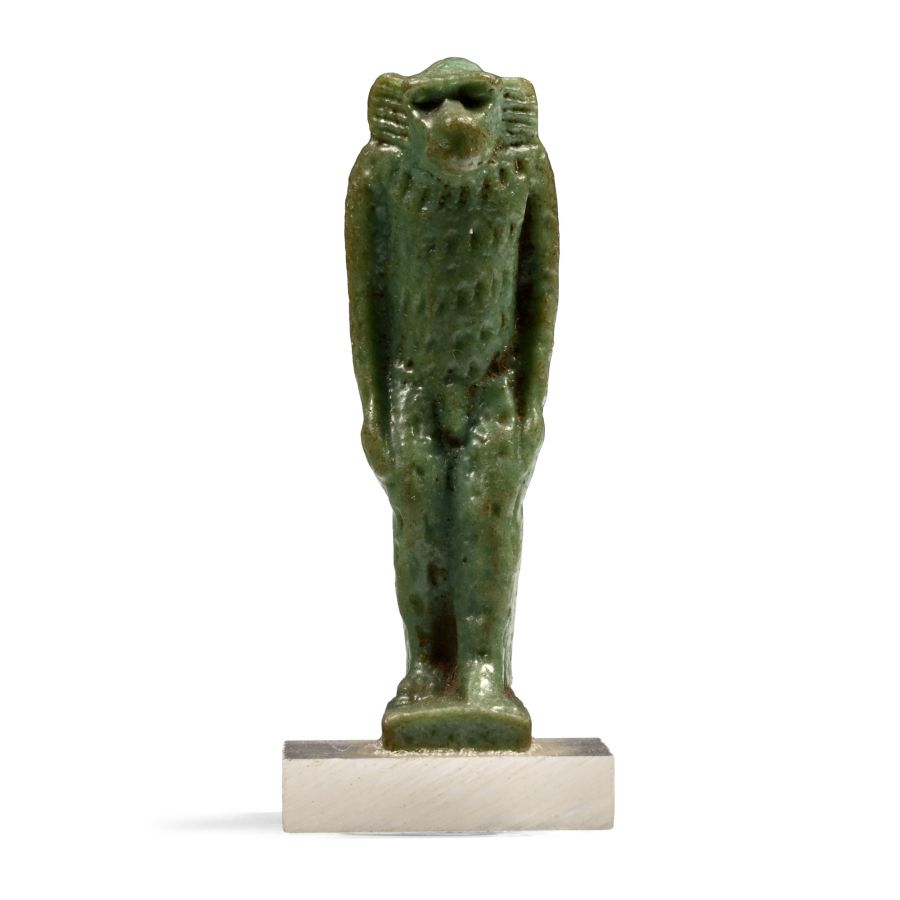
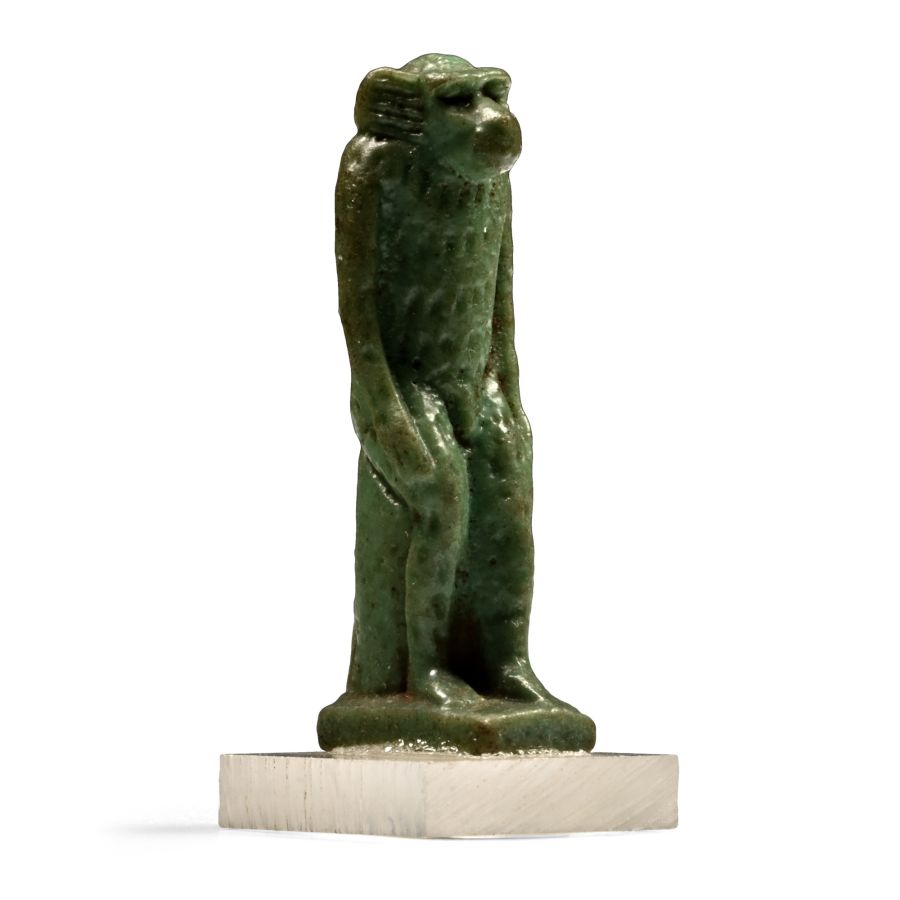
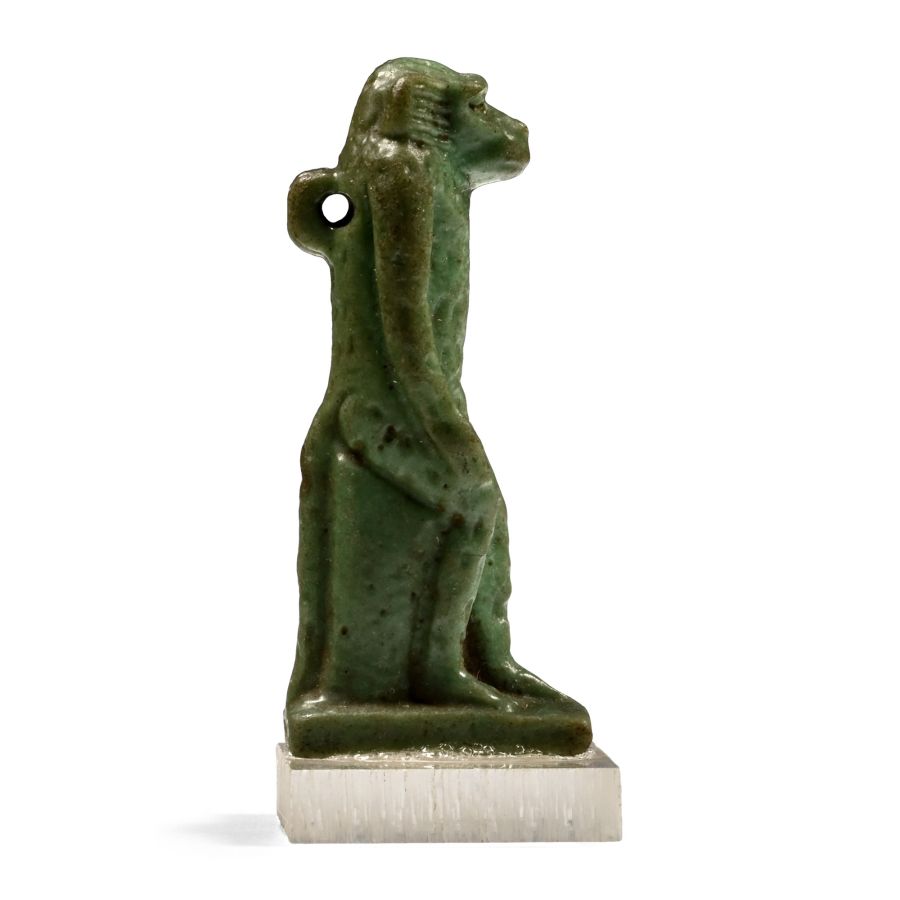
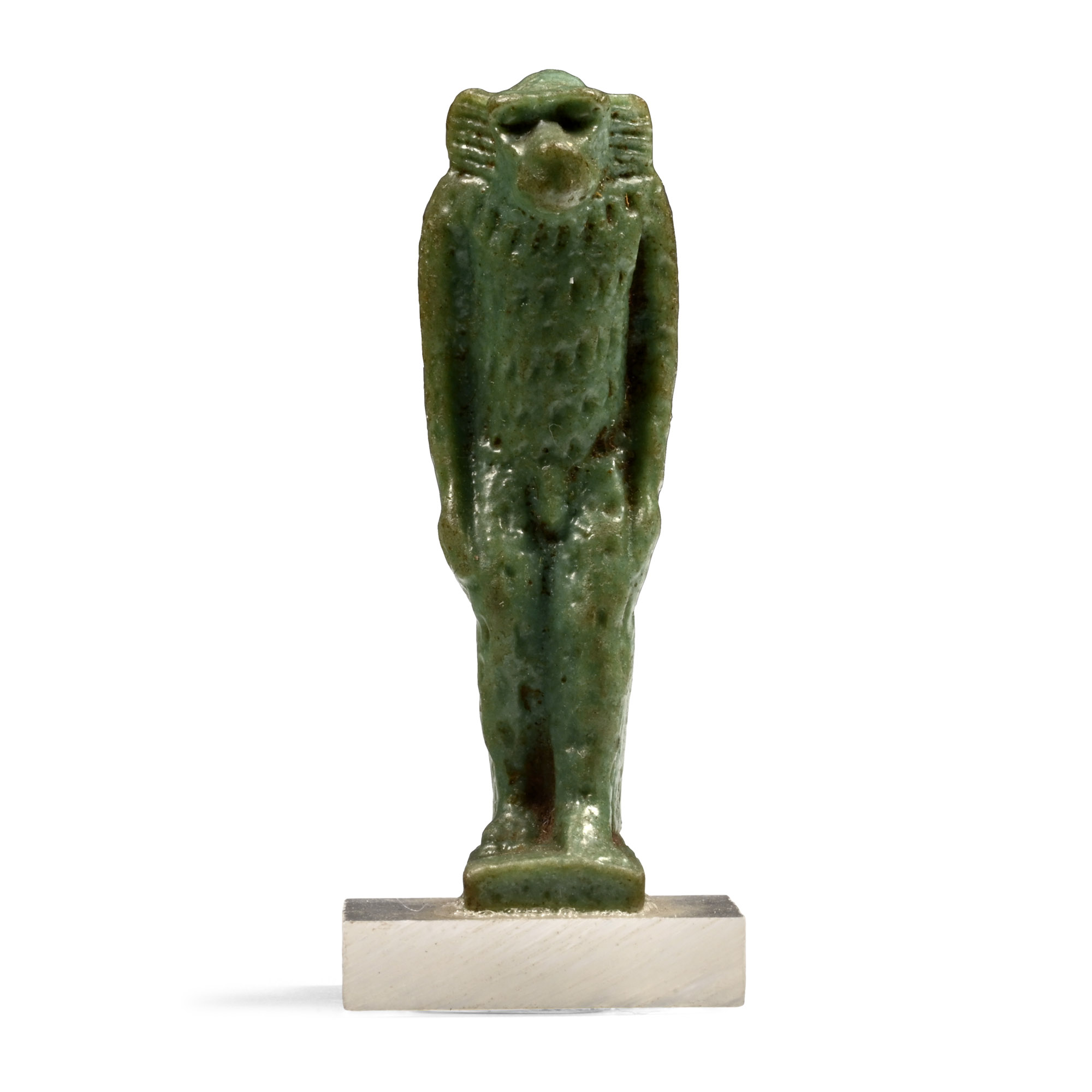
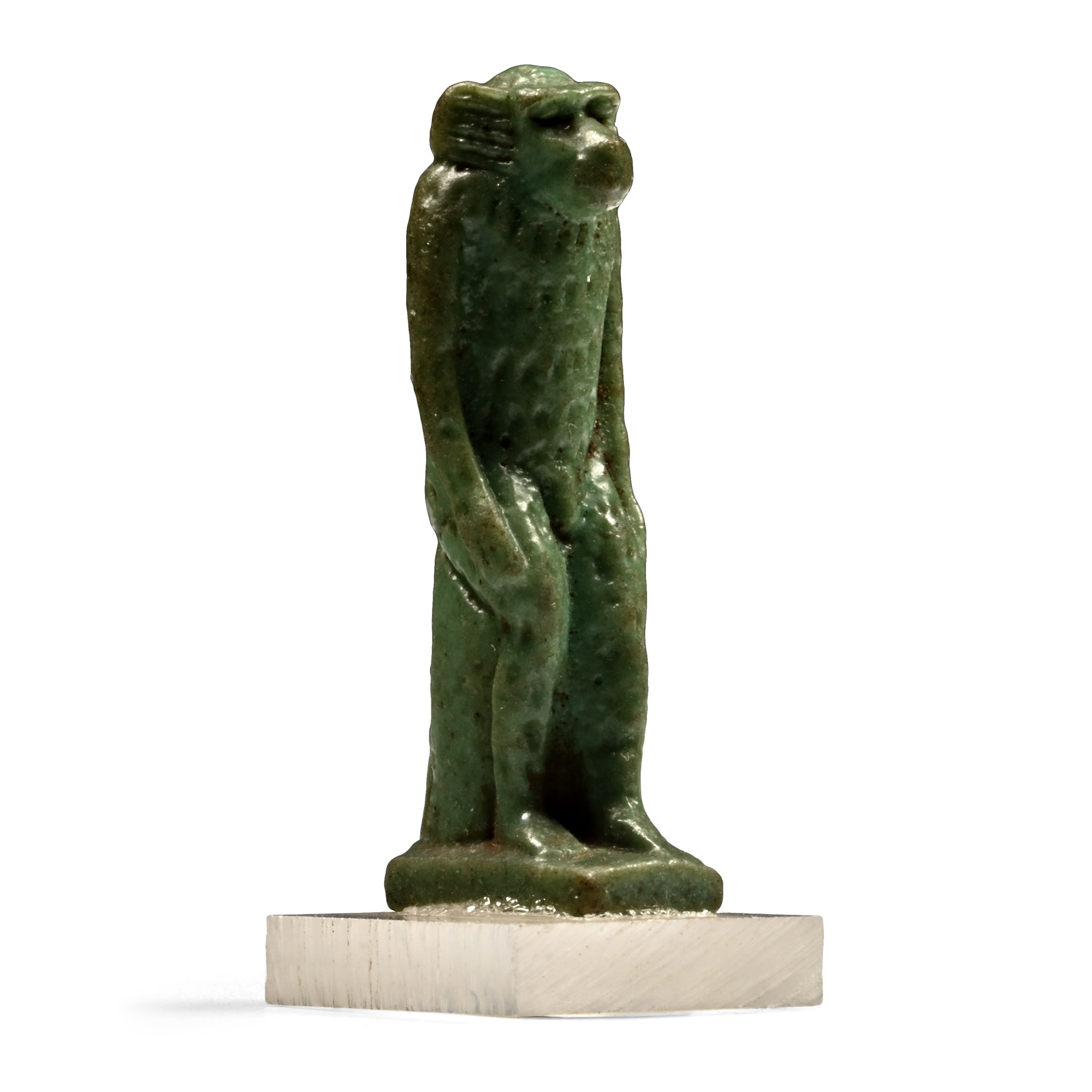
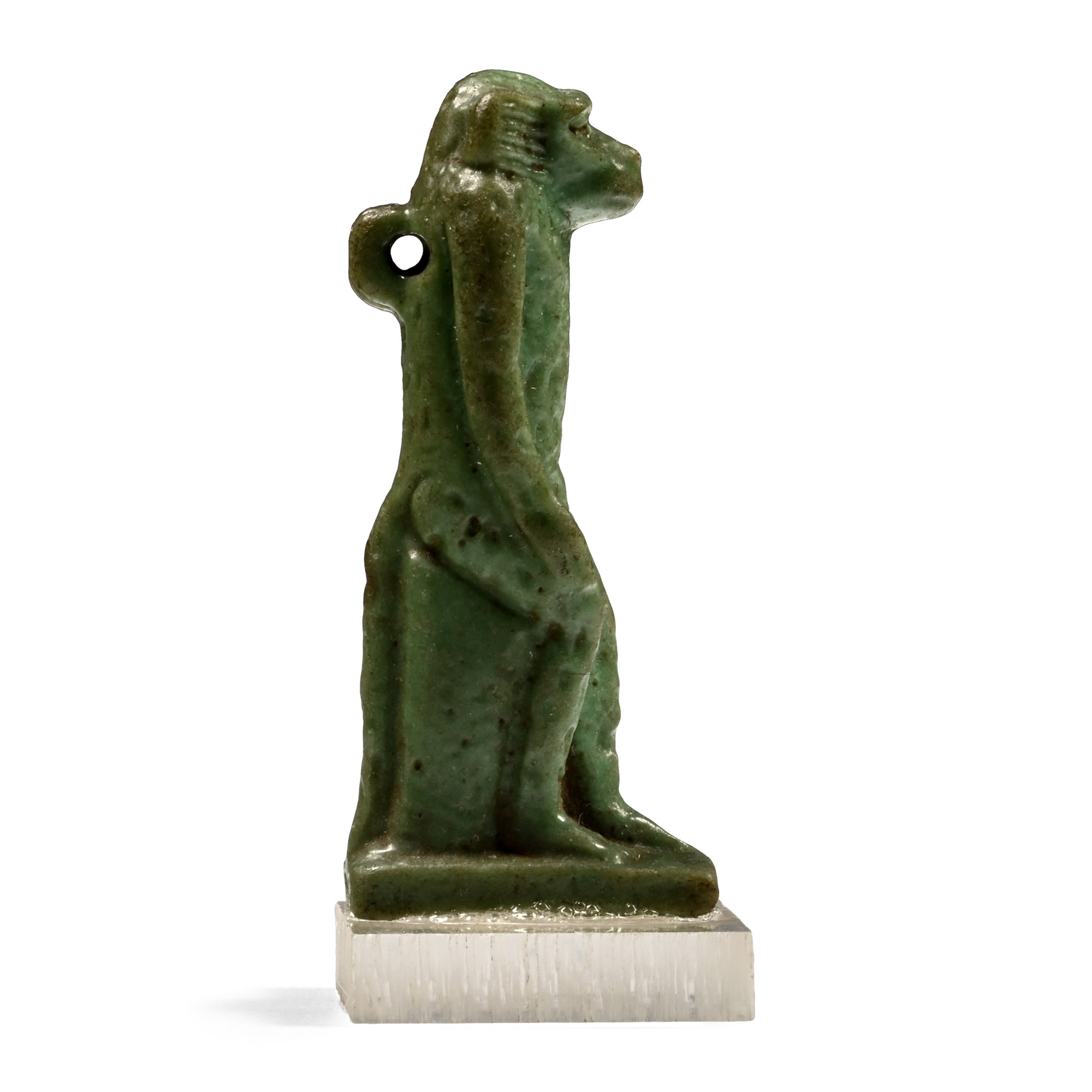
Egyptian Green Glazed Faience Amulet of a Monkey
THIRD INTERMEDIATE PERIOD, CIRCA 1069-735 B.C.
1 5/8 in. (6.1 grams total, 43 mm including stand).
Modelled in the round with dorsal pillar and loop, small base.
ProvenanceCollection of Monsieur M.; Etude Tajan, Paris, 26 February 1996, no.101.
Private collection, London, UK, acquired from the above sale.
Accompanied by a copy of a French cultural passport, dated 21 March 1996.
This lot is accompanied by an illustrated lot declaration signed by the Head of the Antiquities Department, Dr Raffaele D'Amato.
Cf. Andrews, C., Amulets of Ancient Egypt, London, p.66, fig.71c.
FootnotesThe vervet monkey was a symbol of love and sexual fulfilment.
CONDITIONTimeLine Auctions follows a vetting process to ensure the authenticity and legality of all items, reinforcing our commitment to integrity and responsible trading. Each antiquity, antique, and coin lot undergoes thorough examination by a vetting committee of at least ten external specialists, professional trade association members, scientists, and archaeologists: Our Vetting Process
AUCTIONS:
TimeLine is a leading auction house specialising in antiquities, ancient art, collectables, natural history, coins, medals, and books. Our auctions offer museums, collectors, historians, and enthusiasts the opportunity to acquire unique and historically significant pieces.
LOT 0019
Egyptian Green Glazed Faience Amulet of a Monkey
Estimate £1,000 - 1,400€1,160 - 1,620 (for guidance only)$1,350 - 1,890 (for guidance only)
-
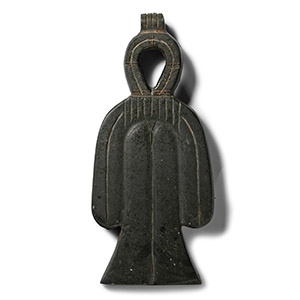
Egyptian Stone Tyet Amulet
Third Intermediate Period-Late Period, circa 743-332 B.C.Sold for (Inc. bp): £1,300
Finely carved tyet amulet with incised internal detailing and ribbed suspension loop at the top. 38.9 grams, 81 mm
Acquired in the mid 1980s-1990s. Private collection, Switzerland, thence by descent. Private collection, since the late 1990s. This lot is accompanied by an illustrated lot declaration signed by the Head of the Antiquities Department, Dr Raffaele D'Amato.
The tyet amulet was associated with the goddess Isis and was often referred to as the 'knot' or 'girdle' of Isis. Some believe that it represents a bandage used to absorb menstrual blood. It was commonly placed within the mummy wrappings on the upper torso of the deceased, with the belief that it would invoke Isis' protection and safeguard the body, thus ensuring their rebirth in the afterlife. -
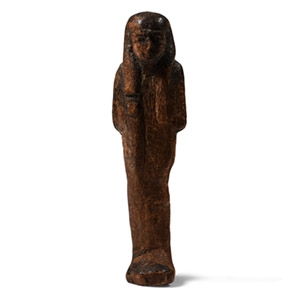
Egyptian Wooden Funerary Shabti Figurine
New Kingdom, circa 1570-1070 B.C.Estimate: £1,200 - 1,700 (‡+bp*)
Opening Bid: £600
Carved in the round as a mummiform figure, with a carefully modelled tripartite wig, a rounded face, large eyes, and a subtly simpering expression. 39 grams, 14.5 cm
Ex R. Liechti (1934-2010) Geneva, Switzerland, formed between 1950-1990s. with Liechti stock number 'E.825' to base. This lot has been checked against the Interpol Database of stolen works of art and is accompanied by a search certificate number no.12079-218221. This lot is accompanied by an illustrated lot declaration signed by the Head of the Antiquities Department, Dr Raffaele D'Amato.
A shabti (also known as ushabti or shawabti) is a small funerary figurine found in ancient Egyptian tombs, from around 2000 BCE to 30 BCE. Its main purpose was to act as a servant for the deceased in the afterlife, carrying out manual tasks like farming or irrigation as directed by the gods. Shabtis were frequently inscribed with a magical formula from the Book of the Dead to ensure they would animate when summoned. -
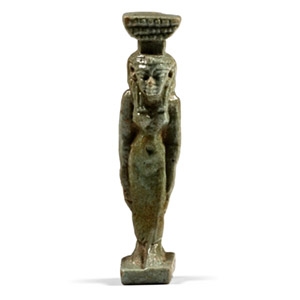
Egyptian Green Glazed Faience Amulet of Nephthys
Late Period, 26th Dynasty, circa 664-525 B.C.Estimate: £500 - 700 (+bp*)
Opening Bid: £250
Depicting the goddess Nephthys wearing the two hieroglyphic parts of her name (Neb(et)-Hut), with dorsal pillar and base. 2.68 grams, 37 mm
with B.M.S., Switzerland. Private collection, London, UK, acquired from the above on 14 September 1981. This lot is accompanied by an illustrated lot declaration signed by the Head of the Antiquities Department, Dr Raffaele D'Amato.
Nephthys was a protective goddess linked to mourning, magic, and the afterlife. As the sister of Isis, she played a vital role in the funerary rites of Osiris. Amulets like this were placed on the deceased to invoke her protection and aid in rebirth. Typically made of faience or semi-precious stone, they were especially common in the Late Period.
