
Loading, please wait...
LOT 0532
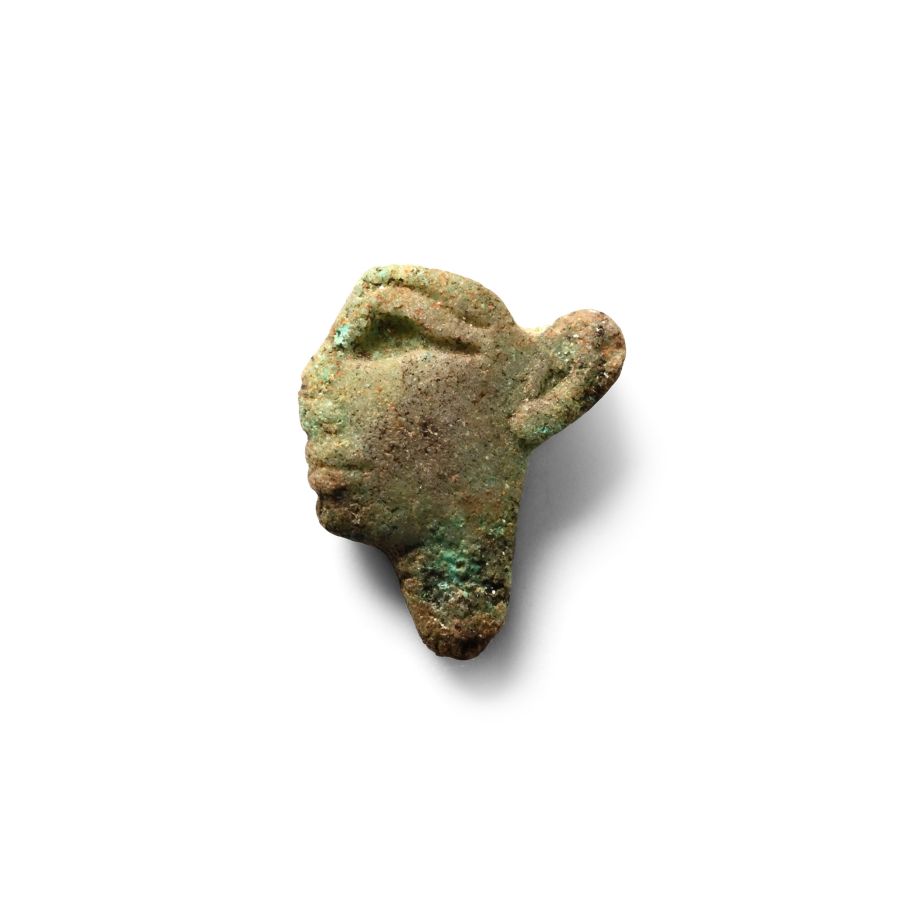
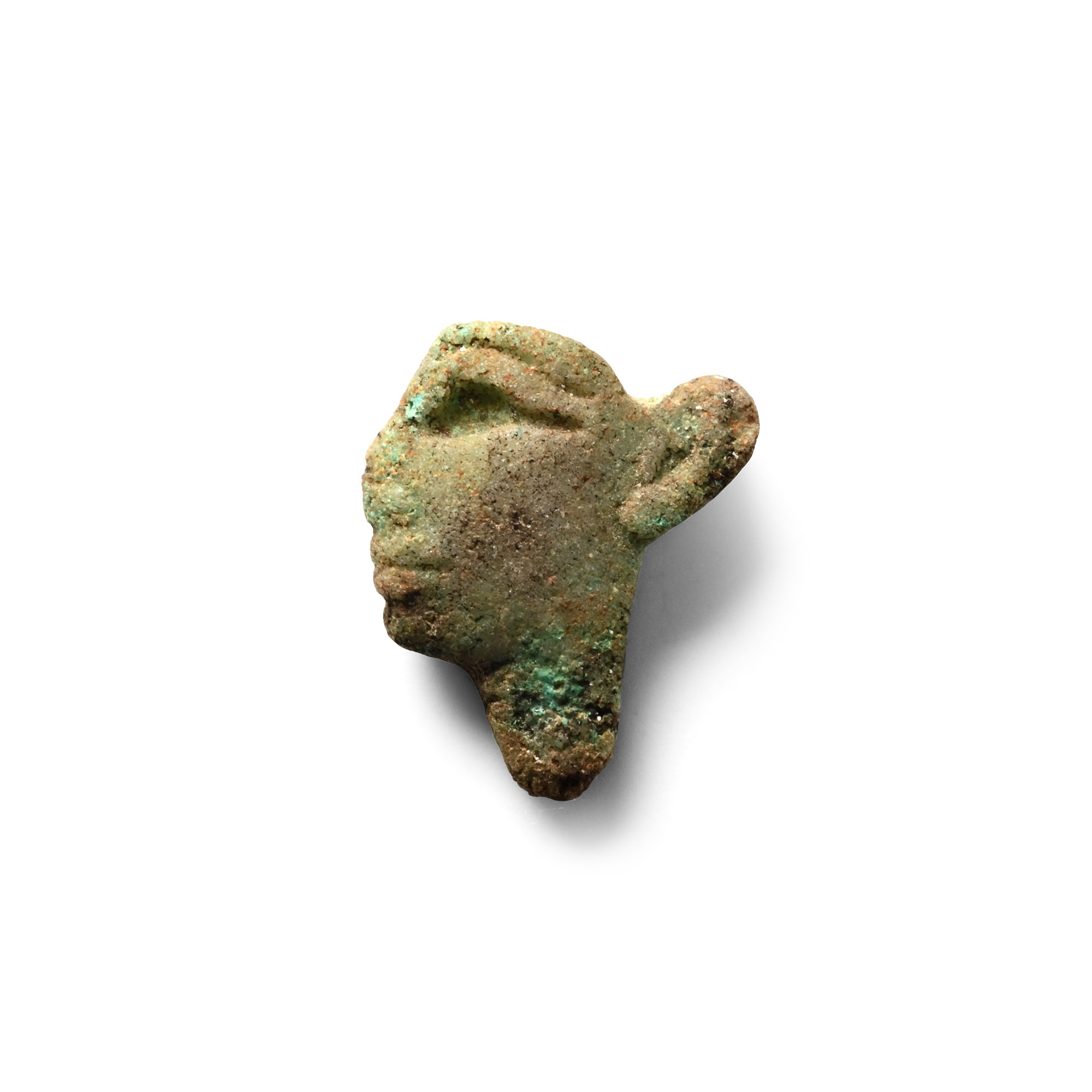
Egyptian Green Glass Pharaonic Face Inlay
LATE PERIOD, 664-332 B.C.
5/8 in. (1.21 grams, 17 mm).
Formed as the profile of a youthful face with shallow socket to accept an eye-insert.
ProvenanceEx French collection, early 20th century.
From the collection of a late Japanese gentleman, 1970s onwards.
TimeLine Auctions follows a vetting process to ensure the authenticity and legality of all items, reinforcing our commitment to integrity and responsible trading. Each antiquity, antique, and coin lot undergoes thorough examination by a vetting committee of at least ten external specialists, professional trade association members, scientists, and archaeologists: Our Vetting Process
AUCTIONS:
TimeLine is a leading auction house specialising in antiquities, ancient art, collectables, natural history, coins, medals, and books. Our auctions offer museums, collectors, historians, and enthusiasts the opportunity to acquire unique and historically significant pieces.
-
.jpg)
Egyptian Limestone Relief with Pharaoh Making Offerings
Ptolemaic-Roman Period, circa 332 B.C.-300 A.D.Sold for (Inc. bp): £4,680
Rectangular relief showing the pharaoh wearing the pschent crown of Upper and Lower Egypt and presenting the hieroglyphic sign of a field (sḫt) in his outstretched palms towards the now barely discernible figure of a standing deity holding a long sceptre; an empty cartouche above and a column of worn hieroglyphic text below; mounted on a custom-made display stand. 18.4 kg total, 45.5 cm including stand
Acquired 1970s-1996. Private collection, Switzerland. with a North American collector. London collection, 2016. This lot has been checked against the Interpol Database of stolen works of art and is accompanied by search certificate number no.12943-244661.
Scenes showing the pharaoh offering various items, including fields, to one or more deities are found in temples across Egypt. The empty cartouche is a feature most often seen in inscriptions from Ptolemaic and Roman-period temples, reflecting uncertainty over the holder of power in the country. -
.jpg)
Egyptian Rock Crystal Scarab
Late Period, 664-332 B.C.Sold for (Inc. bp): £650
Carved scarab with segmented carapace and legs. 6.45 grams, 23 mm
Ex Belinda Elliston collection, a member of the Egyptian Exploration Society, 1940s onwards. -
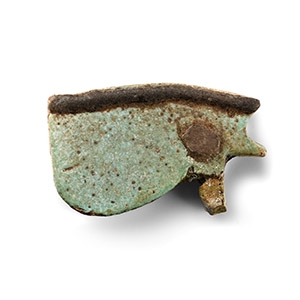
Egyptian Eye of Horus Amulet
Late Period, 664-332 B.C.Sold for (Inc. bp): £78
Wedjat amuletic bead with applied black detailing to the pupil and brow. 4 grams, 30.8 mm
with Archaeologia, Switzerland, before 1983. Ex private North American collection. London private collection, 2016.
