
Loading, please wait...
LOT 0492
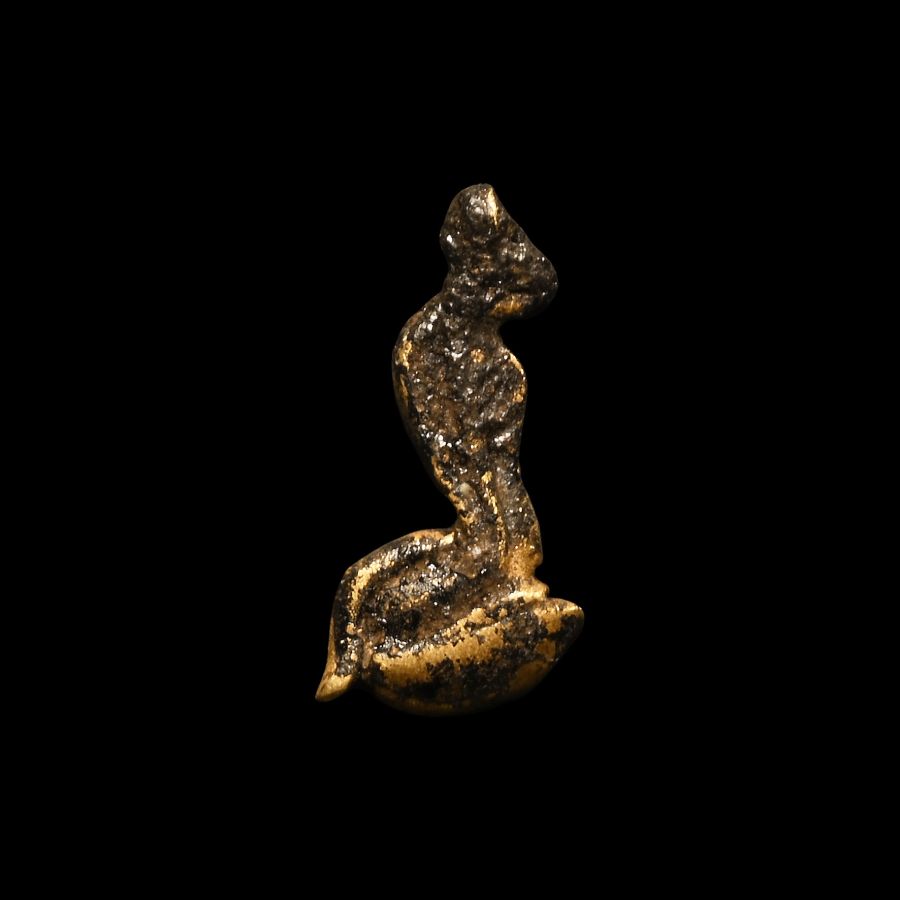
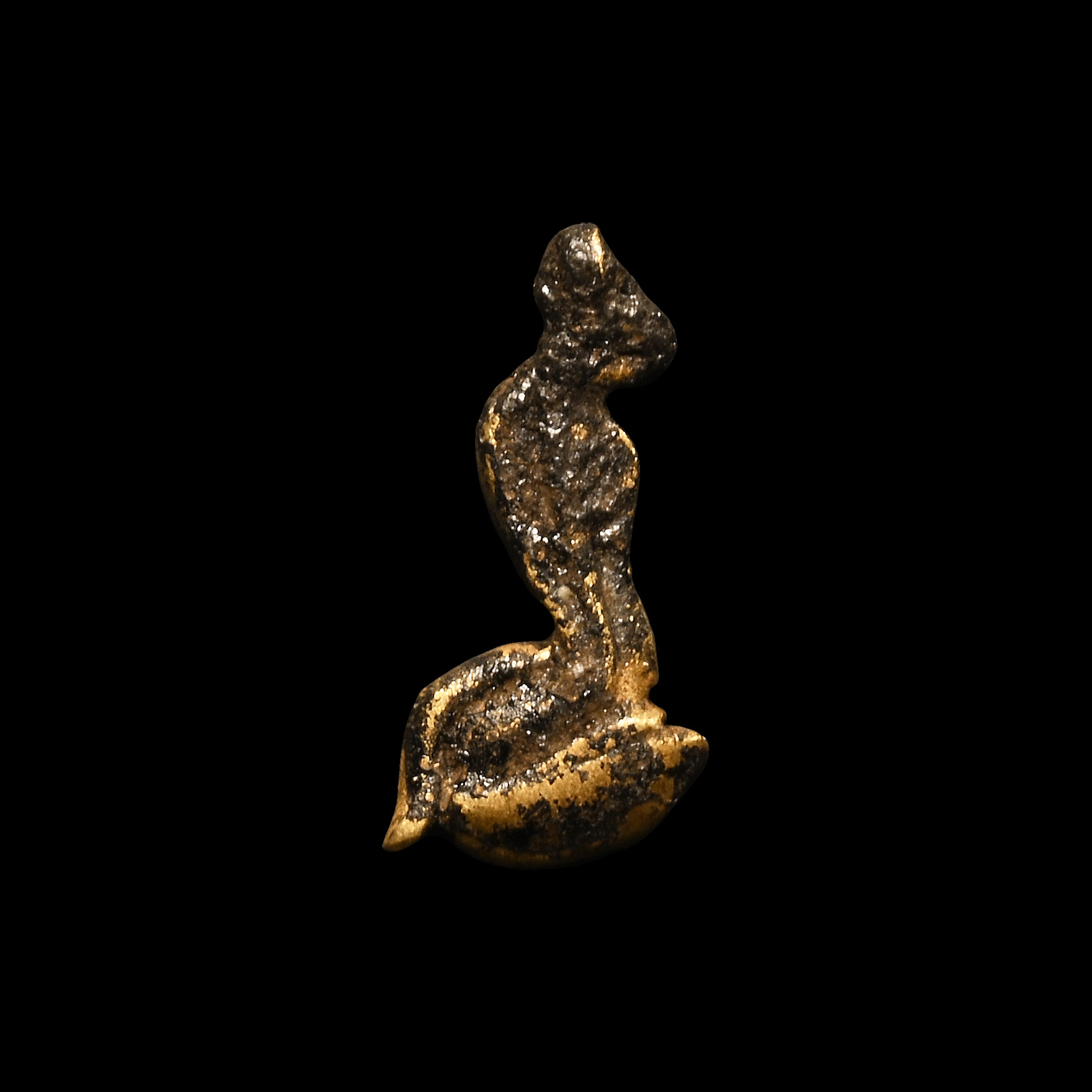
Egyptian Gold Uraeus Amulet
LATE NEW KINGDOM, 1070-900 B.C.
3/8 in. (0.38 grams, 11 mm).
In rearing cobra pose with body coiled below.
ProvenanceFrom an early 20th century French collection.
CONDITIONTimeLine Auctions follows a vetting process to ensure the authenticity and legality of all items, reinforcing our commitment to integrity and responsible trading. Each antiquity, antique, and coin lot undergoes thorough examination by a vetting committee of at least ten external specialists, professional trade association members, scientists, and archaeologists: Our Vetting Process
AUCTIONS:
TimeLine is a leading auction house specialising in antiquities, ancient art, collectables, natural history, coins, medals, and books. Our auctions offer museums, collectors, historians, and enthusiasts the opportunity to acquire unique and historically significant pieces.
-
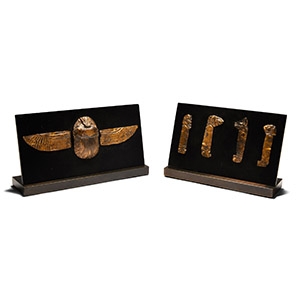
Egyptian Gold Cartonnage Inlays
Late Period-Ptolemaic Period, 664-31 B.C.Sold for (Inc. bp): £4,420
Comprising: a winged scarab with detailed carapace and wings; and the mummiform figures of the four Sons of Horus, Imsety, Hapy, Duamutef, and Qebehsenuef; mounted on custom-made display stands. 635 grams total, 16.5-20 cm wide including stand
From a 1920s French collection. Ex German gallery, 1970-1980s. Spanish collection, 1980s-1990s. London, UK, collection, 2000s. This lot has been checked against the Interpol Database of stolen works of art and is accompanied by search certificate no.12126-214208.
The Four Sons of Horus were deities responsible for protecting the internal organs of the deceased. The human-headed Imsety protected the liver, the baboon-headed Hapy protected the lungs, the jackal-headed Duamutef protected the stomach, and the falcon-headed Qebehsenuef protected the intestines. -
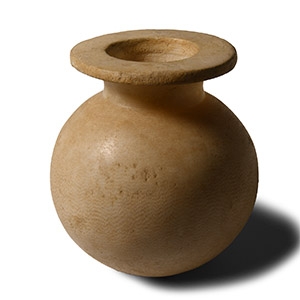
Egyptian Globular Alabaster Jar
Late Old Kingdom-First Intermediate Period, circa 2513-2165 B.C.Sold for (Inc. bp): £1,560
With globular body, short neck and thin, wide rim; part of the rim restored. 310 grams, 98 mm
Ex Waltz collection, Munich, Germany, circa 1970s. with Gorny & Mosch, Auction 206, no.12. Accompanied by copies of the relevant Gorny & Mosch catalogue pages.
Such vessels have been found at numerous sites including Naga ed-Deir, Saqqara, and Badari. -
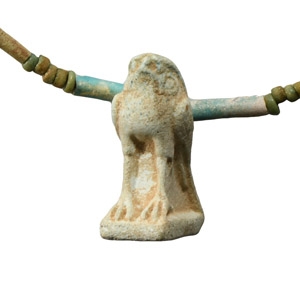
Egyptian Faience Bead Necklace String with Horus Amulet
Late Period, 664-332 B.C.Estimate: £400 - 600 (+bp*)
Opening Bid: £200
Restrung using mainly annular and tubular beads; central feature a large pendant depicting the god Horus in falcon form, intricate feather detailing to the wings and back, long talons gripping the rectangular platform. 14.6 grams, 26 cm
From the vendor's grandfather's collection, formed in the 1950s; thence by family descent circa 1974.
