
Loading, please wait...
LOT 0021
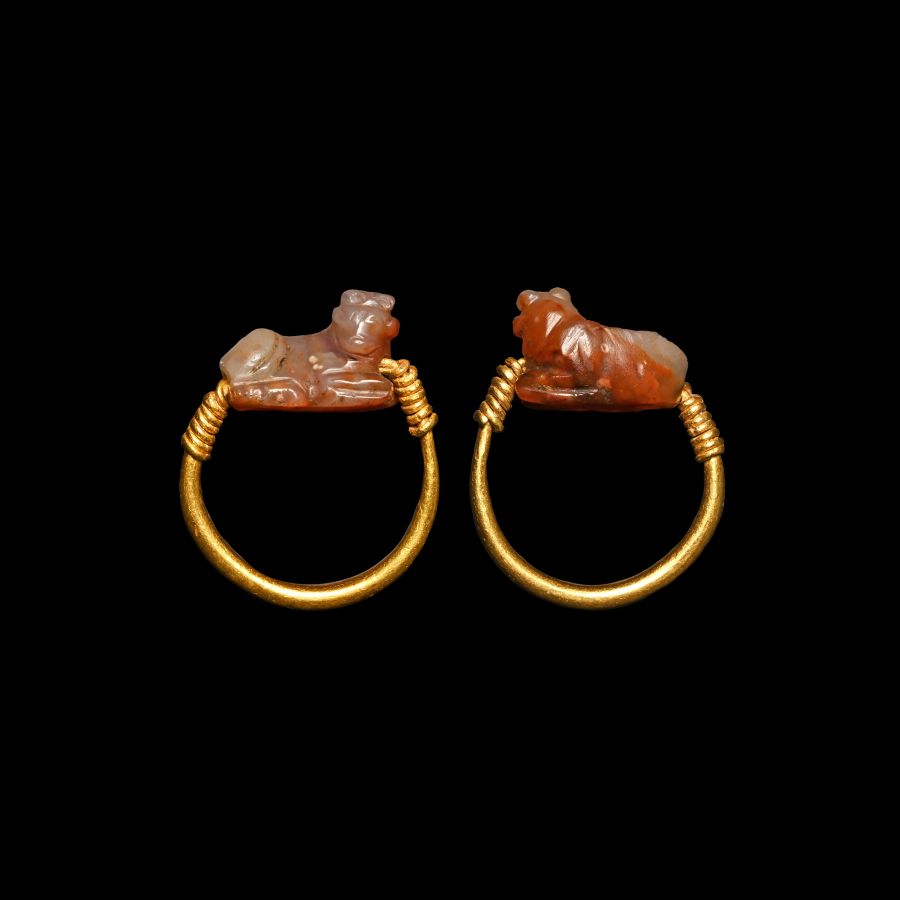
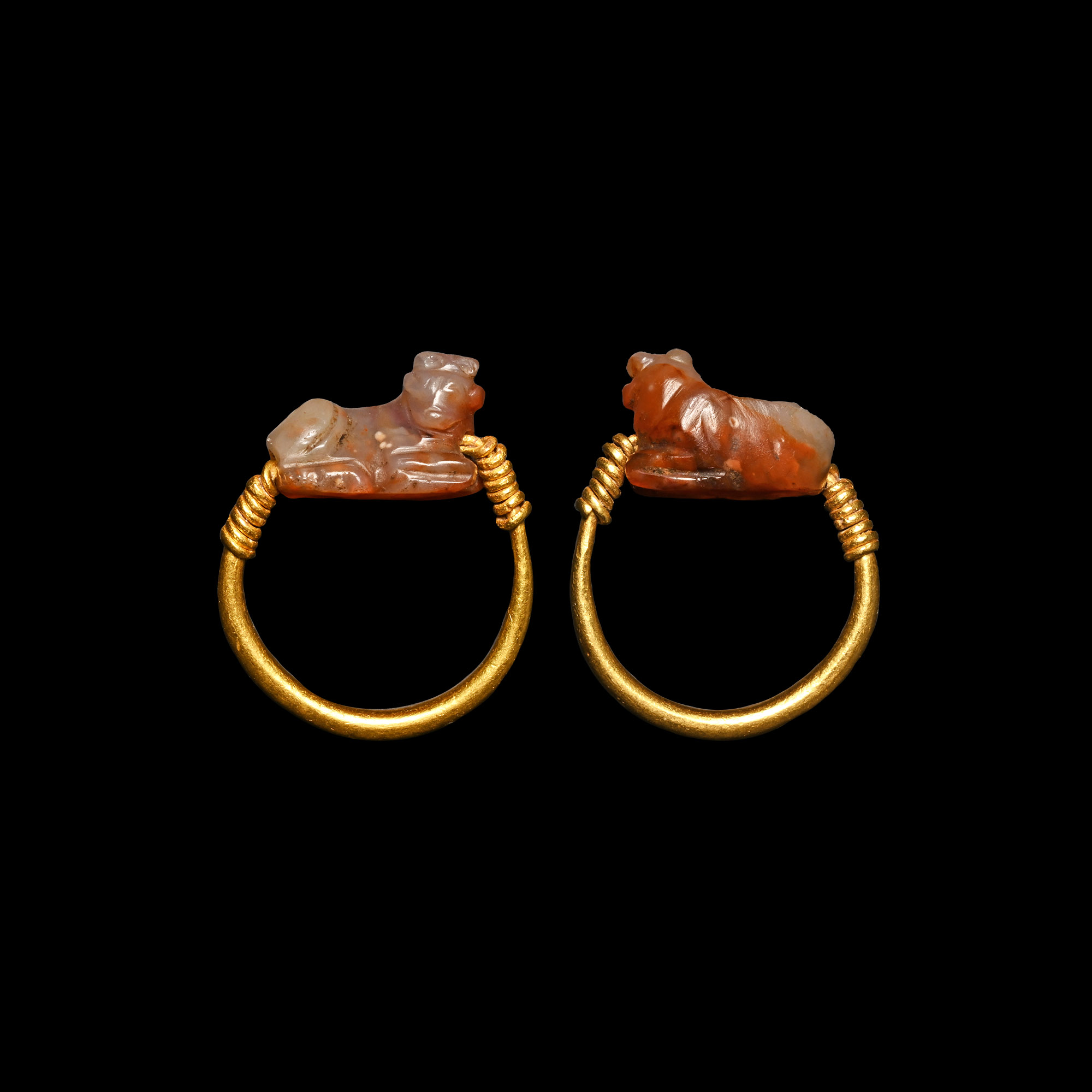
Egyptian Gold Ring with Agate Bull
NEW KINGDOM, 1550-1292 B.C.
1 in. (4.71 grams, 27.98 mm overall, 19.07 mm internal diameter (approximate size British N, USA 6 1/2, Europe 13.72, Japan 13)).
Comprising a round-section swivel ring set with a carved Apis bull depicted recumbent with its head turned to right.
ProvenancePrivate collection, UK.
This lot has been checked against the Interpol Database of stolen works of art and is accompanied by search certificate number no.12939-245988.
For similar see Musée du Louvre, Paris: AF 11092 and N 2090; The British Museum: 1947,1011.2 and 1918,0411.15; Metropolitan Museum of Art: 30.8.418, and the Fitzwilliam Museum: E.GA.21.1947.
FootnotesThe Apis bull was a sacred animal in ancient Egyptian religion, worshipped as a living manifestation of the god Ptah and later associated with Osiris and Ra. Regarded as an intermediary between the gods and humanity, the Apis bull was chosen based on specific physical characteristics, such as a black coat with unique white markings. Once identified, it was housed in a grand temple in Memphis, where it was treated with great reverence, adorned with jewellery, and participated in important religious ceremonies. Upon its death, the bull underwent elaborate mummification and burial rituals, symbolising its transition to the afterlife and its continued divine role. The cult of the Apis bull highlights the Egyptians’ deep connection to animals as symbols of divine power and their belief in the interconnectedness of the mortal and spiritual worlds.
CONDITIONTimeLine Auctions follows a vetting process to ensure the authenticity and legality of all items, reinforcing our commitment to integrity and responsible trading. Each antiquity, antique, and coin lot undergoes thorough examination by a vetting committee of at least ten external specialists, professional trade association members, scientists, and archaeologists: Our Vetting Process
AUCTIONS:
TimeLine is a leading auction house specialising in antiquities, ancient art, collectables, natural history, coins, medals, and books. Our auctions offer museums, collectors, historians, and enthusiasts the opportunity to acquire unique and historically significant pieces.
LOT 0021
Egyptian Gold Ring with Agate Bull
Estimate £6,000 - 8,000€6,960 - 9,280 (for guidance only)$8,100 - 10,800 (for guidance only)
-
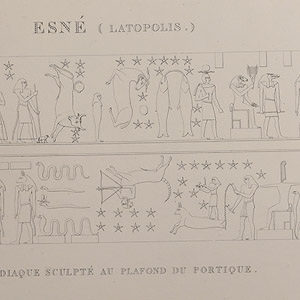
Large Egyptian Expedition Lithograph of Reliefs at Esna
Early 19th century A.D.Sold for (Inc. bp): £7
Proof etching on laid paper of plate 79 from Description De L'Égypte : Ou, Recueil Des Observations Et Des Recherches Qui Ont Été Faites En Égypte Pendant L'expédition De L'Armée Française. Seconde Edition. Dediee Au Roi, entitled Esné (Latopolis). Zodiaque Sculpté Au Plafond Du Portique. 106 grams, 106 x 35 cm
From the collection of a North American priest. Acquired between 1981-1996. Property of a North American collector.
Produced between February 1802 and 1830 on the orders of Napoleon Bonaparte; published between 1809 and 1828. Just 1,000 copies were distributed to various institutions, printed on laid paper with an 'Égypte ancienne et moderne' watermark. The book is subtitled Recueil des observations et des recherches qui ont été faites en Égypte pendant l’expédition de l’Armée française, publié par les ordres de Sa Majesté l’Empereur Napoléon le Grand (Gathering of observations and discoveries which were made in Egypt during the expedition of the French army, published on the orders of His Majesty the Emperor Napoleon the Great). It was the world's first encyclopedia devoted exclusively to the remains of ancient Egypt. The plates of this book are the first to present the archaeological sites of Thebes (Luxor). The Temple of Khnum at Esna, visible today, is mostly of Ptolemaic and Roman date. The decorative zodiac dates to the reign of Ptolemy III. -
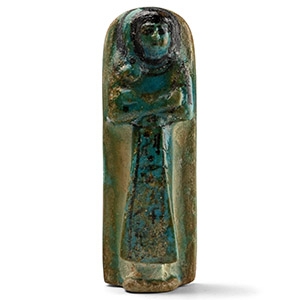
Egyptian Turquoise Faience Shabti of Prince Khaemwaset
New Kingdom, Ramesside Period, 19th Dynasty, 1282-1225 B.C.Estimate: £8,000 - 10,000 (+bp*)
Opening Bid: £3,500
Wearing daily dress and carrying agricultural implements, with dark blue details including his short wig with side-lock, designating him as a Sem-priest of Ptah at Memphis, the text on the kilt naming him as 'Sem-priest and King's son Khaemwaset'; with round-topped back support, the reverse with two columns of hieroglyphs with part of the shabti formula: "He says: O shabti, if one counts, if one is reckoned to do all the works that are to be done there in the God’s land—now indeed obstacles are implanted therewith—as a man at his duties, ‘Here I am,’ you shall say when you are counted off to cultivate the fields, transport by boat the sand of the east to the west and vice versa; ‘Here I am,’ you shall say". 284 grams, 15.1 cm
With Barakat, Beverly Hills: reputed to be from the Omar Pasha Sultan collection, (1806-1871) but unpublished in the 1929 catalogue of the collection, nor in Aubert's 1976 article on the shabtis in the collection. Bonhams, London, 1 May 2013, no.282. Accompanied by copies of the relevant Bonhams catalogue pages. Accompanied by an academic report by Egyptologist Paul Whelan. This lot has been checked against the Interpol Database of stolen works of art and is accompanied by search certificate number no.12938-243536.
Prince Khaemwaset was the fourth-ranked son of Ramesses II and the second born to Queen Isetnofret. More is known about Khaemwaset than any other son of Ramesses II, attested by over 150 objects, ranging from statues to temple reliefs. He is traditionally regarded as the “first Egyptologist” for his restoration of monuments belonging to earlier kings, including the pyramids at Giza and Saqqara. Recent reassessment, however, suggests that some of these activities involved dismantling parts of ancient structures for reuse in his father’s temple constructions. -
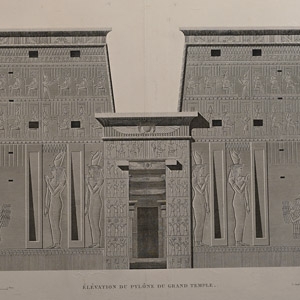
Very Large Egyptian Expedition Lithograph of the Temple of Edfu
Early 19th century A.D.Sold for (Inc. bp): £130
Proof etching on laid paper of plate 51 from Vol.I of Description de l'Égypte : ou, Recueil des observations et des recherches qui ont été faites en Égypte pendant l'expédition de l'armée française. entitled Edfou (Apollinopolis magna. Élévation du pylône du grand temple. 230 grams,106 x 68.5 cm
From the collection of a North American priest. Acquired between 1981-1996. Property of a North American collector.
Produced between February 1802 and 1830 on the orders of Napoleon Bonaparte; published between 1809 and 1828. Just 1,000 copies were distributed to various institutions, printed on laid paper with an 'Égypte ancienne et moderne' watermark. The book is subtitled Recueil des observations et des recherches qui ont été faites en Égypte pendant l’expédition de l’Armée française, publié par les ordres de Sa Majesté l’Empereur Napoléon le Grand (Gathering of observations and discoveries which were made in Egypt during the expedition of the French army, published on the orders of His Majesty the Emperor Napoleon the Great). It was the world's first encyclopedia devoted exclusively to the remains of ancient Egypt. The plates of this book are the first to present the archaeological sites of Thebes (Luxor). The Temple of Horus at Edfu, located on the west bank of the Nile in Upper Egypt. Built in the Ptolemaic Period, it remains one of the best-preserved temples in Egypt.
