
Loading, please wait...
LOT 0553
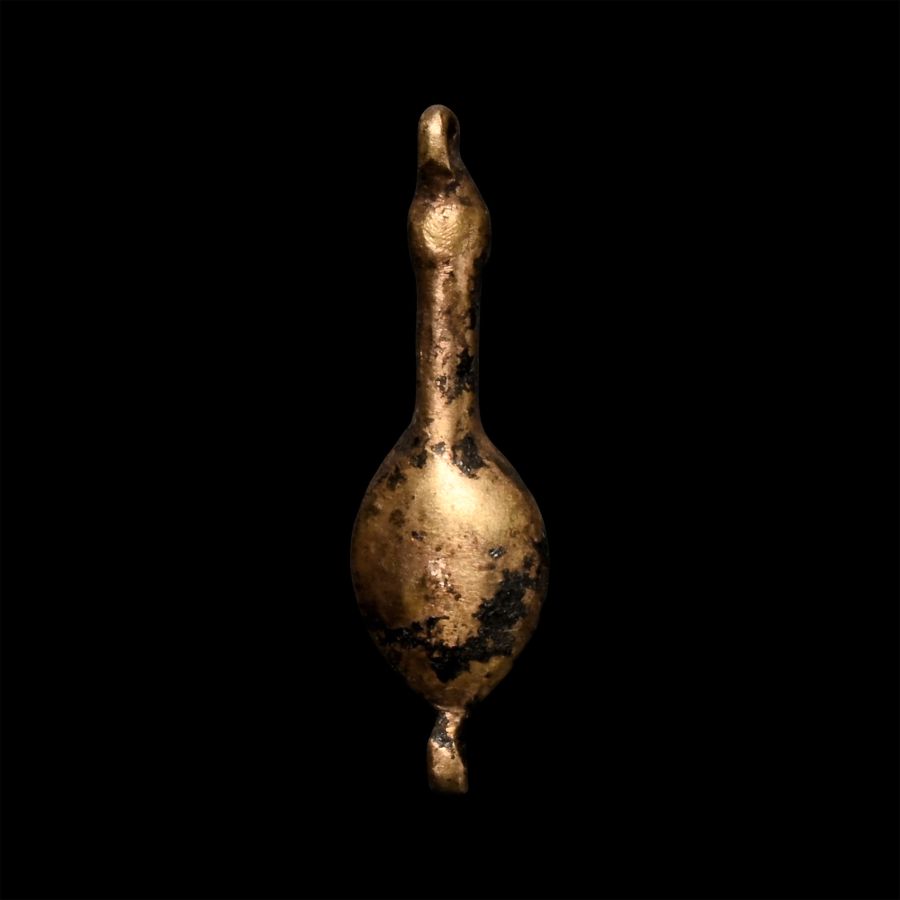
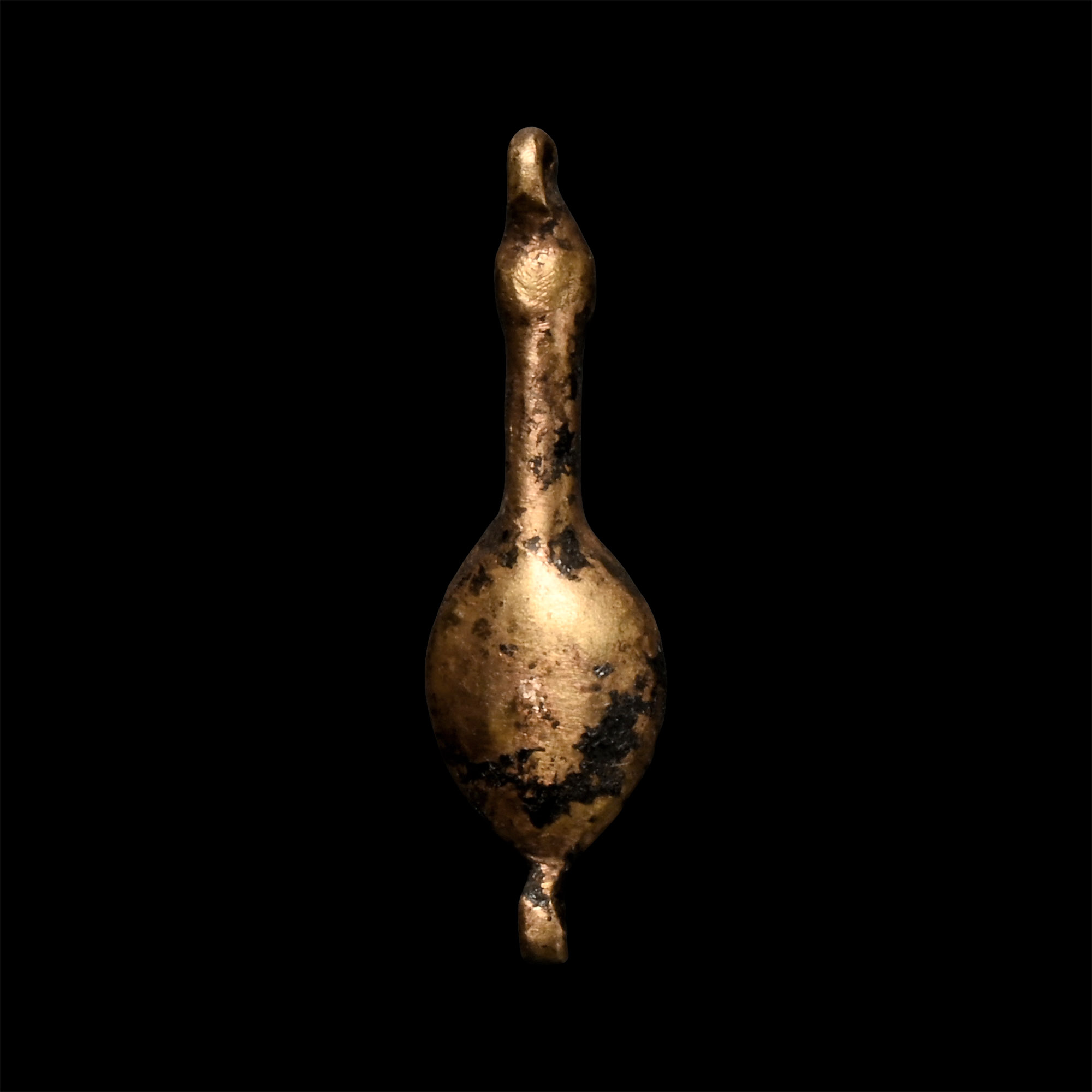
Egyptian Gold Poppy Amulet
CIRCA 5TH-3RD CENTURY B.C.
1/2 in. (0.21 grams, 12 mm).
Bulbous poppy-head with loop at the apex.
ProvenanceEx French collection, early 20th century.
From the collection of a late Japanese gentleman, 1970s onwards.
TimeLine Auctions follows a vetting process to ensure the authenticity and legality of all items, reinforcing our commitment to integrity and responsible trading. Each antiquity, antique, and coin lot undergoes thorough examination by a vetting committee of at least ten external specialists, professional trade association members, scientists, and archaeologists: Our Vetting Process
AUCTIONS:
TimeLine is a leading auction house specialising in antiquities, ancient art, collectables, natural history, coins, medals, and books. Our auctions offer museums, collectors, historians, and enthusiasts the opportunity to acquire unique and historically significant pieces.
-
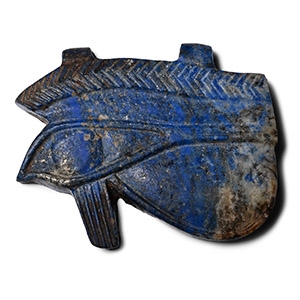
Egyptian Lapis Lazuli Wedjat Eye
Third Intermediate Period-Late Period, 1069-332 B.C.Sold for (Inc. bp): £2,210
Sizeable and finely detailed Eye of Horus, wedjat, with both falcon and human elements, visible gold flecks in places (characteristic of this stone), and two suspension loops on the top. 18.8 grams, 46 mm
From the collection of a gentleman, acquired on the London art market in the 1990s. This lot is accompanied by an illustrated lot declaration signed by the Head of the Antiquities Department, Dr Raffaele D'Amato.
This finely carved wedjat-eye amulet is a representation of the healed eye of the god Horus, featuring both human and falcon elements. The name wedjat in ancient Egyptian means ‘the one that is sound.’ According to Egyptian mythology, Horus' eye was wounded or taken by the god Seth and restored by Thoth. The wedjat-eye amulet was thought to protect its wearer and bestow the power of recovery and regeneration onto them. It was very popular and used by both the living and the dead. -
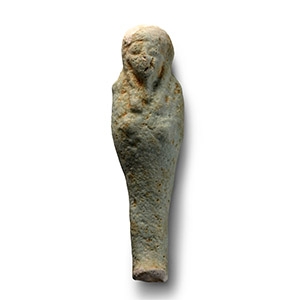
Egyptian Faience Shabti
Ptolemaic Period, 332-30 B.C.Sold for (Inc. bp): £104
D-shaped in section with tripartite wig and beard, hands holding agricultural tools to the chest. 13.9 grams, 77 mm
Ex London, UK, collection, 1990s. -
.jpg)
Egyptian Carnelian Scarab
Late Period, 664-332 B.C.Sold for (Inc. bp): £2,600
Modelled in the round with detailed head and legs, ellipsoid plaque, longitudinal piercing. 3.3 grams, 18 mm
Ex Belinda Elliston collection, a member of the Egyptian Exploration Society, 1940s onwards.
