
Loading, please wait...
LOT 0017
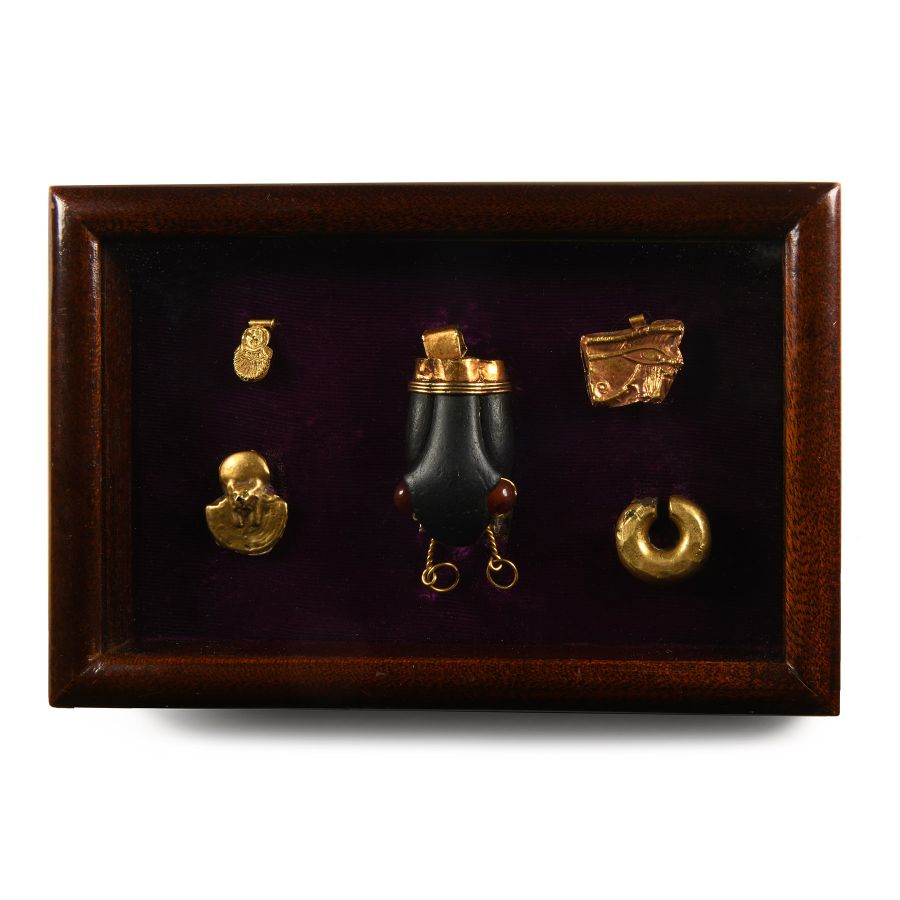
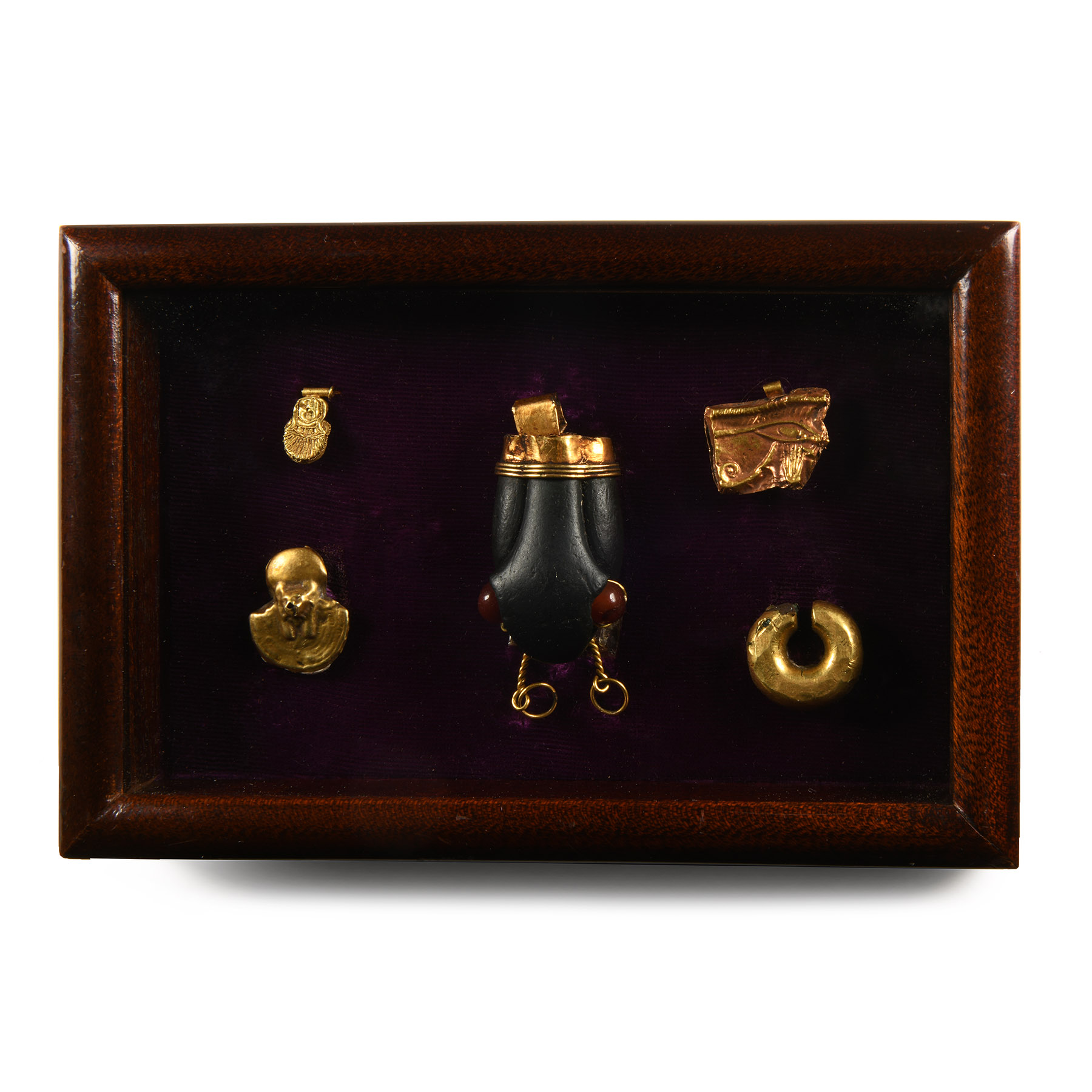
Egyptian Gold Pendant Collection
NEW KINGDOM-PTOLEMAIC PERIOD, 1550-30 B.C.
6 x 4 in. (235 grams total, 15.3 x 10 cm).
Comprising: a sheet-gold wedjat eye; a gold sheet penannular ring, possibly a wig ornament; a sheet-gold bead formed as a granulated female bust; gold aegis of Sekhmet wearing a broad collar and sun disc; a black snake's head mounted in gold with red carnelian eyes, possibly later replacements; mounted in display frame with purple velvet backing.
Provenancewith Christie’s, London, 10 December 1986, no.64 (part).
Property of a gentleman.
Accompanied by copies of the relevant Christie's catalogue pages.
This lot has been checked against the Interpol Database of stolen works of art and is accompanied by search certificate no.12130-214291.
Cf. Andrews, C., Amulets of Ancient Egypt, London, 1994, p.84, fig.86, for two similar examples of stone snake heads dated to the New Kingdom.
CONDITIONTimeLine Auctions follows a vetting process to ensure the authenticity and legality of all items, reinforcing our commitment to integrity and responsible trading. Each antiquity, antique, and coin lot undergoes thorough examination by a vetting committee of at least ten external specialists, professional trade association members, scientists, and archaeologists: Our Vetting Process
AUCTIONS:
TimeLine is a leading auction house specialising in antiquities, ancient art, collectables, natural history, coins, medals, and books. Our auctions offer museums, collectors, historians, and enthusiasts the opportunity to acquire unique and historically significant pieces.
-
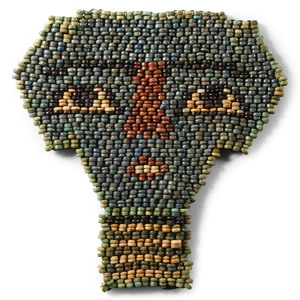
Egyptian Faience Mummy Bead Mask
Ptolemaic Period, 332-30 B.C.Sold for (Inc. bp): £338
Restrung beadwork panel depicting a mummy face mask with false beard. 26.9 grams, 11.2 cm
Previously with Mariaud de Serres, Paris, France. From a Paris gallery. -
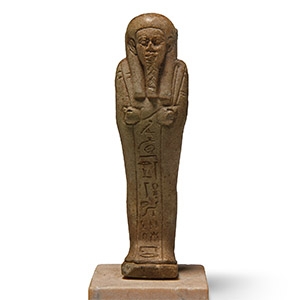
Egyptian Faience Shabti Figure with Hieroglyphic Inscription
Late Period, 664-332 B.C.Sold for (Inc. bp): £845
Olive-green faience with false beard, tripartite wig, holding a pick, hoe and seed bag; plain dorsal pillar; hieroglyphic inscription down the lower front of the body: (ỉ)mꜢḫ n wsỉr ḫtm-nṯr ḏd-ḫỉỉ ms (n) hr-ỉb for 'Honoured of Osiris, the God's Sealer Djed-khy(?) born (to) Her-ib'; mounted on a custom-made stand. 120 grams total, 12.5 cm including stand
From a collection acquired on the UK art market from various auction houses and collections mostly before 2000. From an important Cambridgeshire estate; thence by descent. -
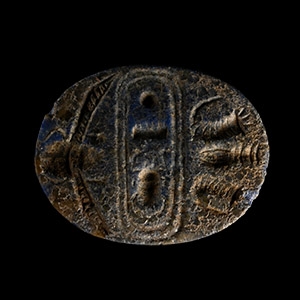
Egypto-Phoenician Lapis Lazuli Scarab with Cartouche for Thutmose III
Late 1st millennium B.C.Estimate: £3,000 - 4,000 (‡+bp*)
Opening Bid: £1,500
With carapace detailing to obverse, plaque with intaglio cartouche for the throne name of Thutmose III, winged scarab and fronds flanking. 7.4 grams, 25 mm
Private collection of Mr S.A., Switzerland, 1990s, thence by descent. This lot has been checked against the Interpol Database of stolen works of art and is accompanied by search certificate no.12127-211877.
