
Loading, please wait...

LOT 0498
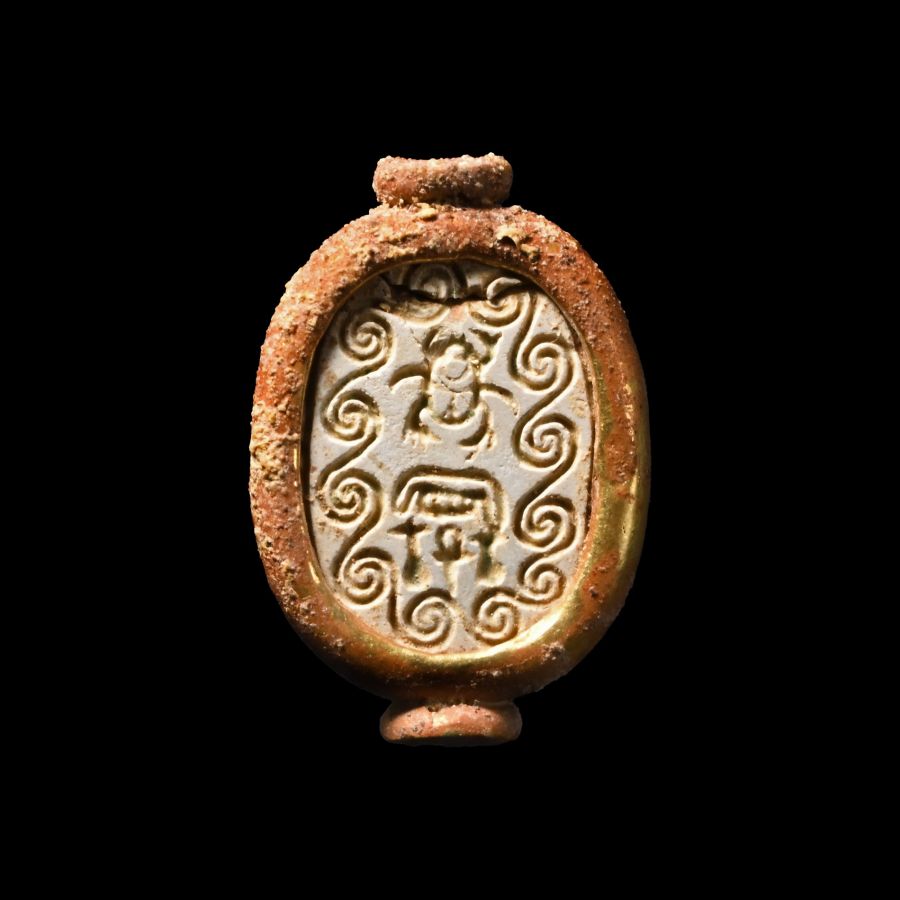
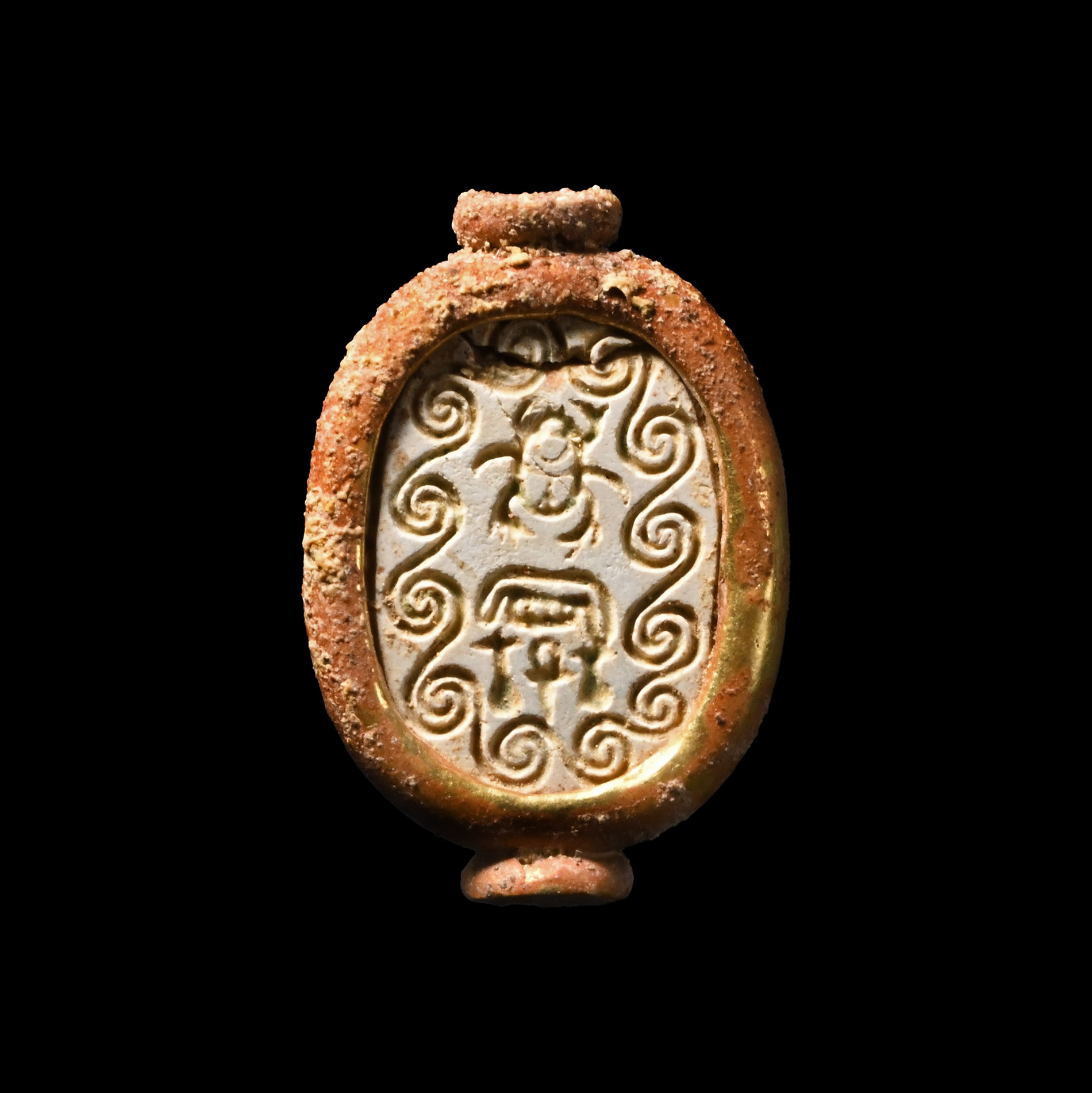
Egyptian Gold Mounted Scarab Bead
MIDDLE KINGDOM-SECOND INTERMEDIATE PERIOD, CIRCA 1900-1560 B.C.
3/4 in. (3.36 grams, 20 mm).
Comprising a faience scarab with a scroll-work border framing the vertically arranged hieroglyphs: kheper beetle, nwb sign for gold, and two nfr signs flanking an ankh sign, set in a gold funda with tubular collars.
ProvenanceFrom an early 20th century Home Counties, UK, collection.
LiteratureSee Ben-Tor, D., The Scarab: A Reflection of Ancient Egypt, Jerusalem, 1993, p. 31, for a discussion of this type of design scarab; Andrews, C., Ancient Egyptian Jewellery, London, 1990, pp.163-9, for discussion of finger rings.
CONDITIONTimeLine Auctions follows a vetting process to ensure the authenticity and legality of all items, reinforcing our commitment to integrity and responsible trading. Each antiquity, antique, and coin lot undergoes thorough examination by a vetting committee of at least ten external specialists, professional trade association members, scientists, and archaeologists: Our Vetting Process
AUCTIONS:
TimeLine is a leading auction house specialising in antiquities, ancient art, collectables, natural history, coins, medals, and books. Our auctions offer museums, collectors, historians, and enthusiasts the opportunity to acquire unique and historically significant pieces.
LOT 0498
Egyptian Gold Mounted Scarab Bead
Estimate £400 - 600€460 - 700 (for guidance only)$540 - 810 (for guidance only)
-
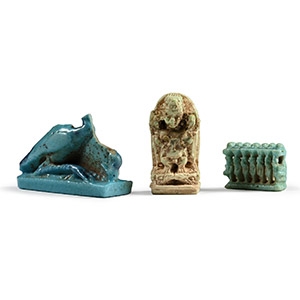
Egyptian Faience Amulet Collection
1st millennium B.C.Estimate: £700 - 900 (‡+bp*)
Opening Bid: £350
Comprising: a row of Tawaret figures on a rectangular base; ibis on a tongue-shaped base; Pataikos flanked by two figures wearing a red crown with uraeus. 6.5 grams total, 16-30 mm
Acquired in the mid 1980s-1990s. Private collection, Switzerland, thence by descent. Private collection, since the late 1990s. -
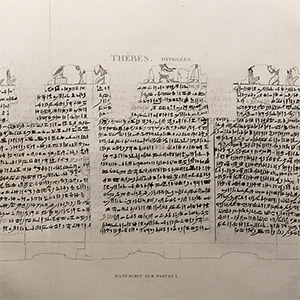
Large Egyptian Expedition Lithograph Print of Hieroglyphs
1820 A.D.Sold for (Inc. bp): £65
Leclerc - Thèbes - Hypogées - Manuscrit sur papyrus - Proof etching on laid paper of plate 69 from La Description de l’Égypte: Antiquités, Volume II: Commission des sciences et arts d’Égypte with later backing sheet. 350 grams, 132 x 65 cm
From the collection of a North American priest. Acquired between 1981-1996. Property of a North American collector.
Produced between February 1802 and 1830 on the orders of Napoleon Bonaparte; published between 1809 and 1828. Just 1,000 copies were distributed to various institutions, printed on on laid paper with an 'Égypte ancienne et moderne' watermark. The book is subtitled Recueil des observations et des recherches qui ont été faites en Égypte pendant l’expédition de l’Armée française, publié par les ordres de Sa Majesté l’Empereur Napoléon le Grand (Gathering of observations and discoveries which were made in Egypt during the expedition of the French army, published on the orders of His Majesty the Emperor Napoleon the Great). It was the world's first encyclopedia devoted exclusively to the remains of ancient Egypt. The plates of this book are the first to present the archaeological sites of Thebes (Luxor). The papyrus manuscript was recovered from the underground chambers (hypogea). The papyrus is now in the Bibliothèque Nationale, Paris. -
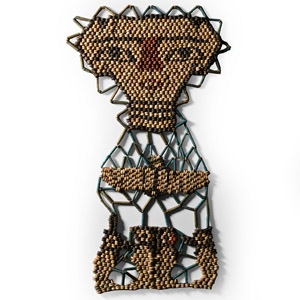
Egyptian Faience Mummy Bead Mask with Four Sons of Horus
Ptolemaic Period, 332-30 B.C.Sold for (Inc. bp): £312
A netted beadwork panel of annular and tubular glazed composition beads in blues, greens, black, cream and red-brown colours, depicting a mummy face mask with a false beard, a scarab with extended wings below, and the 'Four Sons of Horus’ figures beneath the scarab, joined together with areas of open netting of tubular examples; restrung with some later beads. 113 grams, 30 cm
Ex Mariaud des Serres, Paris, France, 1990s.
Winged scarabs were often used as funerary amulets and believed to symbolise the deceased's rebirth and regeneration. The Four Sons of Horus were deities responsible for protecting the deceased's internal organs. Here, on the left, is the erect-eared jackal-headed Duamutef who protects the stomach, followed by the falcon-headed Qebehsenuef, who protects the intestines, then the human-headed Imsety, protector of the liver and, finally, the baboon-headed Hapy on the right, protector of the lungs. The internal organs were often placed in canopic jars with the head of the respective Son of Horus. Amulets depicting these deities were placed within the mummy wrappings.
