
Loading, please wait...
LOT 0438
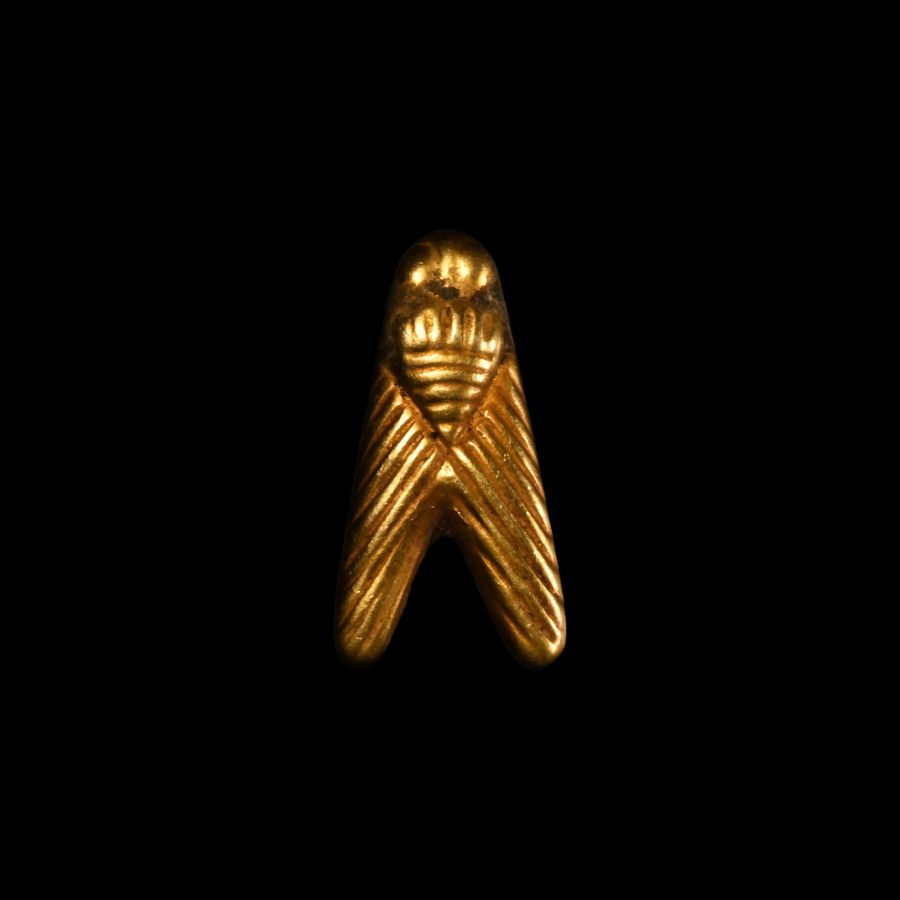
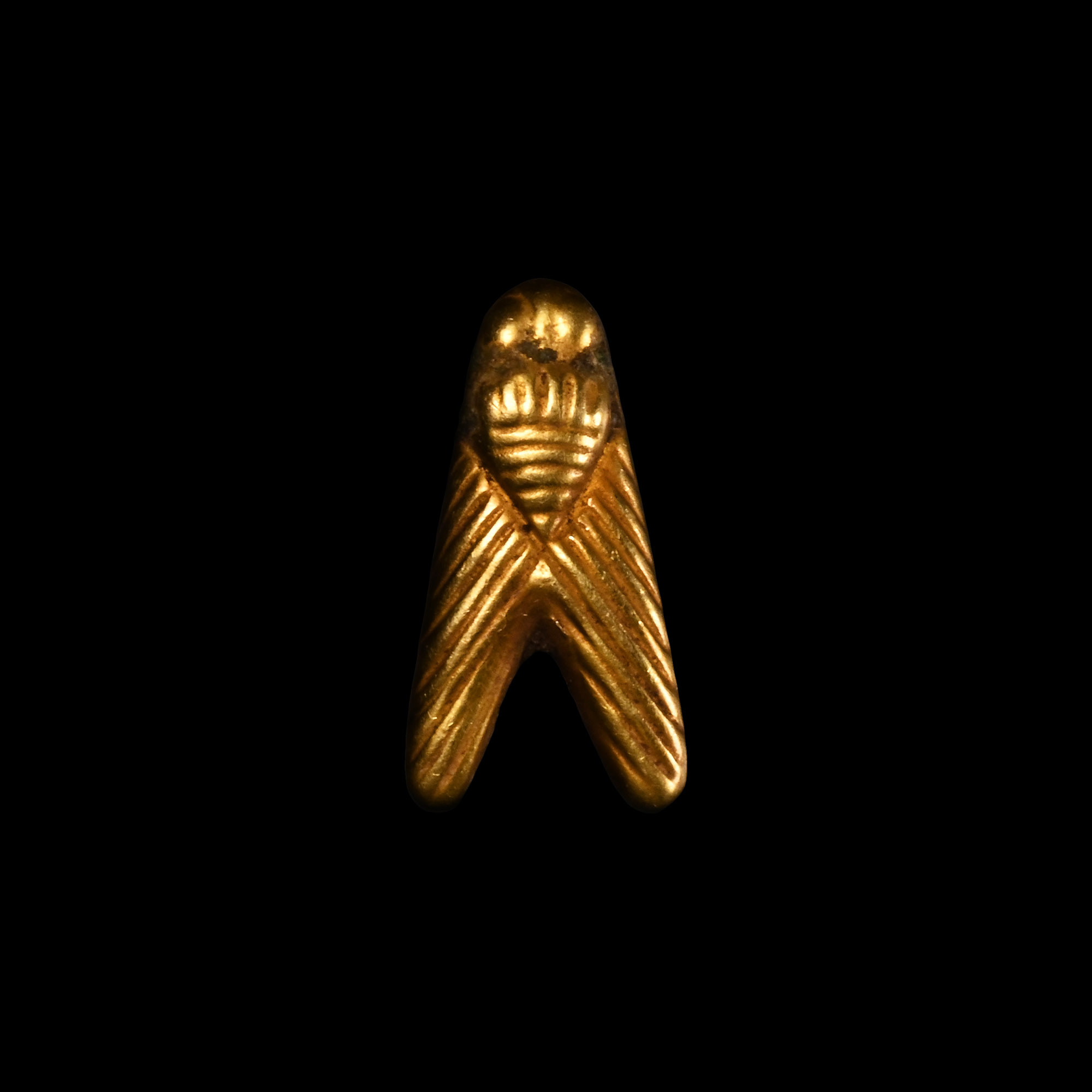
Egyptian Gold Fly Amulet
LATE PERIOD, 664-332 B.C.
5/8 in. (1.76 grams, 17 mm).
Chevron-shaped pendant with incised detailing to the body and wings.
ProvenanceFrom the collection of a gentleman, acquired on the London art market in the 1990s.
This lot is accompanied by an illustrated lot declaration signed by the Head of the Antiquities Department, Dr Raffaele D'Amato.
Cf. Andrews, C., Amulets of Ancient Egypt, London, 1994, fig. 48, for similar examples of gold flies.
FootnotesConsidering that Egyptian artists often depicted fly whisks in the hands of pharaohs and high officials, one might assume that flies were merely a nuisance. However, the Egyptians held flies in high regard due to their quick speed, reactions, and persistence. Small fly amulets first appeared in burials during the Naqada II Period, around 3200 B.C. These amulets grew in popularity, and the materials used to make them expanded during the New Kingdom. They are crafted from various materials such as gold, silver, lapis lazuli, carnelian, amethyst, faience, and bone. These amulets were believed to protect against insect bites and to ward off troublesome flying creatures through apotropaic magic. Some believe they may have even been intended to symbolise the fly’s fecundity. Additionally, pharaohs would bestow gold, fly-shaped pendants as military awards to honour the bravery and fly-like persistence of soldiers in battle.
CONDITIONTimeLine Auctions follows a vetting process to ensure the authenticity and legality of all items, reinforcing our commitment to integrity and responsible trading. Each antiquity, antique, and coin lot undergoes thorough examination by a vetting committee of at least ten external specialists, professional trade association members, scientists, and archaeologists: Our Vetting Process
AUCTIONS:
TimeLine is a leading auction house specialising in antiquities, ancient art, collectables, natural history, coins, medals, and books. Our auctions offer museums, collectors, historians, and enthusiasts the opportunity to acquire unique and historically significant pieces.
-
.jpg)
Egyptian Gold Uraeus Amulet
Late New Kingdom, 1279-1070 B.C.Estimate: £200 - 300 (+bp*)
Opening Bid: £111
Depicting a rearing cobra sporting a sun disc with its coiled body below resting on the hieroglyphic neb sign. 0.38 grams, 11 mm
From an early 20th century French collection. This lot is accompanied by an illustrated lot declaration signed by the Head of the Antiquities Department, Dr Raffaele D’Amato. This lot is accompanied by an illustrated lot declaration signed by the Head of the Antiquities Department, Dr Raffaele D'Amato. -
Egyptian Glass Taweret Amulet
Late Period, 664-332 B.C.Estimate: £500 - 700 (+bp*)
Opening Bid: £278
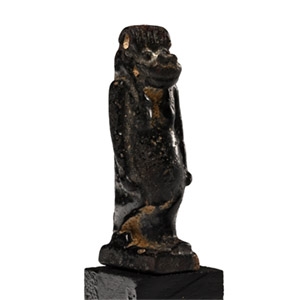
The goddess Taweret in the form of a hippopotamus standing upright with human arms resting on the swollen stomach, crocodile tail flowing down her spine from beneath her wig; mounted on a custom-made display stand. 11.9 grams, 52 mm
Ex P.A. collection, London, UK, 1990s. This lot is accompanied by an illustrated lot declaration signed by the Head of the Antiquities Department, Dr Raffaele D'Amato.
Tawaret is an ancient Egyptian goddess primarily associated with fertility, childbirth, motherhood, and the protection of women during pregnancy and childbirth. She is depicted as a composite creature, blending various animal traits, and is one of the more unique and striking deities in the Egyptian pantheon. Tawaret’s name is derived from the Egyptian word for "great" or "large" (tꜣwꜣrt), reflecting her formidable and protective nature. -
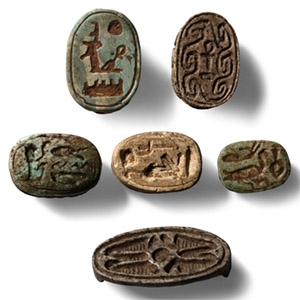
Egyptian Mixed Scarab Collection
2nd-1st millennium B.C.Sold for (Inc. bp): £585
Comprising (from left to right, top to bottom): 1) a scarab with an oval border containing the throne name of the 19th Dynasty pharaoh, Seti I (Men-Maat-Re); 2) a scarab with an oval outer border containing a continuous oblong scroll border framing a neb and ankh symbol; 3) a scarab with an oval border containing a seated adorant before a sa, water, and neb symbol; 4) a scarab with an oval border containing the throne name of the 19th Dynasty pharaoh, Ramesses II (User-Maat-Re), atop a neb sign; 5) a scarab with two signs, possibly representing the word for ‘bread’ above a goose, with a beer jar in front; 6) and a scaraboid with a stretched oval border containing mirrored pairs of rearing cobras surrounding a central sun disc. 18.64 grams total, 14-27 mm
From the collection of a gentleman, acquired on the London art market in the 1990s. This lot is accompanied by an illustrated lot declaration signed by the Head of the Antiquities Department, Dr Raffaele D'Amato.
