
Loading, please wait...
LOT 0478
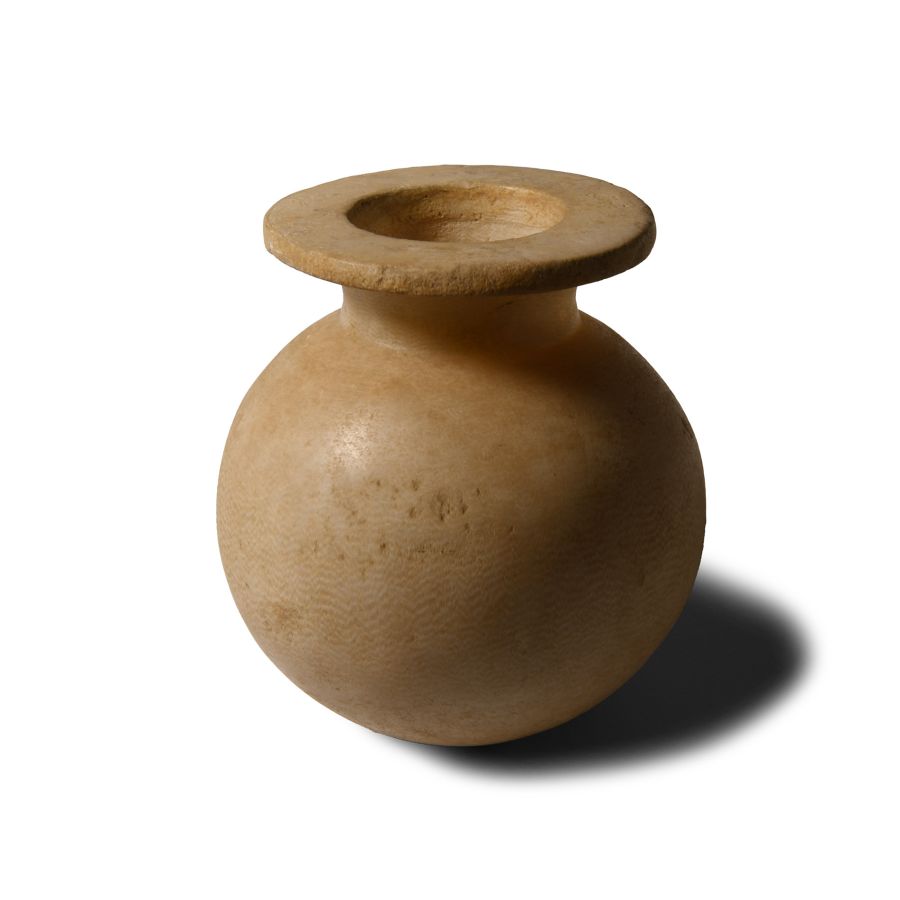
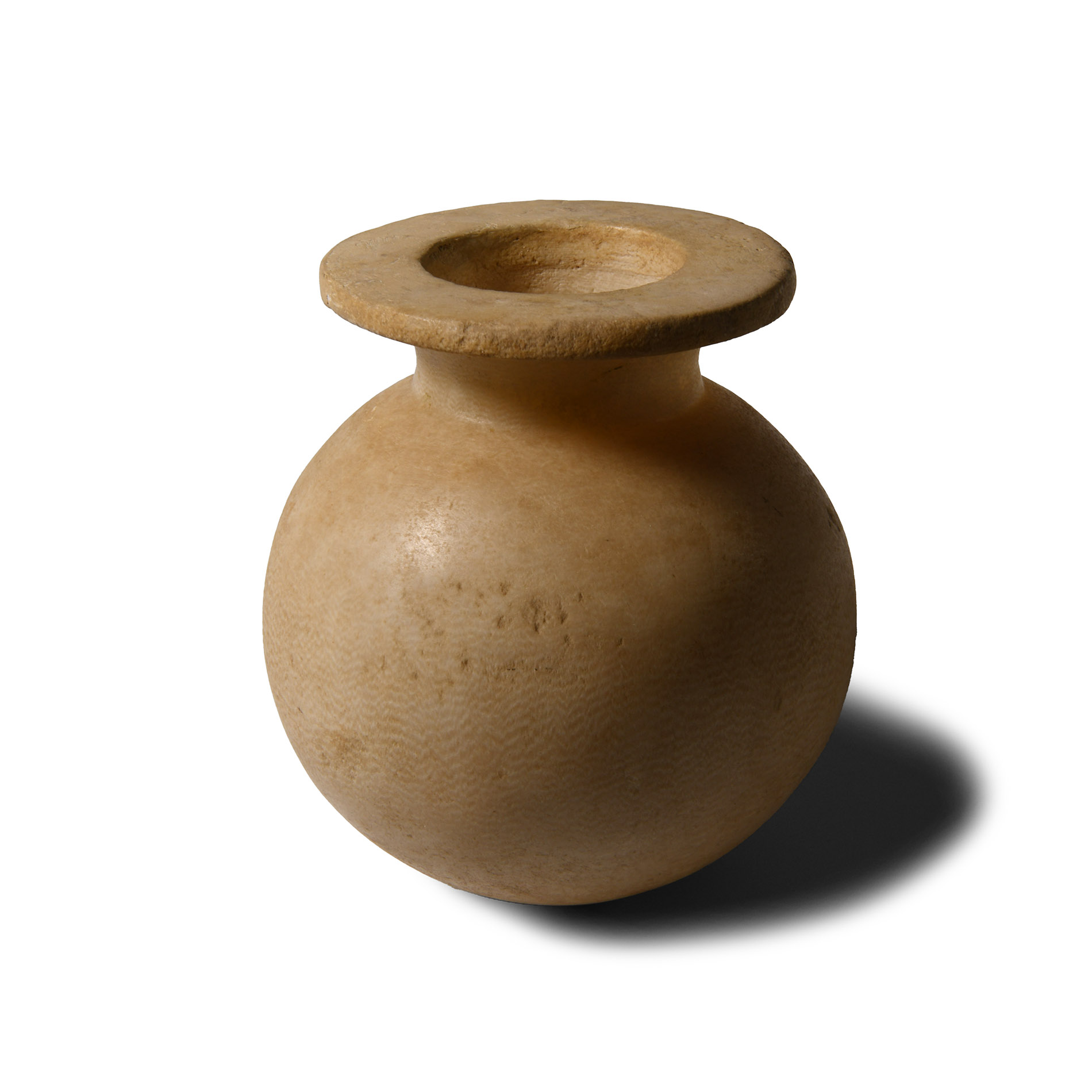
Egyptian Globular Alabaster Jar
LATE OLD KINGDOM-FIRST INTERMEDIATE PERIOD, CIRCA 2513-2165 B.C.
3 7/8 in. (310 grams, 98 mm).
With globular body, short neck and thin, wide rim; part of the rim restored.
ProvenanceEx Waltz collection, Munich, Germany, circa 1970s.
with Gorny & Mosch, Auction 206, no.12.
Accompanied by copies of the relevant Gorny & Mosch catalogue pages.
Cf. Guidotti, M.C., Vasi dall’epoca protodinastica al Nuovo Regno, Museo Egizio di Firenze, Rome, 1991, p.116 (no.101, inv.3321), for a comparable example dated to the First Intermediate Period; Aston, B.G., Ancient Egyptian Stone Vessels: Materials and Forms, SAGA 5, Heidelberg, 1994, p.85, fig.14, pp.137-138, for definition, dating and examples of this vessel type.
FootnotesSuch vessels have been found at numerous sites including Naga ed-Deir, Saqqara, and Badari.
CONDITIONTimeLine Auctions follows a vetting process to ensure the authenticity and legality of all items, reinforcing our commitment to integrity and responsible trading. Each antiquity, antique, and coin lot undergoes thorough examination by a vetting committee of at least ten external specialists, professional trade association members, scientists, and archaeologists: Our Vetting Process
AUCTIONS:
TimeLine is a leading auction house specialising in antiquities, ancient art, collectables, natural history, coins, medals, and books. Our auctions offer museums, collectors, historians, and enthusiasts the opportunity to acquire unique and historically significant pieces.
-
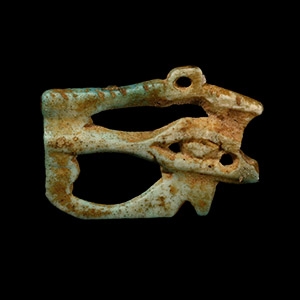
Egyptian Faience Eye of Horus
Late New Kingdom, circa 1300-1075 B.C.Sold for (Inc. bp): £130
Openwork wedjat eye pendant with suspension loop above and slender frame. 0.78 grams, 21 mm
Acquired 1970s onwards. Private collection of Michael O'Hara, Cambridgeshire, UK. -
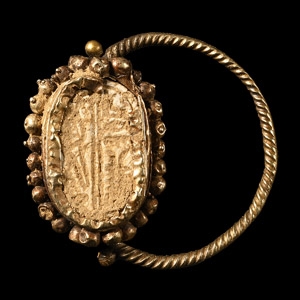
Egyptian Limestone Scarab in Gold Ring
Circa 1750-1550 B.C. and laterSold for (Inc. bp): £572
The scarab carved with simple anatomical detailing with two columns of hieroglyphs to base, including a djed pillar; set in a later gold swivel bezel with beaded edge supported by a tapering, round-section grooved hoop. 2.91 grams, 24.16 mm overall, 21.04 mm internal diameter
Collected from 1970-1999. From the collection of the late Mr S.M., London, UK. Accompanied by a previous catalogue information card.
The djed pillar was associated with the god Ptah, and from the New Kingdom onwards it was associated with the god Osiris, meaning stability, rejuvenation and regeneration. Thus it was used by both the living and the dead, formed of a variety of materials. -
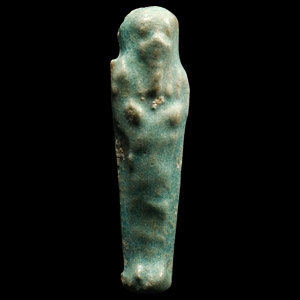
Egyptian Blue Faience Ushabti
Ptolemaic Period, 332-30 B.C.Sold for (Inc. bp): £59
Decorated with a blue glaze and displaying remains of facial, wig, beard and crossed arm detailing to the mummiform figure. 17.9 grams, 70 mm
Acquired in Europe before 1990.
