
Loading, please wait...
LOT 0018
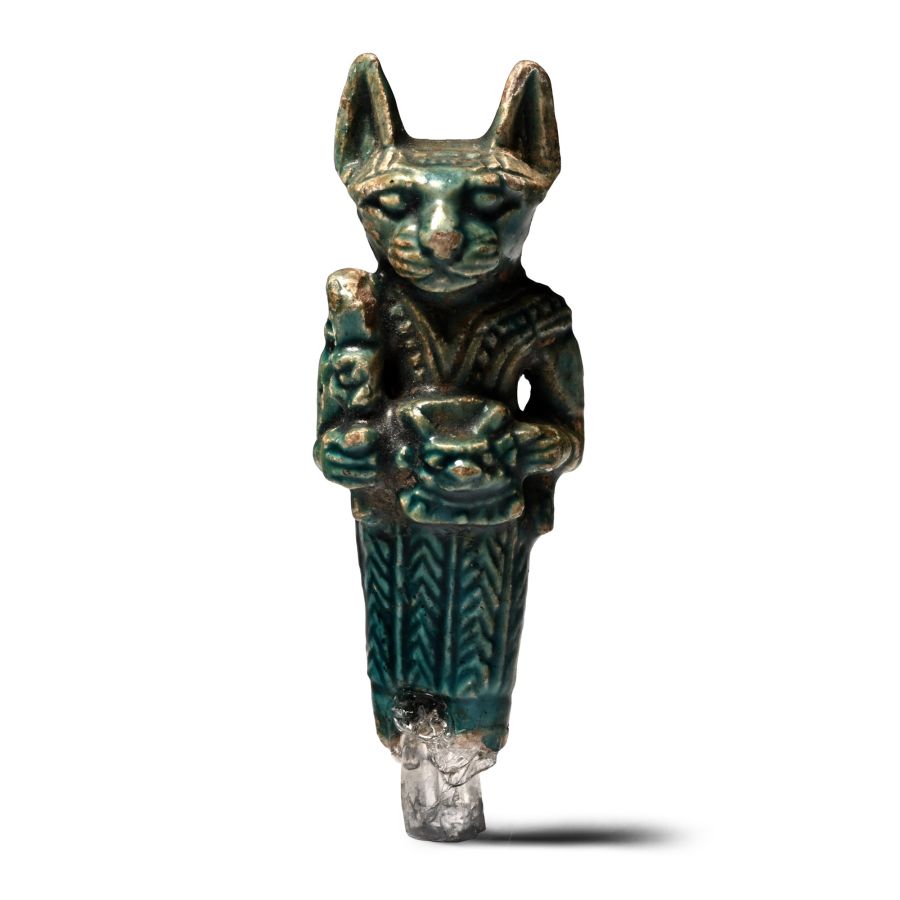
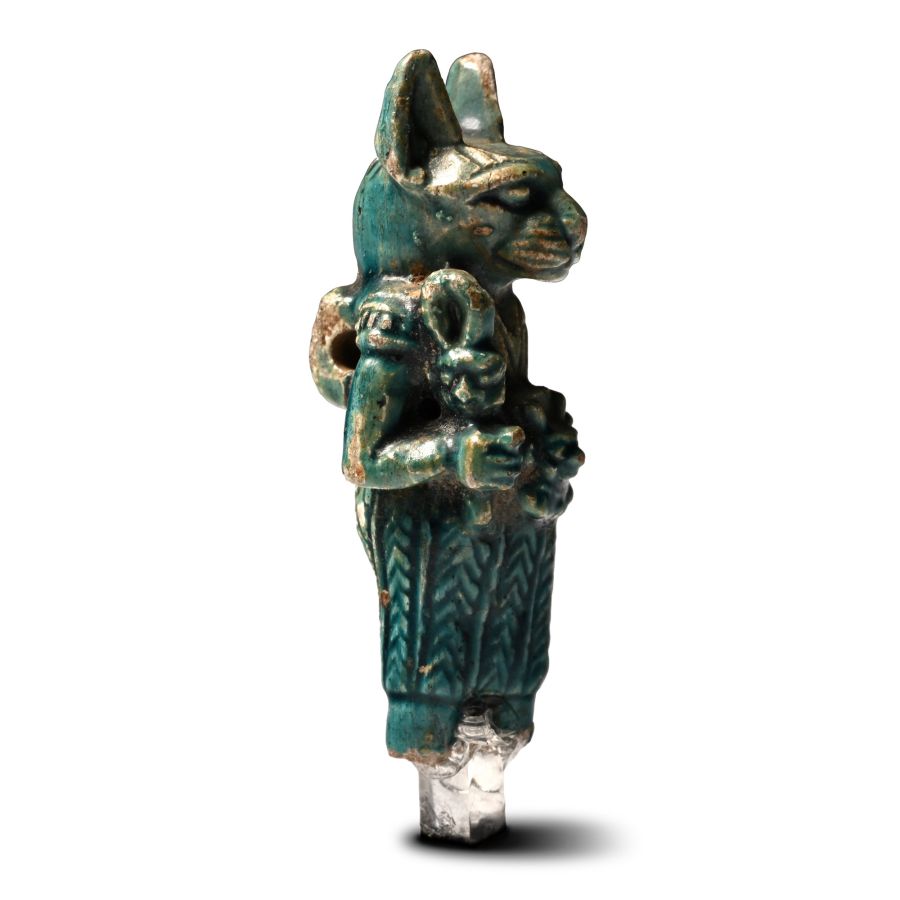
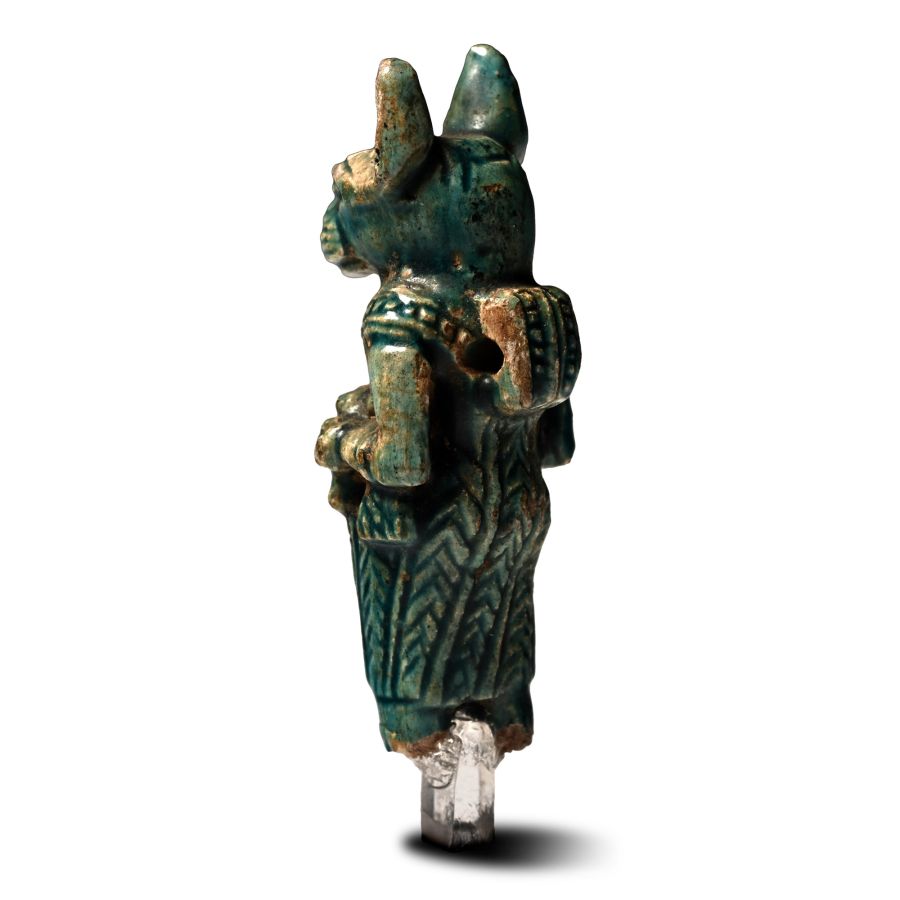
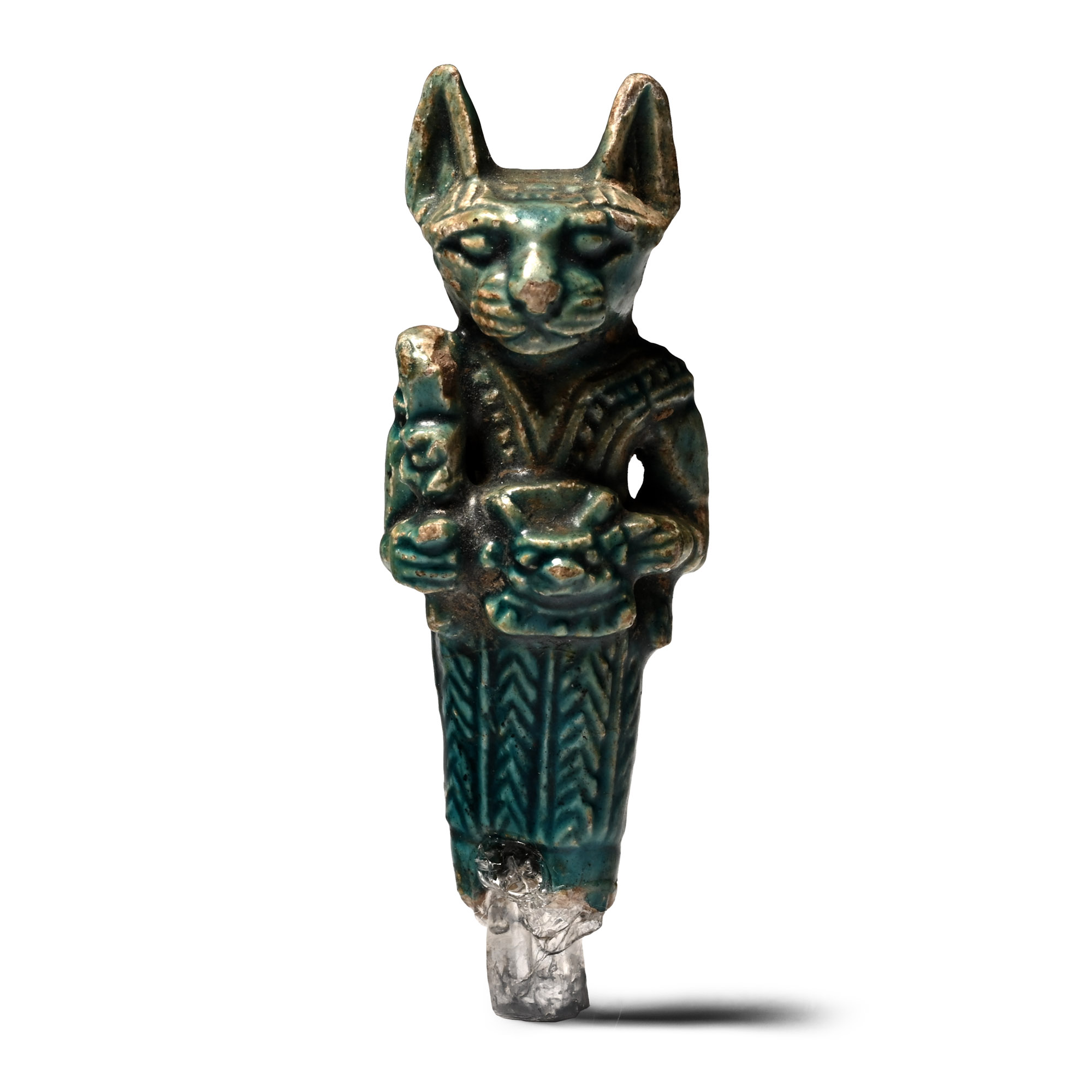
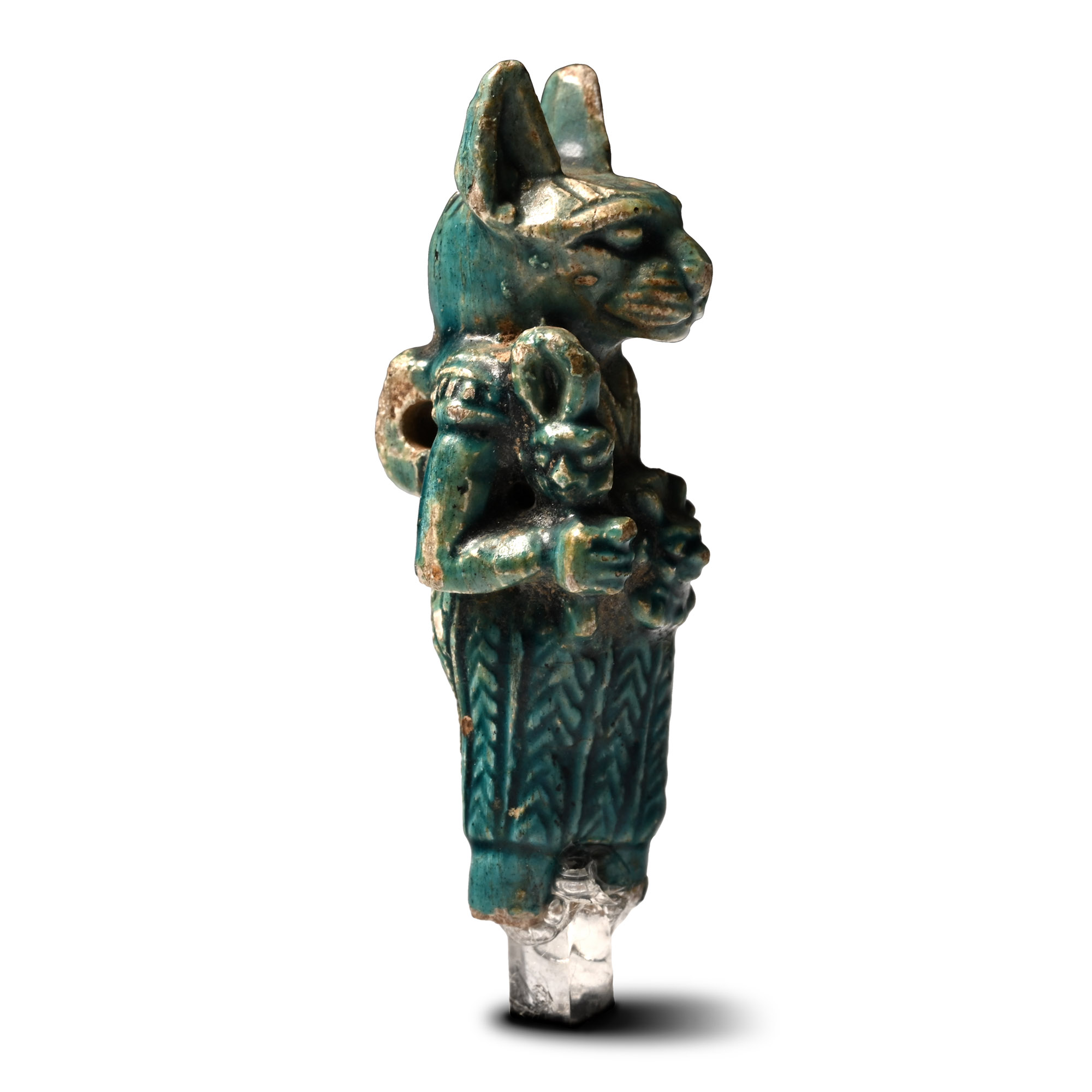
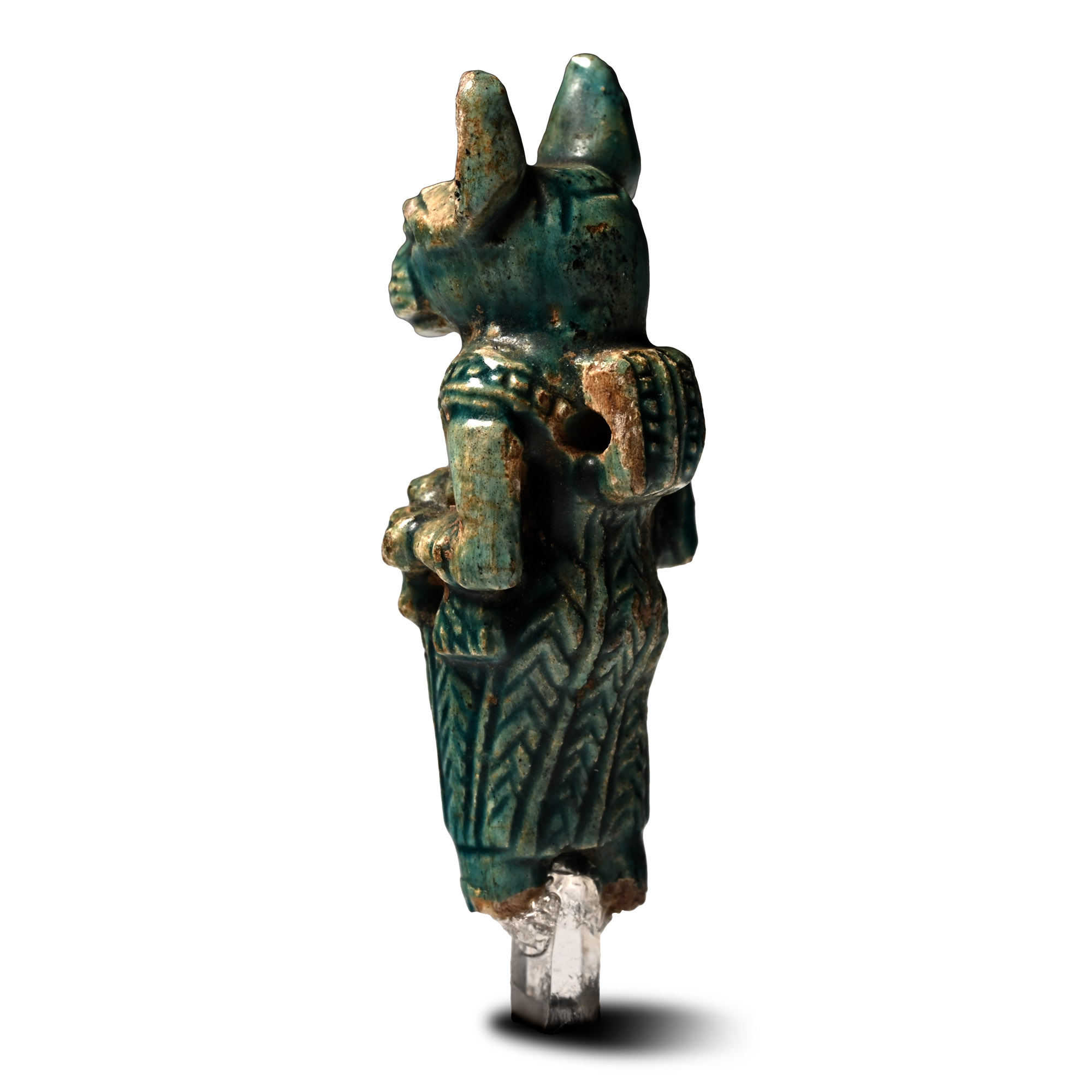
Egyptian Glazed Steatite Amulet of Bastet
LATE PERIOD, CIRCA 664-332 B.C.
1 1/2 in. (3.75 grams, 38 mm).
Modelled in advancing pose wearing a tight-fitting robe, cat-headed, with a sistrum in one hand and a Bes head emblem in the other; suspension loop between shoulders.
ProvenanceFrançois de Ricqlès, Paris, Archéologie, 30 September-1 October 1996, no.332.
Private collection, London, UK, acquired from the above sale.
Accompanied by a copy of a French cultural passport, dated 2 October 1996.
This lot is accompanied by an illustrated lot declaration signed by the Head of the Antiquities Department, Dr Raffaele D'Amato.
Bastet is typically depicted with the head of a lioness or domestic cat. The cat symbolises protection, motherhood, and, later, gentleness and domesticity, qualities associated with Bastet, especially in her later evolution from a fierce lioness to a more benevolent feline goddess. The sistrum she holds is a ritual musical instrument associated with Hathor and other birth goddesses and is linked to joy, music, and divine protection. Bastet was often invoked during music and dance ceremonies, and the sistrum reinforces her role in celebration and protection. Bes was a dwarf god known for guarding households, particularly mothers and children. His image on Bastet’s amulet emphasises her protective role, especially at home and during childbirth.
CONDITIONTimeLine Auctions follows a vetting process to ensure the authenticity and legality of all items, reinforcing our commitment to integrity and responsible trading. Each antiquity, antique, and coin lot undergoes thorough examination by a vetting committee of at least ten external specialists, professional trade association members, scientists, and archaeologists: Our Vetting Process
AUCTIONS:
TimeLine is a leading auction house specialising in antiquities, ancient art, collectables, natural history, coins, medals, and books. Our auctions offer museums, collectors, historians, and enthusiasts the opportunity to acquire unique and historically significant pieces.
-
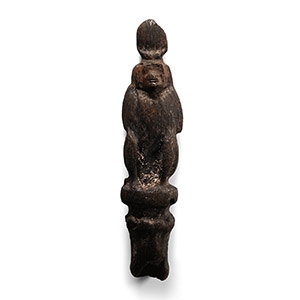
Egyptian Ebony Thoth Figure
1st millennium B.C.Estimate: £200 - 300 (+bp*)
Opening Bid: £100
Carved in the round figure of a baboon with horned sun-disc headgear, crouching on a balustered tubular shaft. 6.87 grams,74 mm
Acquired on the German art market, 1989-1995. with The Museum Gallery, 19 Bury Place, London, WC1, UK, 1998-2003. Property of a London based academic, 2003-present. This lot is accompanied by an illustrated lot declaration signed by the Head of the Antiquities Department, Dr Raffaele D'Amato.
The baboon represented an animal manifestation of the god Thoth. This deity was revered for his associations with knowledge, writing, and healing. The popularity of Thoth was also likely tied to his role as the recorder of the final judgment, which determined whether the deceased had led a virtuous life. -
.jpg)
Egyptian Faience Amuletic Pendant
Late Period, 664-332 B.C.Sold for (Inc. bp): £111
Formed as a broad collar with a Horus head finial supported by two cobra heads. 0.92 grams, 14 mm
Ex early 20th century collection, London, UK. This lot is accompanied by an illustrated lot declaration signed by the Head of the Antiquities Department, Dr Raffaele D'Amato. -
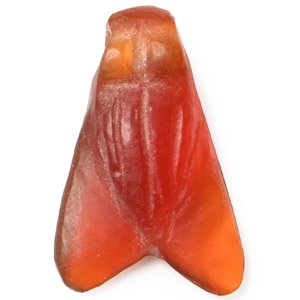
Egyptian Carnelian Fly Amulet
Late Period, 664-332 B.C.Sold for (Inc. bp): £195
Carved with simple body and eye detailing and polished; drilled through the eyes for suspension. 0.32 grams, 12 mm
Ex North London, UK, gallery, early 2000s. This lot is accompanied by an illustrated lot declaration signed by the Head of the Antiquities Department, Dr Raffaele D'Amato.
Egyptian artists often depicted fly whisks with pharaohs and officials, suggesting flies were just nuisances. In reality, Egyptians valued flies for their speed and persistence. Small fly amulets appeared around 3200 B.C. in Naqada II burials, gaining popularity and varying materials during the New Kingdom, including gold, silver, lapis lazuli, carnelian, amethyst, faience, and gemstones. These amulets were thought to protect against insect bites and troublesome creatures via apotropaic magic and possibly symbolised fecundity. Pharaohs awarded gold fly-shaped pendants to honour soldiers' bravery in battle.
