
Loading, please wait...
LOT 0498
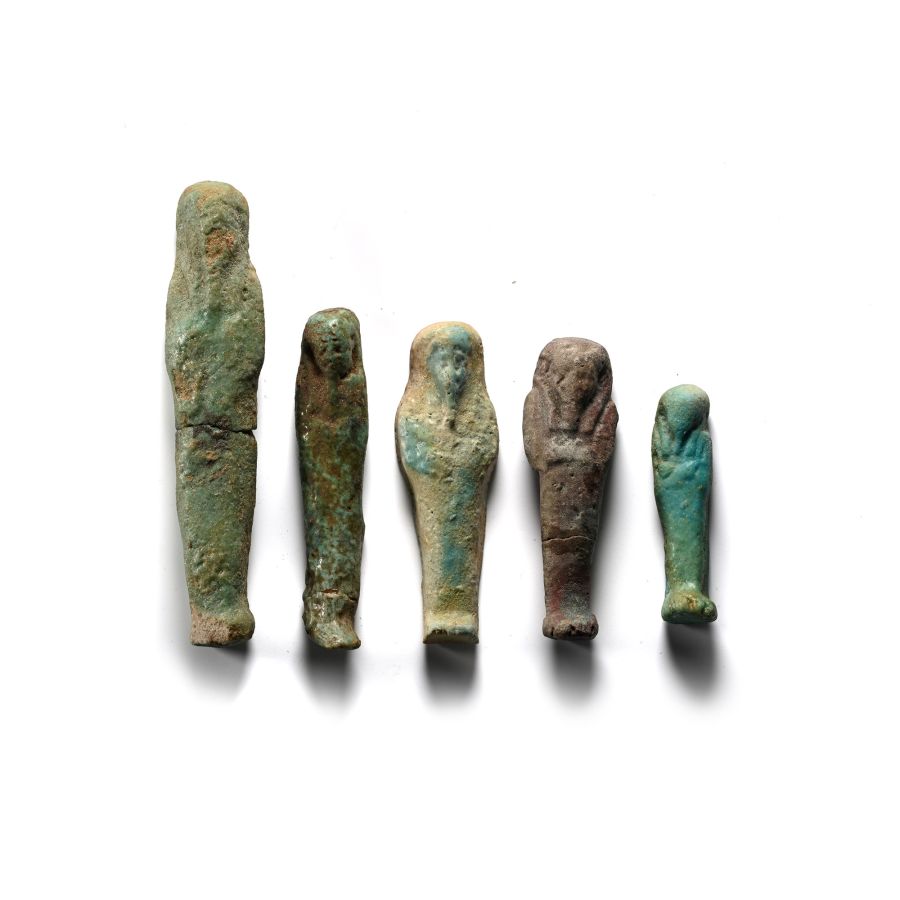
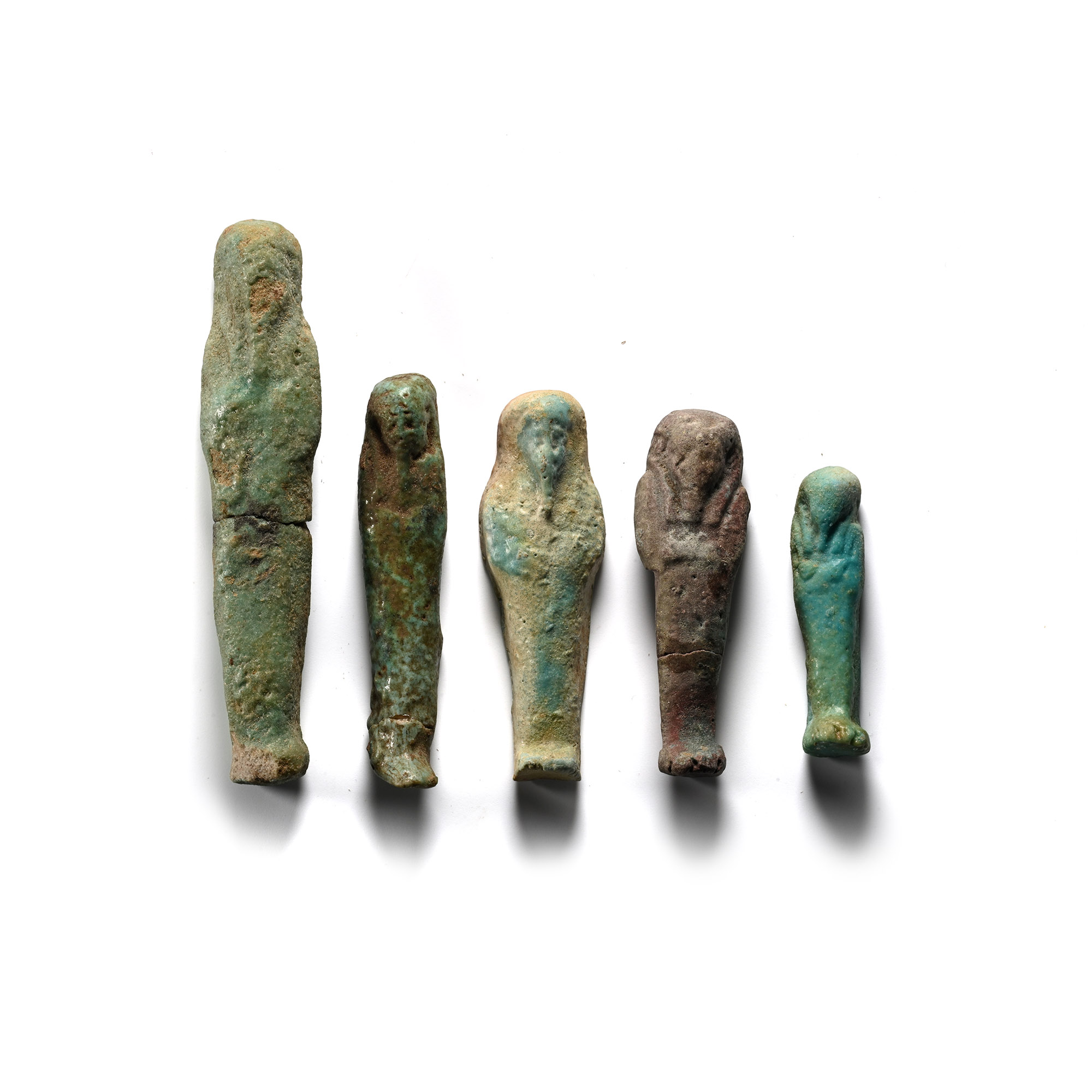
Egyptian Glazed Faience Shabti Collection
PTOLEMAIC PERIOD, 332-30 B.C.
1 3/4 - 3 1/2 in. (54 grams total, 46-91 mm).
Comprising five mummiform figures in different colours, each with a false beard and wearing a lappet wig. [5]
ProvenanceAcquired on the UK art market before 2000.
Property of an Essex, UK, gentleman.
This lot is accompanied by an illustrated lot declaration signed by the Head of the Antiquities Department, Dr Raffaele D'Amato.
Cf. Petrie, W.M.F., Shabtis, London, 1935, pl. XLV, nos. 615, 645, and 649, for comparable examples.
FootnotesShabti figures were created to perform heavy manual tasks on behalf of a person in the afterlife. The body of a shabti typically resembled a mummy from the neck down and was often depicted holding tools such as baskets, mattocks, and hoes. Over time, the number of shabtis in a standard elite burial increased, so that from the Third Intermediate Period onward, it became common to have at least 401 figurines, comprising 365 workers, one for each day of the year, plus 36 overseers, one for every ten workers.
CONDITIONTimeLine Auctions follows a vetting process to ensure the authenticity and legality of all items, reinforcing our commitment to integrity and responsible trading. Each antiquity, antique, and coin lot undergoes thorough examination by a vetting committee of at least ten external specialists, professional trade association members, scientists, and archaeologists: Our Vetting Process
AUCTIONS:
TimeLine is a leading auction house specialising in antiquities, ancient art, collectables, natural history, coins, medals, and books. Our auctions offer museums, collectors, historians, and enthusiasts the opportunity to acquire unique and historically significant pieces.
-
.jpg)
Egyptian Green Glazed Faience Openwork Ring
Third Intermediate Period, circa 1069-735 B.C.Sold for (Inc. bp): £1,430
With the reserved figure of a seated falcon-headed deity holding the Maat feather, a stylised lotus bloom above and below. 3.53 grams, 24.05 mm overall, 19.40 mm internal diameter (approximate size British S, USA 9, Europe 20, Japan 19)
with Christie's, London, 19 October 1994, no.133 (part). Private collection, London, UK, acquired from the above sale. This lot is accompanied by an illustrated lot declaration signed by the Head of the Antiquities Department, Dr Raffaele D'Amato. -
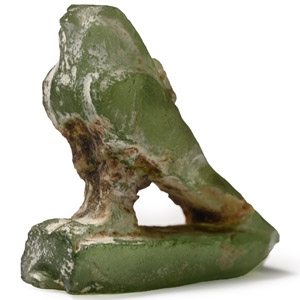
Egyptian Cut-Glass Horus Amulet
1st millennium B.C.Estimate: £300 - 400 (+bp*)
Opening Bid: £150
Modelled in the round, a falcon perched on a rectangular base, with a pierced lug between the shoulders. 3.3 grams, 21 mm
UK private collection before 2000. Acquired on the UK art market. Private collection, London. This lot is accompanied by an illustrated lot declaration signed by the Head of the Antiquities Department, Dr Raffaele D'Amato.
Falcon amulets in ancient Egypt symbolised protection, kingship, and divine power. Often associated with the god Horus, the falcon represented the sky, the sun, and the living pharaoh. These amulets were typically placed with the deceased to ensure protection in the afterlife and to invoke the strength and watchfulness of Horus. Worn in life or death, falcon amulets reflected royal authority and divine guardianship. -
.jpg)
Egyptian Bronze Statuette of Isis Seated with Young Horus
Late-Ptolemaic Period, 664-30 B.C.Sold for (Inc. bp): £130
Isis enthroned wearing a cow's horn headdress with a solar disc, suckling the infant Horus on her lap. 39 grams, 10.7 cm
From the property of a lady since the early to mid 20th century. From the private collection of Mr M.L. since circa 2005. This lot is accompanied by an illustrated lot declaration signed by the Head of the Antiquities Department, Dr Raffaele D'Amato.
In ancient Egyptian mythology, Isis was the sister-wife of Osiris and the mother of the sky god Horus. She is associated with aspects of fertility and motherhood and is often depicted in various artworks seated in a nursing pose with her son Horus on her lap, as here.
