
Loading, please wait...
LOT 0564
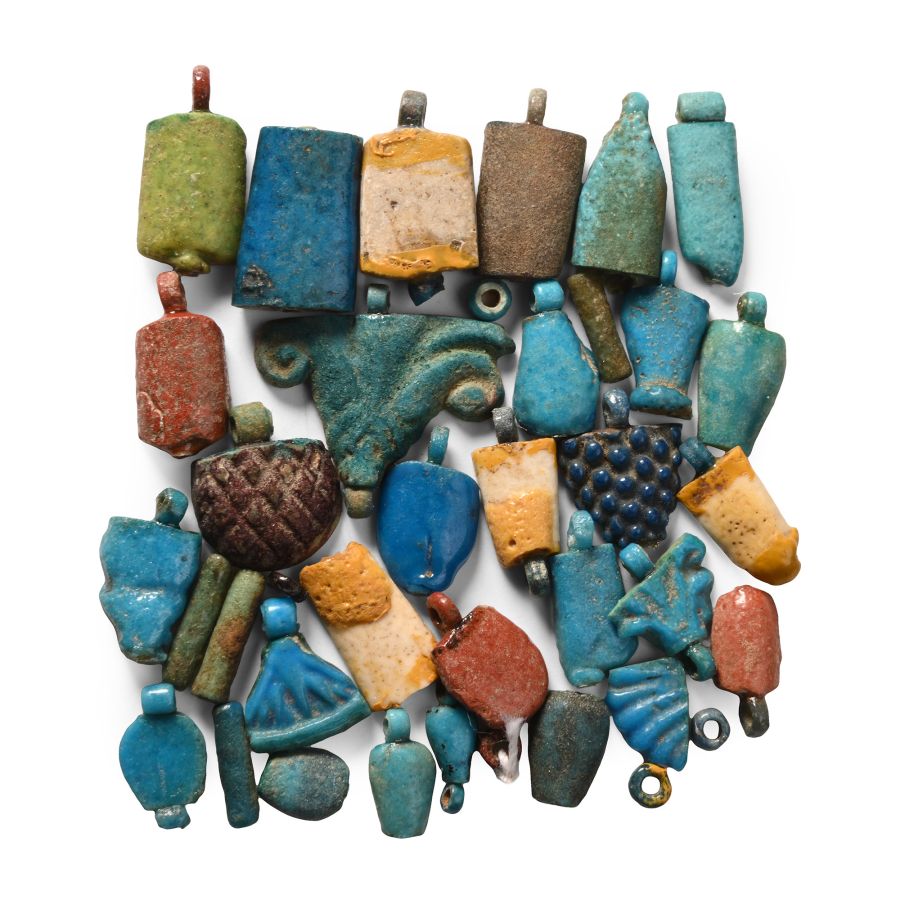
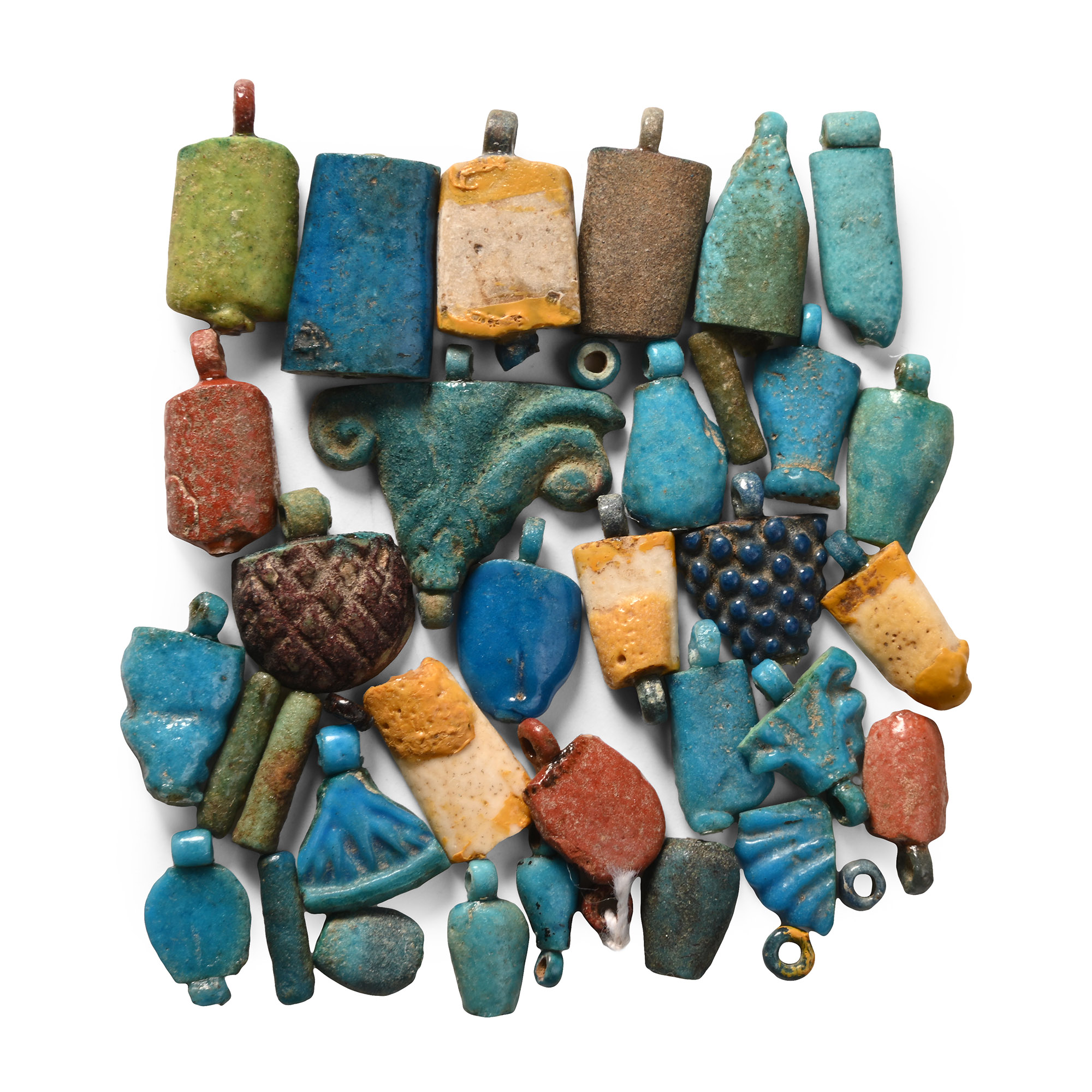
Egyptian Glazed Faience Bead and Amulet Collection
NEW KINGDOM, 1550-1070 B.C.
1/8 - 3/4 in. (8.3 grams total, 2-19 mm).
Comprising various glazed amulets and beads, including grape bunch, lotus flower, and other types. [38, No Reserve]
ProvenanceEx Norri collection, Milton Keynes, UK, 1980s-1990s.
CONDITIONTimeLine Auctions follows a vetting process to ensure the authenticity and legality of all items, reinforcing our commitment to integrity and responsible trading. Each antiquity, antique, and coin lot undergoes thorough examination by a vetting committee of at least ten external specialists, professional trade association members, scientists, and archaeologists: Our Vetting Process
AUCTIONS:
TimeLine is a leading auction house specialising in antiquities, ancient art, collectables, natural history, coins, medals, and books. Our auctions offer museums, collectors, historians, and enthusiasts the opportunity to acquire unique and historically significant pieces.
-
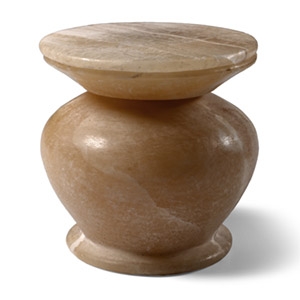
Egyptian Travertine Kohl Jar and Lid
Middle Kingdom-early New Kingdom, 12th-early 18th Dynasty, circa 1985-1479 B.C.Estimate: £1,200 - 1,700 (‡+bp*)
Opening Bid: £667
Piriform vessel with flared foot and wide rim, discoid lid with raised central panel to verso. 355 grams, 65 mm
Ex Galerie Nefer, Zurich, Switzerland. with Galerie Rhéa, Zurich, Switzerland. -
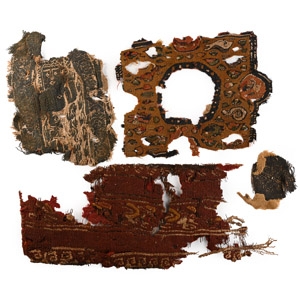
Egyptian Coptic Textile Fragment Group
Circa 6th-7th century A.D.Sold for (Inc. bp): £211
Comprising: a large fragment of a segmentum in white and red linen and wool, S torsion, borders embroidered with meanders, the central scene representing running hares; a purple on linen fragment of a clavus representing a dancer, borders with geometric decoration; and a large fragment of a tablion, ornamented with images of fishes, birds and vegetal patterns in red, green, yellow and dark blue wool, the central tondo missing. 66 grams total including package, 14.3-20.3 cm
Acquired 1970s-1996. Property of a North American collector. London collection, 2016.
Water plant elements are scattered across the bottom of the tablion, which is decorated with water birds; these decorations likely surrounded the image of a nereid. These abstract decorations show a strong stylisation often giving the marine animals a plant-like appearance. -
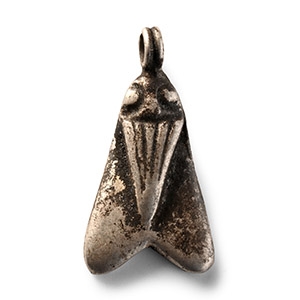
Egyptian Silver Fly Amulet
Late Period, 664-332 B.C.Sold for (Inc. bp): £195
With textured detailing to wings and body, loop for suspension. 1.33 grams, 20 mm
From a gentleman's family collection, 2000s.
