
Loading, please wait...
LOT 0007
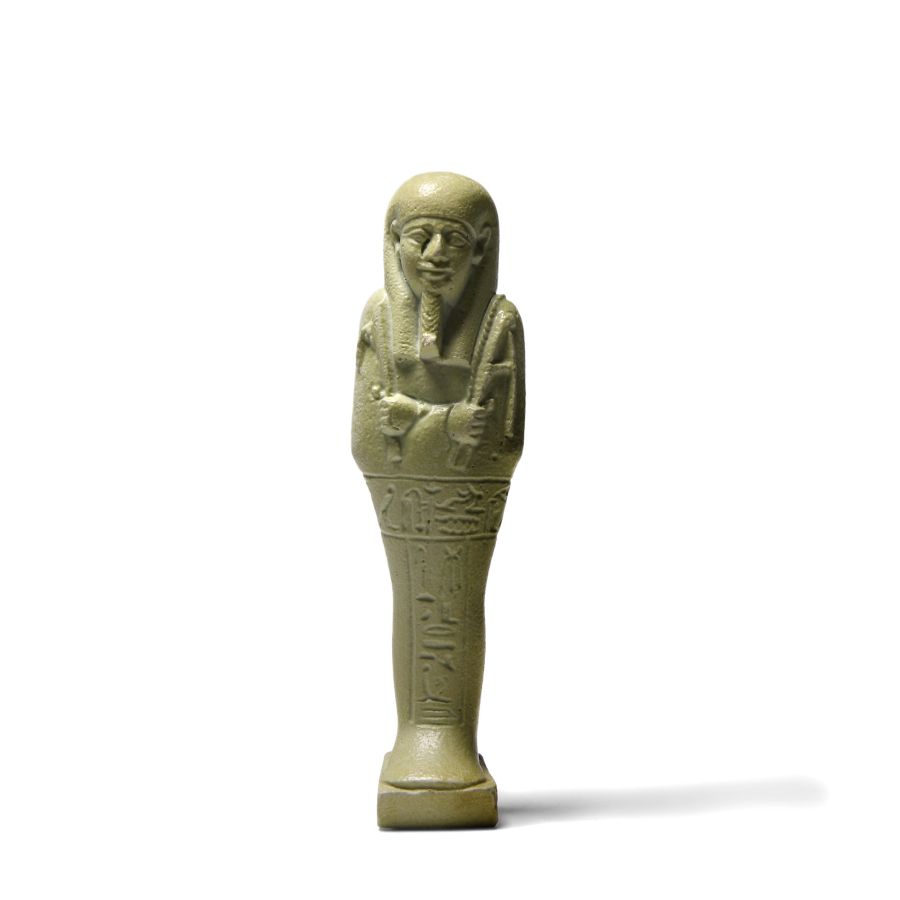
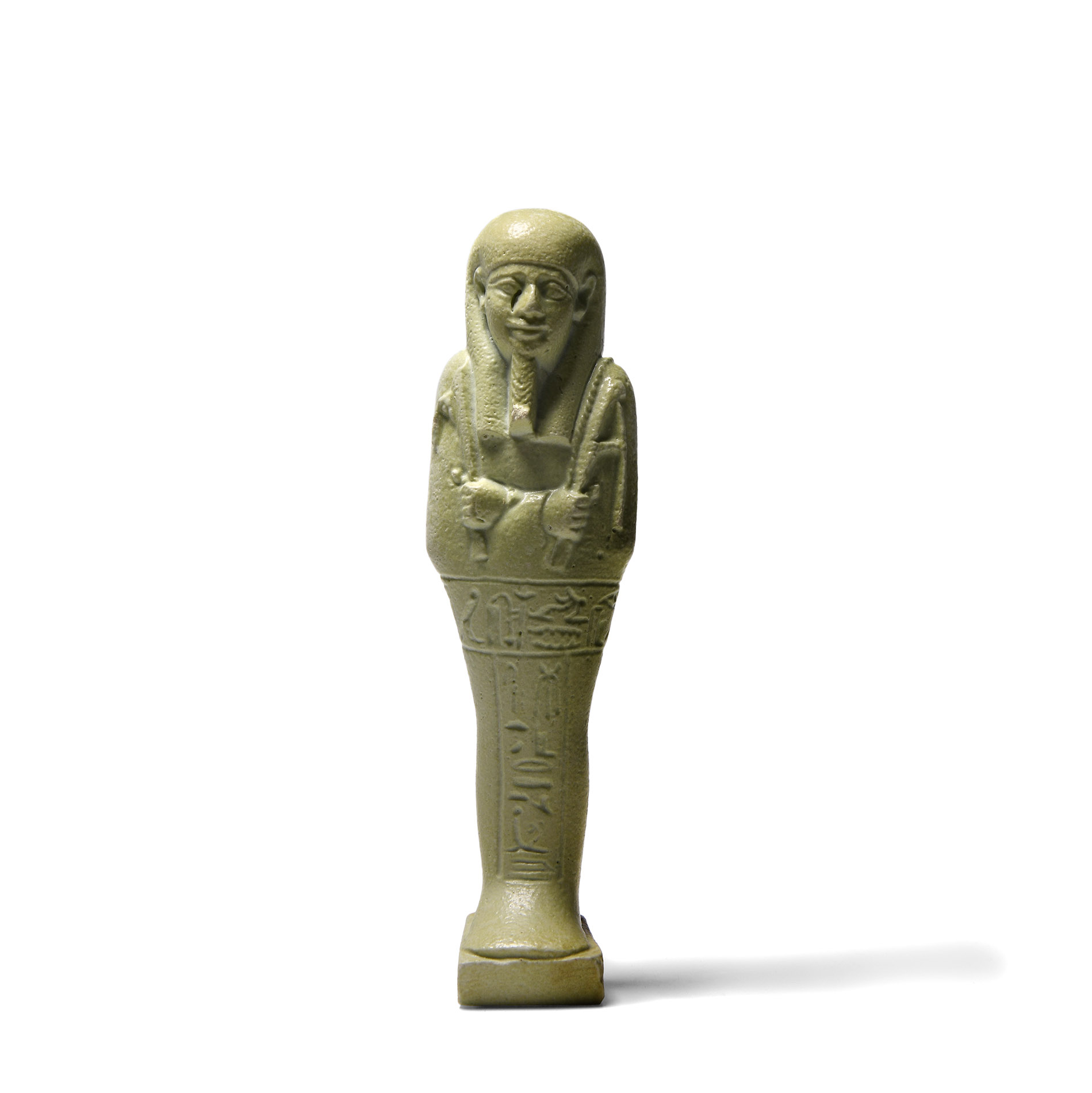
Egyptian Glazed Composition Shabti for Ka-Nefer
30TH DYNASTY, 380-343 B.C.
4 3/4 in. (78 grams, 12.2 cm high).
Modelled mummiform, hands crossed in front of chest holding pick and hoe, seed bag over shoulder, wearing tripartite wig and false beard, T-shaped arrangement of hieroglyphic inscription to the midriff and lower body; plinth base and plain back pillar to reverse.
ProvenancePrivate collection, New York, USA, early 1980s.
LiteratureCf. Schneider, H.D., Shabtis. An Introduction to the History of Ancient Egyptian Funerary Statuettes with a Catalogue of the Collection of Shabtis in the National Museum of Antiquities at Leiden, 3 Volumes, Leiden, 1977, Vol. 2, p.211 (no. 5.3.2.25) and Vol. 3, p.76, for another shabti of Ka-nefer.
FootnotesThe inscription informs us that Ka-nefer was a wener- priest and scribe of Ptah. His mother's name was Isit-reshuty. He was buried at Saqqara.
CONDITIONTimeLine Auctions follows a vetting process to ensure the authenticity and legality of all items, reinforcing our commitment to integrity and responsible trading. Each antiquity, antique, and coin lot undergoes thorough examination by a vetting committee of at least ten external specialists, professional trade association members, scientists, and archaeologists: Our Vetting Process
AUCTIONS:
TimeLine is a leading auction house specialising in antiquities, ancient art, collectables, natural history, coins, medals, and books. Our auctions offer museums, collectors, historians, and enthusiasts the opportunity to acquire unique and historically significant pieces.
-
.jpg)
Egyptian Lower Legs from an Unfinished Limestone Figure
Possibly First Intermediate Period, 2181-2055 B.C. or laterSold for (Inc. bp): £143
Showing the shins and two feet from a larger figure, rectangular section back and base. 560 grams, 10.2 cm
Fair condition.
Acquired in the 1970s. Property of a London gentleman. -
.jpg)
Coptic Textile Fragment Pair with Roman Soldiers
6th-7th century A.D.Sold for (Inc. bp): £468
In silk and wool from a tunic or wall hanging, comprising: (i) a corner fragment of a tapestry showing two soldiers hunting, one with a cross traced as deigmaton on the round shield and a semi-spatha (sword) in his right hand, both dressed in Gothic tunics of green and off-white colour, black trousers and red sagia, escaping animals surrounding; (ii) a long segment (clavus) with a hunting scene comprising a cavalryman in green mantle, off-white tunic, shield and sword, a Nubian servant in exomis and holding a shield, chasing wild horses, antelopes, goats and hares, a third horseman half-visible on the right. 8 grams total, 19-26 cm
Fair condition. Rare.
Hermann Historica, Germany, auction 67, part of lot 2025. Property of a Kensington gentleman. Accompanied by an academic report by Dr Raffaele D'Amato of which this is a part. This lot has been checked against the Interpol Database of stolen works of art and is accompanied by search certificate no.10681-174371 (part).
Tabby technique on linen and wool. It is highly probable that this tapestry was part of a tunic decoration, the clavus (ii) running vertically on the breast; the corner fragment (i) forming the lower hem of the tunic. The representation of military characters, the red colour of the background, and the hunting parties – often associated with military training– indicate the likelihood that these are fragments from the military tunic of a high-ranking officer. -
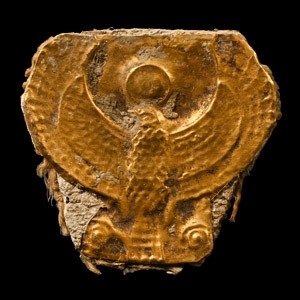
Egyptian Gold Repousse Pharaonic Falcon with Original Linen and Plaster Backing
Circa 500 B.C.Sold for (Inc. bp): £1,430
From mummy wrappings, Horus falcon with spread wings wearing a sun disc and gripping a shen symbol in each claw; applied to a woven fabric backing; held in a membranous display frame. 25 grams total, 70 x 70 mm including case
From a Spanish collection, formerly with a German dealership in the 1980s.
Similar in form to the elaborate inlaid gold pectoral discovered in the tomb of Tutankhamun, for which see Andrews, C., Ancient Egyptian Jewellery, p.134, no. 117.
