
Loading, please wait...
_900x900.jpg "Egyptian Funerary Cone for Djedher")
_200x200.jpg "Egyptian Funerary Cone for Djedher")
.jpg "Egyptian Funerary Cone for Djedher")
LOT 0008
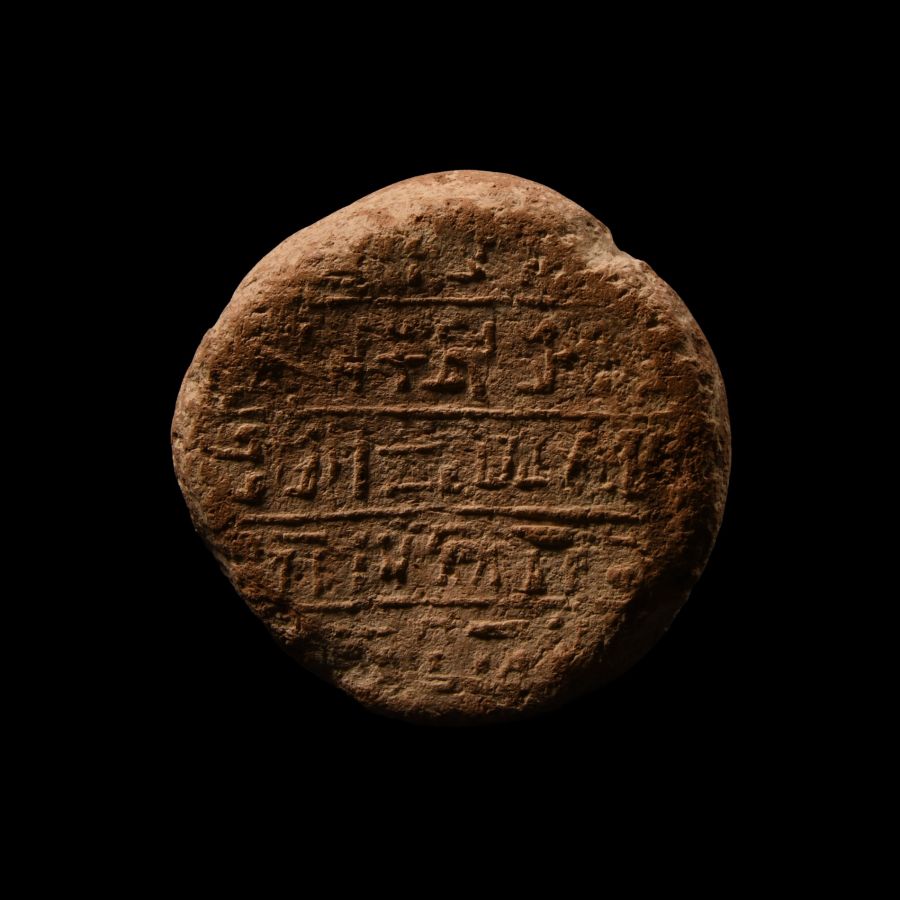
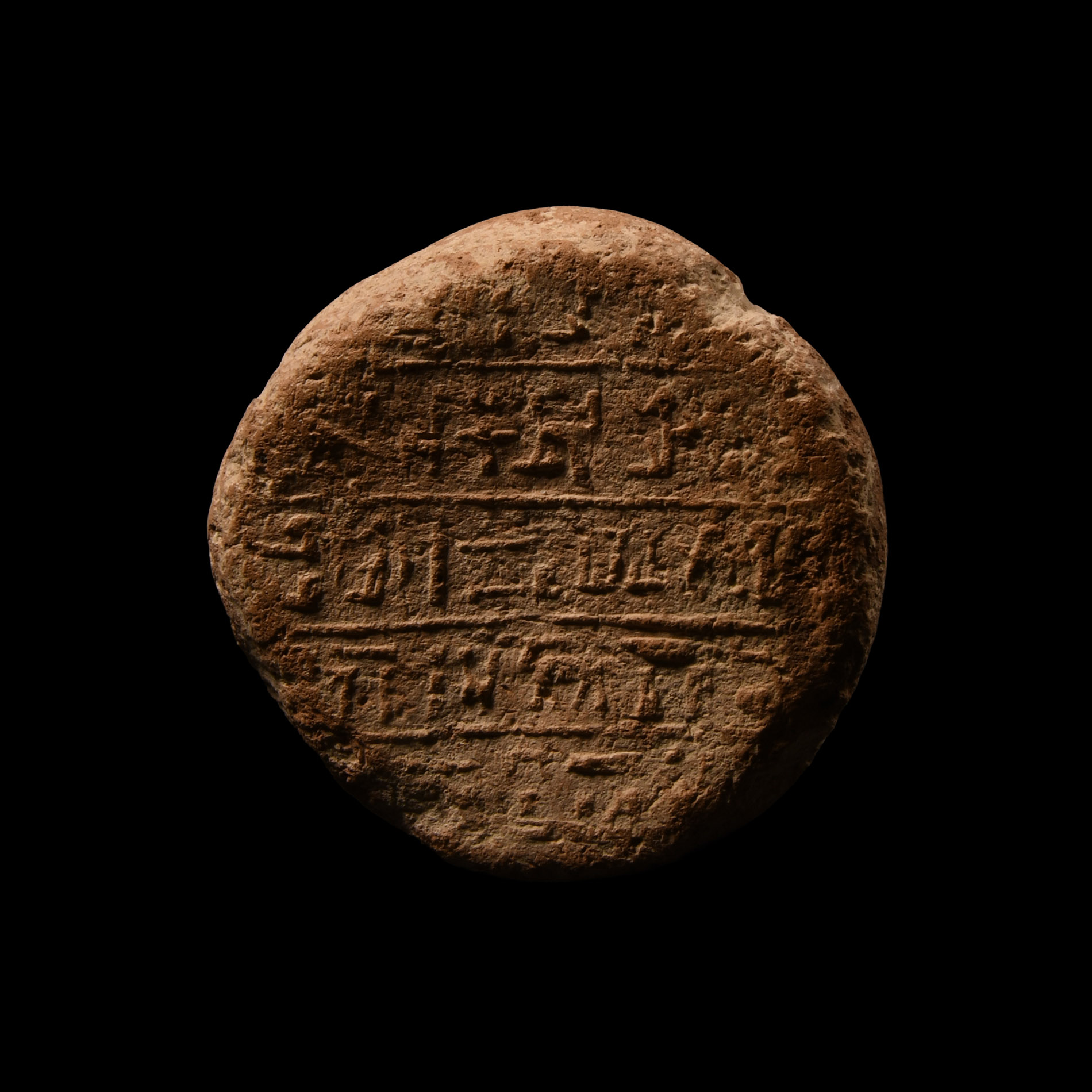
Egyptian Funerary Cone for Djedher
1ST MILLENNIUM B.C.
6 1/2 in. (895 grams, 16.5 cm).
Columnar terracotta cone with flattened base, five horizontal bands of reserved hieroglyphic text giving the dedication: 'Djedher, true of voice, son of Ankhhor who is the son of the hereditary noble, great mayor, great one of the Meshwesh (an ancient Libyan tribe), mayor, overseer of the priests of Banebdju, Djedher, his mother, mistress of the house, Shepensepedet, true of voice.'
ProvenanceAcquired on the German art market, 1989-1995.
with The Museum Gallery, 19 Bury Place, London, WC1, UK, 1998-2003.
Property of a London based academic, 2003-present.
Cf. Davies, N. de G. and Laming Macadam, F., A Corpus of Inscribed Egyptian Funerary Cones, Oxford, 1957, cone number 378.
FootnotesFunerary cones were used to decorate the facades of tombs. The 'tail' was pushed into the soft plaster coating so that only the disc was visible. This cone belongs to Djedher, whose tomb is likely to be in the Asasif region of the Theban necropolis, where other examples of his funerary cones have been found.
CONDITIONTimeLine Auctions follows a vetting process to ensure the authenticity and legality of all items, reinforcing our commitment to integrity and responsible trading. Each antiquity, antique, and coin lot undergoes thorough examination by a vetting committee of at least ten external specialists, professional trade association members, scientists, and archaeologists: Our Vetting Process
AUCTIONS:
TimeLine is a leading auction house specialising in antiquities, ancient art, collectables, natural history, coins, medals, and books. Our auctions offer museums, collectors, historians, and enthusiasts the opportunity to acquire unique and historically significant pieces.
-
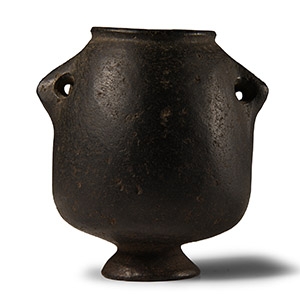
Egyptian Predynastic Basalt Vase
Naqada I-II, circa 3900-3300 B.C.Estimate: £5,000 - 7,000 (‡+bp*)
Opening Bid: £2,500
Barrel-shaped in profile with tapering neck and trumpet-shaped foot, two lateral pierced lug handles, flared rim (damaged). 330 grams, 86 mm
French private collection. From the 'Yvelines Department', Northern France. with Mme Digard, Drouot, Paris, 7 February 2011, no.107. Accompanied by a copy of a French cultural passport. This lot has been checked against the Interpol Database of stolen works of art and is accompanied by a search certificate number no.12072-218133. -
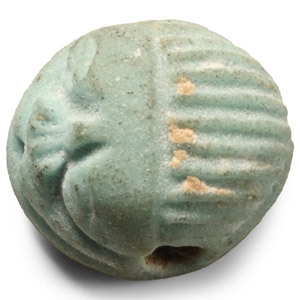
Phoenician Faience Scarab with Face
6th-4th century B.C.Sold for (Inc. bp): £98
Discoid scarab with plain reverse, stylised human face. 0.55 grams, 10 mm
From the Fadel family collection, London, UK, 1970s. -
.jpg)
Greek Marble Head of Dionysus
3rd-1st century B.C.Sold for (Inc. bp): £23,400
Carved in the half-round in three-quarter view, youthful male head with stern features, hair gathered in a browband, horns to the brow; from a frieze or relief; mounted on a custom-made stand. 1.59 kg total, 18.7 cm high including stand
Private European collection. Acquired on the Swiss art market, October 2013. European private collection. Accompanied by a copy of the 2013 invoice. Accompanied by an academic report by Dr Raffaele D'Amato. This lot has been checked against the Interpol Database of stolen works of art and is accompanied by a search certificate number no.12085-218192.
