
Loading, please wait...
LOT 0017
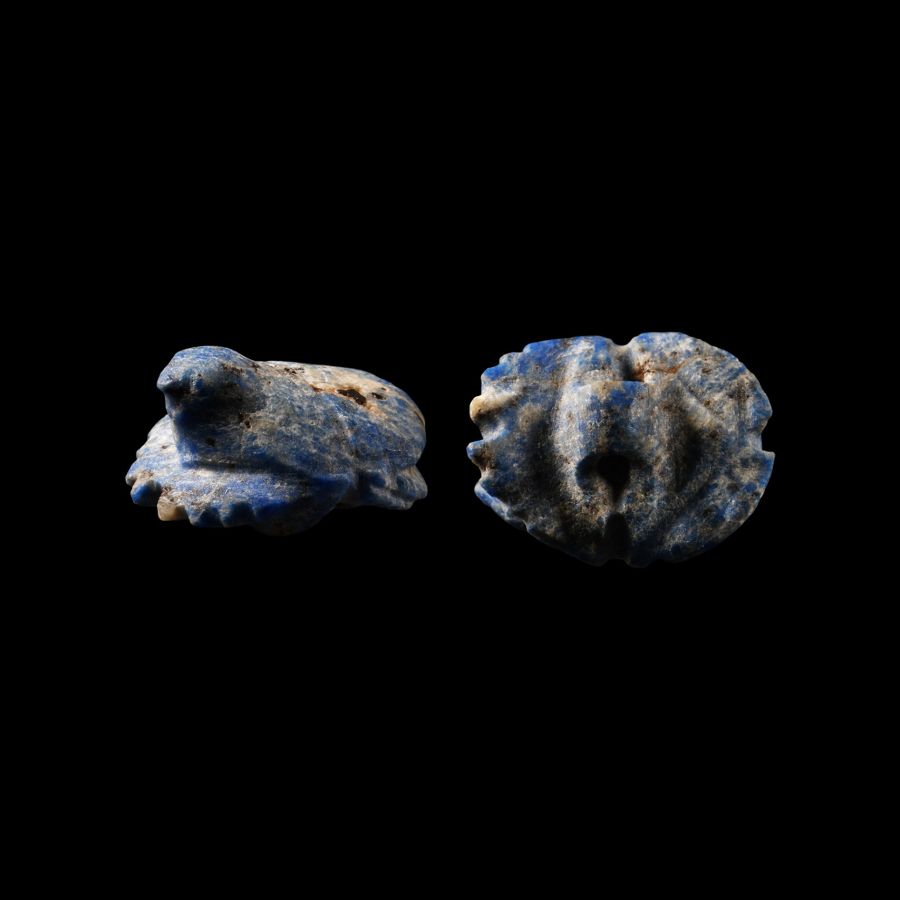
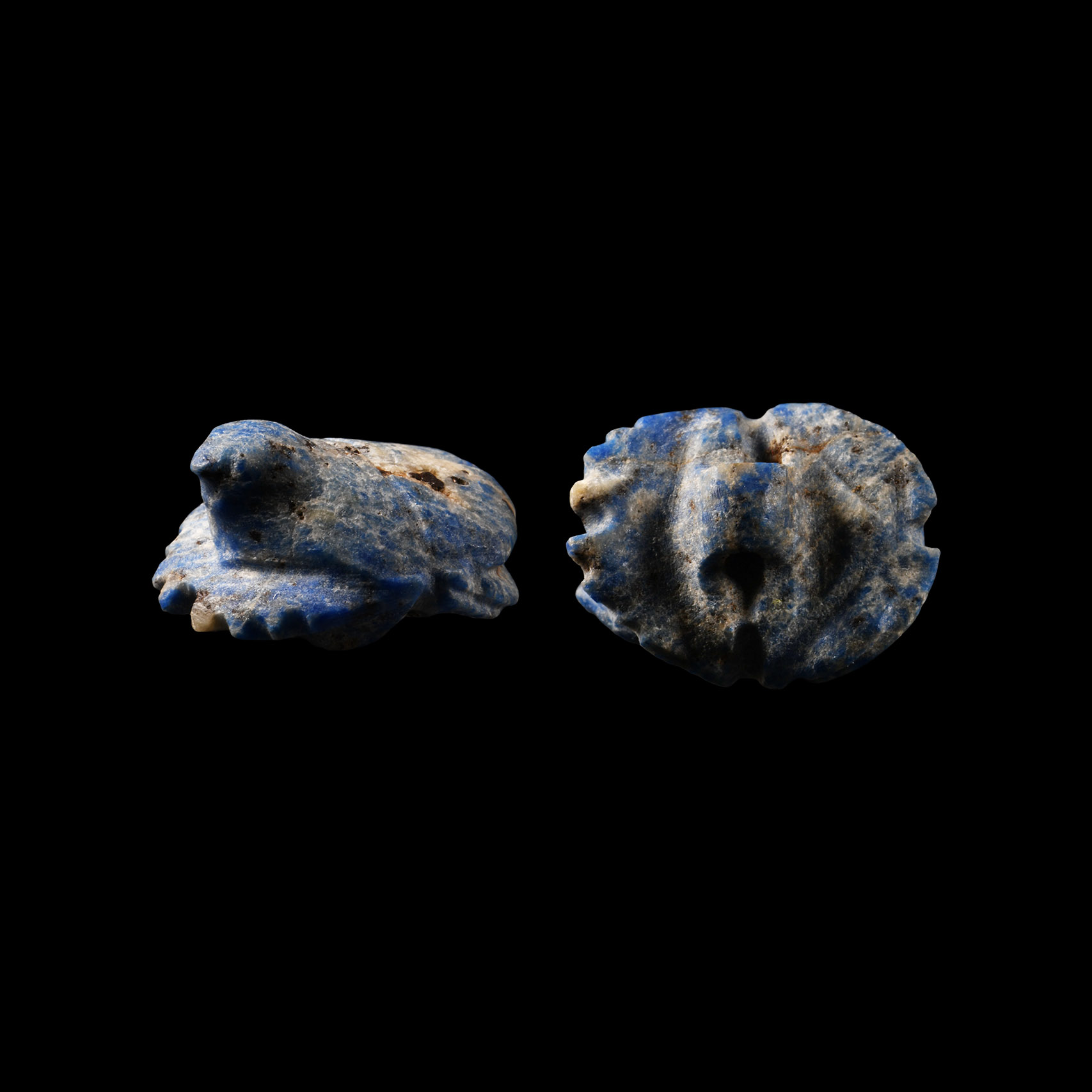
Egyptian Falcon-Headed Lapis Lazuli Scaraboid
LATE PERIOD, 664-525 B.C.
5/8 in. (2.73 grams, 17 mm).
Naturalistic detailing to the underside with pierced lug for attachment; detailed clypeus on upper side, modelled with a falcon head.
ProvenanceFrom an early 20th century collection, Home Counties, UK, 1930-1940s.
LiteratureCf. Ben-Tor, D., The Scarab: A Reflection of Ancient Egypt, Jerusalem, 1989, p.39, for discussion, p.78, nos. 16-17, for lapis lazuli examples; Andrews, C., Amulets of Ancient Egypt, London, 1994, item 59(c).
FootnotesFunerary scarabs with falcon heads such as this were placed within the wrappings of the mummy on various parts of the body. They undoubtedly served a protective role, perhaps with solar connotations of rebirth (suggested by the falcon head) but, unlike heart scarabs, their precise function is not known.
CONDITIONTimeLine Auctions follows a vetting process to ensure the authenticity and legality of all items, reinforcing our commitment to integrity and responsible trading. Each antiquity, antique, and coin lot undergoes thorough examination by a vetting committee of at least ten external specialists, professional trade association members, scientists, and archaeologists: Our Vetting Process
AUCTIONS:
TimeLine is a leading auction house specialising in antiquities, ancient art, collectables, natural history, coins, medals, and books. Our auctions offer museums, collectors, historians, and enthusiasts the opportunity to acquire unique and historically significant pieces.
LOT 0017
Egyptian Falcon-Headed Lapis Lazuli Scaraboid
Estimate £1,500 - 2,000€1,740 - 2,320 (for guidance only)$2,030 - 2,700 (for guidance only)
-

Large Egyptian Faience Cartouche Amulet for the Pharaoh Apries
26th Dynasty, 664-525 B.C.Sold for (Inc. bp): £208
Displaying Wahibre, the birth name of the 26th Dynasty pharaoh Apries on one face; his throne name, Haaibre (rendered 'Apries' in Hellenistic times) on the other; repaired. 7.7 grams, 41 mm
Fine condition, repaired.
Acquired 1980s-1990s. Private collection of H. N., Milton Keynes, Berkshire, UK.
This plaque was almost certainly once part of a foundation deposit of a temple built in the reign of this pharaoh. A similar, albeit slightly thicker, double-sided cartouche-shaped plaque of this king is in the Metropolitan Museum of Art (accession number 02.4.105b). -
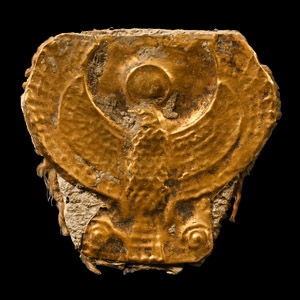
Egyptian Gold Repousse Pharaonic Falcon with Original Linen and Plaster Backing
Circa 500 B.C.Sold for (Inc. bp): £1,430
From mummy wrappings, Horus falcon with spread wings wearing a sun disc and gripping a shen symbol in each claw; applied to a woven fabric backing; held in a membranous display frame. 25 grams total, 70 x 70 mm including case
From a Spanish collection, formerly with a German dealership in the 1980s.
Similar in form to the elaborate inlaid gold pectoral discovered in the tomb of Tutankhamun, for which see Andrews, C., Ancient Egyptian Jewellery, p.134, no. 117. -

Egyptian Bronze Amun-Min-Kamutef Statuette
Late Period, 664-332 B.C.Sold for (Inc. bp): £1,755
Modelled in the round as a votive ithyphallic figure wearing a double-plumed crown with a sun disc, holding a flail in his outstretched right hand and his erect phallus in the left; mounted on a custom-made display base. 538 grams total, 21 cm high including stand
Acquired on the London art market. Ex 'K' collection, 1990-2020s.
Amun-Min-Kamutef was a syncretic deity combining the attributes of Amun, the supreme god of the Egyptian pantheon, and Min who represents sexual procreativity. The iconography of Amun's ithyphallic form Kamutef is essentially that of Min, and serves to emphasise the sexual prowess of the god. Kamutef means 'bull of his mother' and appears to refer both to Amun's sky-goddess mother in her cow form and to the bull's sexual prowess and strength.
