
Loading, please wait...
LOT 0446
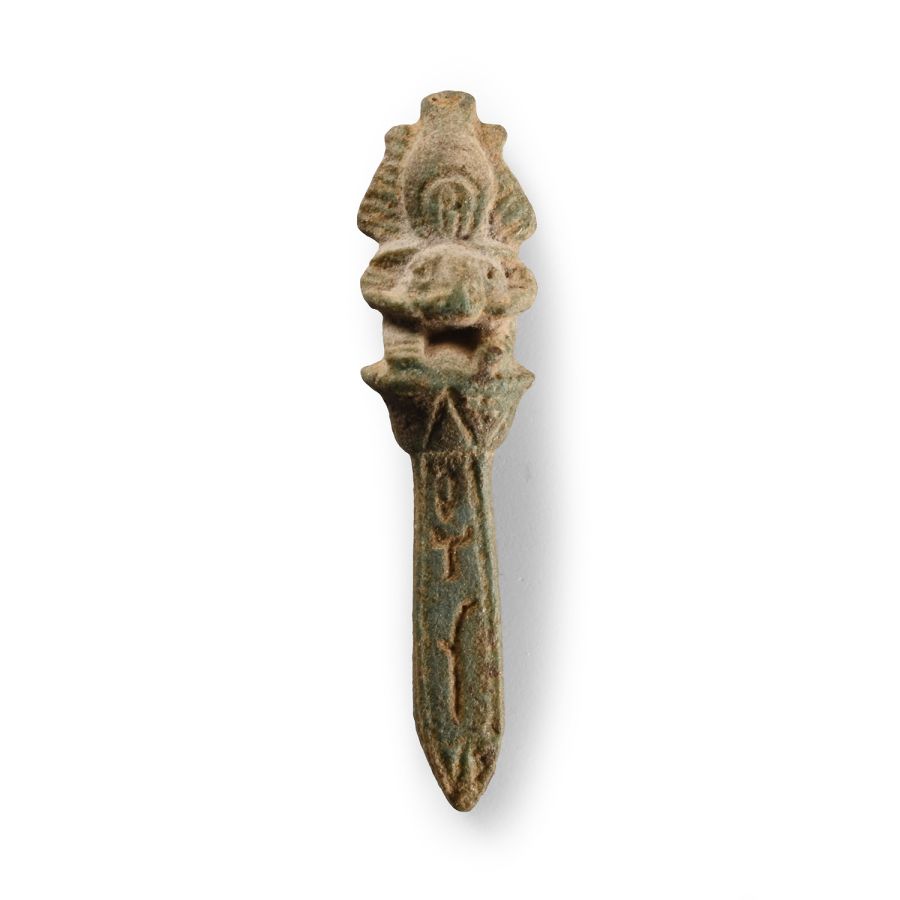
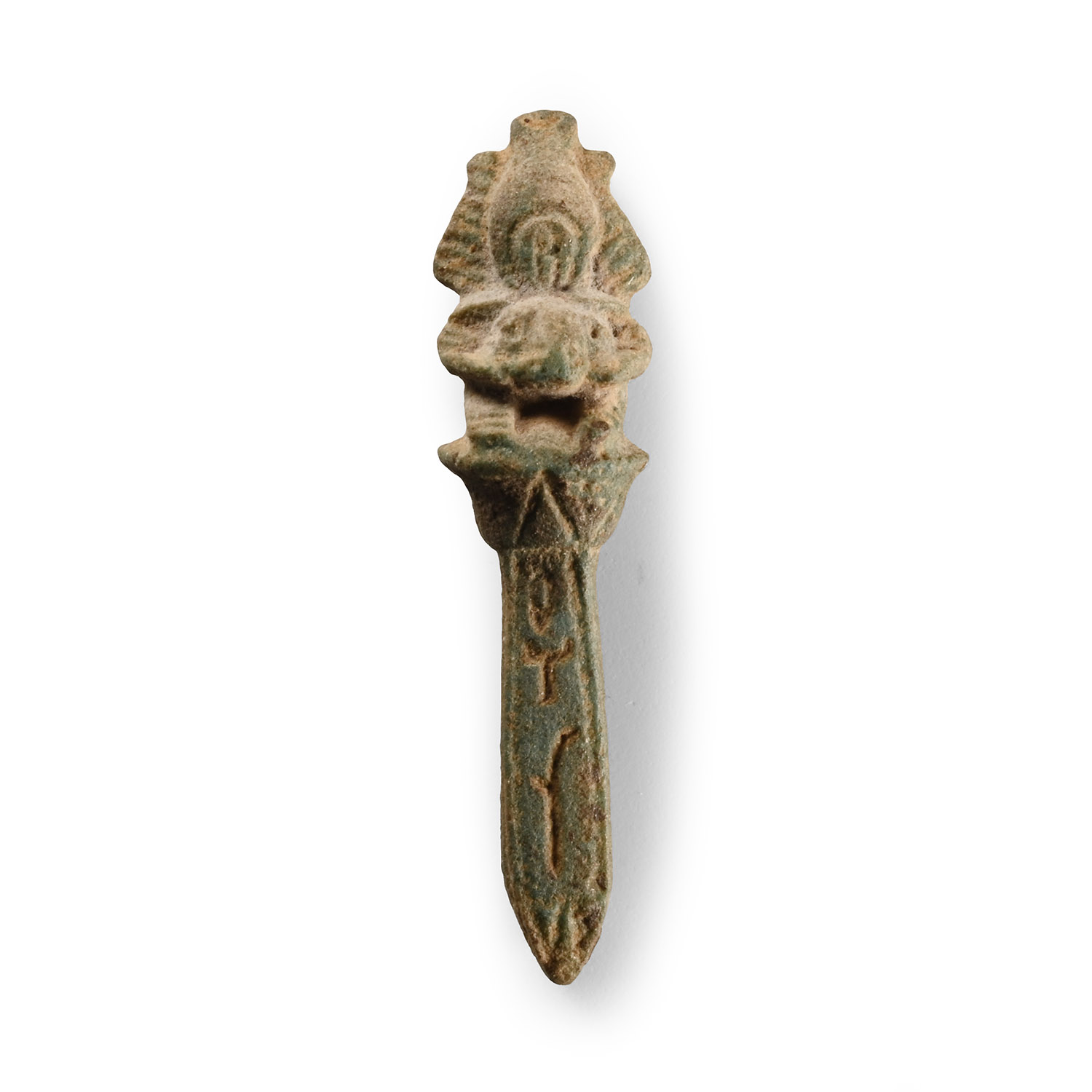
Egyptian Faience Wadj Amulet
LATE PERIOD, 664-332 B.C.
1 1/2 in. (1.92 grams, 39 mm).
Square-section wadj papyrus stalk amulet surmounted by a ram's head wearing the Atef crown; the front inscribed with ankh (life) and renpet (year) hieroglyphs. [No Reserve]
ProvenanceFrom the collection of Doctor Girard, a collector for over 60 years.
with Hotel des Ventes de Clermont-Ferrand, 22 May 2017.
Property of a French collector.
Cf. Andrews, C., Amulets of Ancient Egypt, London, 1994, item 25(d), for type.
FootnotesThe papyrus column or wadj amulet is typically made out of turquoise feldspar or faience, as is prescribed in the Book of the Dead. The word wadj, meaning “green”, evokes concepts of well-being and vitality. Papyrus amulets were often placed around the neck of the deceased to ensure eternal youth in the afterlife. The ram's head is associated with the god Amun and the Atef crown with Osiris, ruler of the Underworld.
CONDITIONTimeLine Auctions follows a vetting process to ensure the authenticity and legality of all items, reinforcing our commitment to integrity and responsible trading. Each antiquity, antique, and coin lot undergoes thorough examination by a vetting committee of at least ten external specialists, professional trade association members, scientists, and archaeologists: Our Vetting Process
AUCTIONS:
TimeLine is a leading auction house specialising in antiquities, ancient art, collectables, natural history, coins, medals, and books. Our auctions offer museums, collectors, historians, and enthusiasts the opportunity to acquire unique and historically significant pieces.
-
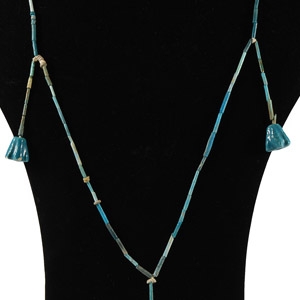
Egyptian Faience Mummy Bead Necklace with Papyrus Flower Amulets
Late Period, 664-332 B.C.Sold for (Inc. bp): £208
Restrung group of mainly tubular beads with five faience papyrus-flower pendants. 25 grams, 102 cm long
From an old English deceased estate. Acquired on the London art market in the early 1990s. Property of a London, UK, collector. -
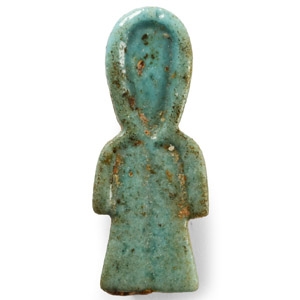
Egyptian Blue Faience Tyet 'Isis Knot' Amulet
Late Period, 664-332 B.C.Sold for (Inc. bp): £104
With dorsal pillar, pierced for suspension. 1.76 grams, 25 mm
From the collection of Doctor Girard, a collector for over 60 years. with Hotel des Ventes de Clermont-Ferrand, 22 May 2017. Property of a French collector.
The tyet amulet was associated with the goddess Isis and was often referred to as the "knot" or "girdle" of Isis. It was commonly placed within the mummy wrappings on the upper torso of the deceased, with the belief that it would invoke Isis' protection and safeguard the body, thus ensuring their rebirth in the afterlife. -
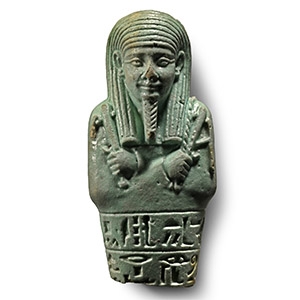
Egyptian Blue Glazed Hieroglyphic Shabti Fragment
Saite Period, 26th Dynasty, 664-525 B.C.Sold for (Inc. bp): £1,820
Pale blue composition with detailed texture to the headcloth, pick and hoe held at the shoulders with cord supporting the seed bag over the shoulder; the lower body with two bands of crisp hieroglyphic text remaining. 96 grams, 90 mm
Acquired on the German art market, 1989-1995. with The Museum Gallery, 19 Bury Place, London, WC1, UK, 1998-2003. Property of a London based academic, 2003-present.
Although the individual's name is lost, his titles: 'member of the elite' and 'mayor/prince/governor', indicate his high status.
