
Loading, please wait...
LOT 0513
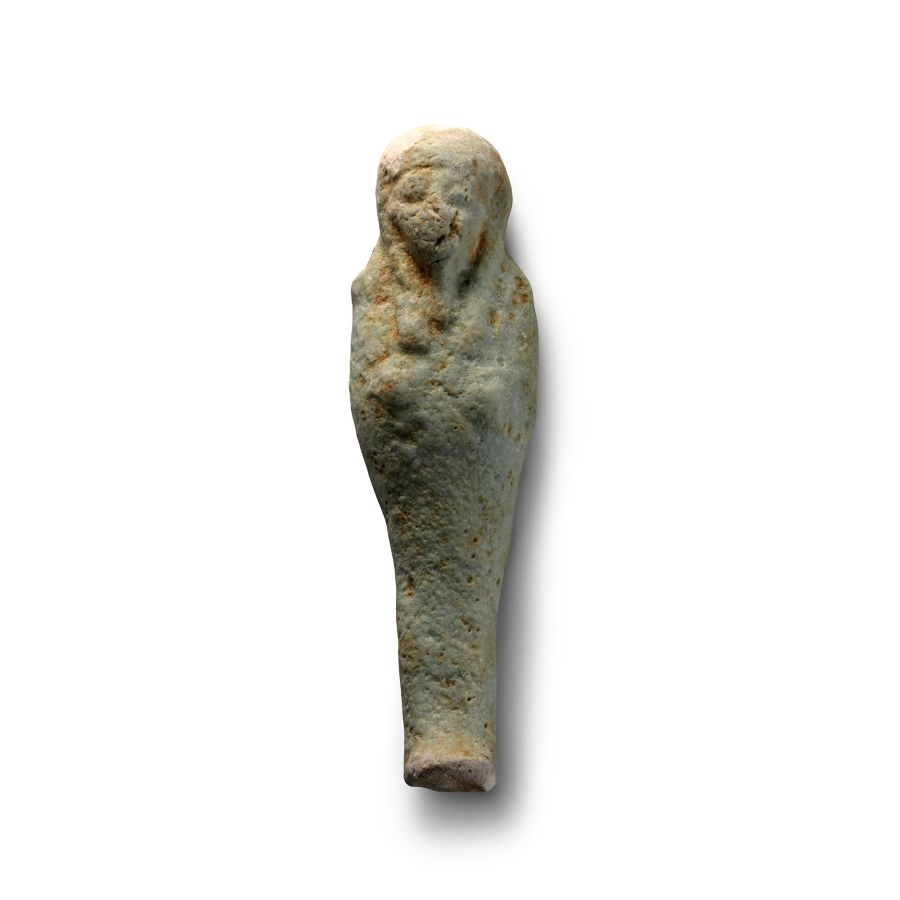
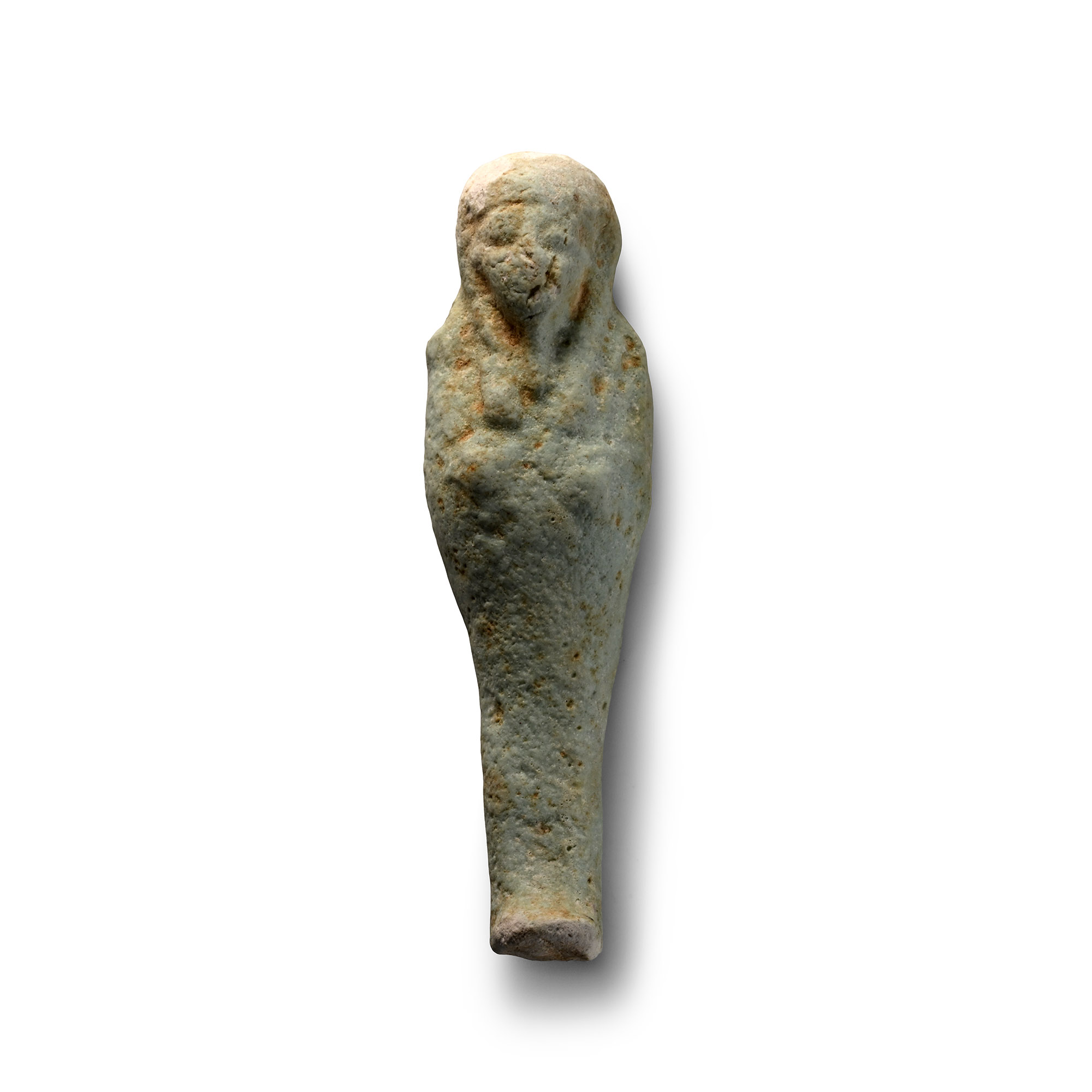
Egyptian Faience Shabti
PTOLEMAIC PERIOD, 332-30 B.C.
3 in. (13.9 grams, 77 mm).
D-shaped in section with tripartite wig and beard, hands holding agricultural tools to the chest. [No Reserve]
ProvenanceEx London, UK, collection, 1990s.
LiteratureCf. Janes, G., The Shabti Collections 6: A Selection from the World Museum, Liverpool, Lymm, 2016, p. 520, no. 274, for similar examples from Abydos.
CONDITIONTimeLine Auctions follows a vetting process to ensure the authenticity and legality of all items, reinforcing our commitment to integrity and responsible trading. Each antiquity, antique, and coin lot undergoes thorough examination by a vetting committee of at least ten external specialists, professional trade association members, scientists, and archaeologists: Our Vetting Process
AUCTIONS:
TimeLine is a leading auction house specialising in antiquities, ancient art, collectables, natural history, coins, medals, and books. Our auctions offer museums, collectors, historians, and enthusiasts the opportunity to acquire unique and historically significant pieces.
-
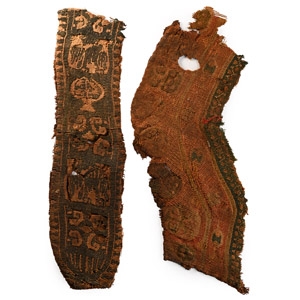
Egyptian Coptic Textile Fragment Group
Circa 6th-7th century A.D.Sold for (Inc. bp): £117
Comprising the terminal part of a clavus in white and purple linen and wool, S torsion, borders embroidered with pilasters, the central scene representing eagles alternating with geometric elements; a large fragment of another clavus, ornamented with geometric patterns in red, green and yellow wool. 49 grams total including package, 22 cm each
Acquired 1970s-1996. Property of a North American collector. London collection, 2016.
The clavi are realised in tapestry technique, and the one with prominent figures has a rounded end. They were part of the decoration of a tunic, and the presence of the Imperial eagle, not a common pattern, could refer to a military tunic. -
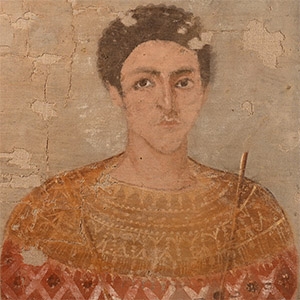
Romano-Egyptian Painted Portrait on Linen
1st-2nd century A.D.Sold for (Inc. bp): £26,000
Encaustic painting on thin linen fabric, upper part of the funeral shroud with half-length representation of the deceased, representing the bust of a young man in the guise of mummiform Osiris holding implements of his divinity, black hair, wearing a gilt broad collar (maniakion) and netting, pink dress ornamented with rosettes, traces of halo in white pigment; set in a glazed frame. 4.3 kg, 58 x 63 cm including frame
Collection of the estate of Patti Cadby Birch (1923-2007), New York, USA. with Sotheby’s, New York, Antiquities, 5 June 2008, sale no.8452, no.105. European private collection, acquired thereafter. Accompanied by a copy of an Art Loss Register certificate, no.S00014603. Accompanied by an academic report by Dr Raffaele D'Amato. This lot has been checked against the Interpol Database of stolen works of art and is accompanied by a search certificate number no.12612-234638. This lot has been cleared against the Art Loss Register database, and is accompanied by an illustrated lot declaration signed by the Head of the Antiquities Department, Dr Raffaele D'Amato.
Fayum portraits, painted on wood or linen, applied to the mummies of the Graeco-Roman period, are one of the most wonderful legacies that the koiné of the Graeco-Roman world has left us. Due to the favourable climate enhancing the state of preservation, these encaustic paintings have left us an almost photographic testimony of the faces of the inhabitants of Roman Egypt. The realistic portrait shows here the idea of the deceased as Osiris. This idea, already existing in the Ptolemaic Period regardless of the gender of the person represented, continued to exist in the Graeco-Roman period. The deceased is undoubtedly a young man, beardless, with black and slightly frizzy hair. A similar male portrait with the same type of clothing, the attributes: nimbus and the identifying elements of Osiris can be found in a portrait now in Paris (Parlasca, 2003, no.771, pl.172,3). Patti Cadby Birch (1923-2007) was a prominent American philanthropist and collector, known for her significant contributions to the arts. A patron of institutions such as The Metropolitan Museum of Art and the Museum of Modern Art in New York, she supported numerous exhibitions and acquisitions, particularly in the fields of antiquities and Islamic art. Works from her esteemed collection have been widely exhibited and are held in several major museum collections. -
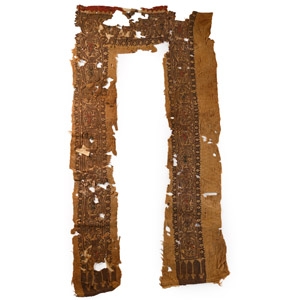
Large Egyptian Coptic Textile Fragment
Circa 7th century A.D.Sold for (Inc. bp): £546
Fragment from a tunic in coarse linen and purple violet wool, preserving the ornamentation of neck and chest, decorated with alternating medallions, with figures enclosed within the orbiculi of the vertical braids (clavi), representing nude or lightly dressed dancers; the upper part of the fragment featuring a decoration of red triangles descending downwards. 224 grams, 62 cm
Acquired 1970s-1996. Property of a North American collector. London collection, 2016.
This iconographic theme, originating from the pagan repertoire of Greek origin, was common on late Roman tunics: it evoked the joyful processions of Dionysus' servants.
