Loading, please wait...
Details
LOT 0499
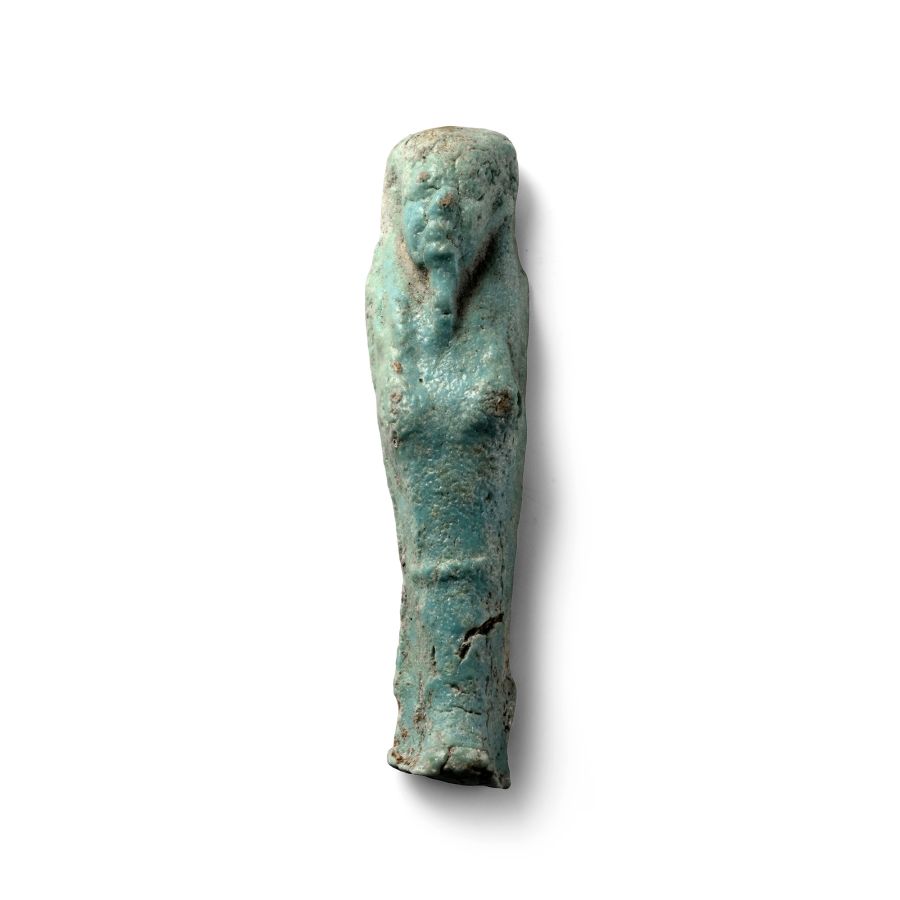
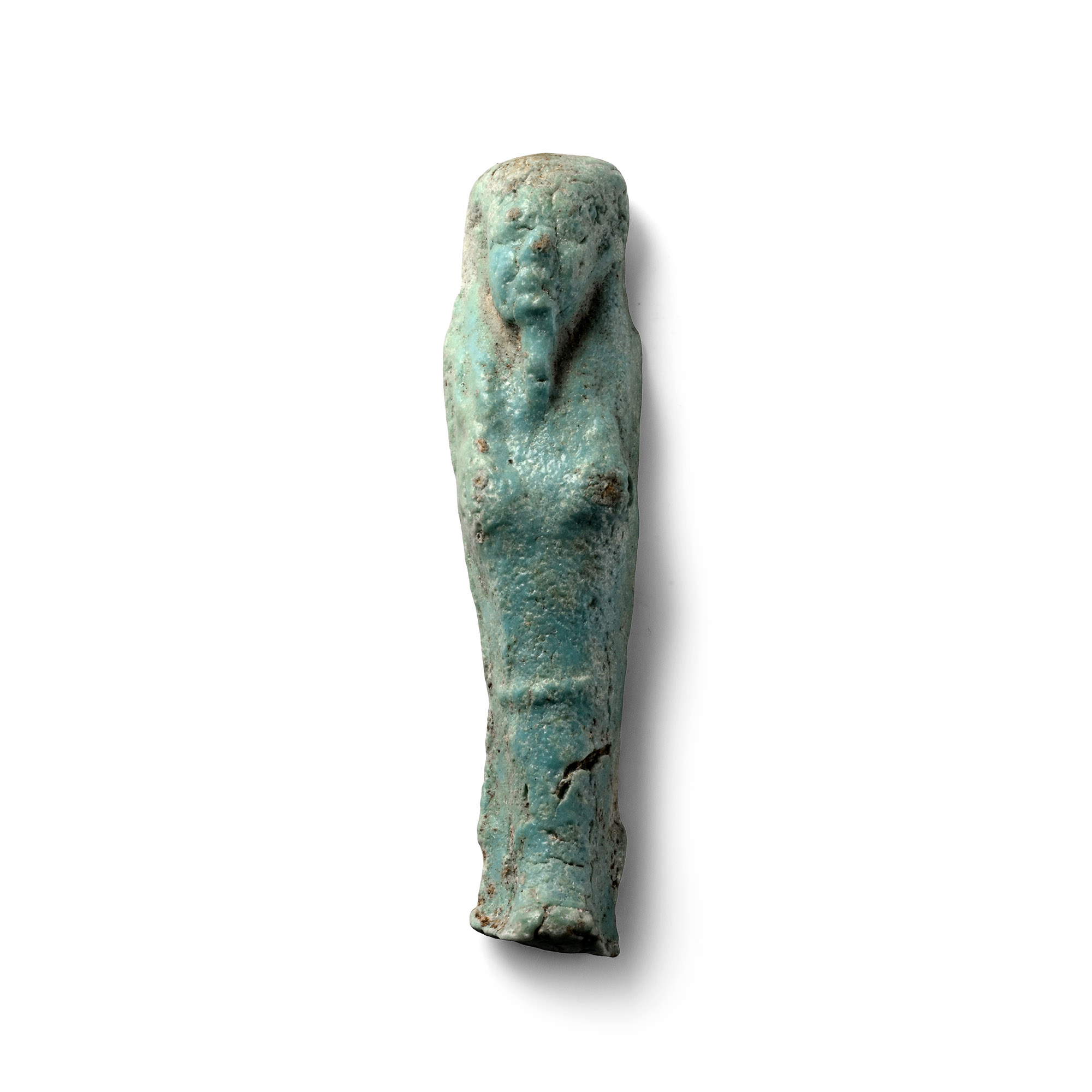
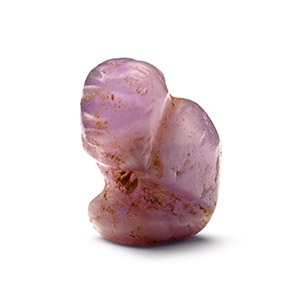
Egyptian Faience Shabti
PTOLEMAIC PERIOD, 332-30 B.C.
2 3/8 in. (7.95 grams, 61 mm).
D-shaped in section with tripartite wig and false beard. [No Reserve]
Provenance
Ex London, UK, collection, 1990s.
Literature
Cf. Janes, G., The Shabti Collections 6: A Selection from the World Museum, Liverpool, Lymm, 2016, p. 519, no. 273, for similar examples from Abydos.
CONDITIONVETTING:
TimeLine Auctions follows a vetting process to ensure the authenticity and legality of all items, reinforcing our commitment to integrity and responsible trading. Each antiquity, antique, and coin lot undergoes thorough examination by a vetting committee of at least ten external specialists, professional trade association members, scientists, and archaeologists: Our Vetting Process
AUCTIONS:
TimeLine is a leading auction house specialising in antiquities, ancient art, collectables, natural history, coins, medals, and books. Our auctions offer museums, collectors, historians, and enthusiasts the opportunity to acquire unique and historically significant pieces.
RELATED LOTS
-
Romano-Egyptian Painted Portrait on Linen
1st-2nd century A.D.Sold for (Inc. bp): £26,000
Encaustic painting on thin linen fabric, upper part of the funeral shroud with half-length representation of the deceased, representing the bust of a young man in the guise of mummiform Osiris holding implements of his divinity, black hair, wearing a gilt broad collar (maniakion) and netting, pink dress ornamented with rosettes, traces of halo in white pigment; set in a glazed frame. 4.3 kg, 58 x 63 cm including frame
Collection of the estate of Patti Cadby Birch (1923-2007), New York, USA. with Sotheby’s, New York, Antiquities, 5 June 2008, sale no.8452, no.105. European private collection, acquired thereafter. Accompanied by a copy of an Art Loss Register certificate, no.S00014603. Accompanied by an academic report by Dr Raffaele D'Amato. This lot has been checked against the Interpol Database of stolen works of art and is accompanied by a search certificate number no.12612-234638. This lot has been cleared against the Art Loss Register database, and is accompanied by an illustrated lot declaration signed by the Head of the Antiquities Department, Dr Raffaele D'Amato.
Fayum portraits, painted on wood or linen, applied to the mummies of the Graeco-Roman period, are one of the most wonderful legacies that the koiné of the Graeco-Roman world has left us. Due to the favourable climate enhancing the state of preservation, these encaustic paintings have left us an almost photographic testimony of the faces of the inhabitants of Roman Egypt. The realistic portrait shows here the idea of the deceased as Osiris. This idea, already existing in the Ptolemaic Period regardless of the gender of the person represented, continued to exist in the Graeco-Roman period. The deceased is undoubtedly a young man, beardless, with black and slightly frizzy hair. A similar male portrait with the same type of clothing, the attributes: nimbus and the identifying elements of Osiris can be found in a portrait now in Paris (Parlasca, 2003, no.771, pl.172,3). Patti Cadby Birch (1923-2007) was a prominent American philanthropist and collector, known for her significant contributions to the arts. A patron of institutions such as The Metropolitan Museum of Art and the Museum of Modern Art in New York, she supported numerous exhibitions and acquisitions, particularly in the fields of antiquities and Islamic art. Works from her esteemed collection have been widely exhibited and are held in several major museum collections. -
Very Large Egyptian Expedition Lithograph of the Temple of Edfu
Early 19th century A.D.Sold for (Inc. bp): £130
Proof etching on laid paper of plate 51 from Vol.I of Description de l'Égypte : ou, Recueil des observations et des recherches qui ont été faites en Égypte pendant l'expédition de l'armée française. entitled Edfou (Apollinopolis magna. Élévation du pylône du grand temple. 230 grams,106 x 68.5 cm
From the collection of a North American priest. Acquired between 1981-1996. Property of a North American collector.
Produced between February 1802 and 1830 on the orders of Napoleon Bonaparte; published between 1809 and 1828. Just 1,000 copies were distributed to various institutions, printed on laid paper with an 'Égypte ancienne et moderne' watermark. The book is subtitled Recueil des observations et des recherches qui ont été faites en Égypte pendant l’expédition de l’Armée française, publié par les ordres de Sa Majesté l’Empereur Napoléon le Grand (Gathering of observations and discoveries which were made in Egypt during the expedition of the French army, published on the orders of His Majesty the Emperor Napoleon the Great). It was the world's first encyclopedia devoted exclusively to the remains of ancient Egypt. The plates of this book are the first to present the archaeological sites of Thebes (Luxor). The Temple of Horus at Edfu, located on the west bank of the Nile in Upper Egypt. Built in the Ptolemaic Period, it remains one of the best-preserved temples in Egypt. -
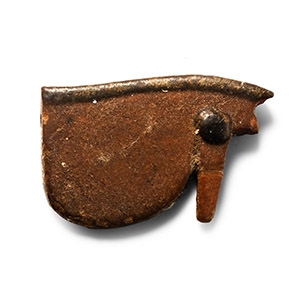
Egyptian Brown Glazed Eye of Horus Amulet
Late Period, 664-332 B.C.Sold for (Inc. bp): £39
Wedjat amuletic bead in dark brown faience with applied black detailing to the pupil and brow. 8.63 grams, 44 mm
with Archaeologia, Switzerland, before 1983. Ex private North American collection. London private collection, 2016.