
Loading, please wait...
LOT 0457
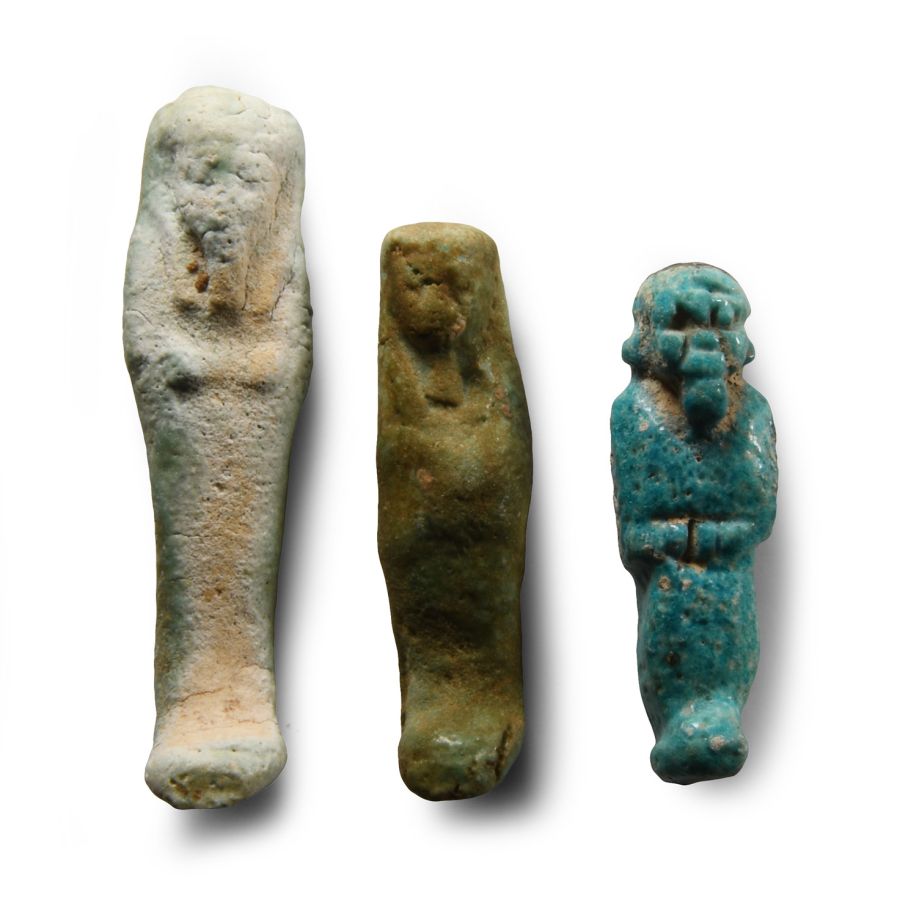
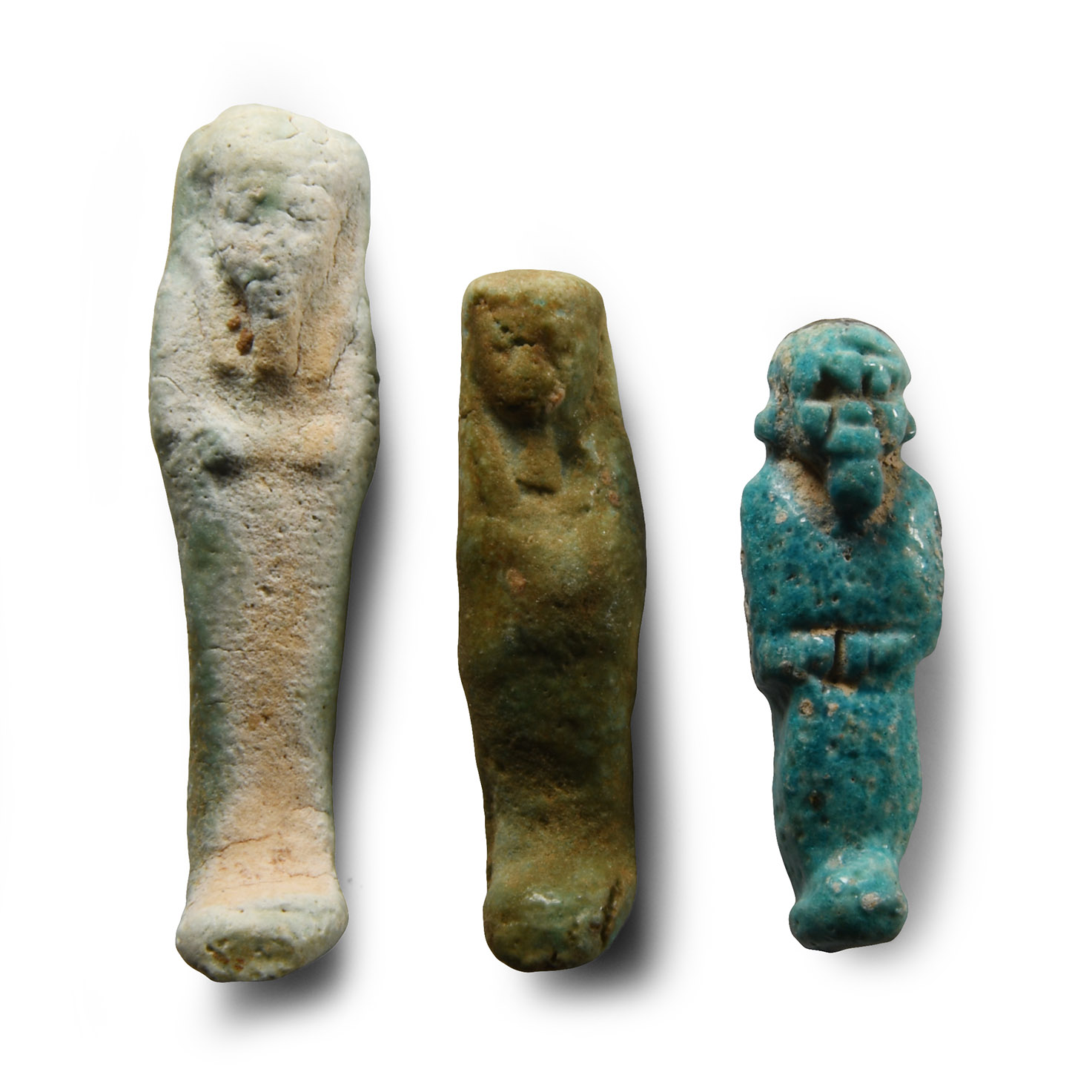
Egyptian Faience Shabti Group
PTOLEMAIC PERIOD, 332-30 B.C.
1 3/4 - 2 1/2 in. (21 grams total, 45-63 mm).
Comprising: one olive-green with lobe base, one rich blue with black detailing, one with tripartite wig. [3, No Reserve]
ProvenanceEx Cummings collection, UK, 1990s.
CONDITIONTimeLine Auctions follows a vetting process to ensure the authenticity and legality of all items, reinforcing our commitment to integrity and responsible trading. Each antiquity, antique, and coin lot undergoes thorough examination by a vetting committee of at least ten external specialists, professional trade association members, scientists, and archaeologists: Our Vetting Process
AUCTIONS:
TimeLine is a leading auction house specialising in antiquities, ancient art, collectables, natural history, coins, medals, and books. Our auctions offer museums, collectors, historians, and enthusiasts the opportunity to acquire unique and historically significant pieces.
-
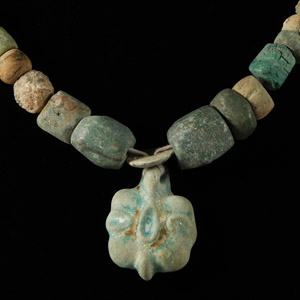
Egyptian Blue Faience Bead Necklace
Roman Period, 30 B.C.-323 AD.Sold for (Inc. bp): £117
Restrung group of graduated beads, mainly tubular and oblate types, centrepiece a rosette pendant. 49 grams, 70 cm long
Acquired 1980-2015. Ex Abelita family collection. -
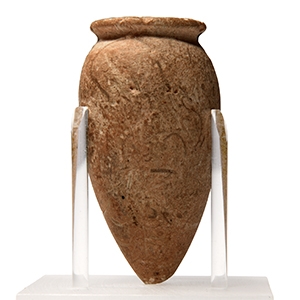
Egyptian Stone Alabastron
Late Old Kingdom, circa 2300 B.C.Estimate: £300 - 400 (‡+bp*)
Opening Bid: £150
The body with rounded shoulders, convex outer face and pointed base, everted rim; accompanied by a custom-made display base. 34.2 grams, 48 mm high (48.9 grams, 55 mm including stand)
Acquired in Europe before 1994. European collection. -
.jpg)
Egyptian Faience Bead Necklace String with Thoth Amulet
Late Period, 664-332 B.C.Sold for (Inc. bp): £585
Restrung using mainly annular and tubular beads; the central feature a large amulet of Thoth in ibis-form wearing a short kilt and advancing on a rectangular plinth. 19 grams, 46 cm
From the vendor's grandfather's collection, formed in the 1950s; thence by family descent circa 1974.
