
Loading, please wait...
LOT 0479
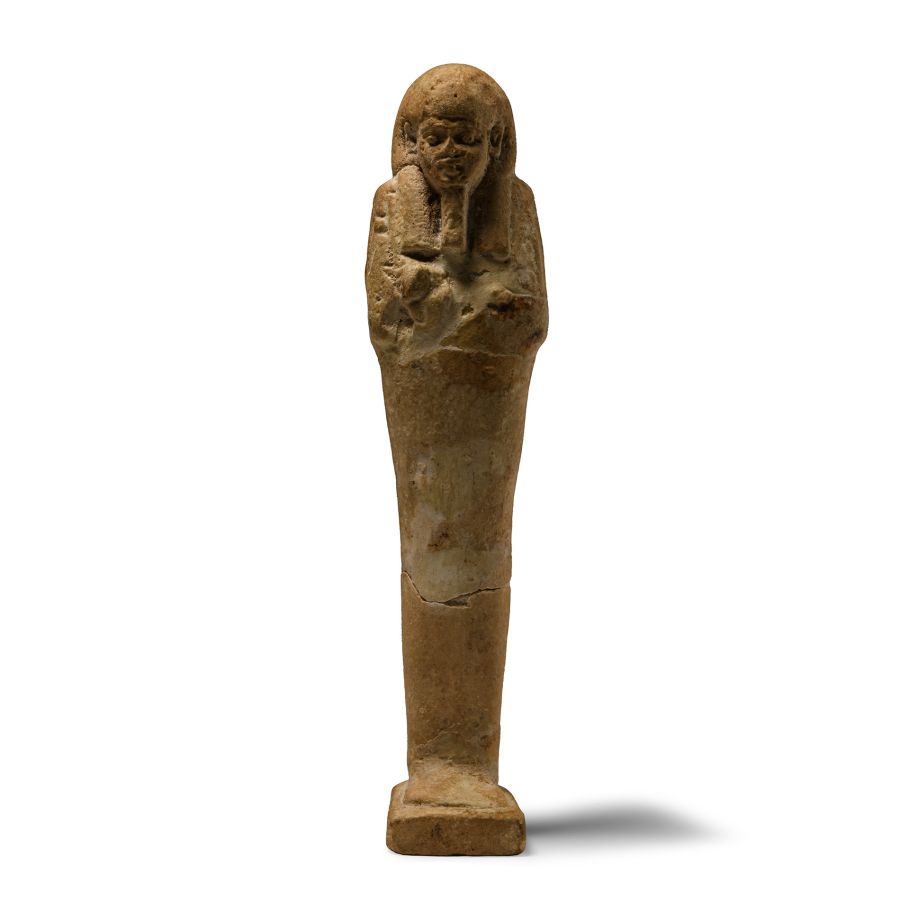
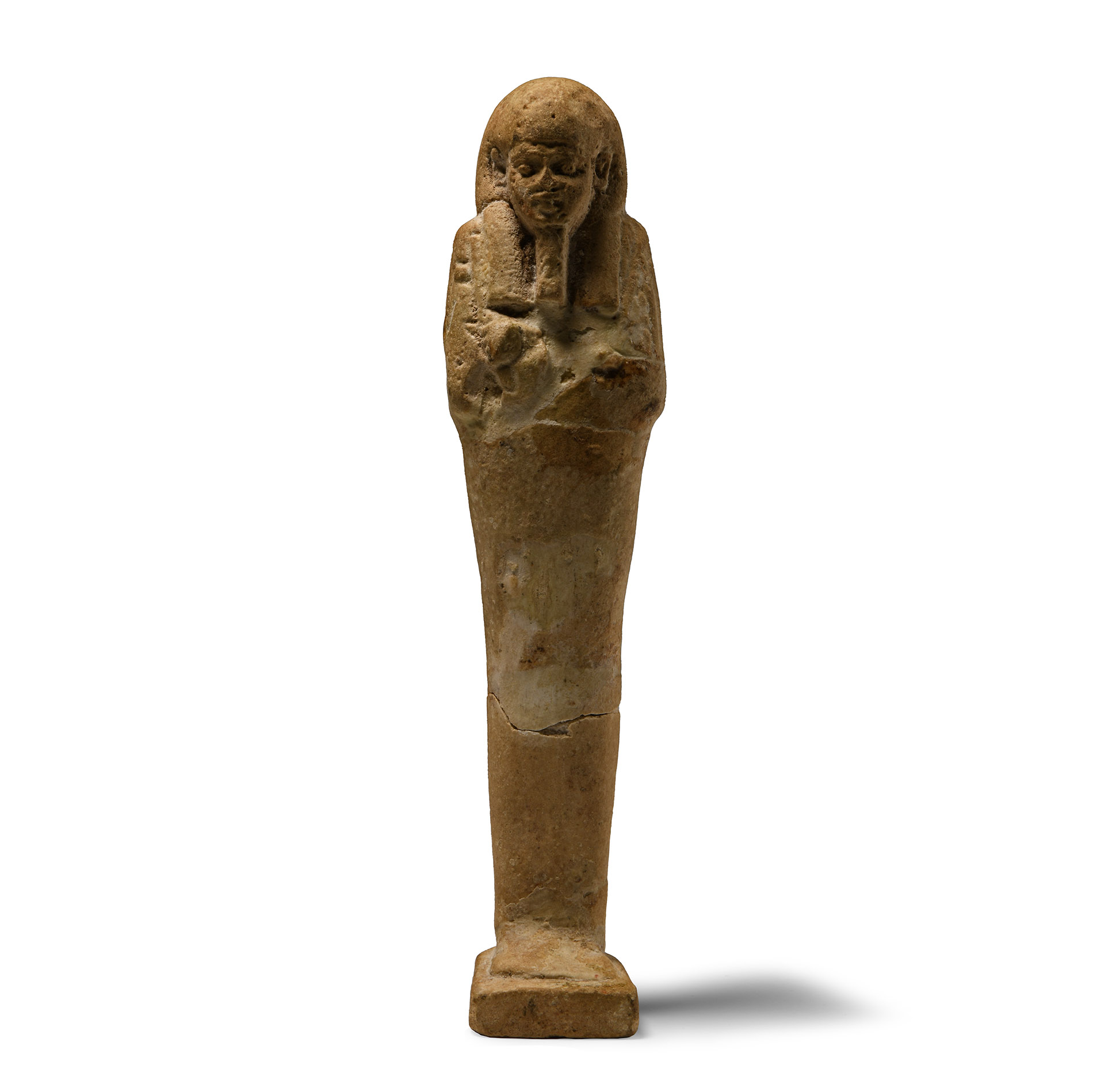
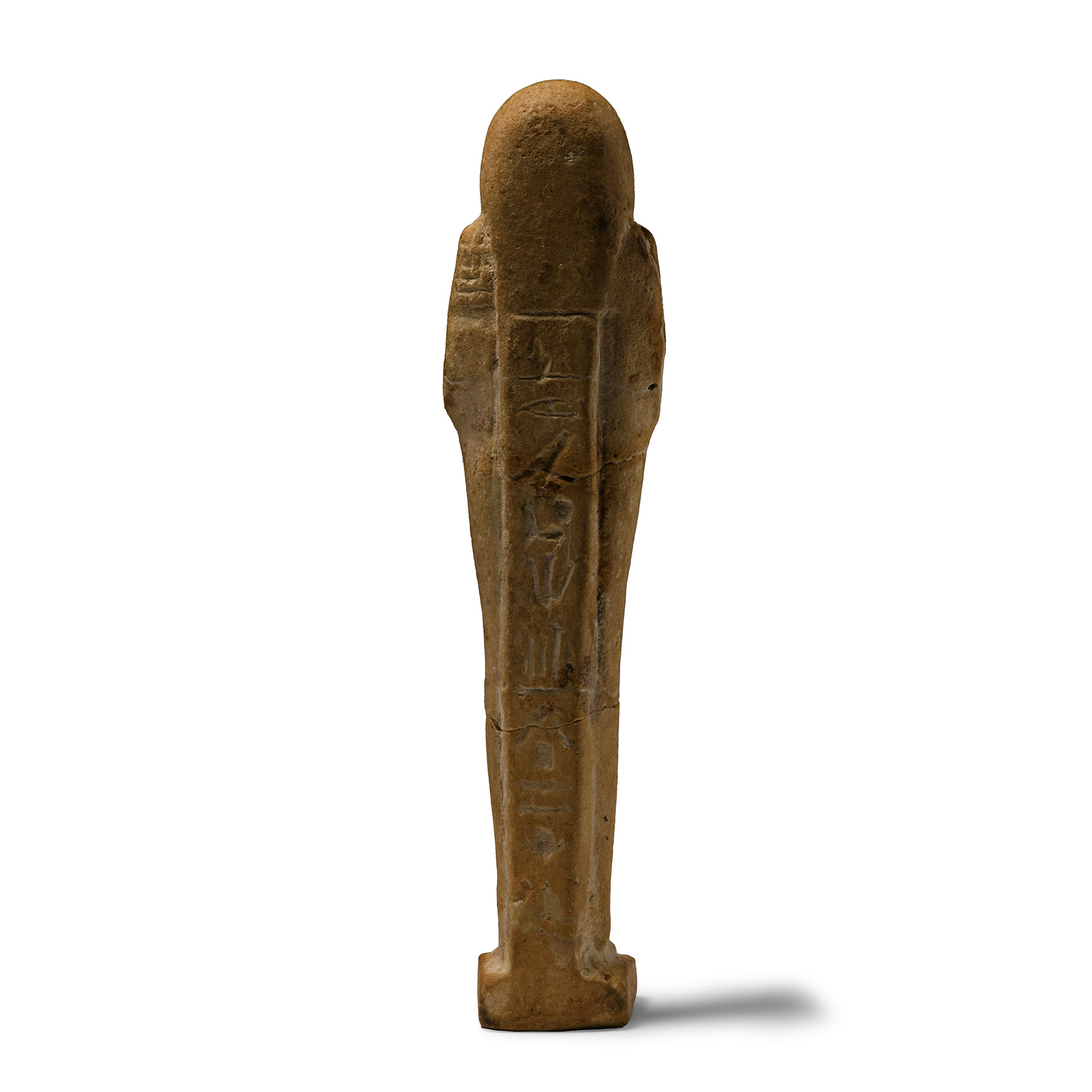
Egyptian Faience Shabti for Horemakhbit
LATE PERIOD, 664-332 B.C.
6 1/4 in. (102 grams, 15.7 cm).
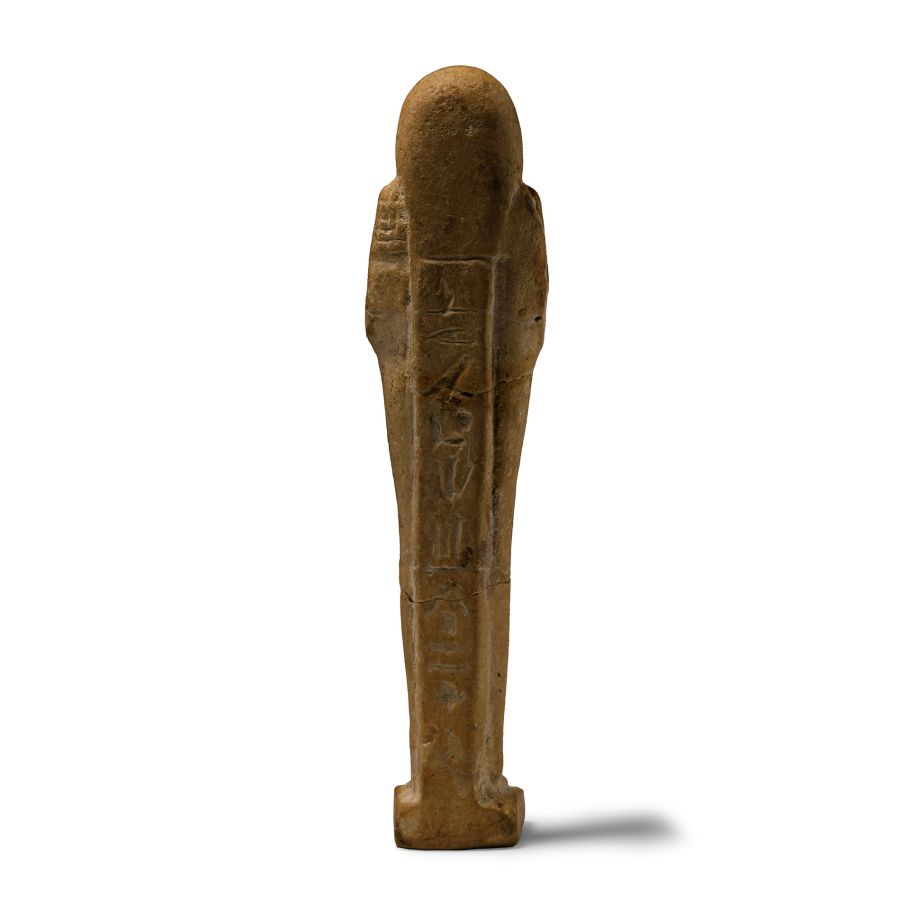
Of long, slender mummiform shape, wearing a tripartite wig and holding a pick and hoe, with a dorsal pillar bearing a hieroglyphic dedication to 'the Osiris, Horemakhbit'; repaired. [No Reserve]
ProvenanceEx M.S. Ciappara collection, Norfolk, UK, 1939-1950.
LiteratureCf. Janes, G., The Shabti Collections 6: A Selection from the World Museum, Liverpool, Lymm, 2016, 475-476, no. 248, for examples of similar style and text arrangement.
FootnotesShabti figures were created to carry out heavy manual tasks on behalf of a person in the afterlife. The body of a shabti was usually in the form of a mummy and often depicted with tools in their hands, such as baskets, picks, and hoes. During the Late Period, it was customary to be buried with hundreds of shabtis.
CONDITIONTimeLine Auctions follows a vetting process to ensure the authenticity and legality of all items, reinforcing our commitment to integrity and responsible trading. Each antiquity, antique, and coin lot undergoes thorough examination by a vetting committee of at least ten external specialists, professional trade association members, scientists, and archaeologists: Our Vetting Process
AUCTIONS:
TimeLine is a leading auction house specialising in antiquities, ancient art, collectables, natural history, coins, medals, and books. Our auctions offer museums, collectors, historians, and enthusiasts the opportunity to acquire unique and historically significant pieces.
-
.jpg)
Phoenician Green Jasper Scarab with Heads of Horus
6th-5th century B.C.Sold for (Inc. bp): £2,860
Scarab with detailed anatomical features, ellipsoid plaque with incuse inset motif topped at each end by the head of Horus; supplied with a museum-quality impression. 4.4 grams, 20 mm
Ex private collection of Mrs J.H., London, UK, early 1990s. -
Large Egyptian Blue Glazed Hieroglyphic Shabti for Ta-Amun
Saite Period, 26th Dynasty, 664-525 B.C.Sold for (Inc. bp): £1,430
With finely modelled facial details, a plaited beard, holding a hoe and the cord of a seed bag at the left shoulder and a pick at the right, ten horizontal bands of hieroglyphic text to the lower body. 140 grams, 18 cm
Acquired on the German art market, 1989-1995. with The Museum Gallery, 19 Bury Place, London, WC1, UK, 1998-2003. Property of a London based academic, 2003-present. -
Egyptian Pharaoh Watercolour Attributed to Howard Carter
Dated 1917 A.D.Sold for (Inc. bp): £1,430
Profile bust of an Egyptian male in nemes headcloth with uraeus to the brow, wesekh segmented collar; signed bottom right 'Howard Carter, 1905'; board to reverse with pencilled note 'Hatshepsu' and inked 'Watercolour painting signed H carter 1905 / remnants of an old Philips auction label on verso', with pencilled star motif. 898 grams total, 38.5 x 31 cm
with old Phillips label to the verso.
Hatshepsut was the longest-reigning female ruler in Egyptian history (1473-1458 B.C.), who undertook several military expeditions. Howard Carter's father, Samuel, was an illustrator for the Illustrated London News in the later 1800s. In 1891, Howard Carter accompanied Percy Newberry on an expedition focussing on First Intermediate Period tombs at the Middle Egyptian site of Beni Hasan, from which many of his original pieces survive. During his time at El-Amarna, the excavator Flinders-Petrie took Carter to visit the newly discovered royal tomb of Pharaoh Akhenaten. Carter made some sketches there which were published in The Daily Graphic on March 23, 1892, accompanying Petrie’s article on the tomb. These sketches were the first Egyptian drawings published by Howard Carter, and the first to convey the uniqueness of Amarna art to the European public.
